The debate around training fasted versus fed has intensified as intermittent fasting has moved from niche practice to mainstream lifestyle choice. Proponents of training fasted claim enhanced fat burning and metabolic flexibility, while critics point to compromised performance and potential muscle loss. The reality, as with most fitness debates, lies somewhere in the middle: and depends heavily on individual goals, workout intensity, and training experience.
This analysis examines what current research actually says about training fasted, separating evidence-based conclusions from social media mythology.
What Happens When You Train Fasted
Training fasted typically refers to exercising after an extended period without caloric intake: usually 8-14 hours, often first thing in the morning before breakfast. During this state, liver glycogen stores are partially depleted, insulin levels are low, and the body has already shifted toward using fat as a primary fuel source.
The theoretical appeal is straightforward: with less readily available glucose, the body should tap more aggressively into stored fat during exercise. This logic has driven millions toward early morning workouts on empty stomachs, hoping to accelerate fat loss.

However, the metabolic picture is more complex than simple fuel availability. When training fasted, the body does increase fat oxidation during the exercise session itself. Post-exercise fat oxidation also remains elevated compared to fed training. But these acute metabolic shifts don't automatically translate into superior long-term fat loss outcomes.
The Fat-Burning Question: What Research Actually Shows
The central promise of training fasted: enhanced fat loss: has been tested repeatedly in controlled studies. The findings consistently disappoint those hoping for a metabolic shortcut.
Research comparing fasted versus fed training groups following identical workout programmes and diets found no significant difference in fat loss between groups. The body appears to compensate over a 24-hour period, with fed exercisers burning more fat during non-exercise hours to balance out the lower fat oxidation during their workout.
A 2024 systematic review did find that intermittent fasting combined with exercise can support body composition improvements and help maintain lean mass. However, these benefits came from the overall dietary pattern rather than the specific timing of workouts relative to meals.
The key takeaway: training fasted increases fat burning during exercise but doesn't produce superior fat loss results compared to fed training when total caloric intake and expenditure remain equal.
Performance Trade-Offs: The Cost of an Empty Tank
Where training fasted shows clear disadvantages is in performance output. Multiple studies demonstrate measurable decrements when athletes exercise without fuel on board.
Key performance findings:
- Fasted athletes showed an average 3.8% worse performance compared to fed counterparts
- Peak power output and total mechanical work scores dropped in fasted conditions
- Pre-exercise feeding enhanced prolonged aerobic exercise performance significantly
- Fasted participants self-reported lower energy, motivation, and readiness before training
For shorter-duration aerobic exercise, the performance gap narrows considerably. A 30-minute easy jog shows minimal difference between fasted and fed states. But as intensity or duration increases, the fed advantage becomes increasingly pronounced.

This creates a practical consideration: if training fasted compromises workout quality, the reduced training stimulus may offset any theoretical metabolic benefits. A high-intensity interval session performed at 85% effort due to low energy produces less adaptation than the same session performed at full capacity after adequate fuelling.
Muscle Protein Breakdown: A Real Concern
Beyond performance, training fasted raises legitimate concerns about muscle preservation. Exercise in a fasted state increases muscle protein breakdown rates, and without incoming amino acids, the body lacks the building blocks needed for immediate repair and synthesis.
Research on athletes following intermittent fasting protocols showed:
- Reduced testosterone levels compared to non-fasting counterparts
- Lower overall body mass
- Failure to gain muscle at the same rate as fed training groups
These findings carry particular weight for anyone prioritising muscle building or strength development. The anabolic environment created by available nutrients around training supports both the workout itself and the recovery process that follows. For those looking to support their training nutrition, creatine monohydrate remains one of the most researched supplements for strength and muscle development.
The muscle preservation concern becomes less relevant for truly low-intensity activity. A morning walk or gentle yoga session doesn't create significant muscle protein breakdown regardless of fed state. But resistance training or high-intensity cardio performed fasted consistently shows less favourable outcomes for muscle retention and growth.
Matching Training State to Workout Type
The evidence points toward a nuanced approach: match your nutritional state to your training goals and session demands.
Train fed for:
- High-intensity intervals, sprints, and hill work
- Resistance training and muscle-building sessions
- Competitive events or performance tests
- Long endurance sessions (90+ minutes)
- Any workout where quality and output matter
Training fasted may work for:
- Low-intensity steady-state cardio
- Walking, yoga, or mobility work
- Recovery sessions
- Short easy runs or bike rides
- Those with established fasting experience and tolerance
First-time fasters attempting longer or harder sessions commonly experience energy crashes, dizziness, and dramatically reduced performance. Metabolic adaptation to training fasted takes time, and the transition period rarely produces quality workouts.
How to Structure Nutrition Around Training Goals
For those practising intermittent fasting who still want to maximise training outcomes, strategic scheduling offers the best solution.
Option 1: Train during the eating window Schedule workouts 2-3 hours after a meal containing protein and carbohydrates. This ensures adequate fuel availability while maintaining the fasting protocol during non-training hours. Post-workout nutrition then falls naturally within the eating window.
Option 2: Train at the end of the fast, eat immediately after If morning training fits your schedule better, complete the workout and break your fast immediately with a protein-rich meal. This minimises the duration of the fasted recovery period while allowing the metabolic state of fasted training. High-protein breakfast options can help maximise post-workout recovery.
Option 3: Match fasting to session type Reserve training fasted for low-intensity or recovery days. Schedule demanding sessions: intervals, heavy lifts, long runs: during fed periods. This hybrid approach captures potential metabolic flexibility benefits without sacrificing workout quality when it matters most.
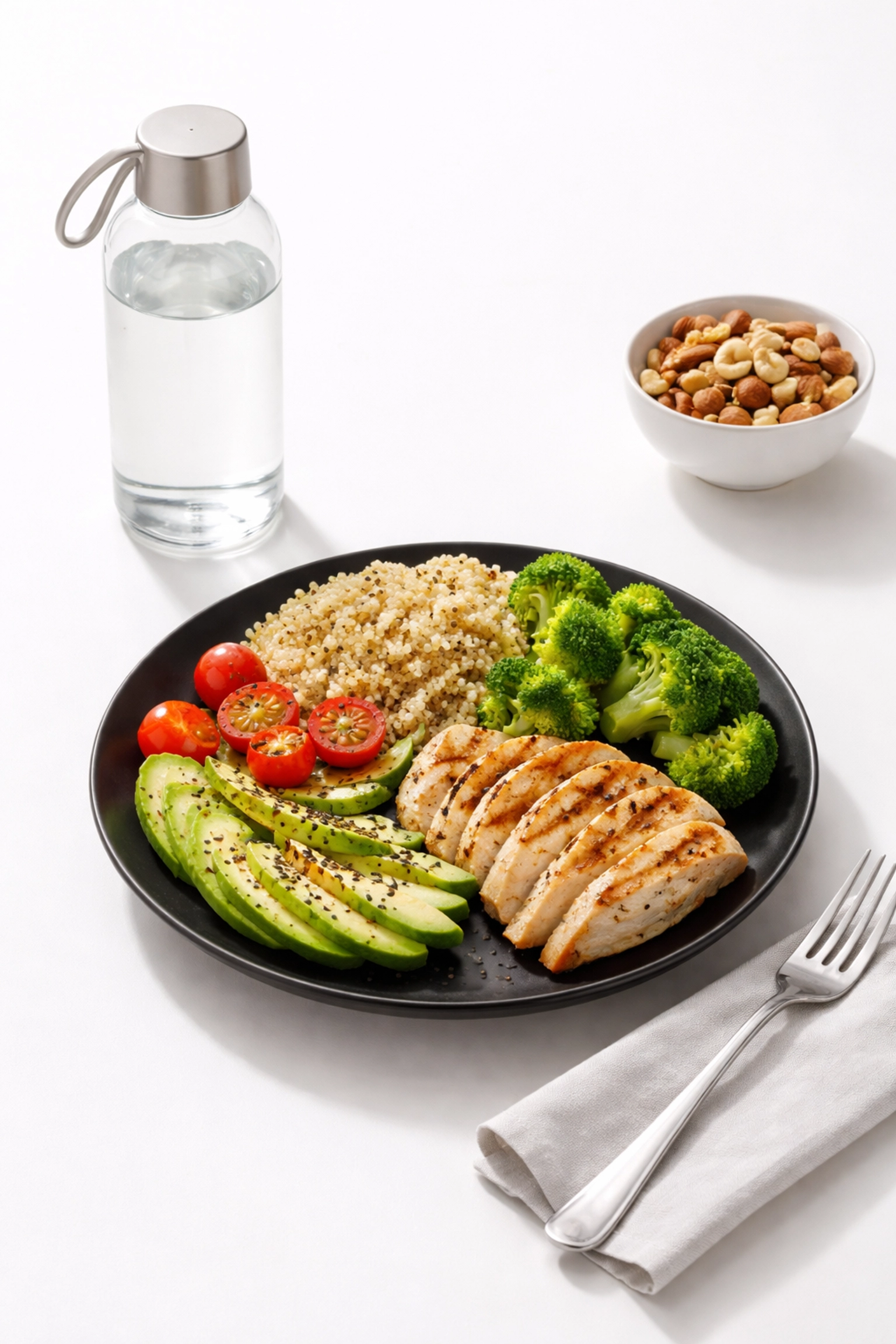
Pre-workout nutrition guidelines (if eating before training):
- 2-3 hours before: Complete meal with protein, carbs, and moderate fat
- 60-90 minutes before: Lighter meal or snack, lower fat and fibre
- 30 minutes before: Simple carbohydrates if needed, easily digestible
Post-workout nutrition priorities:
- Protein intake within 2-3 hours (the "anabolic window" is wider than previously believed)
- Carbohydrate replenishment for glycogen restoration
- Adequate total daily protein distributed across meals
The Bottom Line
Training fasted won't accelerate fat loss compared to fed training when calories and training volume remain equal. It does increase acute fat oxidation but at a cost to performance, particularly during high-intensity or prolonged exercise. For muscle building and strength development, fed training produces consistently superior outcomes.
The practical recommendation: if intermittent fasting fits your lifestyle and preferences, schedule demanding workouts during eating windows or immediately before breaking your fast. Reserve training fasted for low-intensity sessions where performance decrements matter less.
Individual response varies considerably. Some experienced fasters report training fasted without noticeable performance issues, while others find even moderate intensity impossible on an empty stomach. Experimentation within the framework of evidence: prioritising fed training for quality sessions, allowing fasted training for easier work: offers the most sustainable approach.
The goal remains consistent: train effectively, recover adequately, and let total daily nutrition drive body composition outcomes rather than chasing marginal metabolic manipulation through meal timing.