![[HERO] Triathlon Gear for Beginners: Exactly What Equipment You Need to Start Training](https://cdn.marblism.com/iiYa1M3JHJl.webp)
Starting triathlon training doesn't require a £5,000 investment or a garage full of specialist equipment. Most beginners waste money on gear they don't need while overlooking the basics that actually matter. This guide covers exactly what equipment you need for triathlon training: nothing more, nothing less.
The Minimalist Approach to Triathlon Gear for Beginners
Before you spend a penny, understand this: your first triathlon is about completing the distance, not winning it. You can use a basic road bike, borrow swim goggles, and train in your regular running shoes. The key is starting with essentials and upgrading strategically as your commitment grows.
Budget allocation breakdown:
- Swimming gear: £50-£150
- Cycling equipment: £300-£800 (assuming you have a bike)
- Running essentials: £60-£120
- Transition and extras: £40-£80
Total starting budget: £450-£1,150
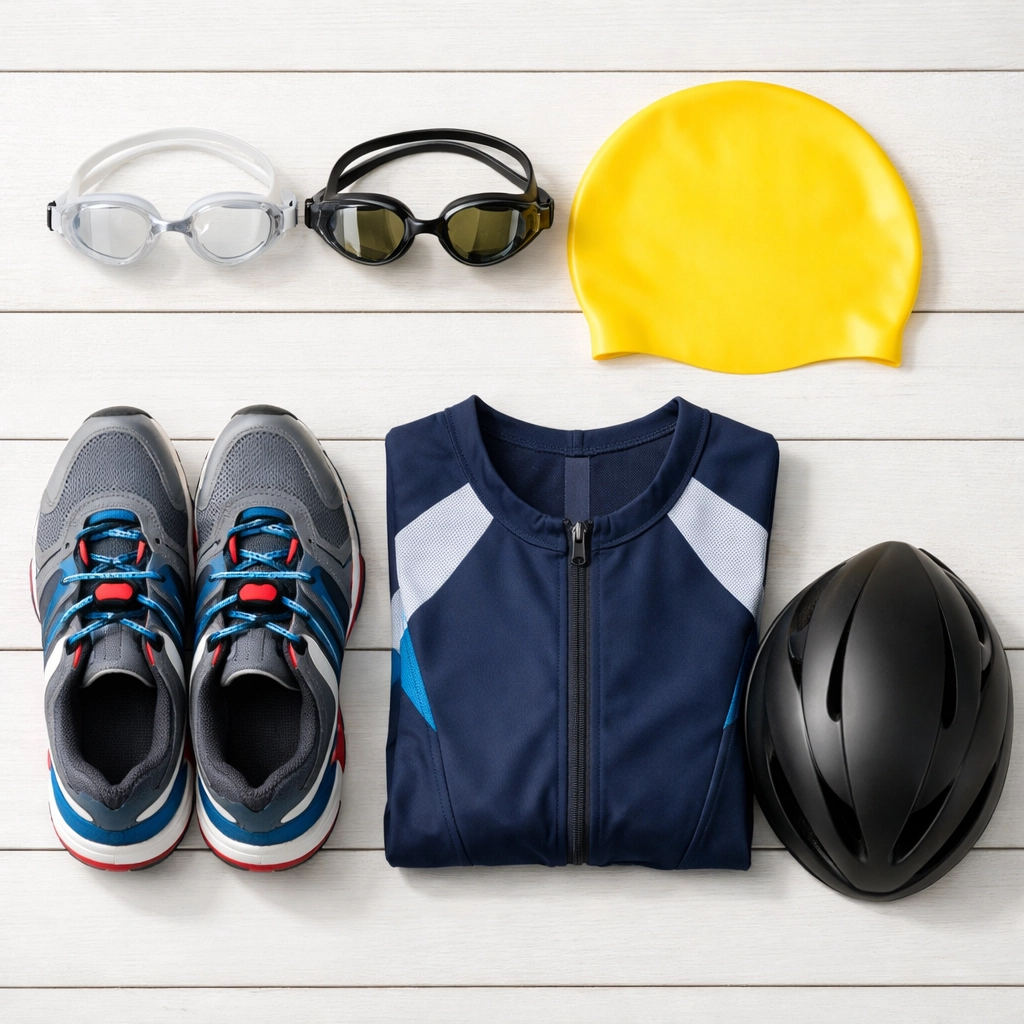
Swimming Equipment: What You Actually Need
Essential Swim Gear
Swim goggles (£15-£40) Purchase two pairs: one clear or light-tinted for pool training and cloudy conditions, and one smoke-tinted for sunny open-water swims. Anti-fog coating is non-negotiable. Test the fit before buying: goggles should create suction without the strap.
Swim cap (£5-£12) Silicone caps last longer than latex and provide better thermal protection. Most races provide caps, but owning one for training is essential. Bright colours improve visibility in open water.
Wetsuit (£80-£300) Only necessary if you're training in water below 20°C or racing in wetsuit-legal conditions. Entry-level wetsuits from Zone3, Orca, or Huub provide adequate buoyancy and thermal protection. Rent before buying if you're unsure about commitment.
Anti-chafing lubricant (£8-£15) Body Glide or similar products prevent wetsuit rub on your neck, underarms, and ankles. Apply generously 10-15 minutes before entering water.
What You Can Skip Initially
- Fancy swim paddles and pull buoys (your local pool likely provides these)
- Tech suits or specialty training swimwear
- Expensive swim watches (your phone can track pool distances)
Cycling Equipment: Budget-Friendly Essentials
Core Cycling Gear
The bike itself You don't need a £3,000 triathlon-specific bike. A road bike, hybrid, or even a well-maintained mountain bike works for your first season. Focus on proper fit over fancy features. Visit a local bike shop for basic adjustments: saddle height and handlebar position affect performance more than carbon frames.
Helmet (£40-£100) Non-negotiable. Replace after any crash, even if damage isn't visible. British Standard BS EN 1078 certification is mandatory. Adequate ventilation matters more than aerodynamics for beginners.
Water bottle system (£10-£25) Two bottles minimum: one for water, one for electrolyte solution. Standard cages work fine; skip the expensive aero models initially.
Basic repair kit (£25-£40)
- Two spare inner tubes (correct size for your tyres)
- Tyre levers (plastic, set of 3)
- Mini pump or CO2 inflator with 2-3 cartridges
- Multi-tool with Allen keys
Learn to change a flat before your first long ride. Practice at home takes 10 minutes and prevents race-day panic.
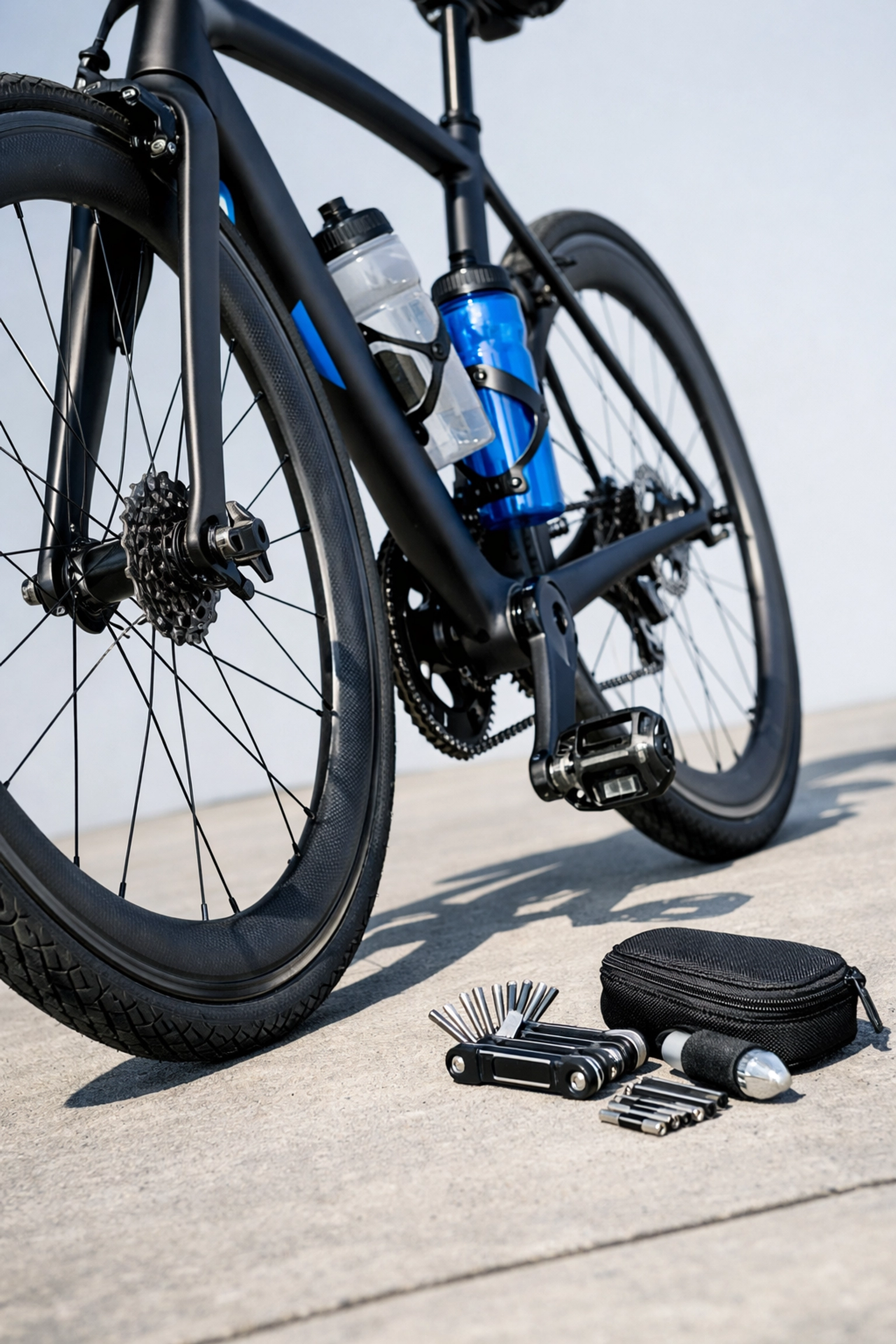
Cycling shorts with padding (£30-£60) Essential for training rides over 45 minutes. Tri-specific shorts work for all three disciplines, but regular cycling shorts with chamois padding are more comfortable for bike-only sessions.
Secondary Priorities
Clipless pedals and cycling shoes (£80-£150 combined) These improve power transfer by 8-12% but require practice. If budget is tight, start with flat pedals and trainers, then upgrade after 2-3 months of consistent training.
Bike computer or GPS watch (£50-£200) Useful for tracking distance, speed, and cadence, but your smartphone with Strava works initially. Invest when you start following structured training plans.
Running Equipment: Keep It Simple
Essential Running Gear
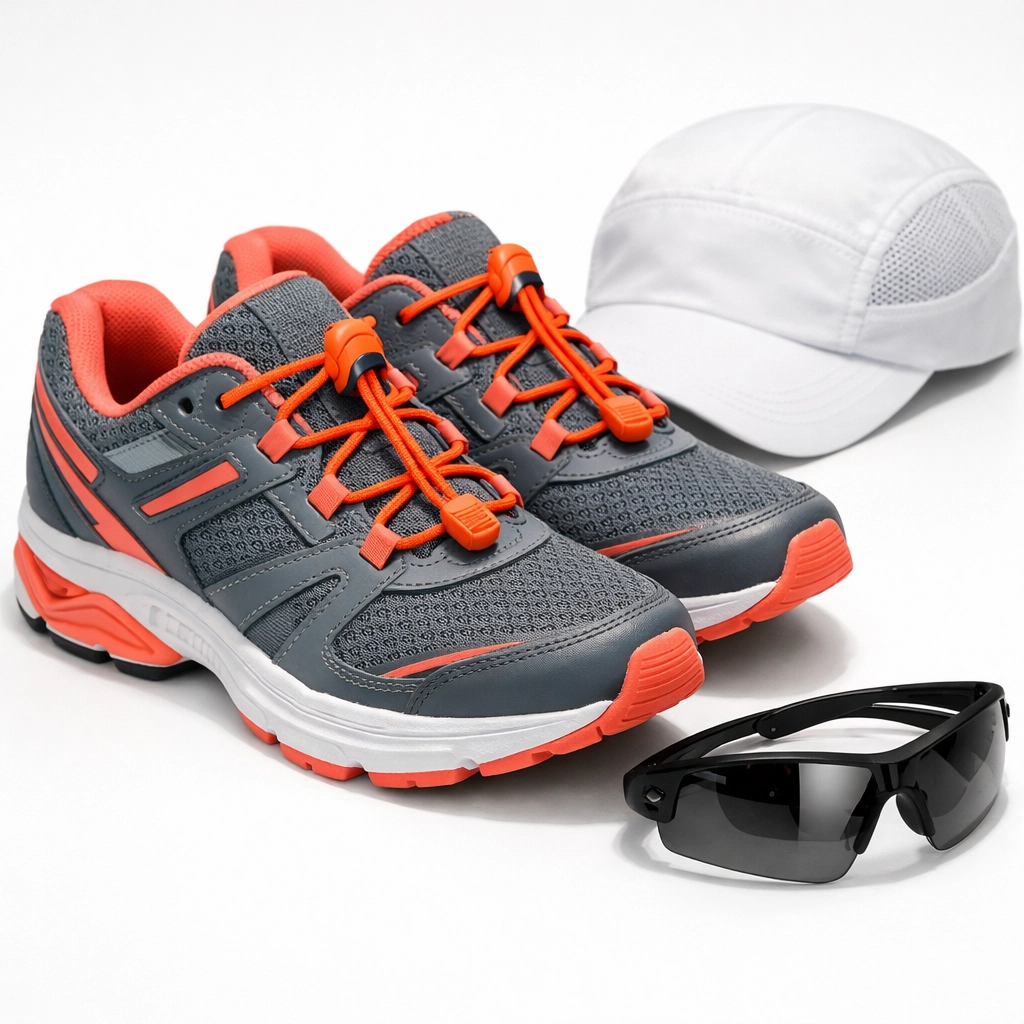
Properly fitted running shoes (£60-£120) Visit a specialist running shop for gait analysis. Beginners should choose:
- Neutral support (unless you have specific pronation issues)
- 8mm or less heel-to-toe drop
- Weight between 7-10 ounces
- Replace every 400-500 miles
Don't buy triathlon-specific running shoes initially: standard trainers provide better cushioning for training volume.
Running hat and sunglasses (£15-£40) Lightweight, breathable caps with wicking fabric protect against sun and rain. Wraparound sunglasses stay secure during movement and reduce eye strain.
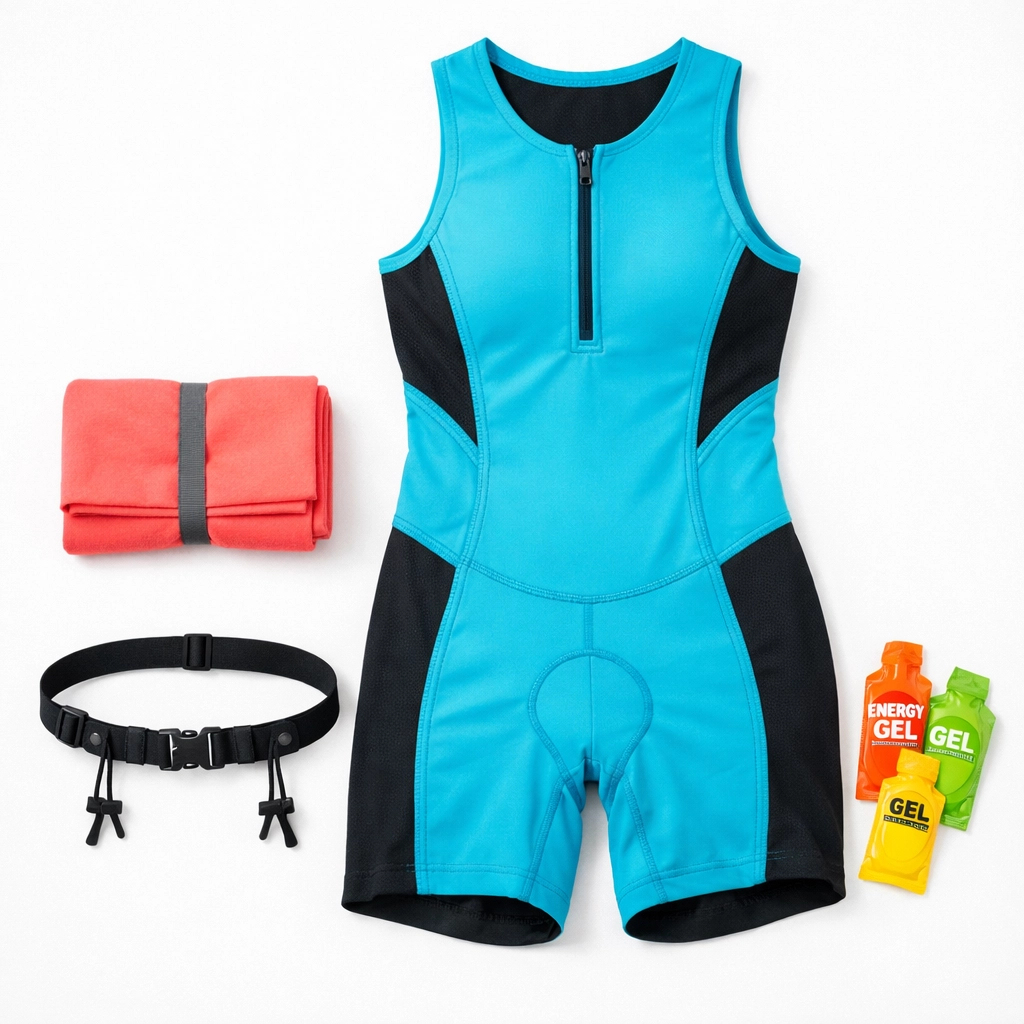
Race belt (£8-£15) Elastic belts with toggles hold your race number without safety pins. Essential for transitions: you can't pin numbers to wet tri-suits effectively.
Transition Gear and Race-Day Essentials
Tri-suit or two-piece kit (£40-£100) A single tri-suit eliminates clothing changes between disciplines. Look for:
- Quick-drying fabric
- Minimal padding (enough for cycling comfort, not so much it stays waterlogged)
- Secure pockets for nutrition
- Flatlock seams to prevent chafing
Alternative: wear swim shorts and a technical t-shirt throughout the race.
Transition towel (£10-£20) Bright-coloured, compact towel marks your spot in transition and provides a clean surface for bare feet. Practice locating it quickly during training.
Elastic laces or lock laces (£6-£12) Convert regular running shoes into slip-ons for faster transitions. Save 15-30 seconds compared to tying laces with wet hands.
Hydration and Nutrition Support
Proper hydration planning prevents performance drops and cramping during longer training sessions and races. Basic electrolyte supplementation becomes essential when training exceeds 90 minutes in a single session.
What you need:
- Electrolyte powder or tablets for training rides and runs over 60 minutes
- Sports nutrition products for race simulation (gels, chews, or whole foods)
- Clear hydration plan for each discipline
Fitness Health offers electrolyte and hydration support specifically designed for endurance athletes. Proper sodium, potassium, and magnesium balance prevents the muscle cramps that sideline many beginner triathletes.
What Equipment to Skip as a Beginner
Overpriced items that don't improve performance:
- Aero helmets (marginal gains that don't matter at beginner speeds)
- Compression gear beyond basic shorts
- Power meters (£300-£800 that beginners can't interpret effectively)
- Heart rate monitors (useful but not essential initially)
- Specialist nutrition products beyond basic electrolytes and carbs
The upgrade path: Focus on consistency for 6-12 months. After completing 2-3 races, you'll know which discipline needs investment. Common upgrade patterns:
- Strong swimmers invest in better bikes
- Cyclists upgrade running shoes and add GPS watches
- Runners often need wetsuit improvements
Budget Triathlon Equipment: Smart Shopping Strategies
Where to save money:
- Buy previous season's models (typically 30-40% cheaper with identical performance)
- Check Facebook Marketplace and eBay for barely-used wetsuits
- Join local triathlon clubs: members often sell outgrown equipment
- Wait for end-of-season sales (September-October in the UK)
- Borrow before buying expensive items like wetsuits and bike computers
Where not to compromise:
- Helmet safety ratings
- Running shoe fit and replacement schedule
- Basic bike maintenance and repairs
- Anti-chafing products
Your First Triathlon Checklist
Mandatory items for race day:
- Swim: goggles, cap (usually provided), wetsuit (if water temp requires)
- Bike: working bicycle, helmet, water bottles, repair kit
- Run: trainers, race belt, hat
- Transition: towel, elastic laces
- Nutrition: electrolyte drinks, energy gels (2-3 for sprint distance)
- Body: sun cream, anti-chafing lubricant
Test everything during training: Never use new equipment on race day. Each item should have 2-3 training sessions of proven reliability. This includes nutrition products: what works for other athletes might upset your stomach.
Starting Your Triathlon Journey
The equipment list for triathlon training looks intimidating, but most beginners already own 40-50% of what they need. A working bicycle, running shoes, and access to a pool gets you started. Add essentials systematically as your training progresses.
Focus your initial budget on safety items (helmet), comfort items (proper running shoes, anti-chafing products), and reliability items (bike repair kit). Everything else can wait until you've completed your first race and identified your specific needs.
The athletes who succeed in triathlon aren't those with the most expensive gear: they're the ones who train consistently with whatever equipment they have. Start with the basics, show up for training, and upgrade strategically as your commitment grows.