![[HERO] The Ultimate Guide to Progressive Overload: How to Keep Seeing Results](https://cdn.marblism.com/WCHa8dVTmyd.webp)
You've been hitting the gym consistently for a few months. The weights that once felt challenging now feel almost easy. You can knock out your usual sets without breaking a sweat. So why aren't you seeing the same results you did when you started?
The answer is simple: your body has adapted. To keep making progress, you need to give it a reason to keep changing. That's where progressive overload comes in.
What Is Progressive Overload?
Progressive overload is the gradual increase of stress you place on your body during training. In plain terms: you need to keep challenging your muscles beyond what they're currently used to if you want them to keep growing stronger.
Think of it this way. If you lift the same 10kg dumbbells for the same 10 reps every single week, your body will adapt to that specific demand. After a few weeks, that workout becomes maintenance, not progression. Your muscles have no reason to grow because they're already strong enough to handle what you're asking them to do.
Progressive overload is the principle that keeps you moving forward instead of spinning your wheels.

How Your Body Adapts to Training Stress
When you challenge your muscles with a new stimulus, whether that's heavier weight, more reps, or less rest, your body goes through a process called General Adaptation Syndrome. Here's how it works:
- Alarm phase: Your muscles experience stress from the workout
- Resistance phase: Your body adapts by building stronger muscle fibres
- Recovery phase: You rest and allow those adaptations to take place
This cycle repeats every time you introduce a progressive challenge. Without that progressive element, your body reaches equilibrium. You maintain your current strength and size, but you don't improve. Over time, you might even see your performance decline.
The key takeaway? Your muscles need a reason to adapt. Progressive overload gives them that reason.
5 Practical Ways to Apply Progressive Overload
You don't need to complicate this. Progressive overload can be applied through several straightforward methods:
1. Add More Weight
The most obvious approach. If you're squatting 60kg for 3 sets of 8 reps, try 62.5kg next week. Small increases add up over time.
2. Increase Your Reps
If you performed 8 reps last week, aim for 9 or 10 this week with the same weight. Once you hit the top of your rep range (say, 12 reps), increase the weight and drop back down to 8 reps.
3. Add Extra Sets
Instead of 3 sets of bench press, do 4 sets. This increases your total training volume, which is a proven driver of muscle growth.
4. Reduce Rest Periods
If you currently rest 90 seconds between sets, try cutting it to 75 seconds. This increases the density of your workout and creates more metabolic stress.
5. Increase Training Frequency
Train a muscle group twice per week instead of once. More frequent stimulus can lead to faster adaptations, provided you're recovering adequately.
You don't need to use all five methods at once. Pick one or two variables to manipulate each training cycle, and you'll see consistent progress.
The 10% Rule: Progress Safely
Here's where people often go wrong. They get excited about progressive overload and try to jump from 60kg to 80kg in a single week. That's a recipe for injury, not gains.
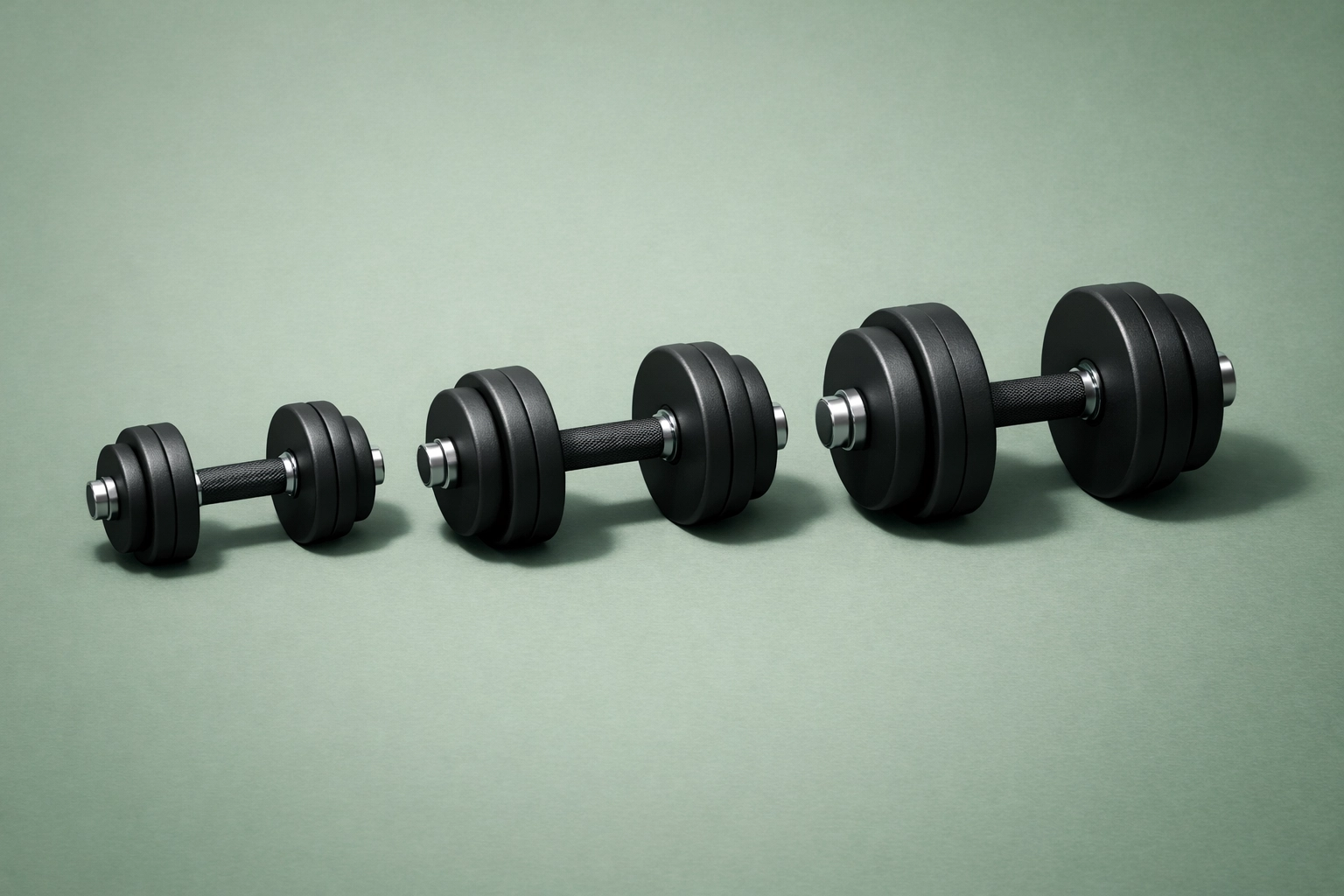
Follow the 10% rule: increase weight, reps, or training volume by no more than 10% per week. This allows your muscles, tendons, and ligaments to adapt gradually without excessive strain.
For example:
- If you're squatting 100kg, add 5-10kg next week, not 20kg
- If you're doing 30 total reps of an exercise, aim for 33 reps next week, not 45
Progressive overload is a long-term strategy. Small, consistent improvements compound over months and years. Patience wins.
Why Progressive Overload Prevents Plateaus
Plateaus happen when your body has fully adapted to your current training stimulus. You're no longer creating enough stress to trigger further adaptations.
This is why people who do the same workout routine for years eventually stop seeing results. Their body has become incredibly efficient at that specific routine. There's no challenge left.
Progressive overload forces your body to keep adapting. By continually increasing the demands, you ensure your muscles never fully "catch up." This keeps you in a state of constant improvement rather than maintenance.
If you've noticed your strength or muscle gains have stalled, ask yourself: when was the last time I increased the challenge in my workouts? The answer usually reveals the problem.
The Mental Benefits of Measurable Progress
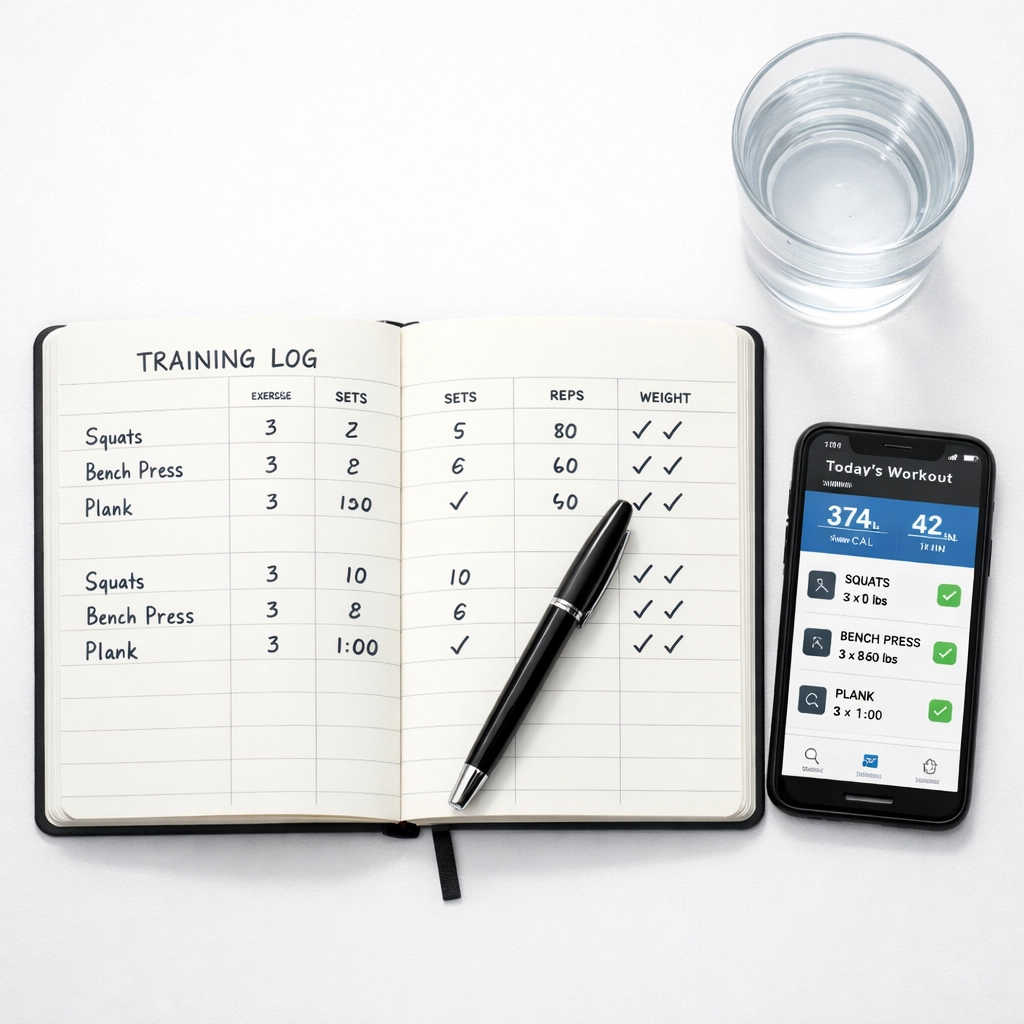
There's a psychological component to progressive overload that doesn't get talked about enough. When you track your workouts and see tangible improvements: lifting heavier, completing more reps, or finishing faster: it builds confidence and motivation.
That sense of progress creates positive momentum. You're more likely to stay consistent when you can clearly see you're getting stronger. It transforms training from a vague pursuit into a measurable achievement.
This is why keeping a training log matters. Write down your weights, sets, and reps. Review them every few weeks. You'll be surprised how quickly those small increments add up to significant gains.
Supporting Your Training with Proper Recovery
Progressive overload only works if you're recovering properly between sessions. Your muscles don't grow in the gym: they grow during rest.
This is where nutrition becomes critical. You need adequate protein to repair muscle tissue, sufficient calories to fuel performance, and essential vitamins and minerals to support recovery processes.
Fitness Health offers a range of basic vitamins and minerals that can support your overall health during intense training cycles. When you're pushing your body harder each week, making sure you're not deficient in key micronutrients helps maintain performance and reduce fatigue.
Pay particular attention to:
- Magnesium: Supports muscle function and recovery
- Vitamin D: Important for bone health and immune function
- B vitamins: Help convert food into energy
- Zinc: Supports protein synthesis and immune health
Think of supplementation as insurance. While whole foods should form the foundation of your nutrition, filling potential gaps ensures your body has everything it needs to adapt to progressive training stress.
How to Track Your Progressive Overload
You can't improve what you don't measure. Use these tracking methods:
Training Log: Record every workout with weights, sets, reps, and rest periods. Use a notebook or app: whatever you'll actually stick with.
Progressive Targets: Before each workout, know exactly what you're trying to beat from last week. One more rep? Five more pounds? Write it down.
Monthly Reviews: Every 4 weeks, compare your current lifts to where you started. This bigger-picture view helps you see progress that daily workouts might obscure.
Body Measurements: Take photos and measurements monthly. Progressive overload shows up in the mirror, not just on paper.

Common Progressive Overload Mistakes to Avoid
Progressing Too Quickly: Adding weight every single workout might work initially, but it's not sustainable long-term. Some weeks you'll need to repeat the same load to consolidate gains.
Ignoring Form: Never sacrifice technique for heavier weight. Poor form increases injury risk and reduces the effectiveness of the exercise. Progress means more load with good form.
Forgetting About Recovery: Training harder requires recovering smarter. If you're not sleeping enough or eating properly, progressive overload will lead to burnout rather than gains.
Only Focusing on Weight: Remember, progressive overload includes multiple variables. If you can't add weight this week, add a rep or reduce rest time. There's always a way to progress.
Skipping Deload Weeks: Every 4-6 weeks, take a deload week where you reduce training intensity by 40-50%. This allows your body to fully recover and prepare for the next training block. You'll come back stronger.
Making Progressive Overload a Habit
The beauty of progressive overload is its simplicity. You don't need fancy equipment or complicated programmes. You just need to do slightly more than last time, consistently, over an extended period.
Start by choosing 3-5 core exercises you want to improve. Track them religiously. Focus on beating last week's numbers through one of the five methods outlined earlier. Do this for 12 weeks and you'll be amazed at the difference.
Consistency matters more than perfection. You won't set a personal record every single workout, and that's fine. Some sessions you'll simply match last week's performance. The trend over months is what counts, not individual workouts.
For more detailed training strategies, check out our article on training to failure and how it fits into a progressive overload framework.
Progressive overload is the difference between someone who trains for years without results and someone who transforms their physique. It's not complicated, but it requires intention and consistency. Track your workouts, challenge yourself incrementally, recover properly, and the results will follow.