Taking the same supplements every single day for months or years might seem like the most consistent approach to health. But your body doesn't work that way. Supplement cycling: strategically taking breaks from certain supplements instead of using them year-round: helps maintain your body's responsiveness while preventing the physical, mental, and financial burnout that comes with perpetual supplementation.
This guide breaks down exactly what supplement cycling is, why it works, and how to build a sustainable long-term health routine that actually sticks.
What Is Supplement Cycling?
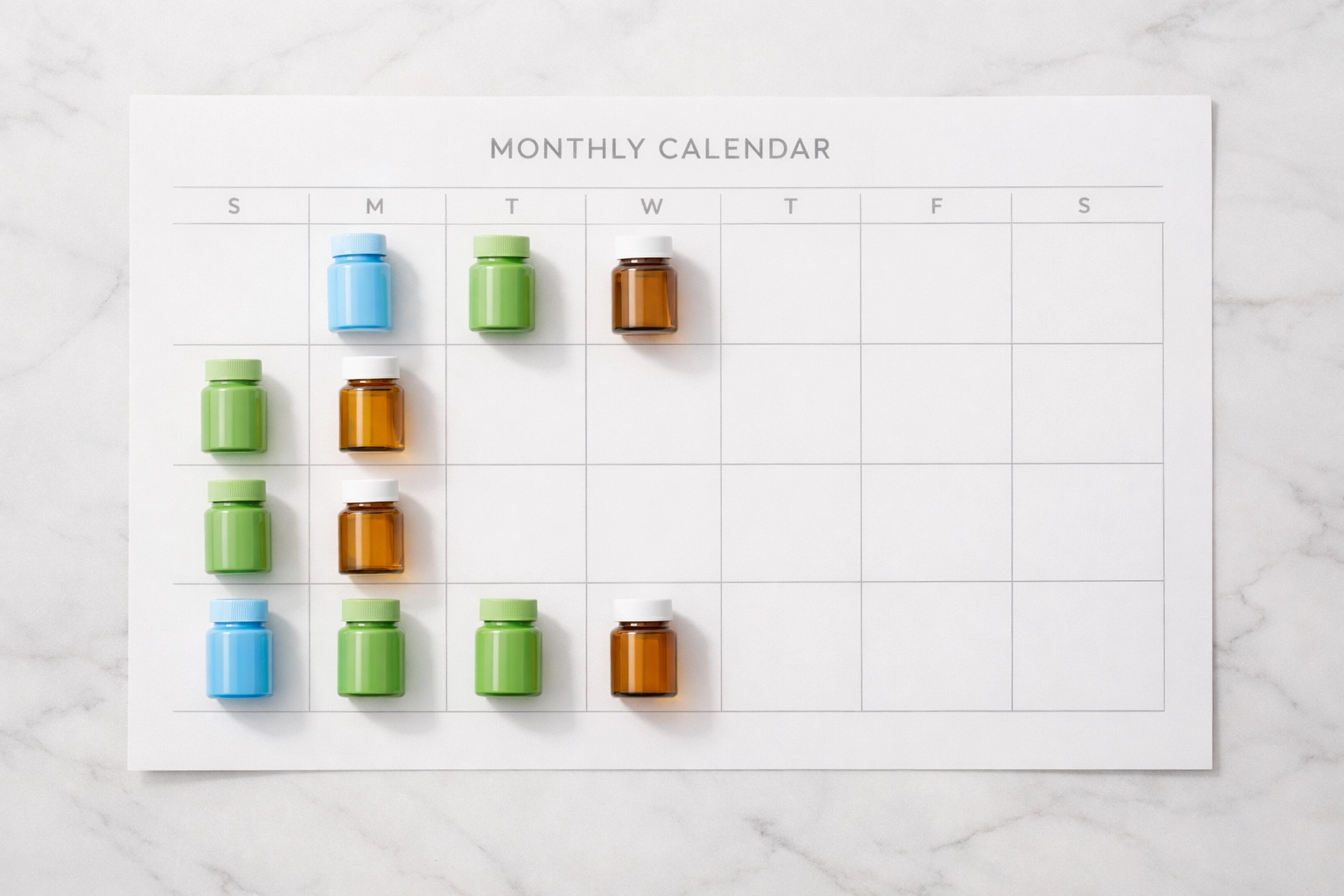
Supplement cycling means taking planned breaks from specific supplements rather than consuming them continuously. You alternate between periods of supplementation (loading or maintenance phases) and periods without them (rest or deload phases).
Unlike simply forgetting to take your vitamins, cycling is strategic. You decide in advance which supplements to rotate, how long each phase lasts, and when to take breaks. This approach applies to most: but not all: supplements in your routine.
The core principle: your body adapts to everything. When you introduce the same supplement daily without variation, your cells, enzymes, and receptors adjust to its presence. This adaptation reduces effectiveness over time, similar to how your muscles plateau when you repeat the same workout for months.
Why Supplement Cycling Prevents Long-Term Health Routine Burnout
Maintains Supplement Effectiveness
Your body builds tolerance to many supplements when used continuously. Cycling prevents this adaptation by giving your system periodic resets. When you reintroduce a supplement after a break, your body responds more effectively than it would after months of constant use.
Reduces Toxicity Risk
Fat-soluble vitamins (A, D, E, and K) accumulate in body tissues rather than flushing out like water-soluble vitamins. Continuous high-dose supplementation increases the risk of excessive buildup. Cycling these nutrients allows your body to utilize stored amounts before adding more.
Optimizes Nutrient Absorption
Some nutrients compete for absorption. Iron and calcium inhibit each other when taken simultaneously. Cycling supplements ensures you receive full benefits from each nutrient without interference. Your digestive system also benefits from periodic breaks, maintaining optimal absorption capacity.
Reduces Liver and Kidney Burden
Your liver filters every supplement you take. Continuous supplementation means constant work for this organ. Strategic breaks allow your liver and kidneys to process and clear accumulated compounds, maintaining long-term organ health.
Prevents Financial Waste
High-quality supplements cost money. Taking everything year-round: regardless of actual need: drains your budget on products that may not provide proportional benefits after initial saturation. Cycling reduces costs while maintaining results.
Minimizes Decision Fatigue
Managing multiple supplements daily: timing, dosages, food interactions, storage: creates mental burden. A cycling approach simplifies your routine by reducing the number of daily decisions. Fewer pills to track means less stress and better adherence.
Which Supplements to Cycle vs. Keep Consistent

Supplements That Benefit from Cycling
Fat-Soluble Vitamins (A, D, E, K)
- Cycle duration: 8-12 weeks on, 2-4 weeks off
- Reason: Prevents tissue accumulation and toxicity
Herbal Adaptogens (Ashwagandha, Rhodiola, Ginseng)
- Cycle duration: 6-8 weeks on, 2-3 weeks off
- Reason: Maintains receptor sensitivity and stress response effectiveness
Pre-Workout and Stimulant Supplements
- Cycle duration: 4-6 weeks on, 1-2 weeks off
- Reason: Prevents tolerance to caffeine and other stimulants
Testosterone Support Supplements
- Cycle duration: 8 weeks on, 4 weeks off
- Reason: Allows natural hormone production to maintain baseline function
Joint Support and Glucosamine
- Cycle duration: 3 months on, 1 month off
- Reason: Gives your body time to respond without continuous external input
Supplements to Keep Consistent
Creatine Research consistently shows continuous creatine supplementation maintains muscle saturation more effectively than cycling. Muscle creatine levels drop during breaks, requiring reloading when you restart. Keep this one daily at 3-5g.
Omega-3 Fish Oil Essential fatty acids require consistent intake to maintain blood levels and anti-inflammatory benefits. Your body doesn't store omega-3s long-term, making daily supplementation optimal. Check out why omega-3s support brain function year-round.
Probiotics for Ongoing Gut Health If you're managing specific digestive conditions, consistent probiotic use maintains beneficial bacterial populations. Cycling can disrupt the stability you've built, though periodic strain rotation may be beneficial.
Vitamin B Complex Water-soluble B vitamins flush out daily and require regular intake to maintain levels. Unless you're mega-dosing specific B vitamins, these don't need cycling.
The Simple Supplement Cycling Planning Framework
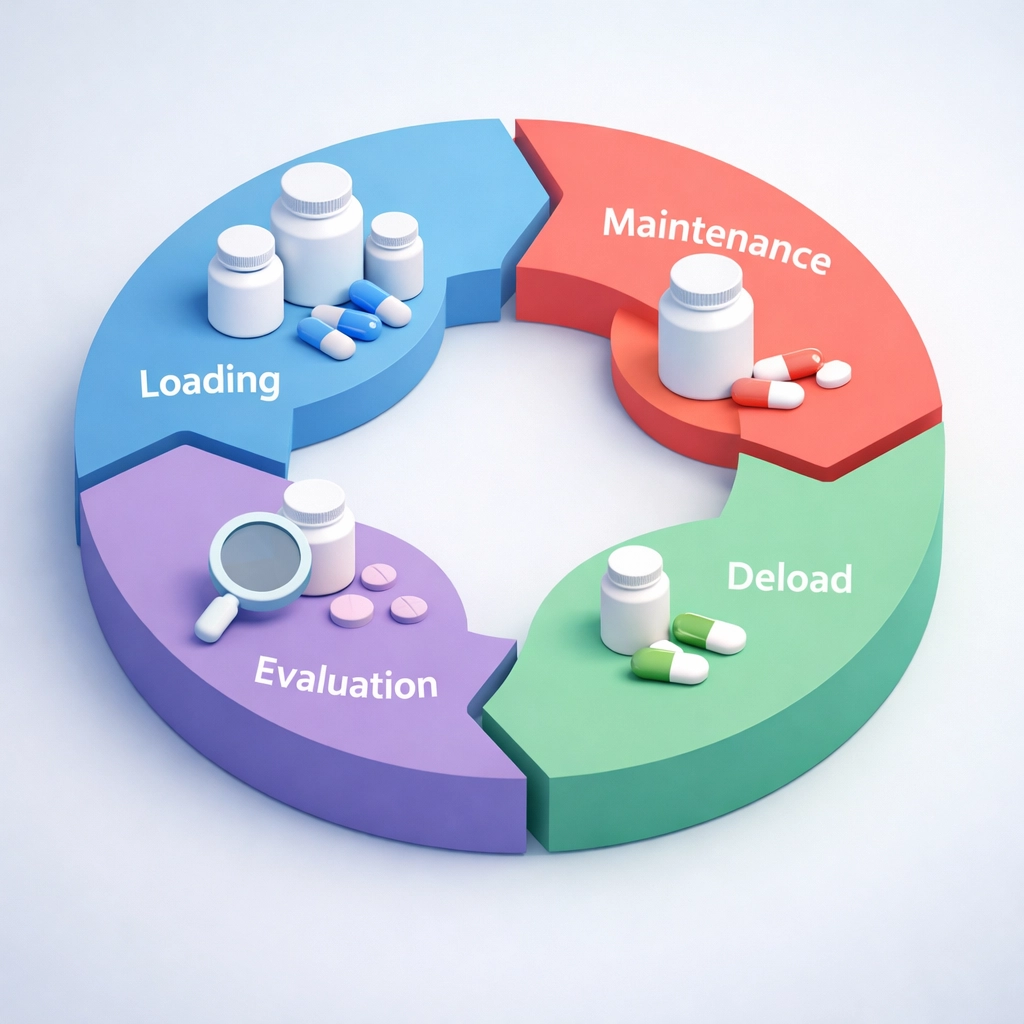
Follow this four-phase approach to structure your long-term health routine without burnout:
Phase 1: Assessment (2-4 Weeks)
Identify your baseline before starting any cycling protocol.
Action steps:
- List every supplement you currently take
- Note the dosage and frequency of each
- Record your energy levels, sleep quality, and physical performance
- Get blood work if possible to establish nutrient baseline
- Identify which supplements you've taken continuously for 6+ months
Phase 2: Categorization (1 Week)
Group supplements into cycling categories based on their properties and your goals.
Create three lists:
- Continuous supplements: Omega-3s, creatine, basic multivitamin
- Primary cycle supplements: Fat-soluble vitamins, adaptogens, performance boosters
- Secondary cycle supplements: Joint support, testosterone support, specialized nutrients
Phase 3: Implementation (12-16 Weeks)
Execute your cycling plan using this structure:
Weeks 1-8: Loading Phase
- Take all primary cycle supplements at full dosage
- Maintain continuous supplements daily
- Track how you feel weekly
Weeks 9-10: Deload Phase
- Stop primary cycle supplements completely
- Continue only continuous supplements
- Monitor for changes in energy, performance, or mood
Weeks 11-16: Maintenance Phase
- Reintroduce primary cycle supplements at 50-75% of loading dose
- Assess whether full dosage is necessary
- Plan next cycling rotation
Example Weekly Schedule:
- Monday-Friday: Full supplement routine (loading phase)
- Saturday-Sunday: Continuous supplements only
- Every 8-10 weeks: 2-week complete break from cycled supplements
Phase 4: Evaluation and Adjustment (Ongoing)
At the end of each 12-16 week cycle, evaluate results.
Ask yourself:
- Did I notice reduced effectiveness before the break?
- Did effectiveness return after reintroduction?
- Can I reduce dosages during maintenance phases?
- Are any supplements providing no noticeable benefit?
- Has my baseline health improved enough to drop certain supplements?
Adjust your next cycle based on these answers. The goal is continuous refinement toward the minimal effective dose and supplement selection.
Synchronizing Supplement Cycles with Life Phases
Your supplement needs aren't static. Align cycling with your actual demands:
High-Stress or Training Periods
- Use full loading doses of adaptogens and performance supplements
- Duration: 6-8 weeks during demanding projects or intense training blocks
Recovery or Maintenance Periods
- Reduce to continuous supplements only
- Duration: 2-4 weeks during vacations or lighter training phases
Seasonal Adjustments
- Winter: Prioritize vitamin D and immune support
- Summer: Reduce or cycle off vitamin D, focus on hydration and electrolytes
This approach prevents both physical and psychological burnout by matching supplementation intensity to actual need.
Avoiding Common Supplement Routine Planning Mistakes
Mistake 1: Cycling Everything Simultaneously Don't stop all supplements at once unless medically necessary. Stagger your cycles so you're always maintaining some supplementation while resting others.
Mistake 2: Not Tracking Baseline Metrics Without baseline data, you can't determine if cycling improves effectiveness. Track at least three measurable markers (sleep quality, workout performance, mood) throughout cycles.
Mistake 3: Ignoring Individual Response Generic cycling protocols are starting points, not rules. If you feel significantly worse during breaks from a specific supplement, that indicates dependence or genuine need: adjust accordingly.
Mistake 4: Forgetting About Food First Supplements complement diet, they don't replace it. Before adding more supplements to cycle, optimize your nutrient intake from whole foods. Consider your broader nutrition approach before expanding supplementation.
Mistake 5: Never Consulting Professionals If you take medications, have chronic health conditions, or use therapeutic doses of supplements, consult a healthcare provider before implementing cycling protocols. Drug-nutrient interactions and condition-specific needs require professional guidance.
When to Adjust Your Supplement Cycling Strategy
Modify your approach if you experience:
- Worsening symptoms during breaks: May indicate genuine deficiency requiring continuous supplementation
- No difference between on and off phases: Suggests the supplement provides minimal benefit or you're not deficient
- Negative reactions when restarting: Could indicate sensitivity developed during the break
- Improved baseline health: Allows for reduced supplementation frequency or elimination of certain supplements
Re-evaluate your entire cycling strategy every 6 months. Your health status, diet, stress levels, and physical demands change over time. Your supplement routine should adapt accordingly.
![[HERO] Supplement Cycling 101: How to Plan Your Long-Term Health Routine Without Burnout](https://cdn.marblism.com/ovhHpmXW4XH.webp)
The Sustainable Long-Term Approach
Supplement cycling works because it acknowledges a fundamental truth: more isn't always better, and consistency doesn't mean daily perpetual use. Strategic variation maintains effectiveness while preventing the physical toll on your organs, the mental burden of complex daily routines, and the financial drain of unnecessary supplementation.
Start with one or two supplements to cycle while keeping the rest consistent. Track your response. Gradually expand cycling to other appropriate supplements as you learn what works for your body. The goal is finding your minimal effective supplementation: the smallest amount that produces your desired results without burnout.
Before making significant changes to your supplement routine, especially if you manage chronic conditions or take prescription medications, consult with a healthcare provider or registered dietitian. They can help you create a cycling protocol that complements your specific health needs and goals.
Your body thrives on strategic variation. Give it planned breaks, and it will respond better in the long term than it ever did with constant supplementation.