Whether you're stepping into competitive swimming or simply want to benchmark your pool performance, understanding what constitutes a good 100m freestyle time provides valuable insight into your fitness journey. The average 100m freestyle time ranges between 1:45 and 2:15 across all age groups, but this broad range tells only part of the story.
Your swimming pace depends on multiple factors including age, gender, training background, and technique proficiency. A recreational swimmer in their 40s achieving 2:00 demonstrates solid fitness, while a competitive 25-year-old targeting under 1:30 represents advanced performance levels.
Comprehensive 100m Freestyle Times by Age and Skill Level
Understanding where you stand requires examining performance across different age brackets and swimming abilities. Here's the complete breakdown for 100m freestyle times in a 50m pool:
| Age Group | Beginner | Intermediate | Advanced |
|---|---|---|---|
| 18-24 | 2:00 - 2:30 | 1:40 - 2:00 | 1:15 - 1:40 |
| 25-34 | 2:05 - 2:40 | 1:45 - 2:05 | 1:20 - 1:45 |
| 35-44 | 2:10 - 2:50 | 1:50 - 2:10 | 1:25 - 1:50 |
| 45-54 | 2:20 - 3:00 | 1:55 - 2:20 | 1:30 - 1:55 |
| 55-64 | 2:30 - 3:20 | 2:05 - 2:30 | 1:40 - 2:05 |
| 65+ | 2:45 - 3:40+ | 2:15 - 2:45 | 1:50 - 2:15 |
For practical reference, a 40-year-old recreational swimmer achieving between 1:50 and 2:10 demonstrates solid technique and fitness. These times represent realistic goals for swimmers who train 2-3 times per week with proper instruction.
Gender Differences in Swimming Performance
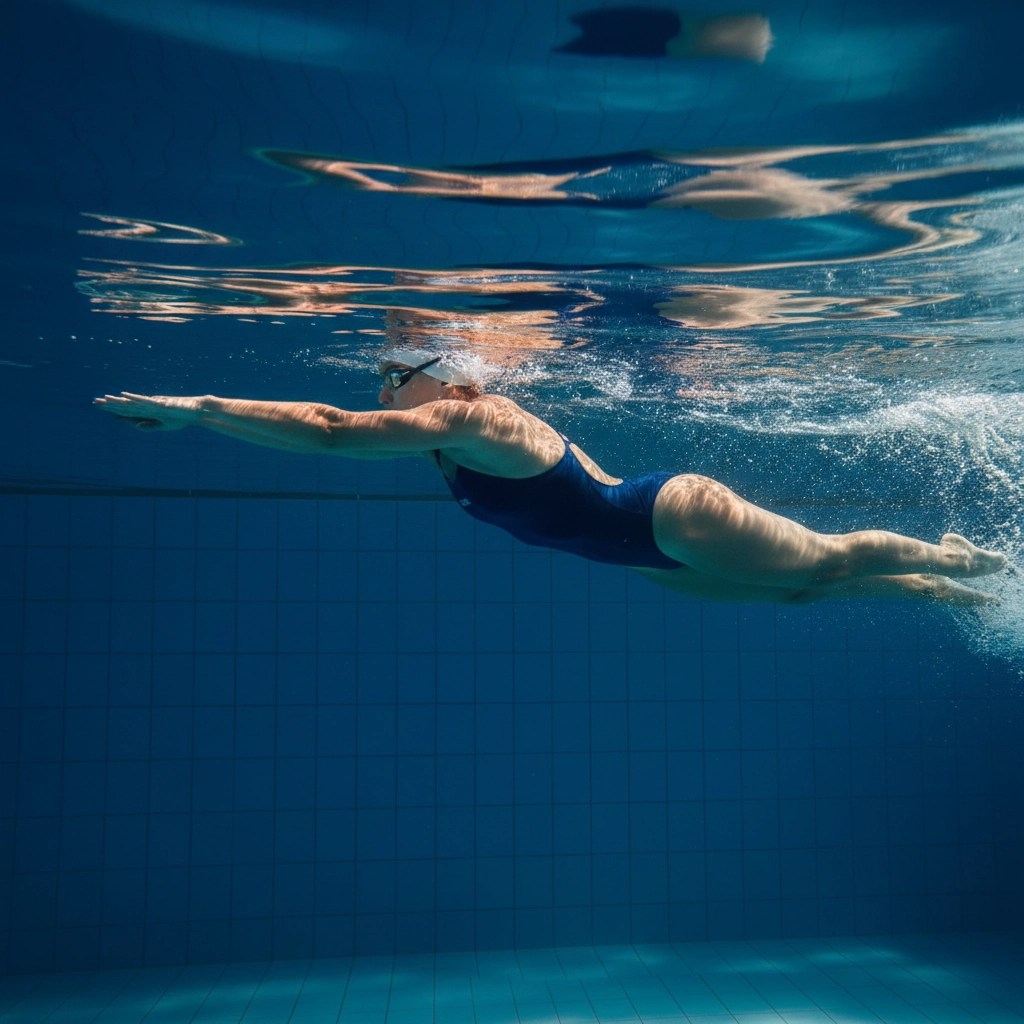
Biological differences between males and females create measurable performance gaps in competitive swimming. Males typically demonstrate faster times due to higher muscle mass, greater lung capacity, and longer limb length relative to body size.
However, these differences matter less than many assume. A trained female swimmer consistently outperforms an untrained male swimmer regardless of age group. Technique efficiency, training consistency, and stroke mechanics override raw physical advantages in recreational swimming contexts.
Masters swimming competition results provide the most accurate gender-specific benchmarks. Female swimmers typically add 8-12 seconds to male equivalent times across age groups, but individual variation remains significant.
Key Factors Affecting Your 100m Freestyle Pace
Physical Fitness Level
Cardiovascular endurance directly impacts your ability to maintain stroke rate throughout 100 metres. Poor aerobic conditioning forces swimmers to slow significantly in the final 25 metres, adding 15-30 seconds to overall time.
Muscular endurance in shoulders, core, and legs determines stroke power maintenance. Swimmers lacking specific strength often experience technique breakdown under fatigue, creating drag and reducing efficiency.
Stroke Technique Quality
Proper freestyle technique can improve times by 20-40 seconds without increasing fitness. Common technical flaws include:
- Crossing over the centreline during arm recovery
- Insufficient body rotation limiting stroke length
- Poor breathing timing disrupting rhythm
- Inadequate catch phase reducing propulsion
Training Background and Frequency
Swimmers training 2-3 times weekly show measurable improvement within 6-8 weeks. Those maintaining 4+ weekly sessions demonstrate continued progress over months and years.
Structured training incorporating technique work, endurance sets, and speed development produces faster improvement than random swimming alone.
Body Composition and Type
Lower body fat percentages improve buoyancy and reduce drag. However, extremely lean swimmers may struggle with buoyancy in longer distances.
Height and limb length provide advantages in stroke length, but shorter swimmers often demonstrate superior stroke rate capabilities.
Tracking Your Progress: Apps and Timer Strategies
Swimming-Specific Apps
MySwimPro offers comprehensive workout tracking, stroke analysis, and goal-setting features. The app provides personalised training plans based on current performance levels.
Swim.com focuses on interval timing and set tracking. Users can log workouts, monitor progress over time, and compare performances across different distances.
Garmin Connect integrates with Garmin swim watches, providing detailed analytics including stroke count, pace per length, and efficiency metrics.
Manual Timing Methods
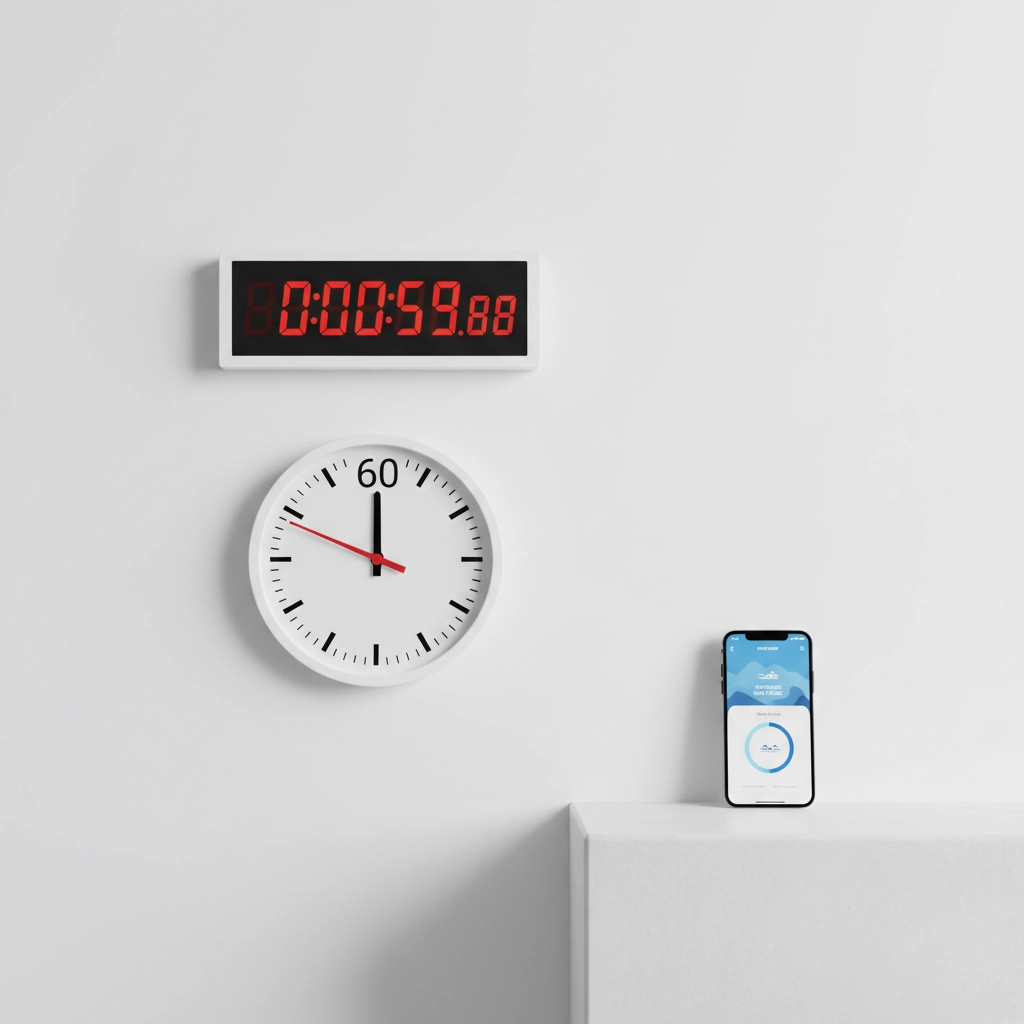
Use pace clocks available at most pools to time individual 100m efforts. Record times immediately after completion to ensure accuracy.
Smartphone stopwatch apps work effectively for basic timing. Position your phone poolside where you can easily see the display during swimming.
Partner timing provides additional motivation and accuracy. Swimming with others creates natural pacing opportunities and competitive elements.
Goal-Setting Framework
Establish baseline times through three separate 100m efforts with 2-minute rest intervals. Use the middle time as your current benchmark.
Set incremental improvement targets of 3-5 seconds per month for beginners, 1-2 seconds for intermediate swimmers. Advanced swimmers may target seasonal improvements measured in fractions of seconds.
Track weekly averages rather than single best efforts. Consistent improvement across multiple swims indicates genuine progress versus one-time performances.
Step-by-Step 100m Freestyle Improvement Plan
Week 1-2: Technique Foundation
Focus entirely on stroke mechanics without timing pressure. Practice bilateral breathing, proper catch technique, and body rotation drills.
Swim 50m repetitions at comfortable pace, concentrating on one technical element per length. Common focus points include high elbow catch, streamlined body position, and rhythmic breathing.
Week 3-4: Endurance Building
Introduce longer continuous swimming sets. Complete 200-400m efforts at sustainable pace, maintaining good technique throughout.
Add interval training with 50m repetitions. Swim each 50m at target 100m pace with 30-second rest intervals.
Week 5-6: Speed Development
Incorporate 25m sprint efforts at maximum sustainable speed. Focus on maintaining stroke technique while increasing stroke rate.
Practice race pace 100m efforts once weekly. Time these attempts to monitor improvement and identify pacing strategies.
Week 7-8: Race Simulation
Complete full 100m time trials every 3-4 days. Practice different pacing strategies: negative split, even pace, and fast start approaches.
Add competition elements like diving starts or racing against training partners to simulate meet conditions.
Frequently Asked Questions
What's a Good 100m Time for Swimmers Over 40?
Swimmers aged 40-49 should target 1:50-2:10 for solid recreational performance. Competitive masters swimmers in this age group often achieve 1:25-1:45 depending on training background.
Focus on consistent technique and injury prevention rather than aggressive time goals. Many swimmers achieve personal bests well into their 40s and 50s through improved efficiency.
How Do I Break Through Performance Plateaus?
Performance plateaus occur when current training no longer provides adequate stimulus for improvement. Address plateaus through:
Technique refinement: Video analysis often reveals subtle flaws limiting progress. Consider professional coaching for technical assessment.
Training variety: Introduce new set structures, distances, or stroke variations to challenge different energy systems.
Recovery optimization: Ensure adequate sleep, nutrition, and rest between training sessions. Overtraining frequently masquerades as plateau.
Strength training: Land-based exercises targeting swimming-specific movements often unlock pool performance gains.
How Can I Get My Kids Interested in Swimming?
Create positive pool experiences through games and fun activities rather than structured training. Children respond better to play-based learning than rigid instruction.
Set age-appropriate challenges like swimming across the pool width or completing underwater somersaults. Celebrate effort and improvement over absolute times.
Consider group lessons or swim clubs where children can socialise while learning. Peer interaction often motivates continued participation more effectively than individual instruction.
Make swimming a family activity by participating together. Children mirror parental attitudes toward physical activities and sports.
Understanding Your Swimming Journey
Your 100m freestyle time represents a snapshot of current fitness, technique, and training status. Rather than fixating on specific numbers, focus on consistent improvement and enjoyment of the swimming process.
Regular monitoring provides motivation and direction for training efforts. Whether you're targeting competitive times or simply improving personal fitness, understanding average performance standards helps establish realistic and achievable goals.
Remember that swimming improvement follows non-linear patterns. Periods of rapid progress alternate with plateaus and occasional regression. Maintain consistency in training approach while remaining patient with the improvement process.