Most people spend hours hunched over screens, creating muscle imbalances that lead to rounded shoulders, forward head posture, and back pain. The seated cable row is a gym staple for strengthening the posterior chain, but you don't need expensive equipment or a gym membership to fix these issues.
Pulling exercises like the seated cable row target your lats, rhomboids, middle traps, and biceps, muscles that directly counteract the forward slouch position. When these muscles are weak, your shoulders roll inward, your upper back rounds, and your neck juts forward, creating a cascade of postural problems.
Why Pulling Movements Are Essential for Your Health
Your body operates on a balance system. For every pushing movement you do throughout the day, typing, driving, carrying groceries, you need corresponding pulling movements to maintain equilibrium. Without this balance, certain muscles become overactive and tight (chest, front deltoids) while others become weak and lengthened (upper back, rear deltoids).
This imbalance doesn't just affect appearance. It contributes to:
- Shoulder impingement and rotator cuff injuries
- Neck pain and tension headaches
- Reduced breathing capacity from compressed chest cavity
- Lower back pain from compensatory movement patterns
- Decreased athletic performance and everyday function
The seated cable row specifically targets the muscles responsible for retracting your shoulder blades and maintaining upright posture. But you can achieve the same benefits at home with strategic exercise selection.
True No-Equipment Alternatives
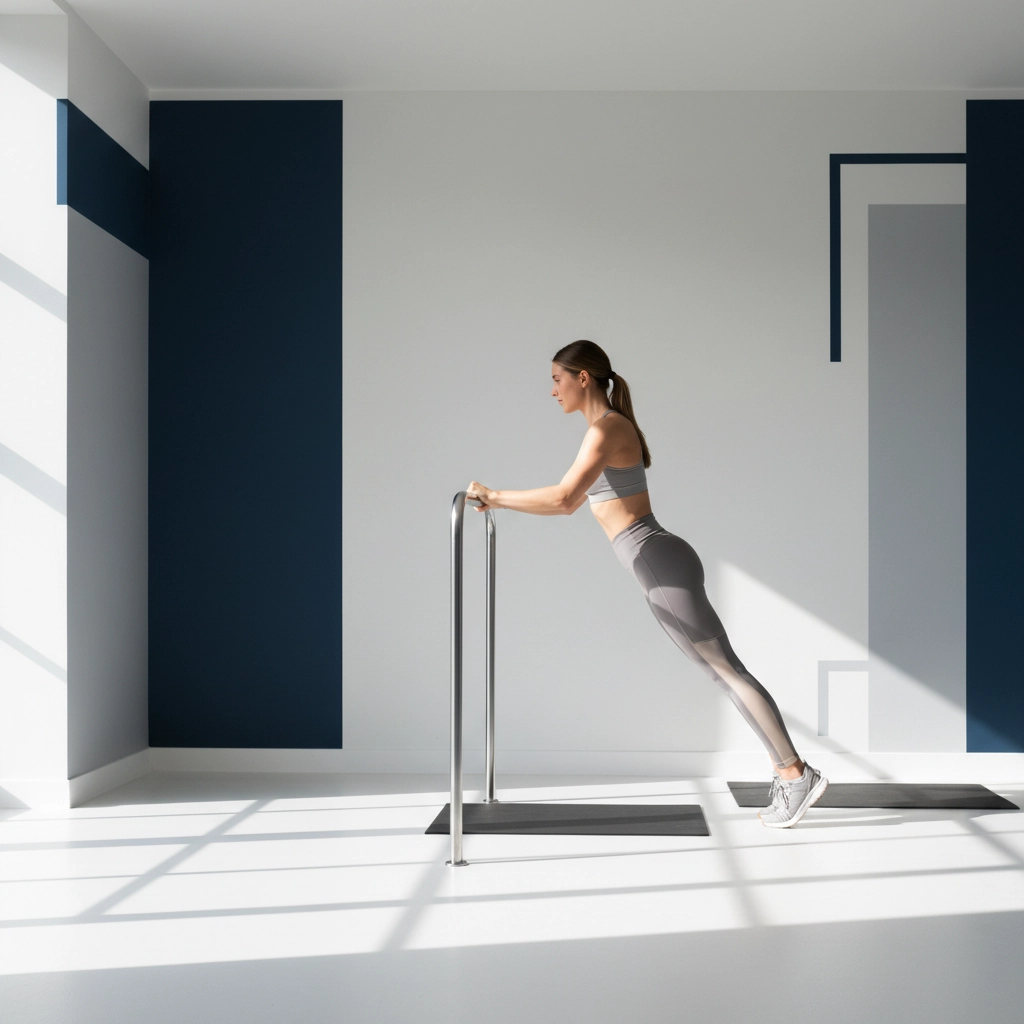
Inverted Row (Bodyweight Row)
The inverted row stands as the gold standard for equipment-free pulling exercises. You'll need access to a sturdy horizontal bar, table edge, or similar stable surface at roughly waist height.
Setup:
- Position yourself under the bar with feet extended forward
- Grip the bar with hands slightly wider than shoulder-width
- Keep your body in a straight line from head to heels
- Start with arms fully extended
Movement:
- Pull your chest toward the bar by squeezing your shoulder blades together
- Keep your core engaged to maintain the straight body position
- Lower yourself back to starting position with control
- Repeat for 8-15 repetitions
The inverted row activates the same muscle groups as seated cable rows while potentially providing greater lat activation. Since you're supporting your own bodyweight, it also improves grip strength and core stability.

Reverse Snow Angels
This floor-based exercise requires no equipment and effectively targets the middle traps and rhomboids.
Setup:
- Lie face down on the floor with arms extended overhead
- Keep your forehead down and core engaged
- Arms should be straight with thumbs pointing up
Movement:
- Sweep your arms down and back in a wide arc
- Focus on squeezing your shoulder blades together
- Return arms to starting position with control
- Perform 12-20 repetitions
Wall Handstand Push-Away
This exercise targets the upper back while improving shoulder mobility.
Setup:
- Stand arm's length from a wall
- Place palms flat against the wall at shoulder height
- Step back until arms are extended
Movement:
- Push your body away from the wall by retracting your shoulder blades
- Allow your chest to move toward the wall
- Push back to starting position
- Perform 10-15 repetitions
Minimal Equipment Home Solutions
Resistance Band Door Anchor System
A resistance band with door anchor creates the most accurate replication of seated cable rows at home.

Setup:
- Attach door anchor at knee height when seated
- Sit facing the door with knees bent, heels on ground
- Adjust distance from door to create appropriate tension
- Grip band with both hands, thumbs up
Movement:
- Pull the band to your lower chest/upper abdomen
- Focus on initiating the movement with your shoulder blades
- Keep your spine neutral throughout the movement
- Control the return to starting position
- Perform 10-15 repetitions
Progression Tips:
- Move farther from the anchor point to increase tension
- Use multiple bands for added resistance
- Perform single-arm variations for unilateral strength
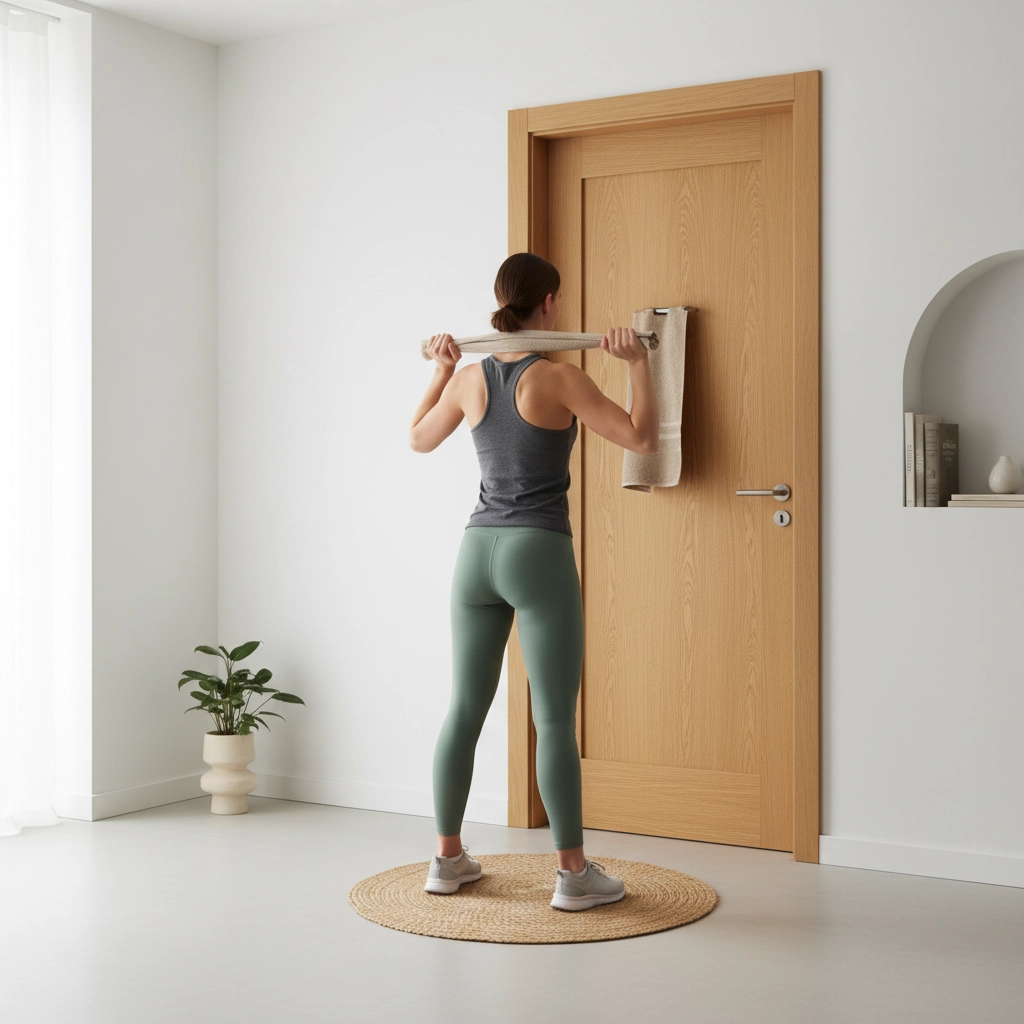
Towel Door Rows
A simple towel and sturdy door handle create an effective pulling exercise.
Setup:
- Loop a towel through a closed door handle
- Hold both ends of the towel
- Lean back until arms are extended and towel is taut
- Keep feet planted firmly on the ground
Movement:
- Pull yourself toward the door by squeezing shoulder blades
- Keep your body in a straight line
- Lower yourself back with control
- Adjust difficulty by changing foot position
Technique Tips for Maximum Effectiveness
Proper Shoulder Blade Movement
The key to effective pulling exercises lies in proper scapular (shoulder blade) mechanics. Before moving your arms, initiate each repetition by:
- Depressing your shoulder blades (pulling them down)
- Retracting your shoulder blades (squeezing them together)
- Then pulling with your arms
This sequence ensures your middle traps and rhomboids do the primary work rather than your biceps dominating the movement.

Spine Alignment
Maintain a neutral spine throughout all pulling exercises. Avoid:
- Excessive arching of the lower back
- Rounding the upper back
- Jutting the head forward
Think about creating a straight line from your head to your tailbone during bodyweight exercises.
Breathing Pattern
Exhale during the pulling phase (concentric portion) and inhale during the lowering phase (eccentric portion). This breathing pattern helps maintain core stability and provides oxygen to working muscles.
Progressive Overload Strategies
Bodyweight Progressions
Beginner: Start with knees bent during inverted rows Intermediate: Straighten legs and elevate feet on a low surface Advanced: Add a weighted backpack or perform single-arm variations
Resistance Band Progressions
Week 1-2: Focus on form with moderate tension Week 3-4: Increase repetitions to 15-20 Week 5-6: Add second band or move farther from anchor Week 7-8: Incorporate tempo variations (slow eccentric)
Volume Progression
Start with 2 sets of 8-10 repetitions three times per week. Gradually increase to 3-4 sets of 12-15 repetitions as strength improves.
Injury Prevention and Safety Guidelines
Common Mistakes to Avoid
- Using momentum: Perform all movements with controlled tempo
- Neglecting the eccentric: The lowering phase builds strength and prevents injury
- Ignoring pain: Stop immediately if you experience sharp or shooting pain
- Poor grip: Ensure secure grip on all equipment before beginning
Pre-Exercise Preparation
Warm up with arm circles, shoulder blade squeezes, and light stretching for 5-10 minutes before beginning your workout.
When to Modify
If you experience shoulder or back discomfort:
- Reduce range of motion
- Decrease resistance or difficulty
- Focus on perfect form over repetition count
- Consult a healthcare provider if pain persists
Creating Your Home Back Workout
Combine these exercises into an effective routine:
Beginner Program (3x per week):
- Inverted rows: 2 sets of 8-10
- Reverse snow angels: 2 sets of 12-15
- Wall handstand push-away: 2 sets of 10-12
Intermediate Program (3-4x per week):
- Resistance band rows: 3 sets of 12-15
- Single-arm inverted rows: 2 sets of 6-8 each arm
- Towel door rows: 2 sets of 10-12
- Reverse snow angels: 3 sets of 15-20
Advanced Program (4-5x per week):
- Weighted inverted rows: 4 sets of 8-10
- Single-arm resistance band rows: 3 sets of 10-12 each
- Feet-elevated inverted rows: 3 sets of 6-8
- Tempo reverse snow angels: 3 sets of 12 (3-second holds)
Frequently Asked Questions
Q: How often should I do pulling exercises? A: Aim for 3-4 times per week, allowing at least one day of rest between sessions for muscle recovery.
Q: Can these exercises replace gym equipment entirely? A: For general fitness and posture improvement, yes. For maximum muscle building, you'll eventually need progressive overload through added weight.
Q: What if I have shoulder problems? A: Start with limited range of motion and consult a physical therapist. Focus on gentle movements that don't cause pain.
Q: How long before I see results? A: You may notice improved posture within 2-3 weeks. Significant strength gains typically occur after 6-8 weeks of consistent training.
Q: Are these exercises suitable for beginners? A: Yes, start with the easiest variations and progress gradually. Quality of movement always trumps quantity.
The key to success lies in consistency and proper form. Start with exercises appropriate for your current fitness level, focus on quality over quantity, and gradually progress as your strength improves. Your posture: and your back( will thank you.)