

Starting strength training without prior experience can feel overwhelming, but the fundamentals are straightforward. You don't need expensive equipment or a gym membership to begin building muscle and strength. Bodyweight exercises, basic equipment, and consistent practice form the foundation of effective strength training for beginners.
The key to success lies in starting small, focusing on proper form, and gradually increasing intensity over time. This approach minimises injury risk while maximising long-term results.
Getting Started: Foundation Principles
Begin with bodyweight exercises before adding external weights. Your body provides natural resistance that's perfectly calibrated to your current strength level. Push-ups, squats, lunges, and planks require zero equipment while targeting all major muscle groups.
Start with 2-3 training sessions per week with at least one day of rest between workouts. Your muscles grow during recovery periods, not during the actual workout. Monday, Wednesday, Friday creates an ideal schedule for beginners.
Warm up for 5-10 minutes before each session. Light cardio like brisk walking or dynamic stretches prepare your muscles and joints for exercise. This reduces injury risk and improves performance.
Focus on compound movements that work multiple muscle groups simultaneously. These exercises provide maximum benefit for your time investment and build functional strength you'll use in daily activities.
Essential Beginner Exercises
Upper Body Foundations
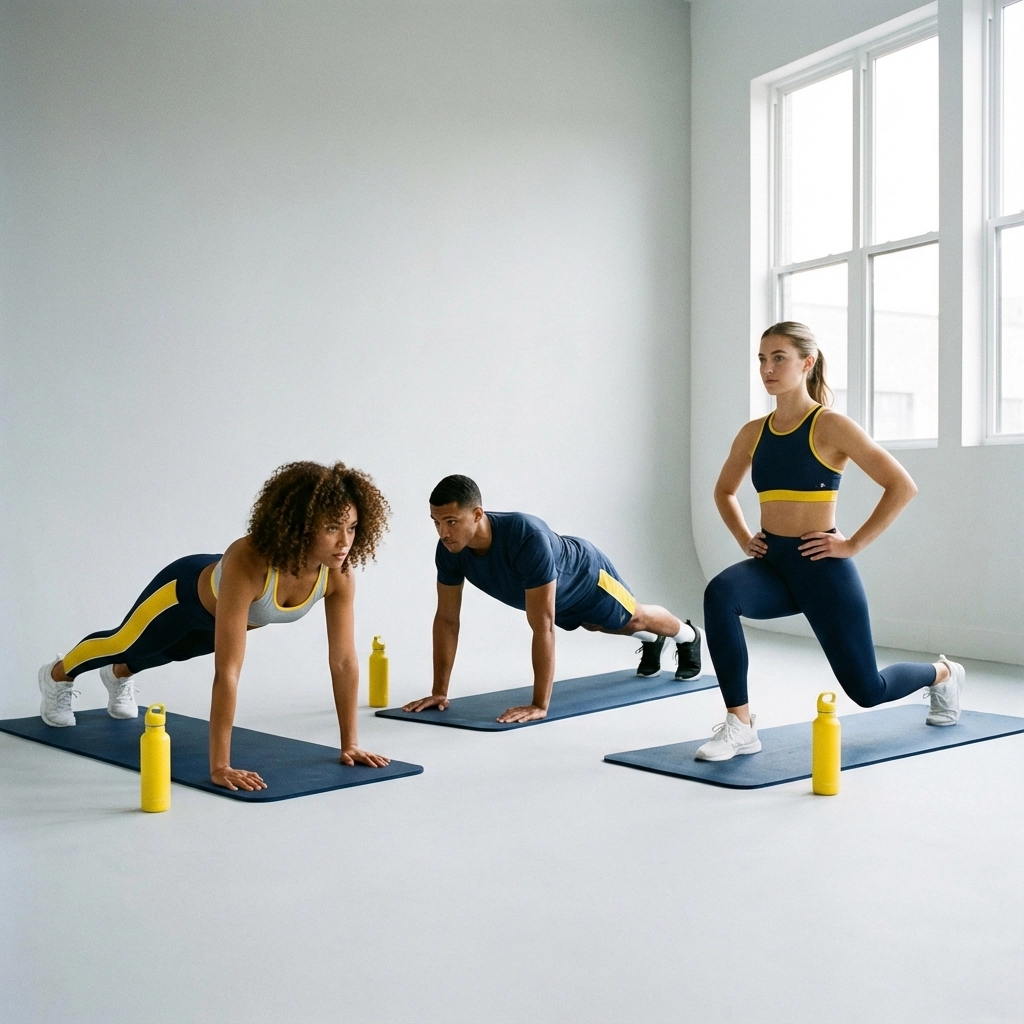
Push-ups target your chest, shoulders, triceps, and core. Start in a plank position with hands slightly wider than shoulder-width. Lower your chest toward the floor by bending your elbows, keeping your body in a straight line. Push back to starting position.
If standard push-ups prove challenging, begin with:
- Wall push-ups: Stand arm's length from a wall and push against it
- Knee push-ups: Drop to your knees while maintaining proper upper body form
- Incline push-ups: Place hands on an elevated surface like a bench or step
Bent-over rows strengthen your back and biceps. Using dumbbells or water bottles, hinge forward at your hips while keeping your back straight. Pull the weights toward your ribcage, squeezing your shoulder blades together. Lower with control.
Lower Body Essentials
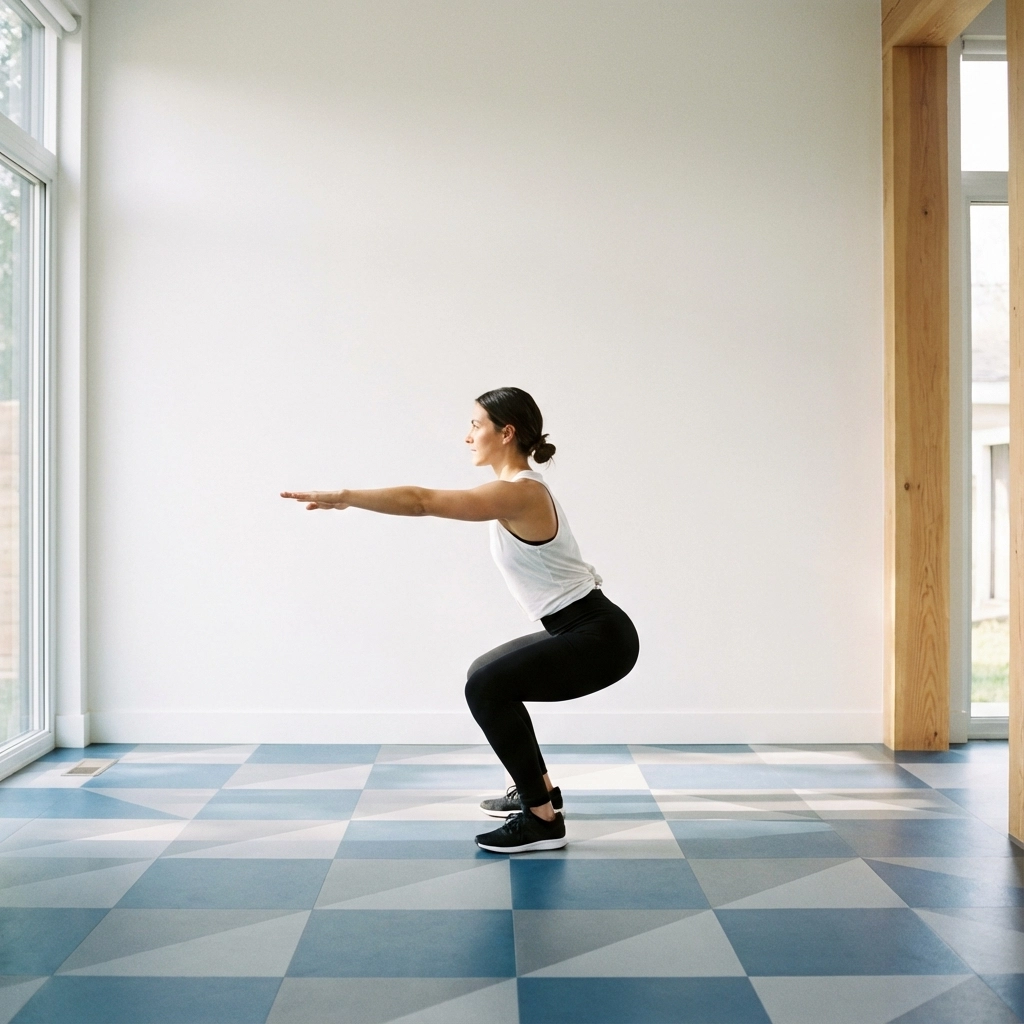
Bodyweight squats work your quadriceps, hamstrings, glutes, and core. Stand with feet shoulder-width apart. Lower as if sitting in a chair, keeping your chest up and knees tracking over your toes. Descend until thighs are parallel to the floor, then drive through your heels to stand.
Lunges target similar muscles while improving balance and coordination. Step forward with one leg, lowering your hips until both knees bend at 90 degrees. Your front knee should align over your ankle. Push back to starting position and repeat on the other side.
Core Development
Planks build core strength and stability. Start in a push-up position, then lower to your forearms. Keep your body straight from head to heels, engaging your core muscles. Hold for 20-30 seconds initially, gradually increasing duration.
Glute bridges strengthen your posterior chain. Lie on your back with knees bent and feet flat on the floor. Lift your hips by squeezing your glutes, creating a straight line from knees to shoulders. Hold briefly, then lower with control.
Training Structure and Progression
Sets and Repetitions
Begin with 2-3 sets of 8-12 repetitions for each exercise. This rep range builds both strength and muscle endurance. Rest 60-90 seconds between sets to allow partial recovery without losing workout momentum.
As exercises become easier, progress by:
- Adding 2-3 repetitions per set
- Increasing to 3-4 sets
- Advancing to more challenging exercise variations
- Adding external weight when bodyweight becomes insufficient
Weekly Programming
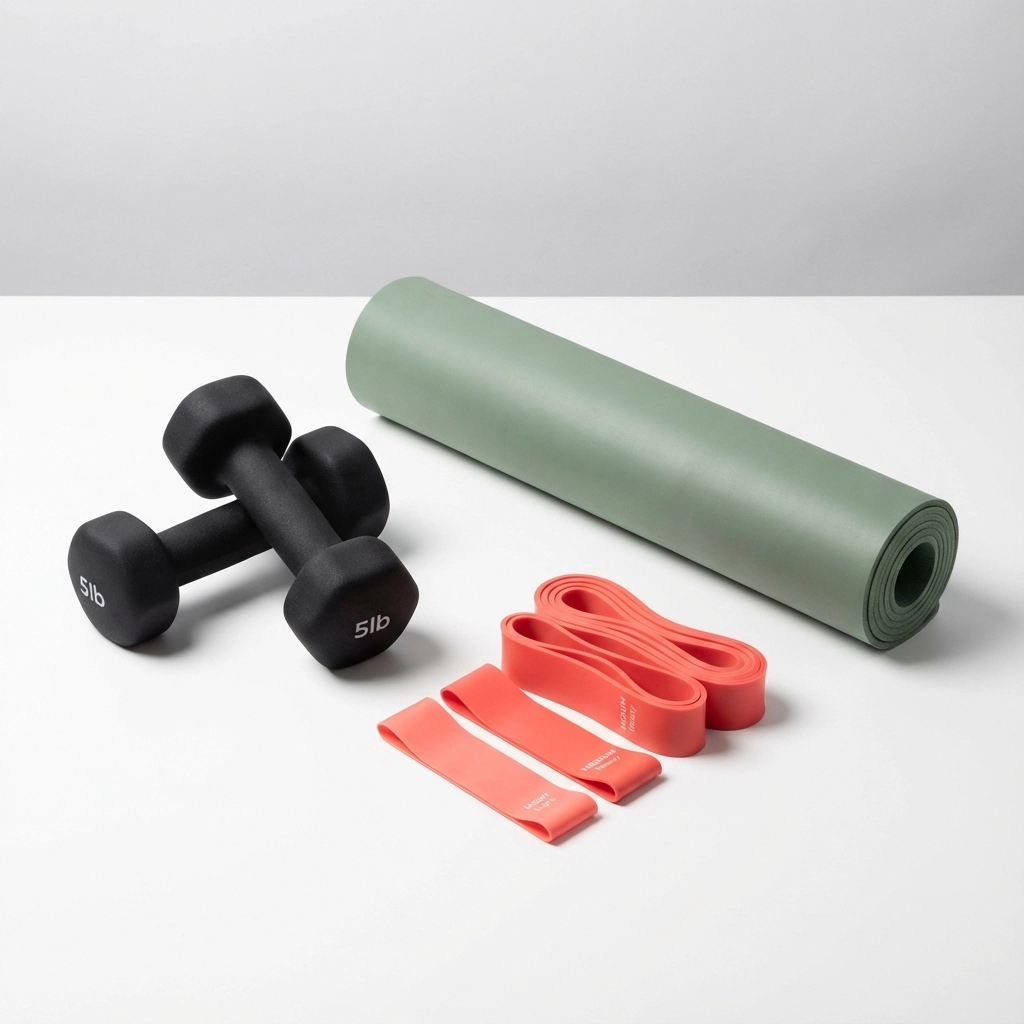
Week 1-2: Master basic movements with bodyweight only Week 3-4: Increase repetitions and add a third set Week 5-6: Introduce light weights or resistance bands Week 7-8: Continue progressive overload with heavier resistance
Sample Beginner Workout
Full-Body Routine (3x per week)
- Warm-up: 5-10 minutes light cardio
- Squats: 2-3 sets of 8-12 reps
- Push-ups: 2-3 sets of 8-12 reps
- Bent-over rows: 2-3 sets of 8-12 reps
- Lunges: 2-3 sets of 8-12 reps per leg
- Planks: 2-3 sets of 20-30 seconds
- Glute bridges: 2-3 sets of 12-15 reps
- Cool-down: 5 minutes stretching
Complete this entire circuit in 30-45 minutes. Focus on quality over quantity: proper form trumps completing extra repetitions.
Progressive Overload Principles
Progressive overload drives strength gains by gradually increasing training demands. Without this principle, your body adapts to current stress levels and stops improving.
Methods to increase difficulty:
- Add weight: Use dumbbells, resistance bands, or weighted vests
- Increase volume: Add more sets or repetitions
- Reduce rest periods: Decrease recovery time between sets
- Advance exercise complexity: Progress to more challenging variations
- Increase training frequency: Add extra training days when recovered
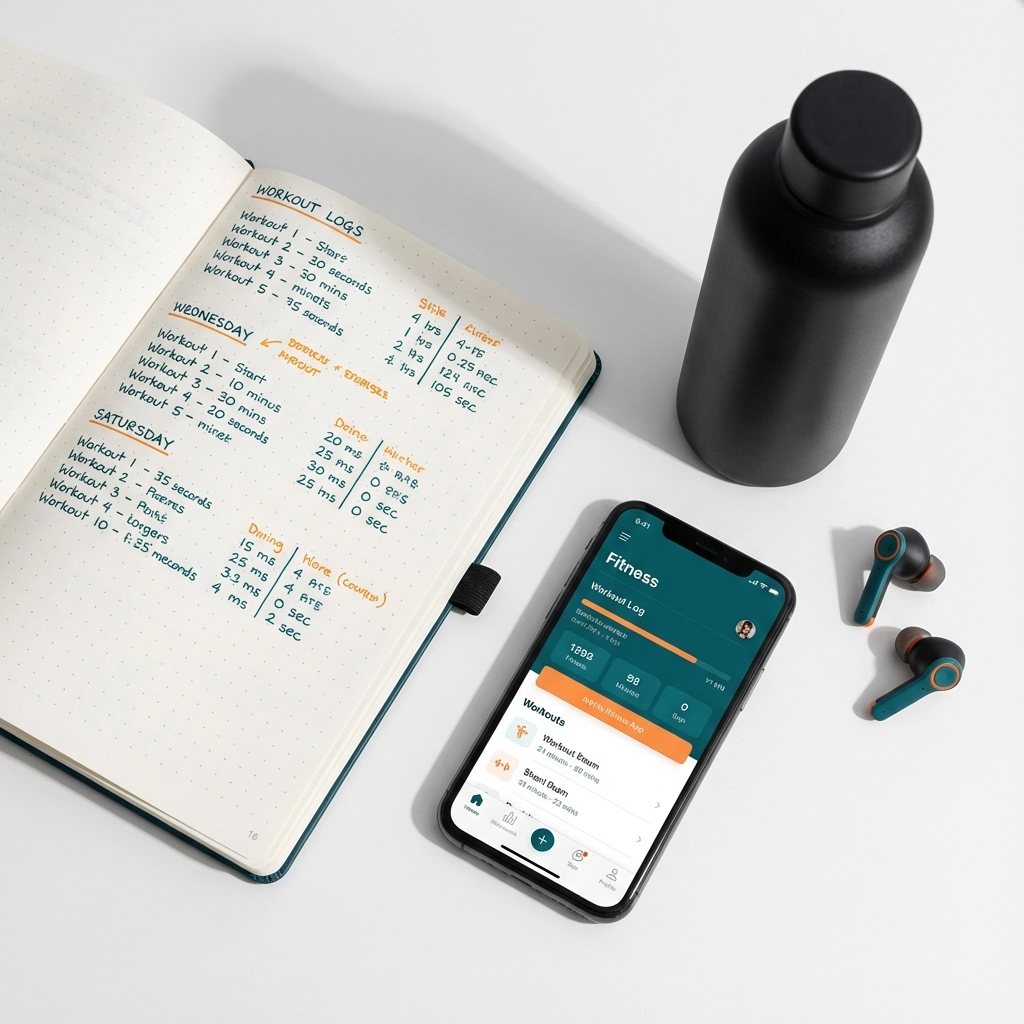
Track your workouts in a notebook or smartphone app. Record exercises, sets, reps, and weights used. This data helps you make informed progression decisions.
Mindset and Consistency Tips
Expect gradual progress. Strength gains occur over weeks and months, not days. Celebrate small victories like completing an extra repetition or holding a plank five seconds longer.
Prioritise consistency over intensity. Three moderate workouts per week produce better results than one intense session followed by a week off. Build the habit first, then increase intensity.
Listen to your body. Muscle soreness is normal, but sharp pain indicates potential injury. Rest when genuinely fatigued rather than pushing through poor form.
Set realistic goals. Focus on process goals like "exercise three times this week" rather than outcome goals like "lose 10 pounds this month." Process goals remain within your control.
Supplement Support for Beginners
While whole foods should provide most nutrients, specific supplements can support your strength training journey.
Protein powder helps meet daily protein requirements for muscle recovery and growth. Aim for 0.8-1 gram of protein per pound of body weight daily. Whey or plant-based protein powders offer convenient options when whole food sources fall short.
Creatine monohydrate enhances strength and power output during high-intensity exercise. Take 3-5 grams daily, with or without food. This well-researched supplement is particularly beneficial for strength training.
Vitamin D3 and K2 support bone health and muscle function. Many people have insufficient vitamin D levels, especially during winter months. A quality Vitamin D3 4000IU with K2 supplement can address this deficiency.
For comprehensive nutritional support, explore natural bodybuilding supplements that complement your training efforts.
Common Beginner Mistakes to Avoid
Doing too much too soon leads to burnout or injury. Start conservatively and build intensity gradually. Your enthusiasm will be better served by consistent moderate training than sporadic intense sessions.
Neglecting proper form reduces exercise effectiveness and increases injury risk. Master bodyweight versions before adding external resistance. Consider working with a qualified trainer for initial instruction.
Skipping warm-ups and cool-downs saves time short-term but increases injury risk long-term. These components are essential parts of effective training, not optional additions.
Comparing yourself to others undermines motivation and leads to unrealistic expectations. Focus on your own progress rather than others' achievements. Everyone starts at different fitness levels.
Inconsistent training produces minimal results. Three consistent weeks of moderate training surpass one week of intense training followed by two weeks off.
Getting Started This Week
Choose three non-consecutive days this week for your first workouts. Monday, Wednesday, and Friday work well for most schedules. Prepare by:
- Clearing 45 minutes for each session
- Setting up a dedicated workout space
- Gathering basic equipment (water bottle, towel, exercise mat)
- Planning your warm-up and cool-down routines
Start with the sample workout provided, focusing on learning proper form for each exercise. Don't worry about challenging yourself intensely: building the habit takes priority over immediate results.

Remember that every expert was once a beginner. Your first workout won't be perfect, and that's completely normal. Consistency, gradual progression, and proper form will build the strength and confidence you need for long-term success. Take that first step today, and you'll be amazed at what you can achieve in just a few months of dedicated practice.











