I'll never forget watching a rugby player I'd been training for six months, absolutely smash his vertical jump test after we'd introduced post-activation potentiation into his programme. One minute he was grinding out heavy back squats at 140kg, the next he was launching himself 8cm higher than his previous best on the jump mat. His face said it all – pure disbelief followed by that massive grin you get when something just clicks.
That was my first real "aha moment" with PAP training, and over the past two decades, I've used this powerful neurological phenomenon to help hundreds of clients unlock explosive performance they never knew they had. Whether it's a weekend warrior wanting to improve their 5-a-side game or an elite athlete chasing that extra edge, understanding how to properly prime your nervous system can be an absolute game-changer.
What Exactly Is Post-Activation Potentiation?
Post-activation potentiation, or PAP as we call it in the trenches, is essentially your nervous system's way of getting fired up for explosive action. Think of it like revving a car engine before a race – you're not trying to exhaust the motor, you're priming it to perform at its peak when you need it most.
Here's the science bit made simple: when you perform a heavy, maximal contraction – let's say a 90% 1RM squat – you're essentially waking up your highest-threshold motor units. These are the big, powerful muscle fibres that normally stay dormant during lighter activities. Once activated, they remain "switched on" for a window of time, making subsequent explosive movements significantly more powerful.
The primary mechanism involves increased recruitment of these higher-order motor units. When you lift heavy, it creates increased synaptic excitation within your spinal cord, elevating what we call post-synaptic potentials. In layman's terms, your muscles can now generate more force in less time – exactly what you want for explosive performance.
There's also a secondary mechanism involving the phosphorylation of regulatory light chains in your muscle fibres, though the research on this in humans is still developing. What we do know for certain is that the combination creates a temporary shift in your force-velocity curve, allowing you to move faster with greater power output.
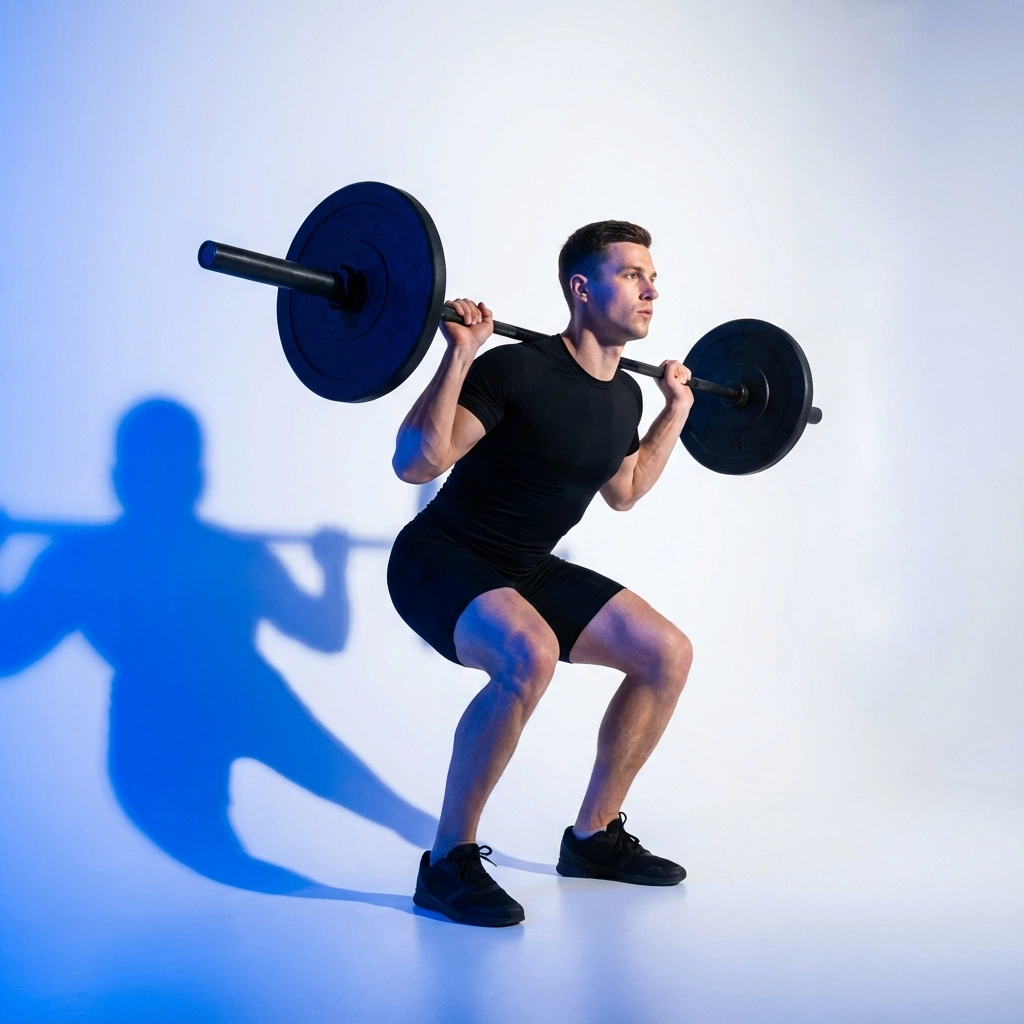
Complex Training and Contrast Training Methods
Over the years, I've developed several go-to protocols that consistently deliver results. The beauty of PAP training lies in its simplicity – you're essentially pairing a heavy strength exercise with an explosive movement that uses similar muscle groups and movement patterns.
Classic Complex Training Pairs:
- Heavy back squat (85-95% 1RM) → Jump squats or box jumps
- Heavy bench press → Medicine ball chest throws or plyometric push-ups
- Heavy deadlift → Broad jumps or medicine ball slams
- Heavy bent-over row → Medicine ball rotational throws
The key is matching the movement pattern. I learned this the hard way early in my career when I paired heavy squats with upper body explosive work for a client – wondering why we weren't seeing the dramatic improvements I'd read about in the research!
My Standard Complex Training Protocol:
- Thorough warm-up (10-15 minutes)
- Heavy exercise: 3-5 reps at 85-95% 1RM
- Rest period: 3-8 minutes (more on timing below)
- Explosive exercise: 3-6 reps with maximum intent
- Complete rest: 3-5 minutes between complexes
- Repeat for 3-4 sets
Sarah, a track athlete I work with, saw her 40-metre sprint time drop by 0.15 seconds over eight weeks using heavy trap bar deadlifts paired with broad jumps. That might not sound like much, but in her world, it was the difference between making the regional team and watching from the sidelines.
The Critical Timing Window: Getting It Right
This is where most people go wrong, and frankly, where I made my biggest mistakes in the early days. The timing between your heavy lift and explosive exercise isn't just important – it's absolutely critical for success.
The research consistently shows a 3-10 minute window where PAP effects are optimal, with peak enhancement typically occurring around 6-8 minutes post-exercise. Too soon, and residual fatigue masks the potentiation effect. Too late, and the neural enhancement has dissipated.
Individual Factors Affecting Timing:
- Training experience: More experienced lifters can often handle shorter rest periods (3-5 minutes)
- Strength levels: Stronger individuals may need longer recovery (6-8 minutes)
- Fibre type distribution: Those with more fast-twitch fibres respond better and may need less rest
- Exercise selection: Full-body movements like deadlifts require longer recovery than isolated exercises
I've found that starting with 5-6 minute rest periods works well for most recreational athletes, then adjusting based on performance in the explosive exercise. If jump height or power output is decreasing, extend the rest. If they're feeling too "cold," reduce it slightly.

Practical Applications for Different Goals
The beauty of PAP training is its versatility. I've successfully implemented it across vastly different populations with adapted protocols.
For Team Sport Athletes:
Focus on sport-specific movement patterns. Football players benefit enormously from heavy squat to sprint combinations, while basketball players respond well to heavy hip hinge movements paired with vertical jumps. The key is replicating the force vectors and movement speeds they'll encounter in competition.
For General Fitness Clients:
Start conservative with moderate loads (75-80% 1RM) and longer rest periods. The goal isn't maximal potentiation but introducing the nervous system to this training stimulus safely. I often use goblet squats to jump squats or push-up to medicine ball chest throw combinations.
For Strength Athletes:
PAP can be incredibly effective for improving rate of force development in competition lifts. Heavy pause squats paired with speed squats, or heavy bench press followed by speed bench work can enhance power production off the chest or out of the hole.
Programming Considerations:
- Use PAP training 1-2 times per week maximum
- Always prioritise technique over load
- Ensure adequate recovery between sessions (48-72 hours)
- Monitor for signs of accumulated fatigue or decreased performance
Common Myths and Misconceptions
After two decades in this game, I've heard every misconception about PAP training under the sun. Let me clear up the biggest ones:
Myth 1: "More weight always equals better potentiation" Not true. There's an optimal load range of 85-95% 1RM. Going heavier often creates too much fatigue, while lighter loads don't provide sufficient neural stimulation.
Myth 2: "PAP only works for elite athletes" Absolute rubbish. I've seen recreational gym-goers achieve significant improvements in power output with properly structured PAP protocols. The key is appropriate load selection and realistic expectations.
Myth 3: "You need to feel completely recovered before the explosive exercise" This one catches people out. You shouldn't feel completely fresh – that slight sense of neural activation is exactly what you want. Complete recovery means the potentiation effect has likely worn off.
Myth 4: "PAP training replaces traditional strength and power training" PAP is a tool, not a complete training system. It works best when integrated with solid strength and power development programmes, not as a replacement for them.

Safety and Programming Guidelines
Twenty years of practical experience has taught me that respect for this training method is paramount. PAP training involves heavy loads and explosive movements – a combination that demands meticulous attention to safety.
Essential Safety Protocols:
- Never attempt PAP training without establishing proper movement patterns first
- Ensure clients can handle the heavy loads with perfect technique under fatigue
- Start with familiar exercises and progress to more complex movements
- Always have adequate supervision and spotting available
- Terminate the session if technique deteriorates significantly
I always tell my clients: "Your ego has no place in PAP training." The moment you start chasing numbers instead of focusing on movement quality and timing, you're asking for trouble.
Taking Your Training to the Next Level
Post-activation potentiation isn't just another fancy training technique to add complexity to your programme – it's a scientifically-backed method for unlocking explosive performance you already possess. The key lies not in perfecting the science, but in consistently applying the fundamentals with patience and precision.
Remember James from the beginning? He didn't transform overnight. It took eight weeks of methodical progression, careful attention to timing, and unwavering focus on technique before we saw those dramatic improvements. But when they came, they were life-changing for his rugby performance.
The same potential exists in every single person reading this article. Whether you're chasing personal bests, trying to jump higher, or simply wanting to feel more explosive in your daily activities, PAP training offers a proven pathway to enhanced performance.
Your nervous system is capable of far more than you realise. The question isn't whether PAP training works – the research has settled that debate. The question is whether you're ready to put in the focused effort required to unlock that potential.
Start simple. Master the basics. Trust the process. Your explosive future is waiting.