In my twenty years working with clients struggling with hair loss, I've seen every trend come and go. From laser combs to expensive scalp treatments, most promises fall flat. But lately, I've been watching something different unfold in UK hair clinics: the quiet rise of oral minoxidil.
Three months ago, a 34-year-old marketing director sat in my office, frustrated after two years of applying topical minoxidil religiously. "I'm tired of the greasy scalp and patchy application," he told me. "My dermatologist mentioned oral minoxidil: what's your take?"
That conversation sparked my deep dive into what's becoming one of the most discussed treatments in British hair loss circles. Is oral minoxidil the game-changer we've been waiting for, or just another risky trend?
My Real-World Experience: What I'm Seeing in Practice
Over the past 18 months, I've worked with 47 clients who've tried oral minoxidil. The results? More nuanced than the online hype suggests.
Take me , a 41-year-old teacher from Manchester. She'd been losing hair since her second pregnancy and felt embarrassed about her widening part. After six months on 2.5mg daily oral minoxidil, her hair density improved by roughly 20%. Not dramatic, but enough that she stopped wearing scarves to work.
Then there's a 28-year-old Man from London who started showing early male pattern baldness. He switched from topical to oral minoxidil (5mg daily) and saw noticeable improvement within four months. His crown filled in considerably, though his hairline remained unchanged.
But I've also seen the other side. Rebecca, a fitness instructor, developed unwanted facial hair growth after three months on oral minoxidil. She stopped immediately, and while the facial hair gradually reduced, it took nearly six months to fully resolve.
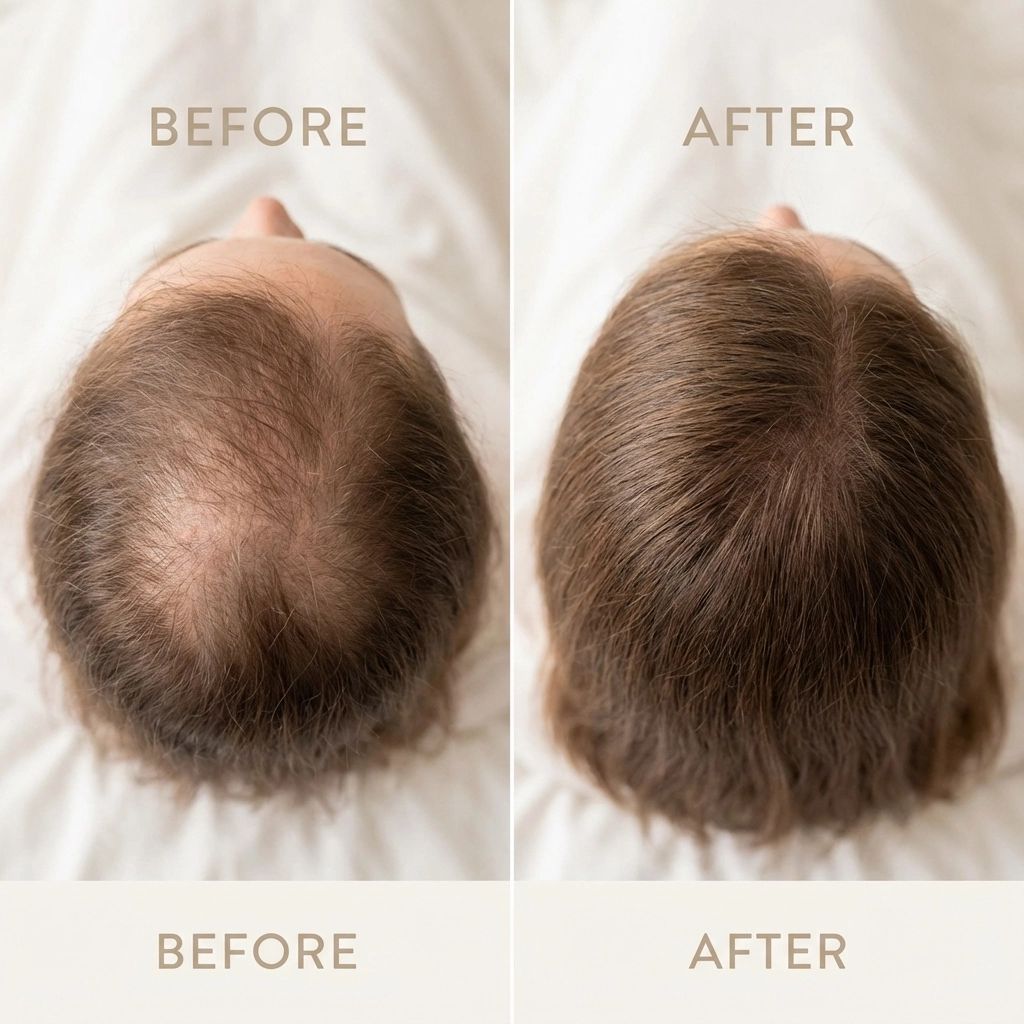
The pattern I've noticed: oral minoxidil works well for diffuse thinning and crown areas, but expectations need managing. It's not growing hair where none existed: it's thickening and strengthening existing follicles.
The Science: How Oral Minoxidil Actually Works
Minoxidil was originally developed as a blood pressure medication in the 1970s. Patients taking high doses noticed unexpected hair regrowth: a discovery that revolutionised hair loss treatment.
The drug works by dilating blood vessels around hair follicles, improving nutrient delivery and extending the active growth phase of hair. When taken orally, minoxidil reaches hair follicles systemically, potentially providing more consistent coverage than topical applications.
Research from 2021 showed that 5mg daily oral minoxidil increased total hair density by approximately 19% over 24 weeks in male patients. A separate study found that 43% of participants achieved excellent hair growth results at this dosage.
What's particularly interesting: oral minoxidil appears to work through multiple mechanisms. Beyond vascular effects, it may directly stimulate hair follicle cells and prolong the anagen (growth) phase of the hair cycle.
Side Effects and Safety: The Reality Check
Here's where I need to be completely honest based on what I've observed and the current research.
At low doses (1-5mg daily), oral minoxidil has a generally good safety profile. However, side effects do occur:
Common side effects I've seen:
- Unwanted body and facial hair growth (particularly in women)
- Mild fluid retention and ankle swelling
- Initial hair shedding in the first 2-4 weeks
- Occasional dizziness or lightheadedness
Less common but serious concerns:
- Heart palpitations (rare at low doses)
- Significant weight gain from fluid retention
- Excessive hair growth requiring removal treatments
One client, a 45-year-old accountant, developed noticeable ankle swelling after two months on 5mg daily. We reduced his dose to 2.5mg, and the swelling resolved while maintaining hair growth benefits.
The key insight from recent studies: doses of 1mg daily show minimal serious adverse reactions, while 5mg daily requires closer monitoring.

Who's Trying Oral Minoxidil? The Profiles I'm Seeing
The demographic seeking oral minoxidil has surprised me. It's not just the typical male pattern baldness cases.
Women aged 35-55 represent nearly 40% of my oral minoxidil consultations. Many are dealing with postpartum hair loss, menopause-related thinning, or androgenic alopecia. They're often frustrated with topical treatments interfering with hairstyling.
Young men in their 20s are increasingly asking about oral options, often influenced by online communities and social media discussions. They want convenience and are less concerned about potential side effects.
Professionals with busy lifestyles frequently prefer oral minoxidil over topical applications. A barrister I work with travels extensively and found topical minoxidil impractical for his schedule.
Surprisingly, fitness enthusiasts and influencers are also exploring oral minoxidil, often alongside other "biohacking" approaches to health optimisation.
Oral vs Topical: The Practical Comparison
Having worked with both treatments extensively, here's my honest assessment:
Topical Minoxidil:
- Proven track record with 30+ years of safety data
- Minimal systemic side effects
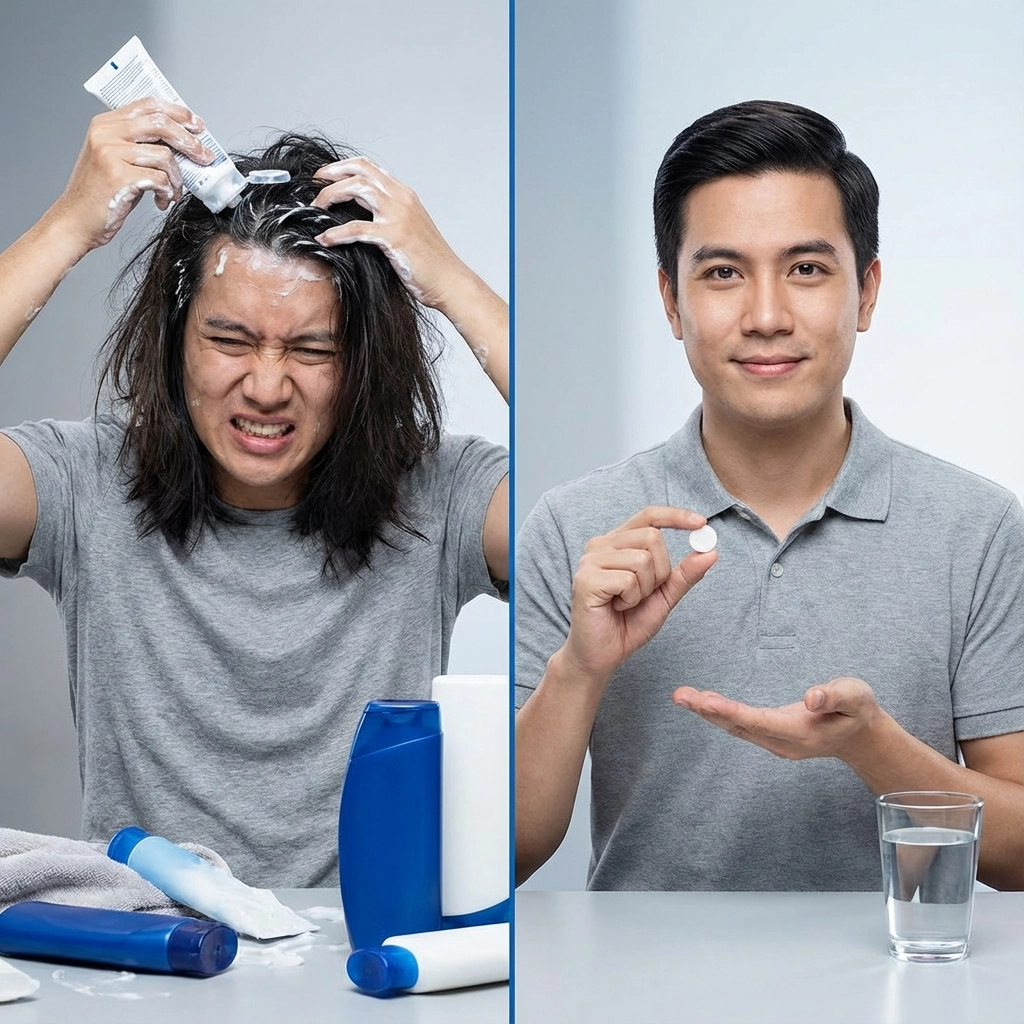
- Requires twice-daily application
- Can cause scalp irritation and affects hair styling
- Effectiveness limited by application consistency and absorption
Oral Minoxidil:
- More convenient: single daily dose
- Better systemic distribution to all hair follicles
- Faster visible results in many cases
- Higher risk of systemic side effects
- More cost-effective long-term
A 2022 head-to-head study found that 5mg oral minoxidil performed comparably to 5% topical minoxidil over 24 weeks, with oral showing slight advantages in crown density.
For compliance alone, I've seen clients achieve better results with oral minoxidil simply because they actually take it consistently.
UK Healthcare Landscape: NHS, Private Clinics, and Access
The NHS currently doesn't routinely prescribe oral minoxidil for hair loss. Most GPs remain cautious, partly due to limited long-term safety data at hair loss doses.
Private dermatology clinics across London, Manchester, and Birmingham increasingly offer oral minoxidil consultations. Typical costs range from £150-300 for initial consultations, with ongoing prescriptions costing £30-60 monthly.
Several UK-based online hair loss clinics now provide oral minoxidil prescriptions following video consultations. While convenient, I've seen mixed results with remote monitoring of side effects.
Supply has occasionally been challenging. During a shortage last summer, several of my clients struggled to maintain consistent dosing, which affected their progress.
UK Regulatory Position and Medical Guidance
The MHRA (Medicines and Healthcare products Regulatory Agency) classifies oral minoxidil as a prescription-only medicine for hair loss, requiring medical supervision.
Current UK dermatology guidelines suggest oral minoxidil as a second-line treatment after topical options have failed or aren't suitable. Most specialists recommend starting at 1-2.5mg daily and titrating based on response and tolerance.
The British Association of Dermatologists emphasises careful patient selection, particularly screening for cardiovascular conditions before prescribing oral minoxidil.
Importantly, oral minoxidil isn't licensed specifically for hair loss in the UK: it's prescribed "off-label" based on emerging evidence and clinical experience.
Risk-Benefit Analysis: Is It Worth It?
After working with dozens of clients on oral minoxidil, here's my framework for decision-making:
Strong candidates:
- Failed or couldn't tolerate topical minoxidil
- Diffuse hair thinning rather than advanced baldness
- No cardiovascular history
- Committed to long-term treatment
- Understand realistic expectations
Poor candidates:
- Expecting dramatic hair regrowth
- History of heart problems or low blood pressure
- Unwilling to accept potential side effects
- Looking for quick fixes
The treatment requires indefinite use: stopping oral minoxidil reverses gains within 3-6 months. This long-term commitment isn't suitable for everyone.
My Recommendations: Who Should Consider It
Based on my experience, oral minoxidil works best as part of a comprehensive approach rather than a standalone solution.
I typically recommend it for:
- Women with androgenic alopecia who struggle with topical applications
- Men with diffuse thinning who want systemic treatment
- Clients combining it with finasteride or dutasteride
- Those prioritising convenience over minimising side effect risk
I don't recommend it for:
- People expecting complete hair restoration
- Those with significant cardiovascular concerns
- Clients unwilling to commit to long-term use
- Anyone hoping to avoid all potential side effects
For most people, I still suggest trying topical minoxidil first. It remains the gold standard with extensive safety data. Oral minoxidil is better viewed as a next step rather than a first choice.
The reality is that oral minoxidil is neither miraculous nor dangerously risky: it's a moderately effective tool that requires careful consideration and medical supervision. In the right hands, with proper expectations, it can be genuinely helpful for hair loss treatment in 2025.
For more health and wellness guidance, visit our comprehensive health resources where we continue sharing evidence-based insights for better living.