Choosing between pure copper supplements and copper blends isn't just about personal preference: it's about absorption, safety, and your specific health needs. The decision affects how much copper your body actually uses, potential side effects, and long-term supplementation success.
Most people assume pure copper means better results, but research shows blended formulations often outperform pure copper in real-world scenarios. Here's what UK health practitioners and supplement users need to know.
Understanding Pure Copper Supplements
Pure copper supplements contain elemental copper without binding agents or additional minerals. These formulations offer the highest copper concentration per capsule, typically ranging from 2-15mg per dose.
Advantages of Pure Copper
Higher Potency Per Dose Pure copper delivers more elemental copper in smaller capsules. This concentrated approach benefits people with severe copper deficiency who need rapid repletion under medical supervision.
Direct Iron Absorption Support Elemental copper directly promotes iron absorption and red blood cell formation. This mechanism works faster than chelated forms when treating copper-deficient anaemia.
Cost-Effective for High Doses When you need substantial copper intake, pure forms provide more copper per pound spent compared to chelated alternatives.

Disadvantages of Pure Copper
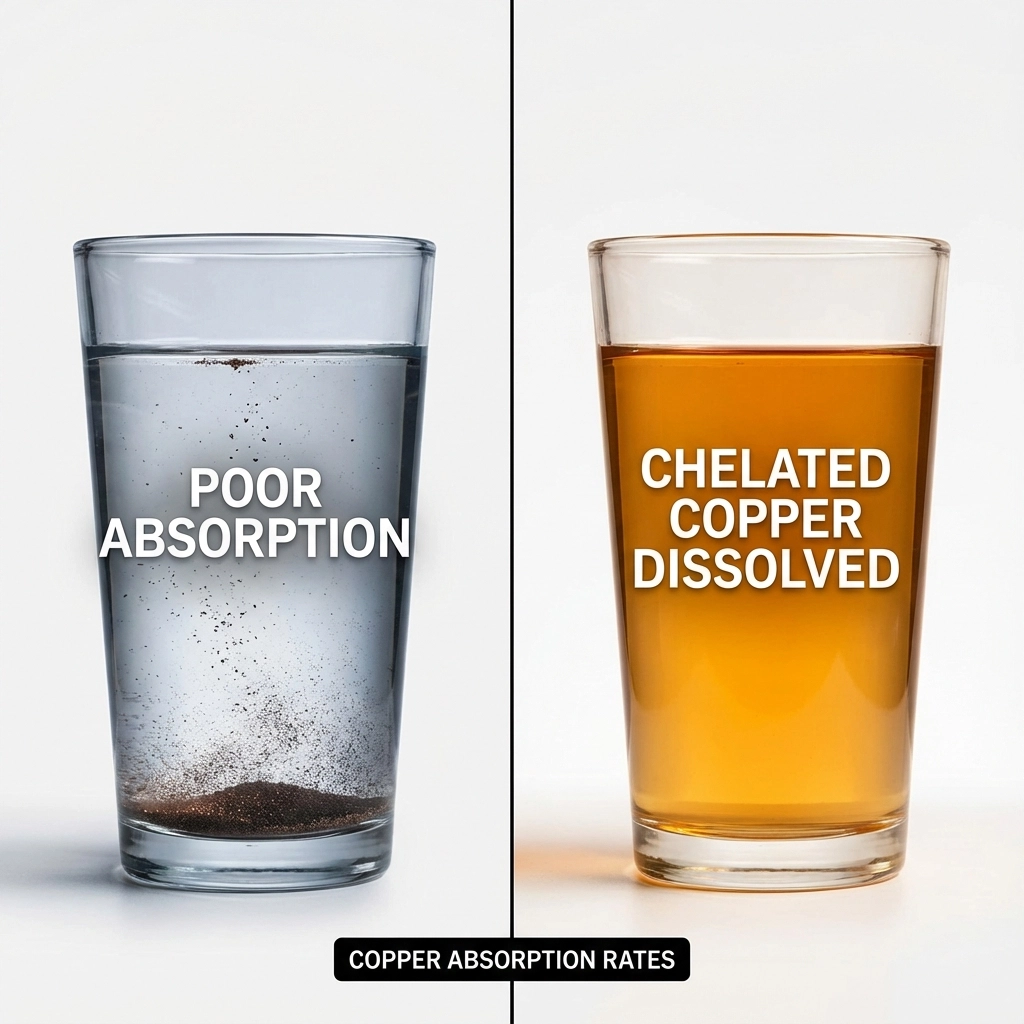
Poor Absorption Rates The human digestive system struggles with pure copper absorption. Studies show absorption rates as low as 12-15% for elemental copper compared to 85-90% for chelated forms.
Increased Side Effects Pure copper commonly causes nausea, stomach upset, and metallic taste. These effects occur because unbound copper irritates gastric mucosa.
Zinc Interference Risk High-dose pure copper supplementation can deplete zinc levels rapidly. This creates secondary deficiencies that require additional supplementation.
Narrow Dosing Window The difference between therapeutic and toxic doses is smaller with pure copper. Overdose symptoms can develop gradually, making monitoring essential.
Copper Supplements with Blends: The Chelated Advantage
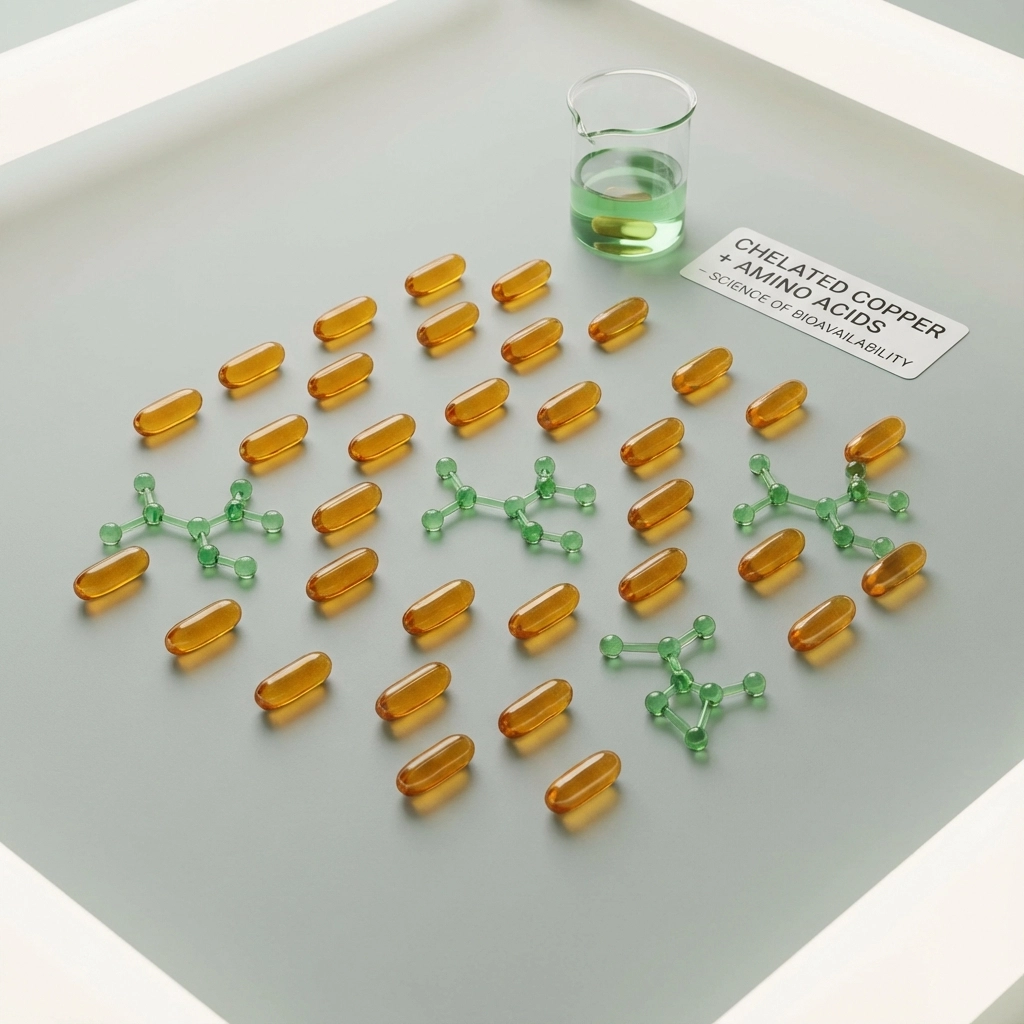
Blended copper supplements use amino acids, organic acids, or other minerals as carriers. Common forms include copper gluconate, copper bisglycinate, and copper amino acid chelates.
Benefits of Chelated Copper
Superior Bioavailability Amino acid chelation increases copper absorption to 85-90%. The organic carrier protects copper through stomach acid and delivers it directly to absorption sites.
Gentler on Digestion Chelated forms rarely cause stomach upset when taken with food. The binding agent buffers copper's irritating effects on gastric tissue.
Better Mineral Balance Quality copper blends include complementary nutrients like zinc and manganese in balanced ratios. This prevents secondary deficiencies during supplementation.
Sustained Release Properties Chelated copper absorbs more slowly, maintaining steady blood levels without peaks that can trigger side effects.
Potential Drawbacks of Blended Forms
Lower Copper Content Per Capsule Binding agents reduce the percentage of elemental copper per dose. You'll need larger or more frequent doses to match pure copper intake.
Higher Cost Per Milligram The chelation process and additional ingredients increase manufacturing costs. Expect to pay 20-40% more per milligram of actual copper.
Variable Quality Between Brands Not all chelation processes create equally bioavailable products. Inferior binding can reduce absorption below advertised levels.
Absorption and Effectiveness Comparison
Copper absorption depends heavily on stomach acidity, competing minerals, and binding agents present during digestion.
Pure Copper Absorption Factors
Pure copper requires adequate stomach acid for initial breakdown. People using antacids, proton pump inhibitors, or those over 60 often show poor pure copper absorption.
Timing matters significantly. Taking pure copper with zinc, iron, or high-fibre meals can reduce absorption by 50-70%. Empty stomach dosing improves absorption but increases side effect risk.
Chelated Copper Performance
Chelated copper bypasses many absorption barriers. The amino acid carrier uses dedicated transport pathways that don't compete with other minerals.
Research shows copper bisglycinate maintains consistent absorption even when taken with meals containing zinc or iron. This flexibility makes daily supplementation more practical.
Safety Considerations and UK Guidelines
The UK's Food Standards Agency sets the safe upper limit for copper at 10mg daily for adults. Both pure and chelated forms can reach toxic levels with excessive dosing.
Monitoring Requirements
Pure Copper Users Monitor zinc and vitamin C status every 3-6 months. Pure copper can deplete these nutrients rapidly, especially at doses above 5mg daily.
Check liver enzymes annually with long-term use. Copper accumulates in liver tissue, and early detection prevents Wilson's disease-like symptoms.
Chelated Copper Users Less frequent monitoring is typically needed, but annual copper and zinc testing remains prudent for doses above 3mg daily.
Warning Signs of Excess
Both forms can cause copper toxicity. Early symptoms include:
- Metallic taste lasting more than 2 hours after dosing
- Persistent nausea or vomiting
- Yellow-tinted skin or eyes
- Dark-coloured urine
- Unusual fatigue or weakness
Popular UK Brands and Formulations
Pure Copper Options
Solgar Copper Provides 2mg elemental copper per capsule. Well-tolerated by most users but requires empty stomach timing for optimal absorption.
Higher Nature Copper Offers 1mg doses suitable for maintenance supplementation. The lower potency reduces side effect risk while providing adequate copper for most people.
Chelated Copper Leaders
Thorne Copper Bisglycinate Uses true amino acid chelation for maximum bioavailability. Independent testing confirms 85%+ absorption rates in clinical studies.
Life Extension Copper Combines copper with complementary trace minerals in balanced ratios. Popular among practitioners for comprehensive mineral support.
Viridian Copper Gluconate Provides gentle, well-tolerated copper supplementation. The gluconate form offers good absorption with minimal digestive upset.
You can find quality copper supplements like Copper Gluconate Tablets that provide effective immune system support.
Comparison Summary Table
| Factor | Pure Copper | Chelated Copper | Recommendation |
|---|---|---|---|
| Absorption Rate | 12-15% | 85-90% | Chelated wins clearly |
| Potency Per Capsule | Very High | Moderate | Pure copper advantage |
| Digestive Tolerance | Poor | Excellent | Chelated preferred |
| Zinc Interaction | High interference | Minimal impact | Chelated safer |
| Cost Per mg Copper | Lower | Higher | Pure copper cheaper |
| Monitoring Needs | Intensive | Moderate | Chelated easier |
| Best Use Case | Severe deficiency | Daily supplementation | Depends on need |
Final Recommendations by Situation
Choose Pure Copper When:
Severe Copper Deficiency Diagnosis Medical supervision with documented deficiency below 70 mcg/dL requires rapid repletion that pure copper provides.
Short-Term Therapeutic Use Brief interventions (4-8 weeks) under practitioner guidance can utilise pure copper's higher potency effectively.
Cost Is Primary Concern Budget-conscious users needing high-dose copper may find pure forms more economical despite absorption challenges.
Choose Chelated Copper When:
Long-Term Daily Supplementation Ongoing maintenance or moderate deficiency correction works better with gentler, more bioavailable forms.
Digestive Sensitivity People with gastritis, ulcers, or general supplement intolerance handle chelated forms much better.
Taking Multiple Minerals Complex supplement regimens benefit from chelated copper's reduced interference with zinc and iron absorption.
Convenience Matters Flexible timing and reduced monitoring requirements make chelated copper more practical for busy lifestyles.
For most UK adults, chelated copper offers the best balance of effectiveness, safety, and convenience. The superior absorption compensates for lower copper content per dose, while reduced side effects improve long-term compliance.
Pure copper remains valuable for specific medical situations requiring rapid copper repletion, but chelated forms serve the majority of supplementation needs more effectively.
Consider your specific health status, other medications or supplements, and monitoring capabilities when making this choice. When in doubt, chelated forms provide a safer starting point for copper supplementation.