If you're tracking calories or trying to lose weight, understanding exactly what's in your breakfast matters. A 4-egg omelette can range from 280 to 590 calories depending on how you prepare it and what fillings you add. This comprehensive guide breaks down the numbers and shows you how to make your omelette work for your weight loss goals.
Complete Nutritional Breakdown: 4-Egg Omelette
A plain 4-egg omelette made with large eggs contains approximately 375-392 calories. Here's the complete nutritional profile:
Macronutrients:
- Calories: 375-392
- Protein: 25-28 grams (50-56% of daily value)
- Fat: 28-29 grams
- Carbohydrates: 2-5 grams
- Fiber: 0 grams
- Sugar: 2-3 grams
Key Micronutrients:
- Vitamin B12: 125% daily value
- Selenium: 56% daily value
- Riboflavin: 42% daily value
- Phosphorus: 35% daily value
- Vitamin D: 20% daily value
- Choline: Significant amounts for brain health
The high protein content makes this an excellent choice for appetite control and muscle maintenance during weight loss.

How Different Fillings Change the Calorie Count
Your choice of fillings dramatically impacts the final calorie count. Here's how popular additions stack up:
High-Calorie Additions
- Cheddar cheese (1/4 cup): +110 calories
- Butter for cooking (1 tbsp): +100 calories
- Ham (2 oz): +60-70 calories
- Bacon (2 strips): +90 calories
- Avocado (1/4 medium): +60 calories
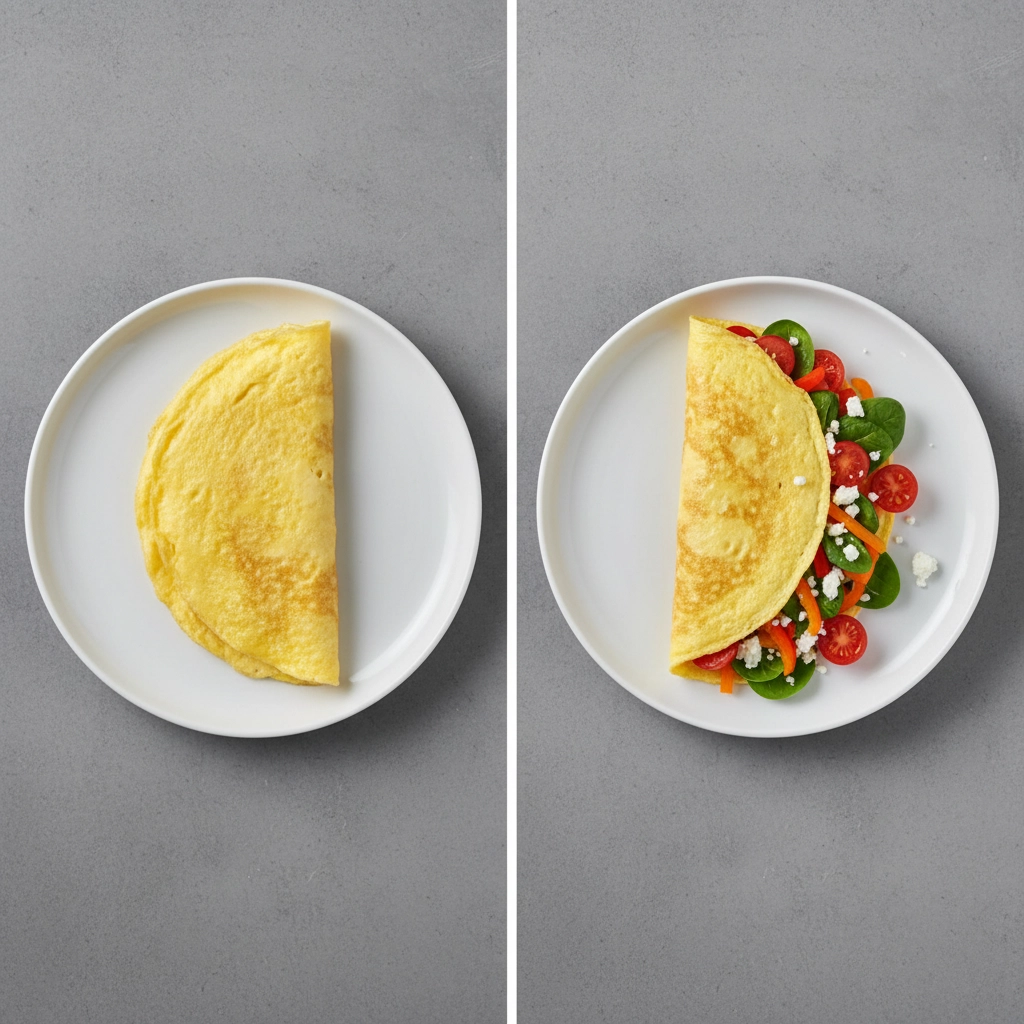
Total with cheese and butter: 502 calories
Low-Calorie Vegetables
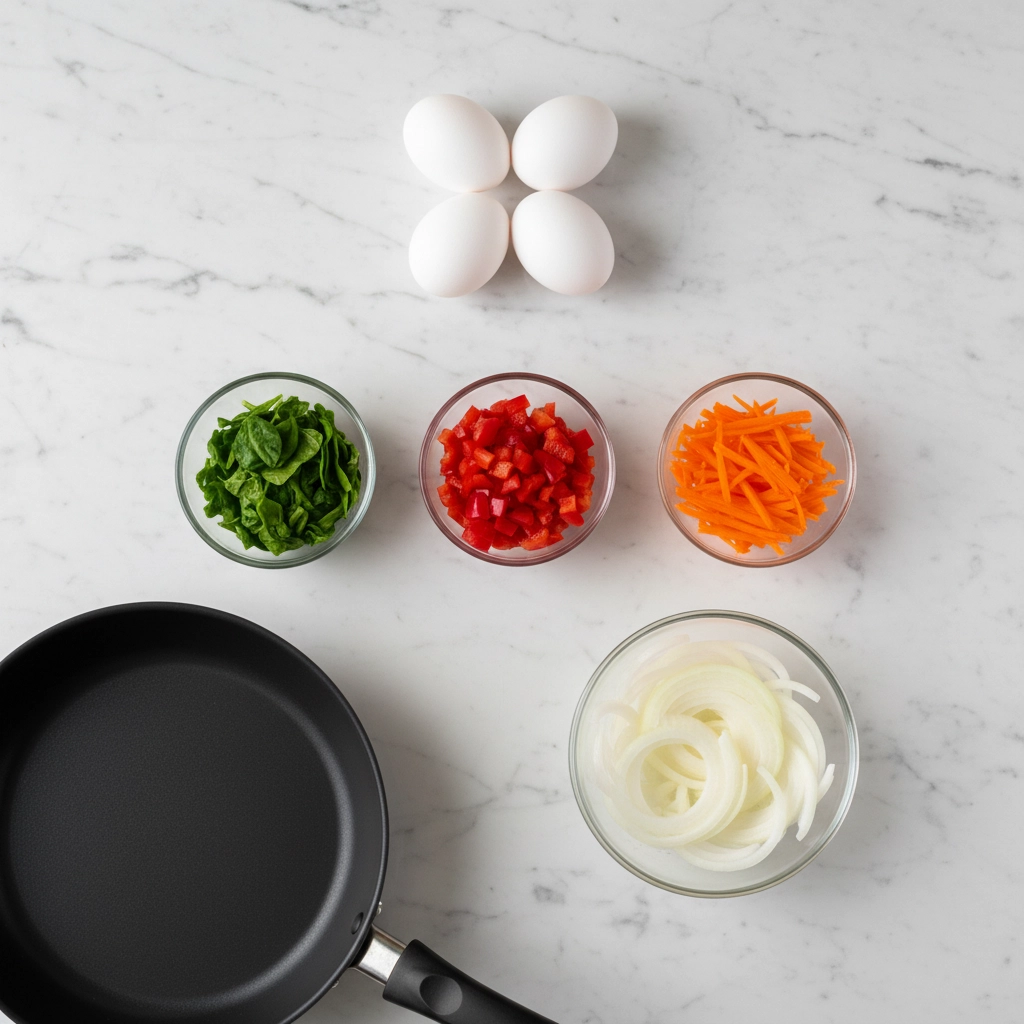
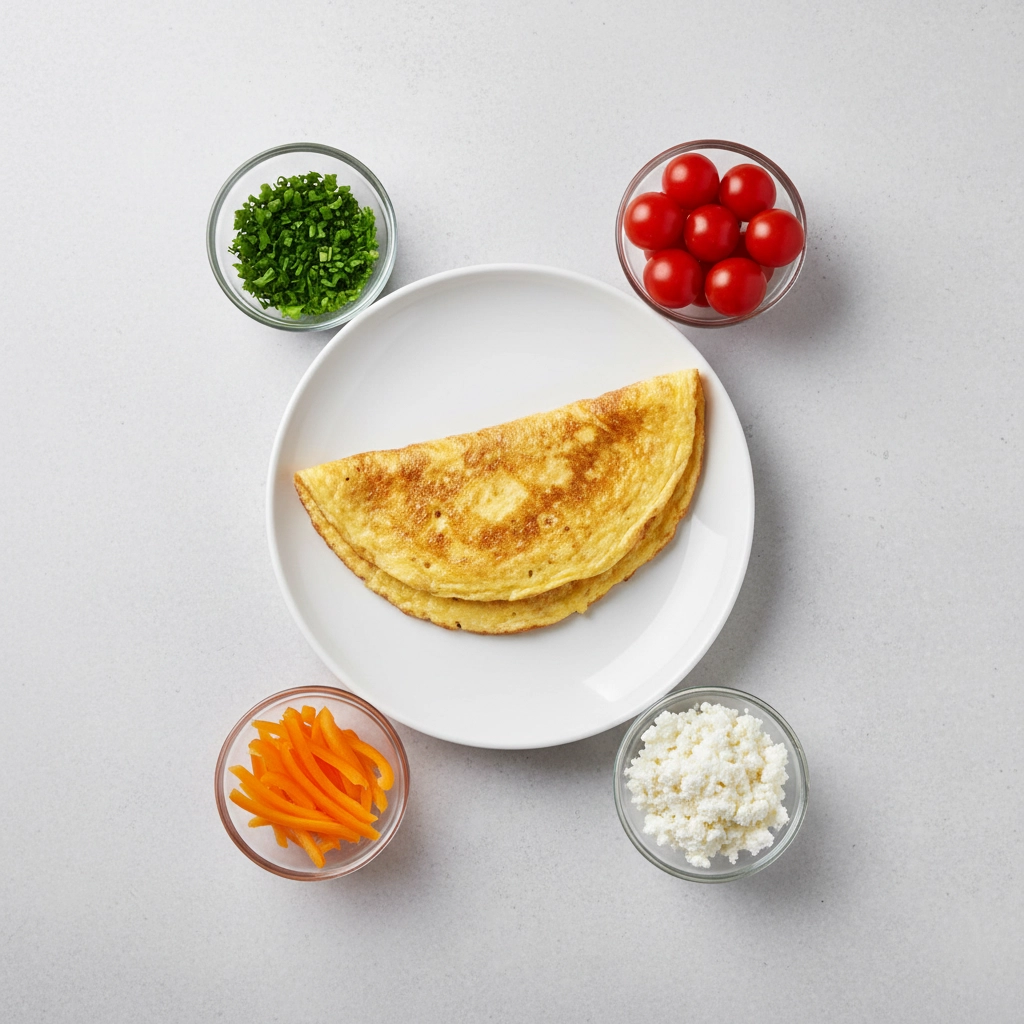
- Spinach (1 cup): +7 calories
- Mushrooms (1/2 cup): +8 calories
- Bell peppers (1/4 cup): +9 calories
- Onions (1/4 cup): +16 calories
- Tomatoes (1/4 cup): +9 calories
Total with mixed vegetables: 300-350 calories
Protein-Rich, Lower-Calorie Options
- Cottage cheese (2 tbsp): +25 calories
- Turkey (1 oz): +30 calories
- Smoked salmon (1 oz): +35 calories
Comparison with Other Breakfast Choices
Understanding how a 4-egg omelette compares to other breakfast options helps put the calories in perspective:
Similar Calorie Breakfasts:
- Greek yogurt with granola: 350-400 calories
- 2 slices whole grain toast with peanut butter: 380-420 calories
- Bagel with cream cheese: 450-500 calories
- Fast food breakfast sandwich: 400-550 calories
Higher Protein Advantage: A 4-egg omelette provides 25-28 grams of protein, significantly more than most breakfast alternatives. This protein advantage helps with:
- Increased satiety lasting 3-4 hours
- Better blood sugar stability
- Enhanced muscle protein synthesis
- Higher thermic effect (burns more calories during digestion)
Smart Strategies to Lower Calories for Weight Loss
The Egg White Swap
Replace some whole eggs with egg whites to dramatically reduce calories while maintaining protein:
- 2 whole eggs + 4 egg whites: 280 calories, 28g protein
- 1 whole egg + 6 egg whites: 225 calories, 26g protein
- All egg whites (equivalent to 4 eggs): 140 calories, 28g protein
Cooking Method Modifications
- Use cooking spray instead of butter: Saves 100 calories
- Non-stick pan with minimal oil: Saves 50-80 calories
- Steam vegetables beforehand: Reduces need for cooking fats
Volume-Adding Vegetables
Fill your omelette with high-volume, low-calorie vegetables to increase satisfaction:
- Spinach: Adds iron and folate for just 7 calories per cup
- Mushrooms: Provide umami flavor for 8 calories per half cup
- Bell peppers: Offer vitamin C and crunch for 9 calories per quarter cup
Cheese Alternatives
- Nutritional yeast: Cheesy flavor for 20 calories per tablespoon
- Light cheese: 50% fewer calories than regular cheese
- Fresh herbs: Basil, parsley, or chives add flavor with virtually no calories
The Weight Loss Omelette Formula
For optimal weight loss results, aim for this combination:
Base: 2 whole eggs + 2-4 egg whites (280-320 calories) Vegetables: 1-2 cups mixed non-starchy vegetables (+15-25 calories) Cooking method: Cooking spray or minimal oil (+10-20 calories) Seasonings: Herbs, spices, hot sauce (virtually zero calories)
Total: 305-365 calories with 26-30 grams of protein
This formula provides maximum nutrition and satiety while fitting comfortably into a 1,200-1,800 calorie weight loss plan.
Portion Control and Meal Timing
Ideal Portion Sizes
A 4-egg omelette represents a substantial breakfast that should keep you satisfied for 4-5 hours. For weight loss:
- Very active individuals: Full 4-egg omelette fits well
- Sedentary lifestyle: Consider 3 eggs or the egg white modification
- Smaller appetites: 2 eggs with extra vegetables provides adequate protein
Best Times to Eat
Consuming your omelette earlier in the day maximizes its benefits:
- Breakfast (7-9 AM): Provides sustained energy and appetite control
- Post-workout: Supports muscle recovery when eaten within 2 hours of exercise
- Avoid late evening: High protein content may interfere with sleep for some people
Common Mistakes That Sabotage Weight Loss
Over-Cooking with Fats
Many people add butter both to the pan and as a finishing touch, doubling the fat calories unnecessarily.
Restaurant-Size Portions
Restaurant omelettes often contain 6-8 eggs and excessive cheese, reaching 800+ calories. Stick to homemade versions for better control.
Ignoring Cooking Oil
Even "healthy" oils like olive oil contain 120 calories per tablespoon. Cooking spray provides the same non-stick benefits for under 10 calories.
Loading with Processed Meats
Bacon, sausage, and processed ham add significant calories and sodium without proportional nutritional benefits.
Frequently Asked Questions
How many calories in a 4-egg omelette with cheese?
A 4-egg omelette with 1/4 cup cheddar cheese contains approximately 502 calories. To reduce this, use 2 tablespoons of cheese (saving 55 calories) or choose a lower-fat cheese option.
Can I eat a 4-egg omelette every day for weight loss?
Yes, when prepared with minimal added fats and plenty of vegetables. The high protein content supports weight loss by increasing satiety and preserving muscle mass during calorie restriction.
What vegetables add the fewest calories to my omelette?
Spinach, mushrooms, bell peppers, and tomatoes provide the most volume and nutrients for the fewest calories. A full cup of mixed vegetables typically adds only 15-25 calories.
Is it better to use whole eggs or egg whites for weight loss?
A combination works best. Two whole eggs provide essential nutrients and satisfaction, while additional egg whites boost protein without excessive calories. This combination offers 280 calories with 28 grams of protein.
How does a 4-egg omelette compare to protein powder for breakfast?
A 4-egg omelette provides more satiety, essential fats, and micronutrients than protein powder alone. However, it contains more calories. For pure protein efficiency, egg whites or a combination approach works well.
Can I meal prep omelettes for the week?
Omelettes don't reheat well due to texture changes. Instead, prep ingredients in advance: pre-chop vegetables, measure egg portions, and use quick-cooking methods for fresh omelettes daily.
Making It Work for Your Goals
A 4-egg omelette can be an excellent tool for weight loss when you understand the calorie impact of your choices. Focus on maximizing protein while controlling added fats and high-calorie fillings. The key is preparation method and portion awareness rather than avoiding this nutritious breakfast option entirely.
With 25-28 grams of high-quality protein and essential nutrients, a well-prepared 4-egg omelette supports your weight loss goals while providing sustained energy and satisfaction. Start with the basic egg and vegetable combination, then experiment with herbs and spices to keep your breakfast interesting without adding calories.