After two decades of training everyone from complete beginners to competitive athletes, I've learned one crucial truth: your body doesn't follow a rigid schedule. Some days you walk into the gym feeling like you could deadlift a car, other days you struggle with weights that normally feel light as a feather. This is where autoregulation comes in: and it's absolutely game-changing for your progress.
I remember working with a busy solicitor , who was following a strict percentage-based program. One Tuesday evening, she arrived at our session completely knackered after pulling an all-nighter for a court case. Her program called for 85% squats, but she could barely manage 70%. Rather than forcing it, we adjusted on the fly using RPE principles. Six months later, she'd made better progress than any of my clients following rigid programs.
What Is Autoregulation and Why Does It Matter?
Autoregulation is simply adjusting your training intensity, volume, and load based on how you're feeling and performing in real-time. Instead of blindly following a program that says "Week 4: 4 sets of 6 at 80%," you learn to read your body's signals and adjust accordingly.
Think of it like driving a car. You don't set the cruise control and ignore the road conditions: you adjust your speed based on traffic, weather, and how the car's responding. Your training should work the same way.
The science backs this up brilliantly. Research shows that autoregulated training often produces better results than fixed programs while reducing injury risk and burnout. Your body is constantly fluctuating between states of readiness, fatigue, and recovery. Autoregulation helps you surf these waves rather than fighting against them.
Understanding RPE and Reps in Reserve (RIR)
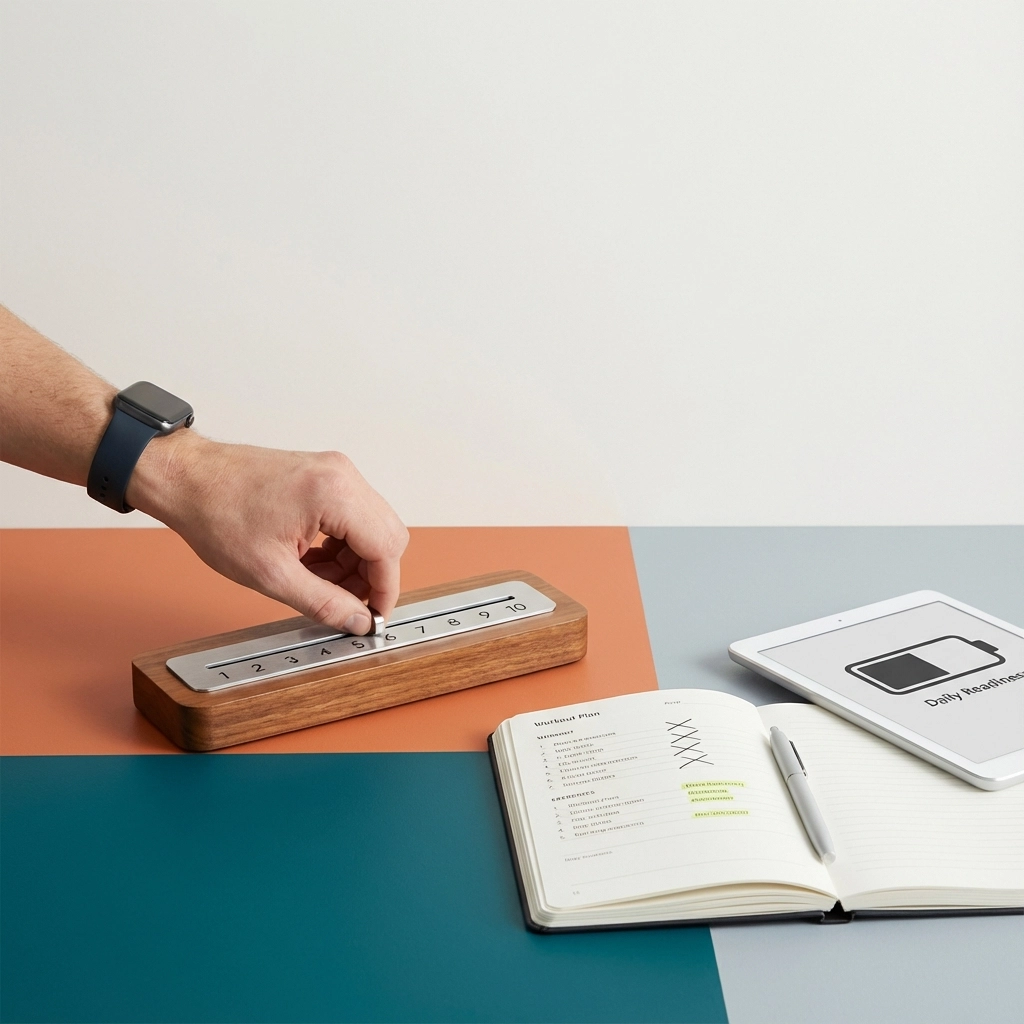
Rate of Perceived Exertion (RPE) is your subjective assessment of how hard an exercise feels, typically on a scale of 1-10. But here's where most people get it wrong: RPE isn't just about how out of breath you are. It's about how many more reps you could realistically perform with good form.
This is where Reps in Reserve (RIR) comes in handy. If you complete a set and could have done 2 more reps before failure, you've worked at 8 RPE (or 2 RIR). It's incredibly practical once you get the hang of it.
The RPE Scale Breakdown:
- RPE 6-7: Easy to moderate effort, could do 3-4 more reps
- RPE 8: Hard effort, could do 2 more reps
- RPE 9: Very hard, could do 1 more rep
- RPE 10: Maximum effort, couldn't do another rep with proper form
I teach all my clients to start conservatively. Most newcomers think they're working at RPE 8 when they're actually at RPE 6. It takes practice to calibrate your internal gauge, but once you nail it, you'll have incredible control over your training stimulus.
When to Push Hard vs When to Back Off
This is where the art meets the science. Your daily readiness fluctuates based on sleep, stress, nutrition, and countless other factors. Learning to read these signals is crucial for long-term progress.
Push Hard When:
- You wake up feeling energetic and motivated
- Your warm-up feels smooth and powerful
- Previous sets feel easier than expected
- You're sleeping well and stress is manageable
- You hit your target reps with room to spare
Back Off When:
- You feel sluggish despite adequate warm-up
- Weights that are normally easy feel heavy
- Your form starts breaking down earlier than usual
- You're dealing with high life stress or poor sleep
- You're experiencing unusual soreness or fatigue
Last month, I had James, a construction worker, come in absolutely buzzing after a great night's sleep and a successful project completion. His usual RPE 8 squats felt like RPE 6, so we pushed the intensity and he hit a new personal best. The following week, he was dealing with work stress and family issues. We dropped the intensity, focused on technique, and still had a productive session.
The key is being honest with yourself. Many lifters have fragile egos and always want to push hard. But true strength is knowing when to ease off for long-term gains.

Autoregulatory Progressive Resistance Exercise (APRE)
APRE is a more structured approach to autoregulation that uses your performance on a "test set" to determine adjustments for subsequent sets. It's brilliant for intermediate to advanced lifters who want structure with built-in flexibility.
Basic APRE Protocol:
- Set 1: 50% of your target weight for 10 reps (warm-up)
- Set 2: 75% for 6 reps (activation)
- Set 3: 100% for as many reps as possible (test set)
- Set 4: Adjusted weight based on Set 3 performance
If you hit exactly your target reps in Set 3, you maintain the weight for Set 4. Hit more reps? Increase the weight. Fewer reps? Decrease it. The beauty is that your body tells you exactly what it can handle that day.
I've used APRE successfully with rugby players who need to maintain strength during the season while managing fatigue from matches and training. It allows them to push when they're fresh and automatically scales back when they're beaten up from games.
Balancing Structure with Flexibility
Here's a common misconception: autoregulation means completely winging it. Absolute rubbish. The best autoregulated programs combine solid structure with intelligent flexibility.
Maintain Structure In:
- Exercise selection and order
- Training frequency
- Overall volume targets
- Progressive overload principles
Allow Flexibility In:
- Load selection based on daily readiness
- Rep ranges within prescribed zones
- Rest periods between sets
- Exercise variations when needed
I program all my clients with "intelligent ranges." Instead of prescribing exactly 3 sets of 8 reps at 75%, I might write "3-4 sets of 6-10 reps at RPE 7-8." This gives clear boundaries while allowing for daily adjustments.
Common Myths About Autoregulation
Myth 1: "It's just an excuse to be lazy" Complete nonsense. Proper autoregulation often leads to harder training on good days and more consistent progress over time. Lazy people don't track RPE or make intelligent adjustments: they just skip sessions.
Myth 2: "Beginners can't use autoregulation" Wrong again. While beginners need time to learn RPE, they can start using basic principles immediately. I teach new clients to focus on form breaking down as their primary signal to stop a set.
Myth 3: "You need fancy equipment" Bollocks. While velocity-based training devices are useful, RPE-based autoregulation requires nothing more than honest self-assessment and a basic understanding of effort levels.
Myth 4: "It's too complicated" It's actually simpler than percentage-based training once you get used to it. No calculators, no complex charts: just listen to your body and adjust accordingly.
Practical Implementation Strategies
Start simple. Pick one exercise per session and use RPE instead of fixed percentages. Practice rating your effort after each set and compare it to how many reps you had left. This builds your RPE accuracy over time.
Keep a training log that includes not just weights and reps, but also RPE, sleep quality, stress levels, and how you felt during the session. Patterns will emerge that help you understand your individual response to training.
Don't abandon periodization completely. Use autoregulation within structured phases. During strength phases, aim for RPE 7-9. During deload weeks, keep it at RPE 5-7. The principles remain the same; you're just allowing for daily fluctuations.
Work with experienced trainers when possible. Learning to accurately assess RPE takes practice, and having someone observe your form and effort levels accelerates the learning process.
Making It Work for Your Goals
Whether you're training for strength, muscle gain, or general fitness, autoregulation principles apply. Strength athletes can use it to peak for competitions, adjusting intensity based on how they're recovering between sessions. Those focused on muscle building can use RPE to ensure they're training close enough to failure without completely grinding themselves into the ground.
For general fitness enthusiasts, it removes the guilt and frustration of "bad" training days. Every session becomes productive because you're working at the right intensity for your current state.
Remember, consistency beats perfection every time. A year of autoregulated training that you actually stick to will demolish six months of perfectly planned sessions that you can't maintain due to life getting in the way.
Your body is remarkably intelligent: it's constantly giving you feedback about readiness, fatigue, and capacity. Autoregulation simply teaches you to listen to these signals and respond appropriately. Master this skill, and you'll train more effectively, stay healthier, and make better long-term progress than those chasing arbitrary numbers on a rigid program.
Start today. Rate your next set honestly, adjust accordingly, and begin building a sustainable relationship with training that respects both your goals and your humanity.