Twenty years ago, if someone told me you could build serious muscle using just 20-30% of your max weight, I'd have laughed them out of the gym. Fast forward to today, and I'm regularly using blood flow restriction (BFR) training with everyone from injured athletes to my 68-year-old client Margaret, who's building more muscle now than she did in her thirties.
Blood flow restriction training isn't some gimmicky fitness trend: it's a scientifically-backed method that's revolutionizing how we think about muscle building. Let me walk you through exactly how it works, why it's so effective, and how you can start using it safely and effectively.
What Actually Happens During BFR Training?
Picture this: You're doing bicep curls with what feels like embarrassingly light weight: maybe 15kg when you'd normally use 30kg. But five minutes in, your arms feel like they're about to explode. That's BFR working its magic.
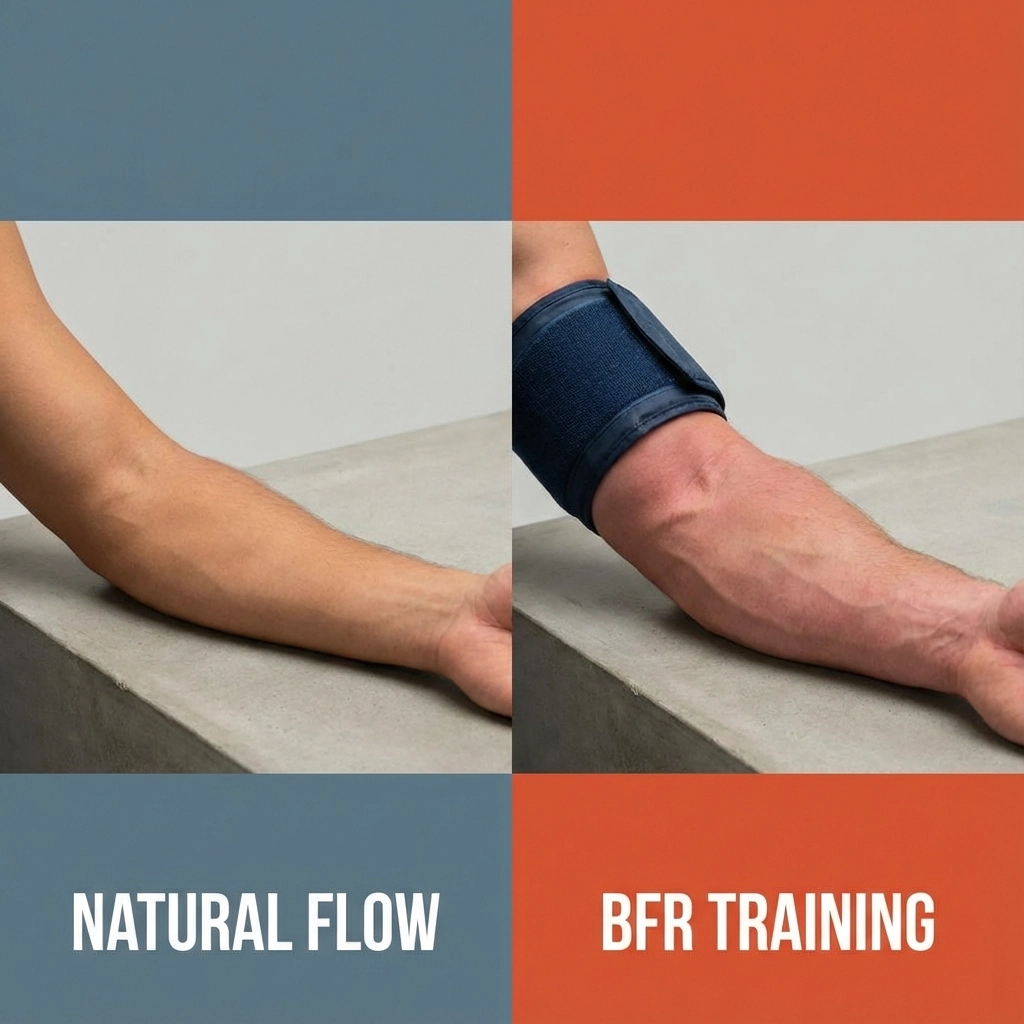
Here's the science in plain English: When you restrict venous blood flow (the blood trying to leave the muscle) while allowing arterial blood to keep flowing in, you create a controlled traffic jam in your muscles. This artificial low-oxygen environment tricks your body into thinking you're doing incredibly intense work, even though you're using light loads.
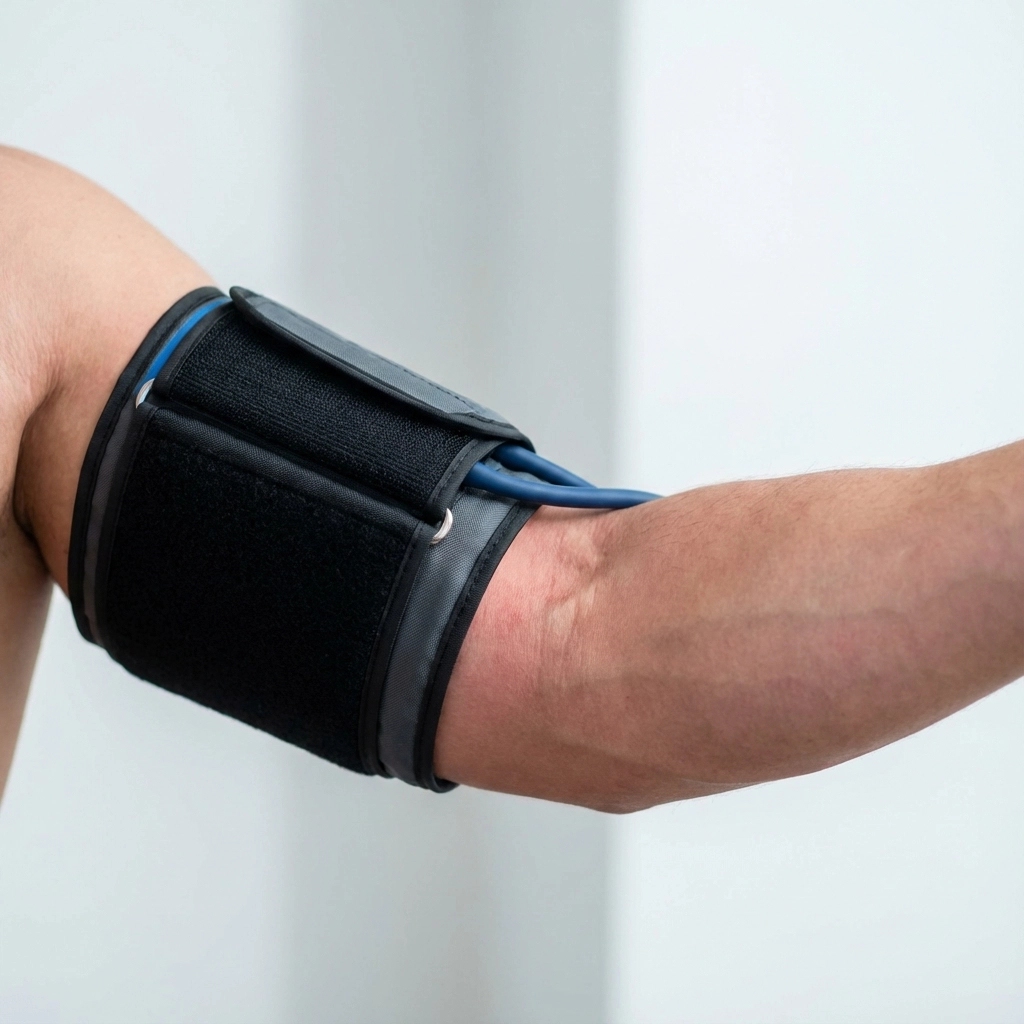
The restricted blood flow causes several cascading effects that drive muscle growth:
Metabolite Accumulation: Lactate and other metabolic byproducts build up rapidly, creating the same muscle-building environment as heavy lifting. I've had clients describe the sensation as "the most intense pump I've ever felt": and they're not wrong.
Hormonal Response: Your body releases growth hormone and IGF-1 at levels similar to high-intensity training. Sarah, a busy mum I train, saw remarkable muscle development using BFR twice weekly when she couldn't handle the joint stress of heavy squats after her knee surgery.
Satellite Cell Activation: These muscle stem cells multiply and help create new muscle fibers. Think of them as your body's construction crew, working overtime to repair and build.
mTOR Pathway Stimulation: This is your body's master switch for protein synthesis and muscle building. BFR flips this switch without the mechanical stress of heavy weights.
The Science Behind Light-Load Muscle Growth
The research is crystal clear: BFR training using just 20-30% of your one-rep max can produce muscle gains comparable to traditional heavy lifting. Studies consistently show 10-20% increases in muscle mass after just 4-6 weeks of consistent BFR training.
What makes this particularly exciting is the muscle fiber recruitment pattern. Normally, light weights only activate slow-twitch fibers. But with BFR, as those slow-twitch fibers fatigue quickly due to reduced oxygen, your body recruits the fast-twitch fibers responsible for size and power. It's like forcing your body to use its best muscle-building machinery with minimal load.
Practical BFR Protocols That Actually Work
After years of experimenting with different approaches, here's what I've found works best:
Pressure Guidelines
Upper Body: 40-60% limb occlusion pressure (LOP) Lower Body: 60-80% LOP
Don't have fancy equipment to measure LOP? Use the perceived pressure scale: 5-6 out of 10 for arms, 7-8 out of 10 for legs. You should feel significant pressure but still maintain some blood flow.
Exercise Selection and Programming
Best BFR Exercises:
- Upper body: Bicep curls, tricep extensions, chest flies, lateral raises
- Lower body: Squats, lunges, calf raises, leg extensions
Repetition Schemes:
- First set: 30 reps
- Subsequent sets: 15 reps each
- Rest: 30-60 seconds between sets
- Total sets: 3-4 per exercise
I typically program 2-3 BFR exercises per session, 2-3 times per week. Tom, a rugby player I work with, uses BFR for his auxiliary work after his main strength training, allowing him to maximize muscle growth without adding recovery stress.
Duration and Frequency
Keep individual muscle group occlusion to 15-20 minutes maximum. I usually structure sessions like this:
- Apply cuffs
- Complete all exercises for that limb
- Remove cuffs immediately
- 5-10 minute rest before targeting different muscle group
Safety First: Who Shouldn't Use BFR
Let me be absolutely clear about contraindications. BFR isn't suitable for everyone, and safety must come first.
Absolute Contraindications:
- History of blood clots or DVT
- Severe cardiovascular disease
- Pregnancy
- Recent surgery on the limb being trained
- Open wounds or infections
Relative Contraindications:
- High blood pressure (consult your doctor)
- Diabetes with circulation issues
- Varicose veins
I always screen clients thoroughly and require medical clearance when in doubt. Remember, the goal is long-term health and fitness, not short-term gains at the expense of safety.
BFR for Injury Rehabilitation and Older Adults
This is where BFR truly shines. I've seen remarkable results using BFR with clients who can't handle heavy loads due to injury or age-related limitations.
Post-Surgery Applications: After ACL reconstruction, patients typically lose significant muscle mass during immobilization. BFR allows muscle building within pain-free ranges of motion. James, a footballer, maintained 90% of his quad size during his ACL rehab using BFR protocols: something unheard of with traditional methods.
Elderly Population Benefits: Older adults face unique challenges: reduced bone density making heavy lifting risky, joint issues limiting range of motion, and longer recovery times. BFR addresses all these concerns.
Margaret, whom I mentioned earlier, started BFR training at 66 after a hip replacement. Using light resistance bands with BFR protocols, she's built more muscle in two years than many people half her age achieve with traditional training.
Specific Elderly Protocols
- Lower pressures (30-50% LOP)
- Shorter duration sessions (10-15 minutes)
- Extended rest periods (2-3 minutes between sets)
- Emphasis on functional movements
Busting Common BFR Myths
Myth 1: "BFR is dangerous and cuts off circulation completely" Reality: Proper BFR restricts venous return while maintaining arterial flow. It's uncomfortable, not dangerous.
Myth 2: "You can use any band or strap" Reality: Proper cuff width and pressure measurement matter. Elastic bands create inconsistent pressure and safety risks.
Myth 3: "BFR replaces heavy training" Reality: BFR complements heavy training beautifully but shouldn't completely replace it for most populations.
Myth 4: "More pressure equals better results" Reality: Excessive pressure reduces effectiveness and increases injury risk. Sweet spot matters.
Combining BFR with Traditional Training
The magic happens when you strategically combine BFR with conventional training. Here's how I typically structure it:
Monday: Heavy compound lifts + BFR auxiliary work Wednesday: Moderate intensity training Friday: Heavy compound lifts + BFR auxiliary work
This approach maximizes both neurological adaptations from heavy lifting and metabolic stress from BFR, giving you the best of both worlds.

Equipment Recommendations and Setup
While professional BFR systems cost thousands, effective training is possible with more affordable options:
Budget-friendly: Resistance bands with pressure gauge (£50-100) Mid-range: Pneumatic cuffs with manual pump (£200-400) Professional: Automated BFR systems (£1000+)
For home use, I recommend starting with a basic pneumatic system. The key is consistent pressure measurement and proper cuff width (45-50mm for arms, 100-110mm for legs).
Programming BFR Into Your Routine
Start conservatively. I recommend beginning with one BFR session per week for 2-3 weeks, then progressing to twice weekly if well-tolerated. Monitor recovery carefully: BFR creates significant metabolic stress despite light loads.
Week 1-2: 1x per week, 2 exercises, 3 sets each Week 3-4: 2x per week, 2 exercises, 3 sets each Week 5+: 2-3x per week, 2-3 exercises, 3-4 sets each
Remember, consistency trumps intensity with BFR. Better to train regularly with appropriate pressure than sporadically with excessive restriction.
Blood flow restriction training represents a paradigm shift in how we approach muscle building. Whether you're recovering from injury, working around limitations, or simply looking to maximize your training efficiency, BFR offers scientifically-proven benefits that were unimaginable just decades ago.
The key to success with BFR lies in proper application, safety awareness, and patience with the learning process. Start conservatively, prioritize safety, and gradually progress as you master the technique.
Your muscles don't care about your ego: they respond to effective stimulus. BFR provides that stimulus efficiently and safely, opening doors to muscle growth that traditional training alone cannot offer. Give it a try, and prepare to be amazed at what your body can achieve with the right approach.