You've crushed your workout. Now what? If you've scrolled through fitness content recently, you've probably seen athletes hopping into ice baths or sitting in glowing red saunas. Both cold plunges and infrared therapy promise faster recovery, reduced soreness, and better performance. But which one actually delivers?
Here's the truth: they work through completely different mechanisms. One isn't necessarily "better" than the other: it depends on your goals, your timing, and what's happening inside your muscles. Let's break down the science so you can make an informed decision about your recovery protocol.
What Happens When You Damage Muscle?
Before comparing recovery methods, you need to understand what you're recovering from. When you train hard, you create microscopic tears in muscle fibres. This triggers an inflammatory response: your body's natural repair process.
Inflammation isn't the enemy. It's actually necessary for adaptation and growth. The goal of recovery isn't to eliminate inflammation entirely. It's to manage it so you can train consistently without excessive soreness or prolonged downtime.
Both cold plunges and infrared therapy influence this inflammatory process, but they do it in opposite ways.
How Cold Plunges Work
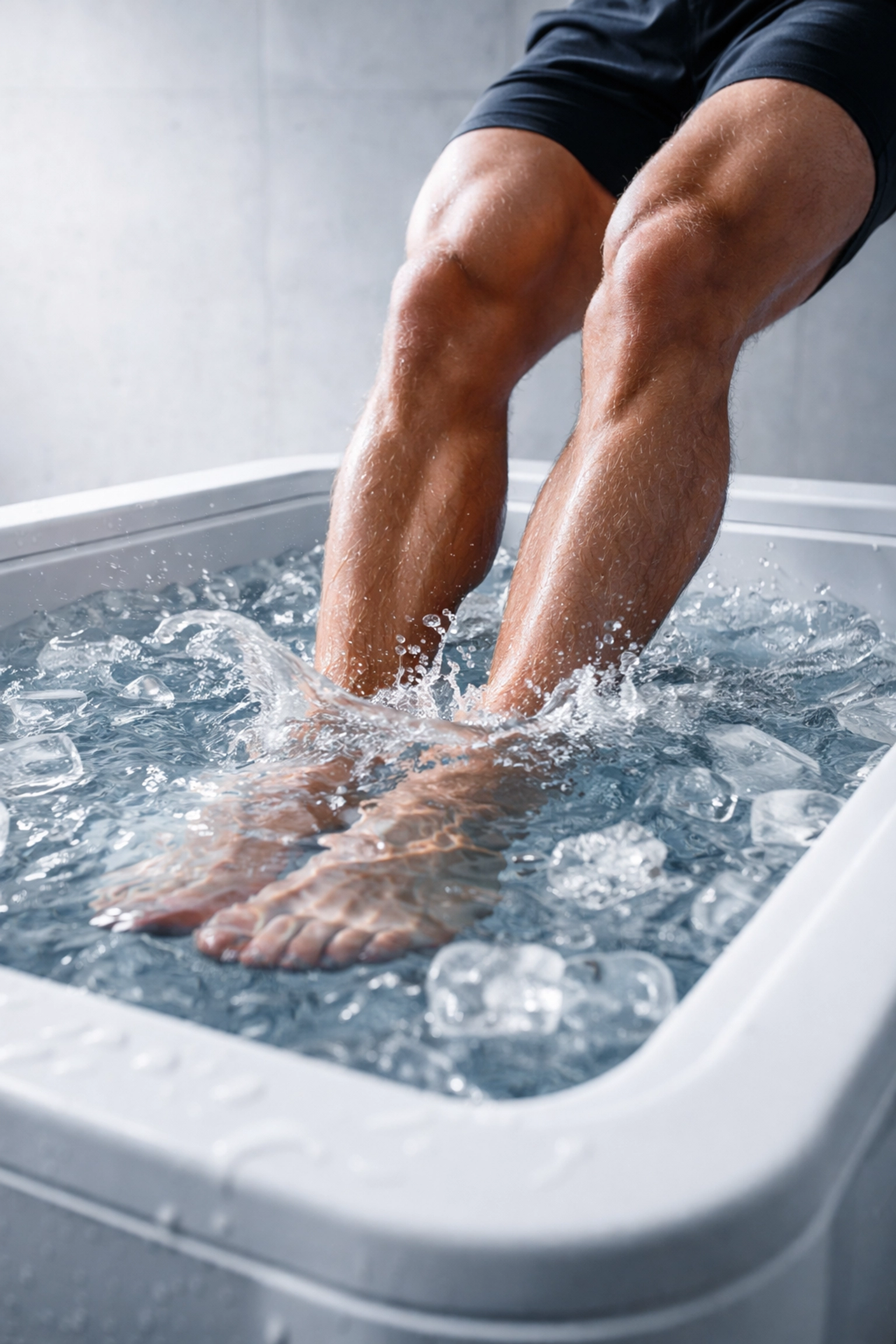
Cold water immersion (typically 10-15°C for 10-15 minutes) triggers a powerful physiological response:
- Vasoconstriction: Blood vessels constrict immediately, reducing blood flow to peripheral tissues
- Reduced metabolic activity: Cold slows cellular processes, limiting the spread of inflammatory markers
- Numbing effect: Cold temperatures reduce nerve conduction velocity, decreasing pain perception
- Rewarming vasodilation: When you exit the cold, blood vessels dilate rapidly, flushing the area with fresh, oxygenated blood
Research confirms that cold water immersion reduces delayed onset muscle soreness (DOMS) and lowers creatine kinase: a key marker of muscle damage. Athletes report feeling significantly better the day after training when using cold therapy.
When to Use Cold Plunges
Cold therapy works best immediately after intense training. The window is roughly 0-30 minutes post-workout when acute inflammation is at its peak.
Best applications:
- After high-intensity interval training
- Following heavy resistance training
- Post-competition recovery
- When you need to train again within 24-48 hours
Cold plunge protocol:
- Temperature: 10-15°C (50-59°F)
- Duration: 10-15 minutes
- Frequency: Immediately post-workout
How Infrared Therapy Works
Infrared saunas operate on the opposite principle. Instead of constricting blood vessels, heat causes vasodilation: opening blood vessels and increasing circulation.
Far-infrared light penetrates 2-7 centimetres into tissue, reaching muscles, joints, and even bone. This deep penetration triggers several responses:
- Increased blood flow: More oxygen and nutrients reach damaged tissues
- Enhanced cellular metabolism: Heat accelerates mitochondrial activity and ATP production
- Improved lymphatic drainage: Increased circulation helps clear metabolic waste
- Collagen production: Heat stimulates fibroblast activity for tissue repair
Studies show far-infrared therapy can reduce muscle soreness by 55-60% and lower creatine kinase levels by up to 89%. Red and near-infrared light have also demonstrated improvements in tissue repair and reduced inflammation in athletes.

When to Use Infrared Therapy
Unlike cold therapy, infrared works on a slower timeline. It's about gradual, sustained recovery rather than immediate relief.
Best applications:
- On rest days for deep tissue recovery
- Before workouts to increase muscle pliability
- For chronic muscle tightness or joint stiffness
- When dealing with persistent soreness that isn't resolving
Infrared protocol:
- Temperature: 45-65°C (113-149°F)
- Duration: 15-30 minutes
- Frequency: 2-4 times per week, preferably not immediately post-workout
Cold vs. Heat: Inflammation vs. Circulation
Here's where it gets interesting. These two methods target different aspects of recovery:
| Factor | Cold Plunge | Infrared Therapy |
|---|---|---|
| Primary mechanism | Reduces inflammation | Increases circulation |
| Timing | Immediately post-workout | Rest days or pre-workout |
| Speed of relief | Rapid (minutes to hours) | Gradual (hours to days) |
| Best for | Acute soreness, competition recovery | Chronic tightness, sustained healing |
| Effect on blood flow | Constricts then dilates | Sustained dilation |
For inflammation: Cold plunges win. If your goal is to reduce acute swelling and soreness after a brutal session, cold immersion delivers faster results.
For circulation: Infrared therapy wins. If you want to increase nutrient delivery and waste removal for deeper, long-term tissue repair, heat is your tool.
The Plot Twist: Neither Might Be Superior
Here's something the marketing doesn't tell you. An NIH study found that cold water immersion was no more effective than active recovery (light movement, walking, easy cycling) for reducing inflammation or cellular stress at the muscle tissue level.
The immediate pain relief you feel after a cold plunge? That's real. But it may not translate to faster actual muscle repair at the cellular level. You feel better, but your muscles might not be healing any faster than if you'd just done some light stretching.
This doesn't mean cold plunges are useless: managing perceived soreness has value. If you feel better, you're more likely to train consistently. But it's worth keeping expectations realistic.
The Best of Both Worlds: Contrast Therapy
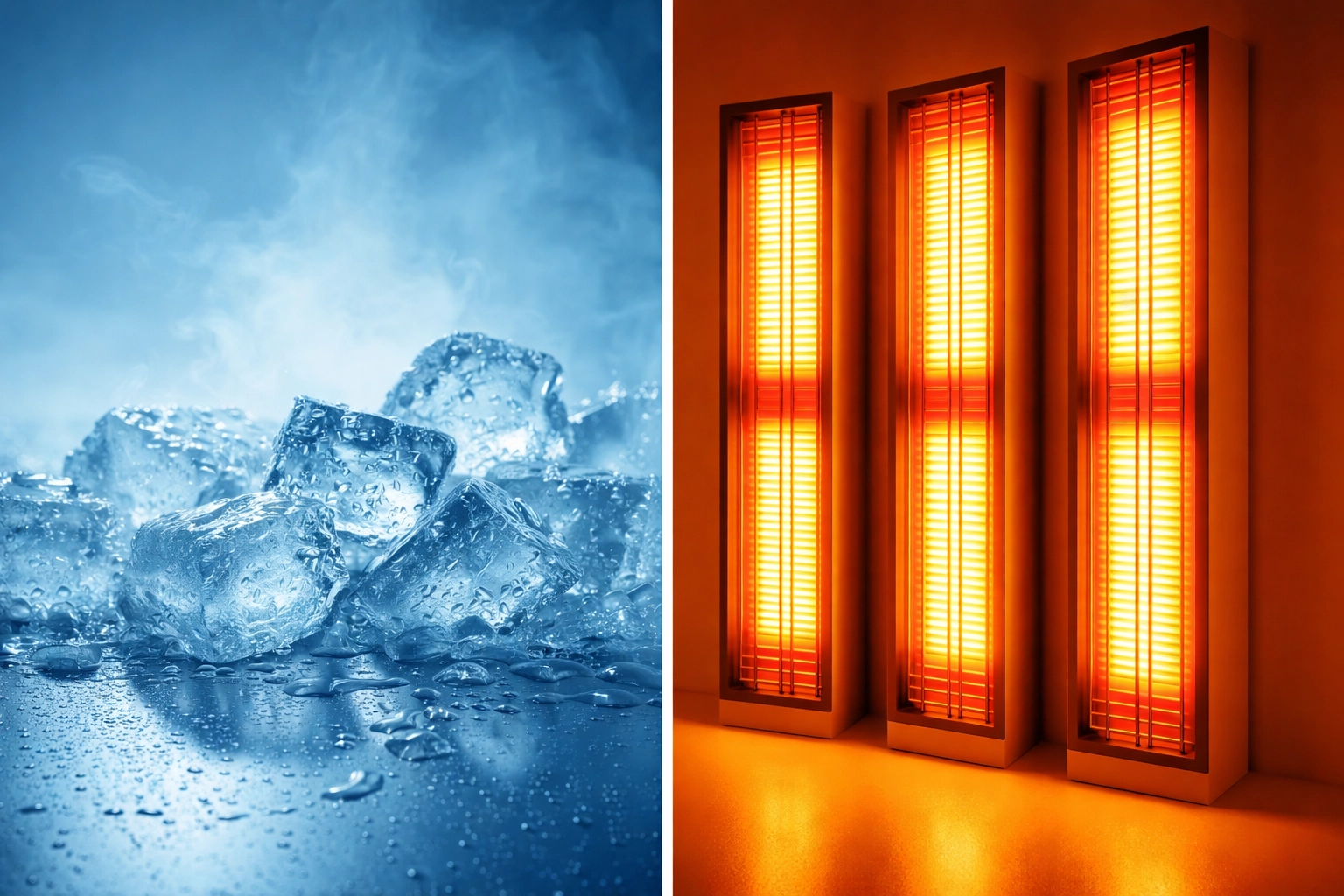
Rather than choosing sides, many athletes combine both methods through contrast therapy: alternating between cold and heat.
Basic contrast protocol:
- Start with 3-4 minutes in heat (sauna or hot water)
- Transition to 1-2 minutes in cold water
- Repeat 3-4 cycles
- End on cold if reducing inflammation is the priority
- End on heat if promoting circulation is the priority
This approach creates a "pumping" effect in the vascular system, potentially enhancing both the anti-inflammatory benefits of cold and the circulation-boosting effects of heat.
The Foundation You're Probably Ignoring
Here's what nobody talks about enough: recovery tech is the cherry on top, not the foundation.
You can have access to the most expensive cold plunge and state-of-the-art infrared sauna, but if your nutrition and supplementation aren't dialled in, you're building on sand.
Your muscles need raw materials to repair themselves:
- Zinc supports protein synthesis and immune function during recovery. Zinc 50mg tablets provide a solid foundation.
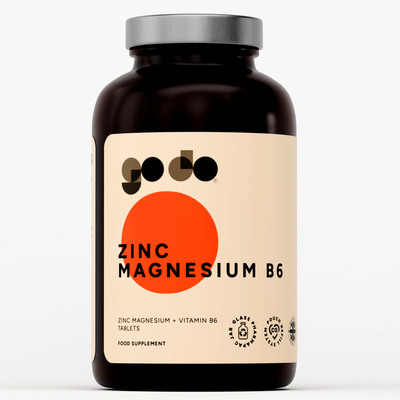
- Magnesium plays a role in over 300 enzymatic reactions, including muscle contraction and relaxation. Combined with zinc and B6 in ZMA tablets, it's a recovery staple.
- Omega-3 fatty acids help modulate the inflammatory response. Omega-3 Fish Oil supports this process naturally.
- B vitamins are essential for energy metabolism and cellular repair. A quality B Complex ensures you're not leaving gains on the table.
Recovery tech enhances a solid foundation. It doesn't replace one.
The Verdict: Which Should You Choose?
Choose cold plunges if:
- You train multiple times per day or have back-to-back competition days
- You need immediate relief from acute soreness
- You prefer quick, accessible recovery methods
Choose infrared therapy if:
- You're dealing with chronic tightness or lingering soreness
- You want to enhance circulation on rest days
- You prefer a more relaxed, gradual recovery experience
Choose both if:
- You have access to both modalities
- You want to maximise recovery from all angles
- You're willing to experiment with timing and protocols
The best recovery strategy isn't about picking the trendiest technology. It's about understanding what your body needs, when it needs it, and building that on top of solid nutrition and high-quality supplementation. Get those fundamentals right, and whatever recovery tech you add will actually have something to work with.