When you decide to transition from a commercial gym to a home setup, the first major hurdle is deciding where to invest your budget. Space is limited, and high-quality equipment is an investment. The age-old debate of machines vs. free weights takes on a different meaning when you are the one paying for the floor space and the shipping costs.
While commercial gyms have the luxury of providing both, most home gym owners must prioritize. This guide breaks down the science, the practicalities, and the specific equipment hierarchies to help you decide which path is right for your goals.
Table of Contents
- Key Takeaways
- The Case for Free Weights: Versatility and Function
- The Case for Machines: Isolation and Safety
- What Does the Science Say?
- EMG and Muscle Activation Data
- Recovery and Nutritional Support
- The Home Gym Decision Matrix
- The Hybrid Hierarchy: How to Build Your Gym
- Real-world View
- Maintaining Your Performance
- FAQ
- Summary Takeaways
Key Takeaways
| Topic | What the evidence and practice suggest |
|---|---|
| Muscle growth | Machines and free weights can both build muscle effectively when training volume and effort are matched. |
| Strength carryover | Free weights usually transfer better to real-world lifting, sport, and whole-body coordination. |
| Safety at home | Machines and racks with safeties reduce risk when you train alone. |
| Space efficiency | Adjustable dumbbells and a bench usually give the best return per square foot. |
| Isolation work | Machines make it easier to target one muscle and push close to failure with less balance demand. |
| Best setup for most people | A hybrid setup works best: start with free weights, then add cables or machines if space and budget allow. |
The Case for Free Weights: Versatility and Function
Free weights: including dumbbells, barbells, and kettlebells: are the foundation of most successful home gyms. Unlike a machine that dictates your movement, free weights require you to control the weight through all planes of motion.
1. Functional Strength and Stability
Free weights are "unconstrained." When you perform a dumbbell chest press, your body doesn't just use the pectoral muscles; it recruits dozens of smaller stabilizer muscles in the shoulder and core to keep the weight from wobbling. This translates directly to real-world strength: carrying groceries, lifting children, or moving furniture.
2. Space Efficiency
A pair of adjustable dumbbells can replace an entire rack of fixed weights and several machines, occupying only a few square feet of floor space. For those living in apartments or utilizing small garage corners, the "bang for buck" regarding floor space is unmatched.
3. Natural Range of Motion
Every human body is built differently. Machines often have fixed pivot points that may not align with your specific limb length or joint health. Free weights allow your joints to find their most comfortable, natural path.

The Case for Machines: Isolation and Safety
Weight machines: including cable towers, leg presses, and Smith machines: often get a bad reputation in "hardcore" fitness circles, but they offer distinct advantages, especially for home trainees.
1. Superior Muscle Isolation
If your goal is pure hypertrophy (muscle growth) in a specific area, machines are often superior. By removing the need to balance the weight, you can focus 100% of your mental and physical energy on the target muscle. For example, a leg extension machine isolates the quadriceps in a way that a barbell squat cannot.
2. Safety for Solo Training
One of the biggest risks of a home gym is training alone. Pushing yourself to failure on a barbell bench press without a spotter can be dangerous. Machines provide built-in safety stops and fixed paths that significantly reduce the risk of being pinned under a heavy weight.
3. Beginner-Friendly Learning Curves
For those just starting their fitness journey, the guided motion of a machine teaches the general "feel" of an exercise without the high technical demand of a barbell. It allows you to build a baseline of strength before moving to more complex movements.
Many high-end home gyms even incorporate specialized cardio-strength hybrids. For instance, why all the best gym and clubs use the Concept 2 rower is often due to its ability to provide a full-body workout that machines usually struggle to replicate.
What Does the Science Say?
A common myth is that free weights build more muscle than machines. However, recent research suggests that for muscle hypertrophy, there is often no meaningful difference when effort, proximity to failure, and total training volume are similar. That means your results depend more on consistency and progressive overload than on whether the resistance comes from a barbell or a machine.
The difference lies more in strength specificity and practicality. If you want to get better at lifting awkward loads, controlling your body through space, or building full-body coordination, free weights usually have the edge. If you want to train a muscle hard with less technical demand and lower balance requirements, machines are often easier to use and repeat consistently.
Research comparing fixed-path vs. free-weight movements
If you want to review the evidence directly, start with these external sources:
- Schwanbeck et al. (2020), Journal of Strength and Conditioning Research — compares adaptations from machine and free-weight resistance training.
- Journal of Clinical Medicine resistance training comparison paper — useful for newer trials and reviews on hypertrophy outcomes across exercise modalities.
- Saeterbakken et al. on unstable and free-weight demands — PubMed entry point for studies examining stabilizer demands and force output in less constrained lifts.
- PubMed search: free weights vs machines hypertrophy strength — broad database search for current comparisons.
What this means for a home gym
- Choose free weights if you want maximum exercise variety per square foot.
- Choose machines if you train alone, want easier setup, or prefer isolation work.
- Use both if your budget allows. This gives you heavy compound lifts plus lower-risk accessory work.
EMG and Muscle Activation Data
EMG studies do not tell you which tool is always better for growth, but they do show how different setups change stabilizer demand and muscle recruitment patterns. Use EMG as supporting data, not as the only decision-maker.
Sample EMG comparison table
| Movement comparison | Main finding from EMG data | Practical takeaway |
|---|---|---|
| Barbell squat vs Smith machine squat | Free barbell squats often show higher stabilizer and trunk muscle activity, while Smith machine squats can shift effort toward prime movers through a fixed path. | Use free squats for coordination and whole-body control; use Smith work for safer solo volume. |
| Dumbbell bench press vs machine chest press | Dumbbells usually require more shoulder stabilization; chest press machines reduce balance demand and can improve focus on pec fatigue. | Dumbbells build control; machines help you train close to failure with less setup. |
| Free-weight shoulder press vs machine shoulder press | Free-weight pressing tends to increase stabilizer recruitment around the shoulder and trunk. | Machines may suit higher-rep hypertrophy blocks or fatigued training days. |
| Leg extension vs squat | Leg extensions isolate the quadriceps more directly, while squats spread work across quads, glutes, adductors, and trunk. | Isolation is useful for bodybuilding or rehab-style programming. |
Interpreting EMG properly
| Point | Why it matters |
|---|---|
| Higher EMG is not the same as more muscle growth | A muscle can show high activation in one movement without producing better long-term hypertrophy than another matched exercise. |
| Stability changes the reading | Fixed-path machines reduce the need for stabilizers, which can lower EMG in support muscles while still training the target muscle effectively. |
| Exercise intent matters | A heavy strength-focused set and a controlled hypertrophy set can produce different activation patterns. |
| Your anatomy matters | Limb length, stance, grip width, and machine design all affect the result. |
Pro Tip: If you train alone in a home gym, use free weights for your first main lift while fresh, then switch to cables or machines for your final hard sets. This keeps the skill and coordination benefits of free weights without forcing you to grind risky reps when fatigued.
Recovery and Nutritional Support
Regardless of whether you choose a squat rack or a multi-gym, your progress depends on your ability to recover. Intense resistance training creates micro-tears in the muscle fibers. To repair these, your body requires specific nutrients.
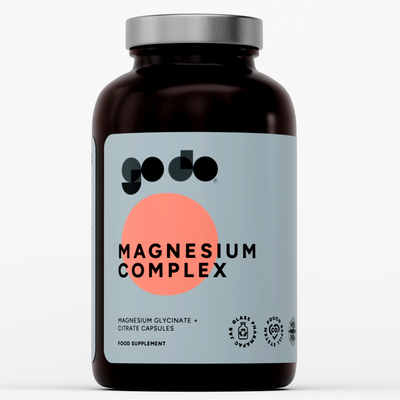
- Muscle Recovery: Magnesium and Zinc are essential for protein synthesis and sleep quality. Many home trainees utilize Zinc Magnesium B6 tablets to support muscle repair overnight.
- Energy and Power: If you choose a free-weight-heavy routine that involves high-intensity compound movements, Creatine Monohydrate is one of the most researched supplements for increasing power output.
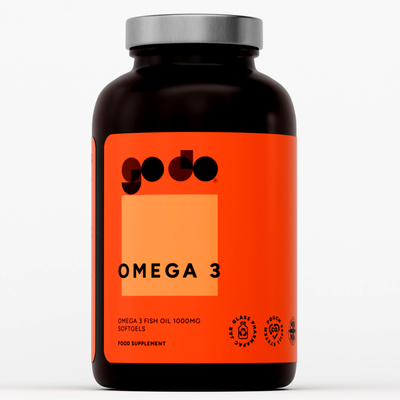
- Joint Health: Free weights can put a higher strain on your connective tissues. Supporting your joints with Omega 3 Fish Oil can help manage the inflammation associated with heavy lifting.

The Home Gym Decision Matrix
To decide which to buy, evaluate your situation based on these four factors:
1. Your Available Space
- Tight Space: Choose adjustable dumbbells and a folding bench.
- Garage/Basement: You have room for a power rack (free weights) or a functional trainer (cables/machines).
2. Your Budget
- Budget-Conscious: Free weights are generally cheaper per pound of resistance. You can start with basic iron plates and a bar.
- Premium Budget: A high-quality cable machine or a Smith machine provides a "luxury" feel and easier transitions between exercises.
3. Your Training Goals
- Athletic Performance/Powerlifting: 90% Free Weights.
- Bodybuilding/Aesthetics: 50/50 Split. Use free weights for heavy compound moves and machines for finishing/isolation.
- General Health/Longevity: Machines are often preferred for their lower impact and safety.
4. Safety Constraints
Do you always train alone? If so, and you aren't confident in your form, a Smith machine or a set of high-quality machines with safety pins may be the wiser investment.

The Hybrid Hierarchy: How to Build Your Gym
You don't have to choose just one. The most effective home gyms use a "Hybrid" approach. Here is the recommended order of purchase for a balanced setup:
- The Foundation (Free Weights): A set of adjustable dumbbells. These allow for hundreds of exercises and take up minimal space.
- The Support: An adjustable bench. This unlocks incline and decline presses, seated rows, and more.
- The "Big Three" (Free Weights): A power rack, barbell, and weight plates. This allows for squats, deadlifts, and bench presses.
- The Refinement (Machine): A plate-loaded cable tower or functional trainer. This provides constant tension that free weights cannot replicate, perfect for face pulls, lat pulldowns, and tricep extensions.
Real-world View
In practice, most home gym owners do not choose between machines and free weights in a vacuum. They choose based on noise, floor space, ceiling height, training experience, and whether they usually train alone.
Here is the real-world breakdown:
- Small apartment setup: Adjustable dumbbells, resistance bands, and a bench usually beat any single machine on value.
- Garage gym setup: A rack, barbell, plates, and a cable attachment or functional trainer give the best balance of strength work and convenience.
- Beginner lifter: Machines can reduce technical frustration and help you learn effort, range of motion, and control.
- Intermediate to advanced lifter: Free weights usually become the foundation, with machines added for extra volume and joint-friendly accessory work.
- Older adults or joint-sensitive lifters: Machines and cables often make it easier to train hard without forcing uncomfortable bar paths.
Bottom line: the best home gym is the one you can use safely, consistently, and progressively for years.
Maintaining Your Performance
Setting up the gym is only half the battle; maintaining your health to use it is the other. High-volume training, whether on machines or with free weights, increases your body's demand for micronutrients.
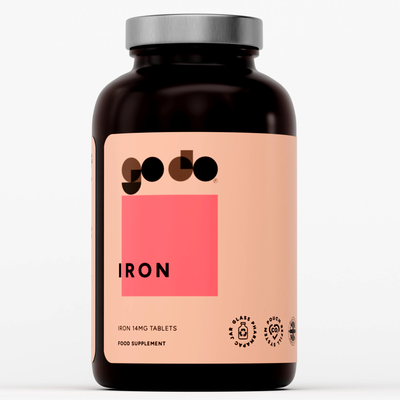
For example, maintaining healthy blood oxygen levels is vital for endurance during long sessions. A simple Iron supplement can be beneficial for those prone to fatigue. Additionally, many lifters find that supporting their metabolic health with Chromium Picolinate helps with energy stability during fasted morning workouts.

FAQ
Are free weights better than machines for muscle growth?
Not necessarily. When total hard sets, effort, and progression are matched, both can build muscle effectively. Free weights add coordination demands. Machines make isolation easier.
Are machines safer for home gyms?
Often yes, especially if you train alone. Fixed paths, selectorized stacks, and safety stops reduce the chance of getting trapped under a failed rep.
Do free weights burn more calories?
They can involve more total muscle mass and stabilizer activity in some exercises, but calorie burn should not be the main reason you choose them. Your full programme matters more.
Should beginners start with machines or free weights?
Beginners can start with either. Machines are easier to learn quickly. Free weights teach movement skill earlier. A mixed approach usually works best.
What is the best first purchase for a home gym?
For most people, start with adjustable dumbbells and an adjustable bench. This gives the widest range of exercises for the lowest space cost.
Summary Takeaways
- Free weights win on versatility, cost, and functional strength. They are the best starting point for 80% of home gym owners.
- Machines win on safety, muscle isolation, and ease of use. They are excellent "add-ons" once the foundation is built.
- Muscle growth is possible with both; your consistency and progressive overload matter more than the tool you use.
- Home Gym Tip: If you train alone, prioritize a power rack with safety spotter arms or machines to avoid injury.
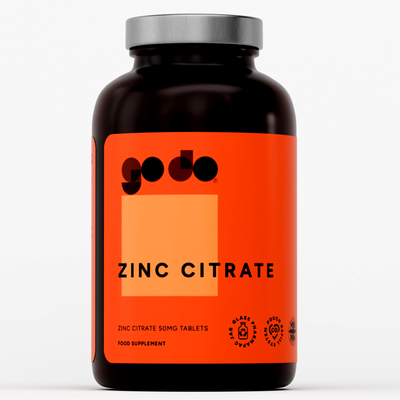
- Don't forget recovery: Supplementing with Zinc Citrate and proper protein intake is non-negotiable for progress.
Building a home gym is a journey. Start with the basics: usually free weights: and slowly add specialized machines as your space and goals evolve. For more information on getting equipment delivered to your door, visit our international shipping page to see how we can help you build your dream setup at Fitness Health.