

Twenty years ago, when I started training clients in a cramped gym, I made the same mistake most trainers make. I focused on the big, impressive muscles - chest, back, shoulders. Grip strength? Forearms? That was just something that happened naturally, right?
Wrong. Dead wrong.
I learned this the hard way when a dedicated client who'd been training consistently for six months, hit a brick wall with her deadlifts. She could barely hold 80kg for more than three reps, despite her legs and back being strong enough for much more. Her grip was giving out before her target muscles even got warmed up.
That was my wake-up call. In two decades of training everyone from weekend warriors to competitive athletes, I've discovered that grip strength isn't just important - it's absolutely fundamental. Yet it remains the most overlooked aspect of upper body development.
Why Everyone Ignores Grip Training
Most people skip forearm work because it's not flashy. You can't impress anyone with your crushing grip in the gym mirror. There's no "grip day" hashtag trending on social media. But here's what I've learned: your grip strength is often the weakest link in your entire training chain.
I've watched countless clients plateau on pull-ups, rows, and deadlifts not because their lats or rhomboids weren't strong enough, but because their hands simply couldn't hold on. It's frustrating, limiting, and completely preventable.
The Three Types of Grip Strength You Need to Know
Most people think grip strength is just grip strength. In reality, there are three distinct types, and you need all of them.
Crushing Grip
This is what most people picture - squeezing something in your palm. Think handshakes, gripping a tennis racket, or using hand grippers. Your crushing grip involves primarily your flexor muscles wrapping around an object.
I test this with clients using a simple handshake. You'd be amazed how many strong-looking individuals have surprisingly weak crushing grip. James, a rugby player I trained, could bench 140kg but had the handshake of a wet fish until we addressed it specifically.
Pinching Grip
This involves holding objects between your thumb and fingers - like carrying weight plates by their edges or gripping a thick book. Pinching grip is crucial for climbing, martial arts, and general functional strength.
Most people's pinching grip is pathetically weak because we never train it. Try holding two 10kg plates smooth-side-out between your thumb and fingers. Most untrained individuals can't manage 30 seconds.
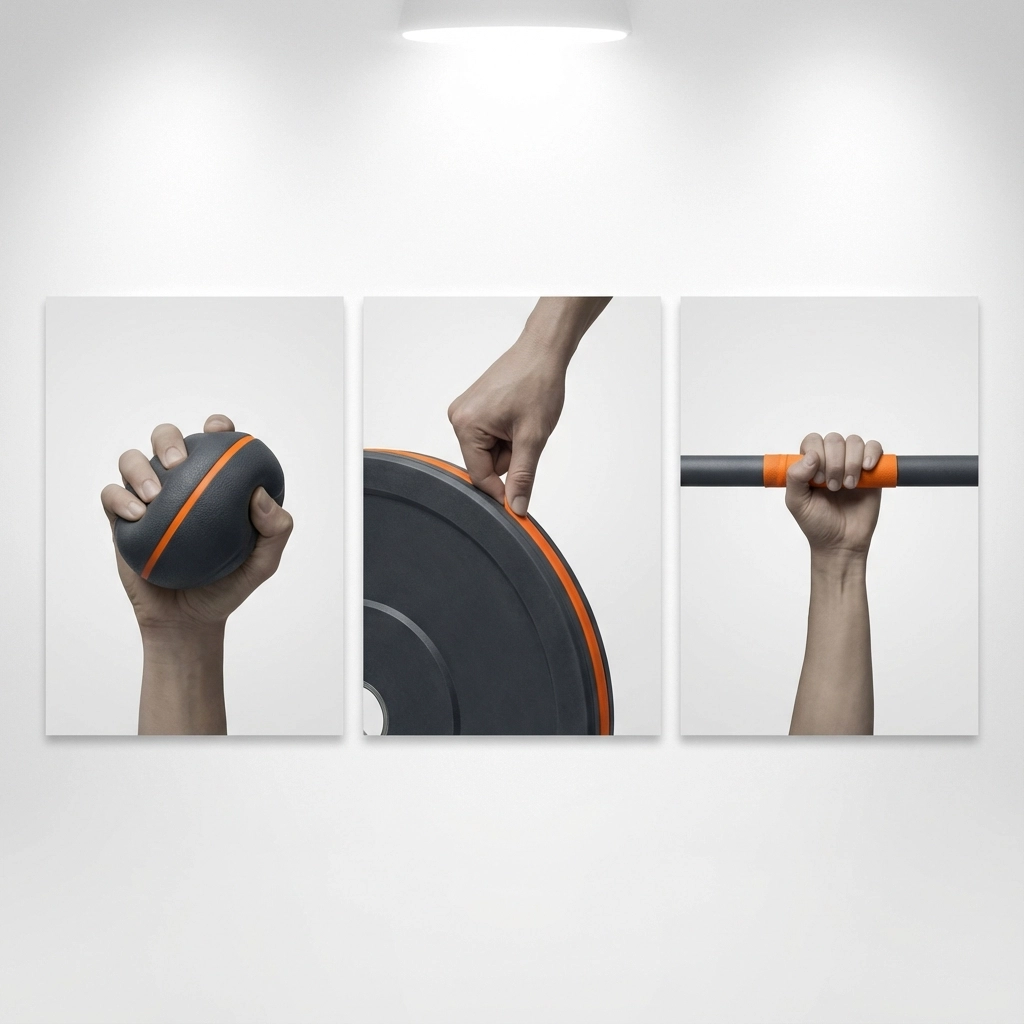
Support Grip
This is your ability to hang onto something for time - think farmer's walks, dead hangs, or holding heavy deadlifts at the top. Support grip combines endurance with strength, requiring both muscular endurance and neural efficiency.
Support grip often determines how many pull-ups you can do or how heavy you can deadlift. It's the foundation that everything else builds upon.
When Weak Grip Sabotages Your Progress
Here's a scenario I see weekly: Mark comes to me frustrated because his back development has stalled. He's been doing the same rowing exercises for months with no progress. We test his grip, and bingo - his hands give out after 45 seconds of hanging.
Your pulling muscles can only be as strong as your ability to hold onto the weight.
I've seen this pattern hundreds of times:
- Deadlifts plateau at weights well below what the legs and back can handle
- Pull-up numbers stagnate because grip fails before lats fatigue
- Rowing exercises become limited by forearm pump rather than back muscle exhaustion
- Farmer's walks turn into grip endurance tests rather than full-body conditioning
The solution isn't just "grip it tighter." You need systematic grip development.
Specific Forearm Training Protocols That Actually Work
After two decades of trial and error with clients, here are the protocols that consistently deliver results:
The Foundation Phase (Weeks 1-4)
Dead Hangs: 3 sets of maximum hold time, 2-3 times per week. Start wherever you are - even 15 seconds counts. Add 5 seconds each week.
Plate Pinches: Hold two 5kg plates smooth-side-out. 3 sets of 30-60 seconds. Progress by adding time, then weight.
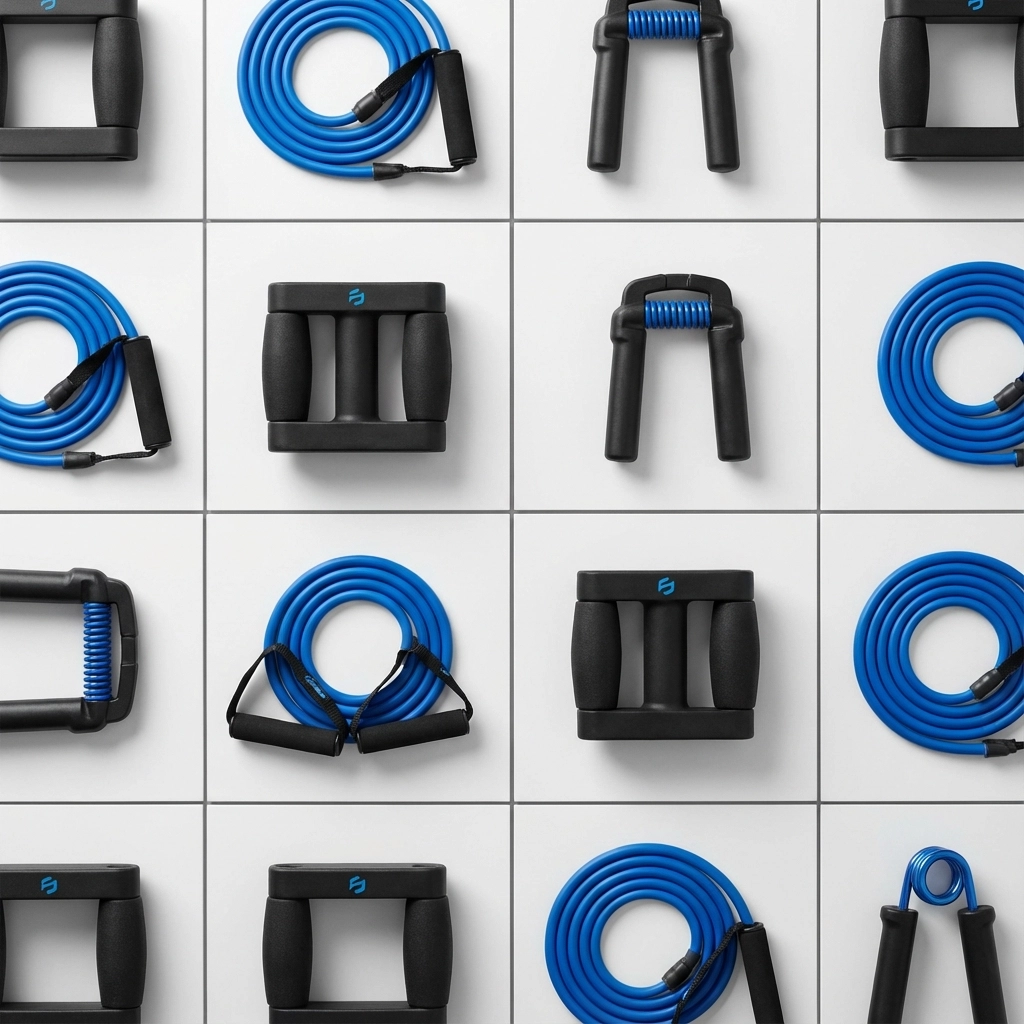
Grip Squeezes: Using a tennis ball or grip trainer, 3 sets of 15 maximum squeezes each hand.
The Strength Phase (Weeks 5-8)
Heavy Farmer's Walks: 40-60 metres with challenging weight. Focus on maintaining posture while grip is tested.
Towel Pull-ups: Hang towels over a pull-up bar and grip the towels instead. This dramatically increases grip difficulty.
Wrist Curls and Reverse Wrist Curls: 3 sets of 15-20 each direction, focusing on full range of motion.
The Power Phase (Weeks 9-12)
Thick Bar Training: Use Fat Gripz on barbells and dumbbells. This forces maximum grip activation during normal exercises.
Grip Clusters: Combine different grip challenges in one session - dead hangs, then farmer's walks, then plate pinches with minimal rest.
Sport-Specific Movements: Rope climbs, rock climbing holds, or martial arts grip training depending on your goals.
Grip Strength as a Health and Longevity Marker
Here's something that might surprise you: grip strength is one of the most reliable predictors of overall health and longevity. Research consistently shows that people with stronger grips live longer, have better cognitive function, and maintain independence well into old age.
I've trained clients in their 70s and 80s, and without exception, those with the strongest grips are the most capable in daily activities. Margaret, now 76, can still carry her own shopping, open stubborn jars, and maintain her garden independence - largely because we've prioritised her grip strength for the past eight years.
Your grip strength reflects:
- Overall muscle mass and strength
- Nervous system function and coordination
- Bone density in hands, wrists, and forearms
- Cardiovascular health (grip strength correlates with heart health)
Think of grip training as an investment in your future self.
Busting Common Grip Training Myths
Myth 1: "Grip strength develops naturally from other exercises" Reality: General training provides minimal grip development. You need specific, progressive grip work.
Myth 2: "Lifting straps are always bad for grip development" Reality: Strategic strap use allows you to overload target muscles while training grip separately. It's about smart programming, not complete avoidance.
Myth 3: "Only climbers and martial artists need grip training" Reality: Everyone benefits from stronger grip, from opening jars to carrying luggage to preventing falls in old age.
Myth 4: "Grip training will make my forearms too big" Reality: Unless you're specifically bodybuilding your forearms with extreme volume, functional grip training creates practical strength without excessive size.
Programming Grip Work Into Your Routine
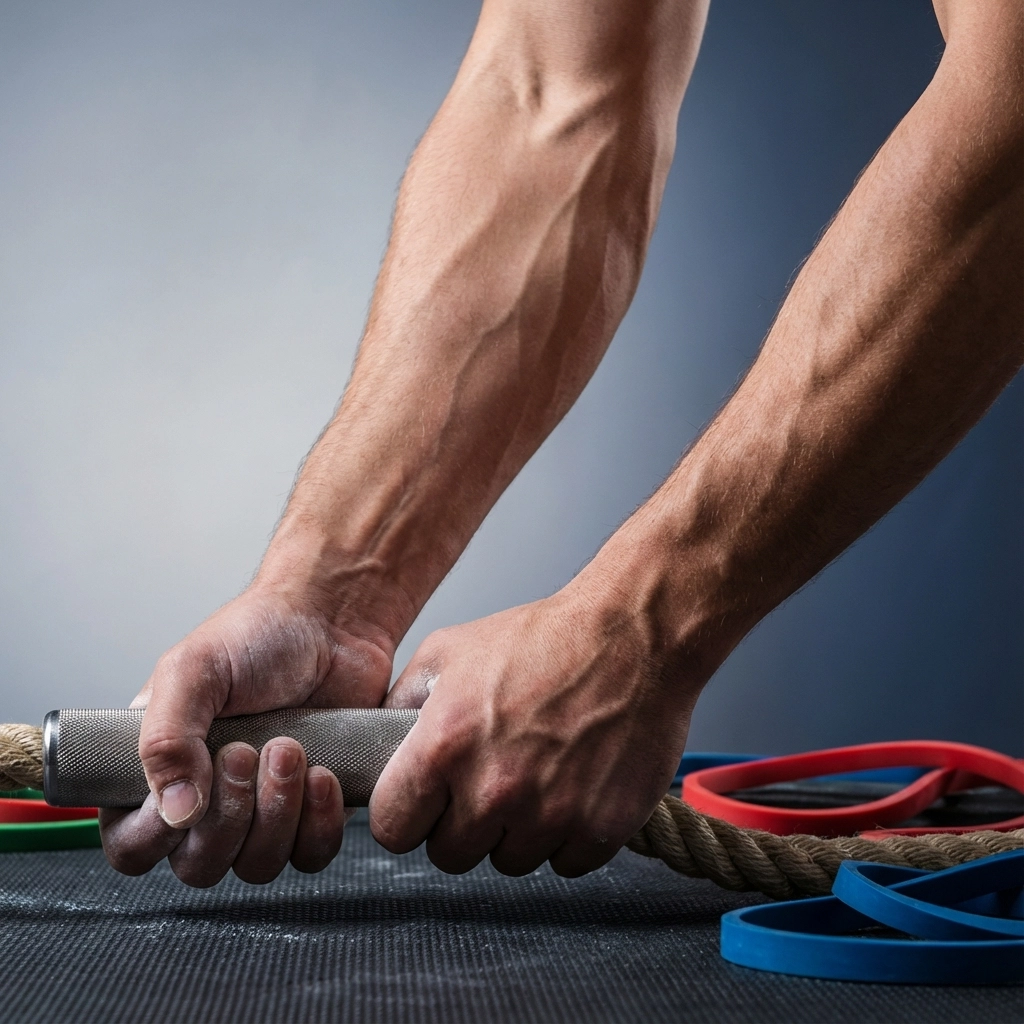
The key is consistency over intensity. I program grip work for clients in three ways:
Option 1 - Daily Minimums: 5 minutes of grip work every training day. Dead hangs, plate pinches, or grip squeezes as a warm-up or cool-down.
Option 2 - Dedicated Sessions: 15-20 minutes twice per week focusing purely on grip and forearm development.
Option 3 - Exercise Integration: Use thick bars, towels, or challenging grips during regular exercises to make every set a grip challenge.
Most successful clients combine all three approaches - daily minimums for consistency, weekly dedicated sessions for progression, and integrated challenges for practical application.
The Transformation Waiting for You
I've watched hundreds of clients transform their training when they finally address their grip strength. Sarah, whom I mentioned earlier, progressed from struggling with 80kg deadlifts to confidently handling 140kg within six months of systematic grip training. Her back development accelerated because she could finally hold onto weights long enough to properly fatigue her target muscles.
But the benefits extend far beyond the gym. Clients report greater confidence in daily activities, reduced hand and wrist pain from desk work, and a sense of practical strength that goes beyond mirror muscles.
Your grip is the bridge between your mind's ambition and your body's capability. When that bridge is strong, everything else becomes possible.
Your Next Step Starts Now
Stop letting weak grip sabotage your progress. Start today with a simple dead hang - grab a pull-up bar and hang for as long as possible. Record your time. That's your baseline.
Tomorrow, add plate pinches. Next week, incorporate farmer's walks. Within a month, you'll feel the difference in every pulling exercise you do.
Remember: grip strength isn't just about lifting heavier weights. It's about building practical, functional strength that serves you inside and outside the gym for decades to come. Your future self will thank you for the investment you make today.
The strongest people I know don't just train their mirror muscles - they build their foundation from the ground up, starting with the very first point of contact between body and weight: their grip.
Start hanging. Start squeezing. Start building the foundation that everything else depends on.











