Here's a frustrating reality for anyone serious about fitness: the same hormone that helps build muscle and drive performance might also be responsible for a receding hairline. Dihydrotestosterone (DHT) is that hormone, and managing it without sabotaging hard-earned gains is a balancing act that thousands of gym-goers and athletes face daily.
The good news? Natural DHT management is possible. Supplements like saw palmetto, pumpkin seed oil, and zinc offer a middle-ground approach that may help protect hair follicles without the dramatic hormonal shifts that come with prescription medications.
Understanding DHT: The Double-Edged Hormone
DHT is an androgen hormone derived from testosterone through the action of an enzyme called 5-alpha reductase. It's significantly more potent than testosterone: roughly three to five times stronger in its androgenic effects.
What DHT does in the body:
- Drives muscle protein synthesis and strength development
- Supports libido and sexual function
- Contributes to body hair growth and voice deepening
- Plays a role in fat distribution and bone density
The problem arises when DHT binds to receptors in the scalp. In genetically susceptible individuals, this binding causes hair follicles to miniaturise over time, eventually producing thinner, weaker hairs until the follicle stops producing visible hair altogether. This process is the primary mechanism behind male-pattern baldness (androgenetic alopecia).

The Hair Loss Connection: Why Blocking All DHT Isn't the Answer
Prescription DHT blockers like finasteride work by inhibiting 5-alpha reductase, reducing DHT levels by up to 70%. While effective for hair retention, this significant reduction can come with unwanted side effects, including decreased libido, potential muscle loss, and other hormonal imbalances.
This is where natural DHT management becomes appealing. Rather than eliminating DHT entirely, natural supplements work as mild inhibitors that may reduce DHT's impact on hair follicles while maintaining enough circulating DHT to support other bodily functions.
Important to note: Natural DHT blockers are generally less potent than prescription options. They work best for mild cases or as part of a comprehensive approach to hair health, not as a replacement for medical treatment in advanced hair loss scenarios.
Natural DHT Blockers: The Key Players
Saw Palmetto
Saw palmetto extract comes from the berries of the Serenoa repens plant and functions as a mild 5-alpha reductase inhibitor. Multiple studies suggest it may help reduce DHT conversion without the aggressive suppression seen with pharmaceutical options.
How it works: Saw palmetto appears to block the enzyme responsible for converting testosterone to DHT, while also potentially preventing DHT from binding to androgen receptors in hair follicles.
Dosage considerations: Most research uses standardised extracts in the range of 320mg to 3000mg daily. The Fitness Health Saw Palmetto 3000mg supplement provides a high-potency dose designed for those wanting meaningful support without multiple capsules throughout the day.

Pumpkin Seed Oil
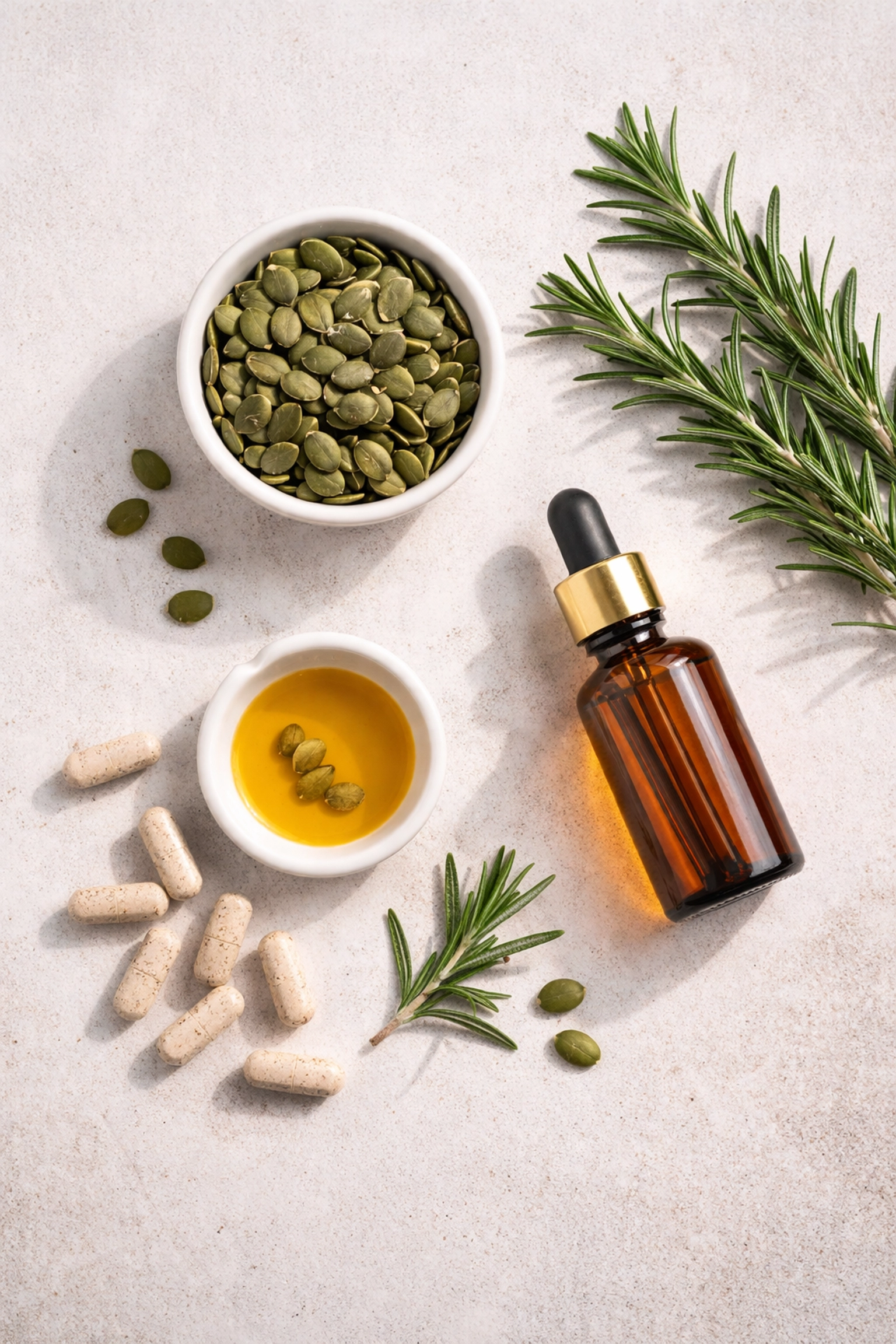
Pumpkin seed oil has emerged as one of the more promising natural options for DHT management. A 2021 study demonstrated that topical application of pumpkin seed oil over three months helped prevent pattern hair loss and promoted increased hair growth in female participants.
How it works: Pumpkin seed oil contains phytosterols and fatty acids that may inhibit 5-alpha reductase activity. It can be used both topically and as a dietary supplement.
Practical application: Taking 400-1000mg of pumpkin seed oil daily, or applying it directly to the scalp 2-3 times per week, represents typical usage patterns in research settings.
Zinc
Zinc plays a crucial role in hormone regulation and has demonstrated 5-alpha reductase inhibiting properties. Zinc deficiency is also independently linked to hair loss, making it a dual-purpose supplement for hair health.
How it works: Zinc appears to modulate DHT levels while supporting overall hair follicle health and protein synthesis: making it particularly relevant for those balancing hair concerns with fitness goals.
Recommended intake: 15-30mg daily is typically sufficient for most adults. Higher doses should only be taken under professional guidance, as excess zinc can interfere with copper absorption.
Can You Block DHT Without Losing Your Gains?
This is the question that keeps fitness enthusiasts up at night. The research specifically examining natural DHT blockers and muscle development is limited, but understanding DHT's role in the body provides useful context.
Key considerations:
-
Natural blockers are mild: Unlike finasteride, which reduces DHT by 70%, natural supplements produce much smaller reductions. This means the DHT available for muscle-related functions remains largely intact.
-
Testosterone remains unaffected: Natural DHT blockers target the conversion process, not testosterone itself. Free testosterone: critical for muscle protein synthesis: continues circulating normally.
-
Localised vs systemic effects: Some natural approaches, particularly topical applications of pumpkin seed oil or saw palmetto, may primarily affect DHT at the scalp level rather than systemically reducing it throughout the body.
-
Individual response varies: Genetics play a significant role in both hair loss susceptibility and hormonal sensitivity. Some individuals may notice no impact on performance, while others might experience subtle changes.
A Practical Approach to DHT Management
For those wanting to protect their hair while maintaining training performance, consider this evidence-informed strategy:
Step 1: Start with foundational nutrition
Ensure adequate zinc intake through diet (oysters, beef, pumpkin seeds) or supplementation. Address any deficiencies before adding specialised supplements.
Step 2: Add saw palmetto
Begin with a quality saw palmetto supplement like Fitness Health's Saw Palmetto 3000mg. Take consistently for at least 3-6 months before evaluating results: hair changes happen slowly.
Step 3: Consider topical applications
Apply pumpkin seed oil directly to the scalp 2-3 times weekly. This targets DHT at the follicle level without significant systemic absorption.
Step 4: Monitor and adjust
Track both hair changes and training performance. If noticeable negative effects on strength or libido occur, reduce dosages or consult a healthcare professional.
Step 5: Support overall hair health
Combine DHT management with good scalp hygiene, adequate protein intake, and stress management. DHT is only one factor in hair health.
Why Quality Matters in Supplement Selection
Not all supplements deliver what their labels promise. Factors like extraction methods, standardisation, and bioavailability significantly impact effectiveness.
Fitness Health produces all supplements in the UK under strict quality control standards. The Saw Palmetto 3000mg formula uses high-potency extract designed for maximum bioavailability. Additionally, eco-conscious packaging reflects a commitment to sustainability alongside health outcomes.
When selecting any DHT-managing supplement, look for:
- Standardised extracts with specified active compound percentages
- Third-party testing or quality certifications
- Clear dosage information matching research protocols
- Reputable manufacturers with transparent sourcing
Setting Realistic Expectations
Natural DHT blockers represent a moderate intervention: not a miracle cure. Research consistently shows they work best for:
- Mild to moderate hair thinning
- Preventative use in those with family history of hair loss
- Supplementary support alongside other treatments
- Individuals wanting to avoid prescription medication side effects
Those experiencing significant hair loss should consult a dermatologist or trichologist. Natural supplements can complement medical treatment but may not be sufficient as standalone solutions for advanced cases.
Key Takeaways
- DHT is essential but problematic: It supports muscle and libido while potentially causing hair loss in susceptible individuals.
- Natural blockers offer middle ground: Saw palmetto, pumpkin seed oil, and zinc mildly inhibit DHT without dramatic hormonal shifts.
- Gains likely won't suffer: The mild nature of natural DHT blockers means testosterone and muscle-building capacity remain largely unaffected.
- Consistency matters: Results take 3-6 months minimum; patience is essential.
- Quality supplements make a difference: Choose standardised, high-potency formulas from reputable manufacturers like Fitness Health.
Managing DHT naturally is about finding balance: protecting hair health while respecting the hormone's legitimate functions in the body. With the right approach, it's possible to support both goals simultaneously.