

How Microplastics Became the Latest Health Obsession
Microplastics have rapidly evolved from an environmental concern to a mainstream health anxiety. Social media feeds overflow with alarming statistics: microplastics found in human blood, placentas, and organs. Wellness influencers recommend expensive filtration systems and "detox" protocols. The supplement industry faces increasing scrutiny as consumers demand plastic-free products.
This shift occurred because microplastics represent something uniquely modern and unsettling: invisible contamination from our own convenience culture. Unlike traditional toxins, microplastics weren't deliberately added to food. They're an unintended consequence of plastic ubiquity, making them feel both unavoidable and violating.
The wellness industry capitalised on this anxiety quickly. "Microplastic-free" marketing claims appeared alongside promises of cellular detoxification and gut restoration. But separating legitimate concern from profitable fear-mongering requires examining the actual science.

How Microplastics Enter Your Food and Supplements
Microplastic contamination follows predictable pathways into the food supply. Understanding these routes helps assess which products pose higher exposure risks.
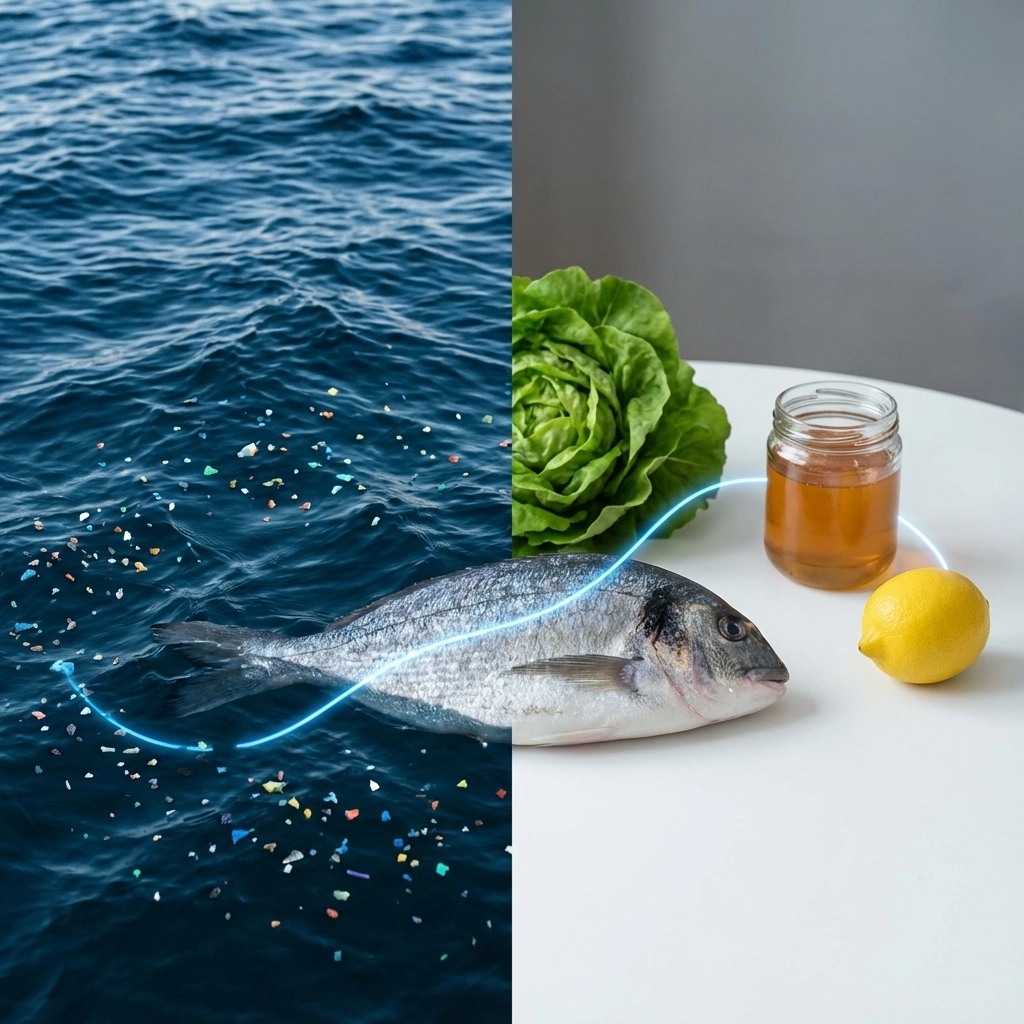
Environmental contamination occurs when plastic waste breaks down in oceans, soil, and air. Sea salt contains microplastics from ocean pollution. Honey shows contamination because bees collect particles from the environment. Fruits and vegetables absorb fragments through root systems and surface deposition.
Processing and packaging introduce additional contamination. Food grinding, mixing, and heating equipment made from plastic components shed particles. Plastic packaging transfers microplastics directly into contents, especially when heated or stored long-term. Tea bags release billions of microplastic particles when steeped in hot water.
Supplements face unique contamination risks during manufacturing. Capsules themselves contribute microplastics when made from conventional gelatin or vegetarian plastics. Processing equipment, filtration systems, and packaging materials all represent potential sources. Marine-based supplements like fish oil carry concentrated ocean microplastics from bioaccumulation in fatty tissues.
Water contamination affects all food production. Bottled water contains significantly more microplastics than tap water in most UK regions. This contamination transfers to any food or supplement manufactured using contaminated water sources.
Current Science: Are These Levels Actually Dangerous?
The scientific consensus reveals a significant evidence gap between detection and demonstrated harm. Current research shows concerning mechanisms in laboratory studies while regulatory agencies maintain that proven human health risks remain unestablished.
Regulatory positions reflect this uncertainty. The FDA states that current scientific evidence does not demonstrate that microplastic levels detected in foods pose health risks. The European Food Safety Authority echoes this assessment, noting insufficient data to establish safety thresholds or health-based guidance values.
Animal studies reveal potential mechanisms for harm that warrant attention. Laboratory research demonstrates that microplastics can trigger inflammation, disrupt gut microbiome balance, and carry absorbed toxins into tissues. Studies show altered immune responses, oxidative stress, and potential interference with hormonal systems.
Human epidemiological studies remain virtually non-existent. This represents the critical knowledge gap. While researchers detect microplastics in human blood, organs, and waste, no large-scale studies have linked these exposures to specific health outcomes or disease patterns.
Dose-response relationships haven't been established. Current exposure levels through typical food consumption may fall well below any threshold for biological effects. The difference between laboratory exposure doses and real-world consumption levels often spans several orders of magnitude.
Testing and Avoidance: UK Consumer Options
UK consumers have limited options for testing personal microplastic exposure, but several practical approaches can reduce consumption.
Personal testing isn't commercially available for microplastics. Unlike heavy metals or nutritional markers, no consumer-facing labs offer microplastic analysis. Research institutions conduct specialised testing, but this remains inaccessible for individual consumers.
Water filtration provides the most actionable intervention. UK tap water generally contains fewer microplastics than bottled alternatives, contrary to popular perception. Carbon block filters remove some microplastics, while reverse osmosis systems eliminate virtually all particles. However, these systems also remove beneficial minerals.
Food sourcing strategies can reduce exposure. Choosing products with minimal plastic packaging, avoiding ultra-processed foods, and selecting organic options where possible may lower consumption. Sea salt contains more microplastics than mined rock salt. Loose-leaf tea eliminates tea bag contamination.
Supplement selection requires examining manufacturing practices. Companies increasingly highlight plastic-free processing and packaging. However, marketing claims often exceed actual testing verification. Third-party testing for microplastics remains expensive and uncommon.
Industry Response and Current Regulations
The supplement and food industries show mixed responses to microplastic concerns, ranging from proactive testing to dismissive marketing tactics.
Regulatory frameworks lag behind public concern. The UK follows EU precedents for food safety assessment, which currently don't include specific microplastic limits. The Food Standards Agency monitors research developments but hasn't issued consumer guidance or industry requirements.
Industry testing initiatives vary dramatically. Leading supplement manufacturers invest in microplastic analysis and process modifications. Smaller companies often lack resources for comprehensive testing. Some brands use microplastic concerns for competitive advantage without substantive testing backing claims.
Packaging innovations represent the most visible industry response. Companies develop plant-based capsules, biodegradable packaging, and plastic-free processing equipment. However, alternative materials sometimes introduce different contamination risks or environmental trade-offs.
Supply chain transparency remains limited. Most companies can't trace microplastic levels through complex ingredient sourcing networks. Raw material suppliers rarely provide microplastic analysis, creating knowledge gaps throughout production chains.
Potential Health Effects: What Science Shows and Doesn't Show
Current research reveals plausible biological mechanisms for microplastic toxicity while demonstrating significant limitations in human health evidence.
Gut microbiome disruption represents the most studied mechanism. Laboratory research shows that microplastics alter bacterial populations, reduce beneficial species diversity, and increase intestinal permeability. These changes correlate with inflammatory markers and gastrointestinal symptoms in animal models.
Chemical exposure pathways occur when microplastics transport absorbed toxins. Plastic particles concentrate heavy metals, pesticides, and persistent organic pollutants from environmental sources. These chemicals can release when particles break down in digestive systems.
Inflammatory responses appear consistently in animal studies. Microplastic exposure triggers immune activation, oxidative stress, and tissue inflammation. However, the doses used in research often exceed realistic human consumption levels by substantial margins.
Reproductive and developmental effects show concerning patterns in animal research. Studies link microplastic exposure to reduced fertility, altered hormone levels, and developmental abnormalities. A review of nearly 2,000 studies found consistent evidence for reproductive impacts across species.
Cancer risk assessments remain inconclusive. While some animal studies suggest increased cancer risk, particularly in digestive tissues, the evidence quality varies significantly. No human cancer studies have examined microplastic exposure as a risk factor.
Critical limitations affect all current research. Most studies use synthetic microplastics at concentrations far exceeding environmental levels. Laboratory conditions don't replicate complex human exposure patterns. Animal models may not translate to human physiology accurately.
Practical Steps for Health-Conscious Consumers
Evidence-based strategies can reduce microplastic exposure without requiring extreme lifestyle changes or expensive interventions.
Water consumption modifications offer immediate impact. Choose UK tap water over bottled options in most regions. Install carbon filtration if taste or local water quality concerns exist. Avoid single-use plastic water bottles, particularly when heated in cars or storage areas.
Food preparation changes minimise contamination. Use glass, stainless steel, or ceramic containers instead of plastic for food storage and heating. Choose loose-leaf tea over tea bags. Select products with minimal plastic packaging when practical alternatives exist.
Supplement selection criteria should include manufacturing transparency. Choose companies that test for microplastics or use verified plastic-free processing. Prioritise marine supplements from companies with rigorous purification protocols. Consider plant-based capsules over conventional gelatin or plastic alternatives.
Kitchen equipment upgrades reduce processing contamination. Replace plastic cutting boards, utensils, and storage containers with non-plastic alternatives. Avoid heating food in plastic containers or using plastic utensils for hot foods.
Shopping strategies emphasise whole foods over processed alternatives. Fresh produce, bulk grains, and minimal packaging reduce total plastic exposure. However, don't sacrifice nutritional quality for microplastic avoidance: the health benefits of nutrient-dense foods likely outweigh microplastic risks.

Supplements vs. Supermarket Foods: Contamination Comparison
Supplement contamination patterns differ significantly from conventional food sources, creating unique risk-benefit calculations for health-conscious consumers.
Concentration effects in supplements can amplify contamination. Marine-based products like fish oil concentrate microplastics through bioaccumulation in fish tissues. However, purification processes in quality supplements may reduce contamination below whole fish levels.
Processing variables create contamination differences. Supplement manufacturing involves extensive grinding, mixing, and filtration that can introduce microplastics from equipment. Conversely, synthetic vitamins manufactured in controlled environments may contain fewer environmental microplastics than whole food sources.
Packaging exposure time affects contamination levels. Supplements often sit in plastic containers for months or years before consumption. However, capsule barriers may protect contents better than loose foods exposed to plastic packaging.
Quality control measures vary dramatically between supplement companies and food producers. Leading supplement manufacturers increasingly test for microplastics, while food producers rarely assess contamination levels. However, regulatory oversight for food safety exceeds supplement monitoring in most cases.
Risk-benefit analysis must consider nutritional value alongside contamination concerns. High-quality omega-3 supplements may provide superior health benefits despite potential microplastic content compared to avoiding fish consumption entirely.
Environmental Impact: Why This Matters for Health Brands
Microplastic contamination represents broader environmental degradation that affects long-term health outcomes beyond direct toxicity concerns.
Brand positioning increasingly requires environmental consideration. Health companies face consumer pressure to address sustainability alongside product safety. Microplastic reduction strategies align with broader environmental responsibilities and market positioning.
Supply chain implications extend beyond immediate contamination concerns. Companies sourcing from heavily polluted regions face increasing contamination risks over time. Environmental degradation threatens ingredient quality and availability for marine-based supplements.
Innovation opportunities emerge from contamination challenges. Companies developing plastic-free processing, biodegradable packaging, and contamination monitoring gain competitive advantages. Environmental leadership increasingly drives consumer loyalty in health markets.
Regulatory anticipation suggests future requirements for environmental impact assessment. Companies implementing microplastic reduction strategies now position themselves advantageously for potential regulatory changes. Proactive environmental policies reduce compliance costs and regulatory risks.
The Reality Check: Myth vs. Evidence for UK Consumers
Separating legitimate health concerns from unfounded anxiety requires examining current evidence objectively and proportionally.
Current exposure levels through typical UK food consumption haven't demonstrated measurable health impacts in human populations. While animal studies show concerning mechanisms, the translation to human health outcomes at realistic exposure levels remains unproven.
Risk prioritisation should focus on established health threats before speculative concerns. Smoking, excessive alcohol consumption, poor diet quality, and sedentary lifestyle pose demonstrably greater health risks than current microplastic exposure levels.
Precautionary measures make sense when they align with other health benefits. Choosing whole foods over processed alternatives, reducing plastic use, and selecting quality supplements provide multiple benefits beyond microplastic reduction.
Continued monitoring remains essential as exposure levels may increase with environmental degradation. Supporting research, choosing environmentally responsible companies, and staying informed about developments help address legitimate long-term concerns.
Balanced perspective acknowledges both legitimate scientific uncertainty and the tendency toward health anxiety amplification. Microplastics represent a real environmental and potential health concern worthy of attention and precaution without requiring panic or extreme lifestyle modifications.
The evidence suggests reasonable precautions make sense while avoiding disproportionate anxiety about current exposure levels through normal food and supplement consumption.










