![[HERO] Planning Your Weekly Meal Prep for Muscle Growth: A Step-by-Step Guide for Beginners](https://cdn.marblism.com/ZxaDLDcXyI-.webp)
Building muscle doesn't happen by accident in the gym: it happens in your kitchen. If you've been training hard but not seeing the gains you want, your nutrition strategy likely needs work. The good news? Meal prep for muscle growth doesn't require a degree in nutrition or hours in the kitchen every day.
This step-by-step guide will walk you through creating a practical weekly meal planning system that supports muscle growth without draining your bank account or overwhelming your schedule.
Step 1: Calculate Your Nutritional Targets
Before you buy a single chicken breast, you need to know what you're working towards. Your body requires specific amounts of protein, carbohydrates, and fats to build muscle effectively.
Protein requirements: Aim for 2.2–3.3 grams per kilogram of bodyweight daily. For an 80kg person, that's 176–264 grams of protein per day. Distribute this across 4–6 meals, targeting 25–35 grams per meal.
Carbohydrate targets: Most beginners building muscle need 330–550 grams of carbohydrates daily, depending on training intensity and body size. These fuel your workouts and support recovery.
Fat intake: Don't neglect fats: they're essential for hormone production, including testosterone. Aim for 0.8–1 gram per kilogram of bodyweight (roughly 25–30% of total calories).
A practical macro split for muscle growth: 40–45% carbohydrates, 30% protein, and 25–30% fat. Use a free macro calculator online to get your specific numbers based on your weight, activity level, and goals.
Step 2: Choose a Weekly Theme and Structure
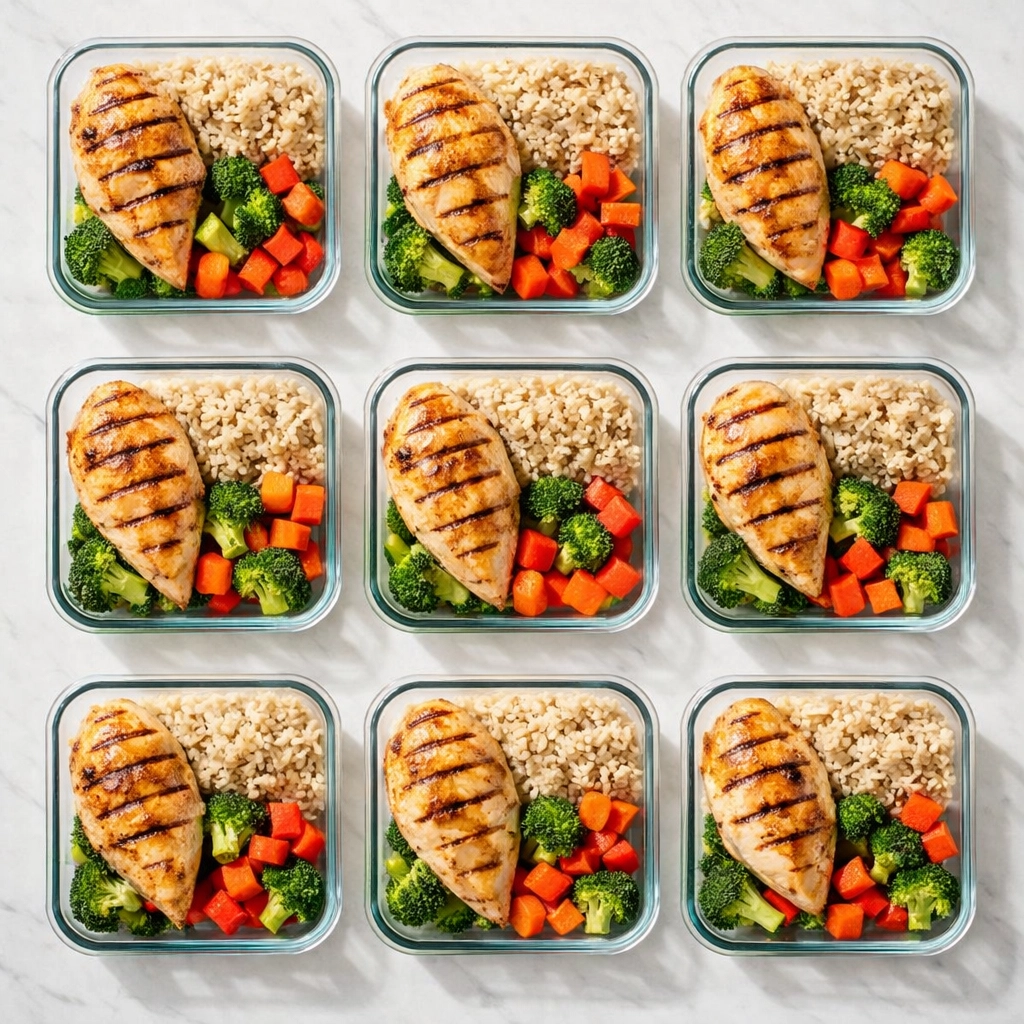
Here's a game-changer most beginners miss: pick a cuisine theme for your week. Whether it's Mediterranean, Asian-inspired, or classic British comfort food, having a theme simplifies your shopping list and makes meal prep more enjoyable.
For example, a Mediterranean week might include:
- Grilled chicken with lemon and herbs
- Baked salmon with garlic
- Chickpea and feta salads
- Brown rice with olive oil and herbs
This approach reduces decision fatigue throughout the week and prevents you from staring into the fridge at 7pm wondering what to eat.
Structure your daily meals:
- Breakfast: High-protein start
- Mid-morning snack: Protein and fruit
- Lunch: Balanced plate with protein, carbs, and vegetables
- Afternoon snack: Protein-focused
- Dinner: Substantial meal with all macros
- Optional evening snack: Casein protein or cottage cheese
Step 3: Create Your Shopping List and Prep Day
Dedicate one day per week: typically Sunday: as your shopping and prep day. This consistency builds the habit and ensures you're never caught without proper nutrition.
Organize your shopping list by sections:
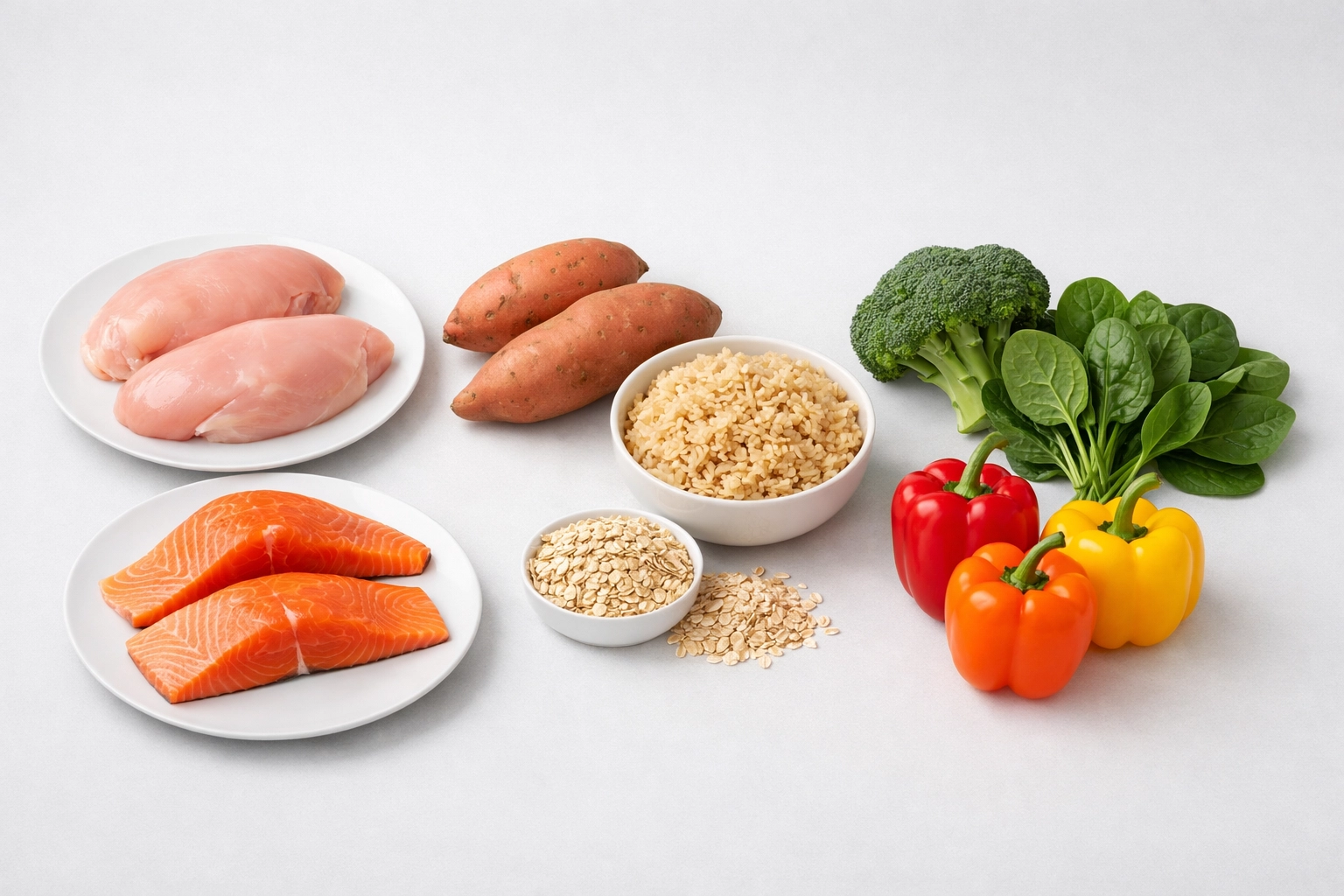
- Proteins: Chicken breast, lean mince, eggs, Greek yoghurt
- Carbohydrates: Sweet potatoes, brown rice, oats, wholemeal bread
- Vegetables: Broccoli, spinach, peppers, courgettes
- Fats: Avocados, olive oil, nuts, seeds
- Essentials: Herbs, spices, tinned goods
UK shopping tip: Visit Aldi or Lidl for affordable protein sources and fresh produce. Their protein yoghurts and fresh meat selections offer excellent value for meal prep beginners. Tesco and Sainsbury's often have bulk-buy deals on chicken breast and mince: stock up and freeze portions.
Prep day workflow:
- Wash and chop all vegetables immediately after shopping
- Cook proteins in bulk (roast chicken, grill salmon, brown mince)
- Prepare carbohydrate bases (cook rice, bake sweet potatoes)
- Portion everything into containers
- Label with dates and contents
Step 4: Select Your Muscle-Building Proteins
Quality protein sources form the foundation of fitness meal prep UK style. Choose a variety to prevent boredom and ensure you're getting different amino acid profiles.
Affordable UK protein sources:
- Chicken breast: £6–8 per kg at most supermarkets
- Turkey mince: Lean and versatile, around £5 per kg
- Eggs: 15 large eggs for roughly £3
- Tinned tuna: 4-pack for £3–4
- Greek yoghurt: High protein, approximately £1.50 per 500g pot
- Cottage cheese: 300g tubs for £1–1.50
Protein supplements: When whole foods aren't practical, high-quality protein supplements bridge the gap. A shake post-workout or between meals helps hit your daily targets without additional cooking.
Plant-based options: If you're reducing meat consumption, incorporate lentils (25g protein per 100g dried), chickpeas, tofu, and tempeh. These also provide fibre and micronutrients.
Step 5: Choose Your Carbohydrate Sources
Not all carbs are created equal for muscle growth. Prioritize complex carbohydrates that provide sustained energy throughout your day and training.
Complex carbs for sustained energy:
- Sweet potatoes: Nutrient-dense, roughly 80p per kg
- Brown rice: Budget-friendly bulk option, 45p per kg
- Oats: Perfect for breakfast, around £1 per kg
- Wholegrain pasta: Quick and versatile, £1 per 500g
- Quinoa: Higher protein content than other grains
Strategic simple carbs: Reserve white rice, white potatoes, and fruit for post-workout meals. These digest quickly, spiking insulin and driving nutrients into muscles when they're most receptive to growth.
Meal prep tip: Cook 1kg of rice and 6–8 sweet potatoes on Sunday. Portion into containers with 150–200g servings for easy grab-and-go meals throughout the week.
Step 6: Implement Time-Saving Strategies
The biggest obstacle to consistent meal prep for muscle growth isn't knowledge: it's time management. Use these strategies to make weekly meal planning beginners can actually sustain.
Batch cooking essentials:
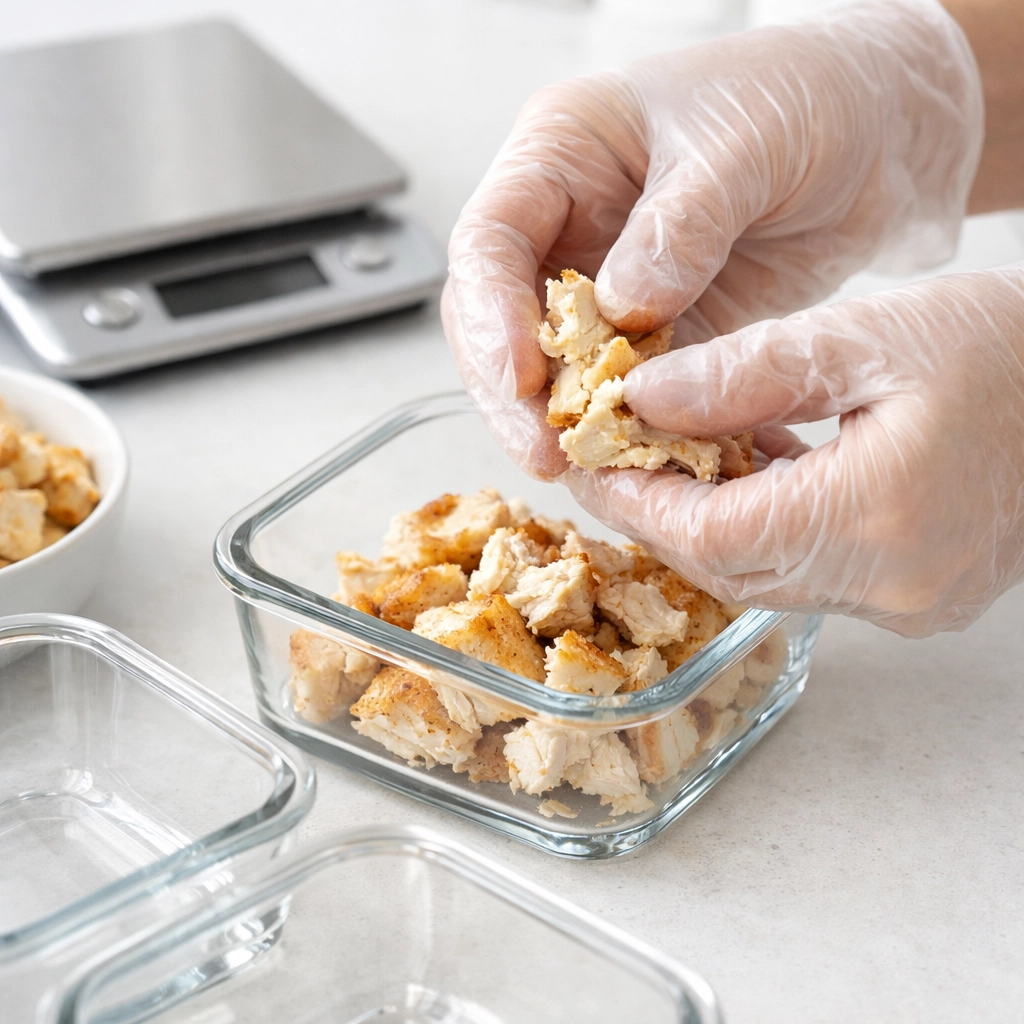
- Cook 2kg of chicken breast at once (roast or grill)
- Prepare 1.5kg of mince for multiple meals
- Boil 12–18 eggs for quick protein snacks
- Roast large trays of mixed vegetables
Kitchen appliances that save hours:
- Slow cooker: Throw in meat and vegetables in the morning, return to perfectly cooked meals
- Air fryer: Cooks chicken breast in 20 minutes with minimal oil
- Rice cooker: Set it and forget it for perfect rice every time
- Food processor: Chops vegetables in seconds
Freezer strategy: Not all prep needs eating within 3–4 days. Freeze half your cooked proteins in individual portions. Pull them out the night before you need them, and you've got two weeks of variety from one prep session.
Step 7: Build Your Daily Meal Structure
Now that you've got all the components, here's how to assemble them into muscle-building meals.
Breakfast (450–550 calories):
- 3 scrambled eggs
- 80g oats with berries
- Tablespoon of almond butter Total: ~40g protein, 50g carbs, 15g fat
Mid-morning snack (200–250 calories):
- Protein shake with 200ml semi-skimmed milk
- Medium banana Total: ~30g protein, 35g carbs, 5g fat
Lunch (600–700 calories):
- 200g grilled chicken breast
- 200g brown rice
- 150g mixed vegetables
- Tablespoon olive oil dressing Total: ~50g protein, 70g carbs, 15g fat
Afternoon snack (200–300 calories):
- 200g Greek yoghurt
- 30g granola
- Handful of berries Total: ~20g protein, 35g carbs, 8g fat
Dinner (650–750 calories):
- 180g lean steak or salmon
- 250g sweet potato
- 200g green vegetables
- Small avocado Total: ~45g protein, 60g carbs, 20g fat
Evening snack (optional, 150–200 calories):
- 150g cottage cheese
- Small apple Total: ~18g protein, 20g carbs, 3g fat
This structure provides approximately 200g protein, 270g carbs, and 66g fat: ideal for an 80kg individual focused on muscle growth.
Step 8: Store and Track Your Meals
Container strategy: Invest in good quality glass or BPA-free plastic containers. You'll need approximately 15–20 containers for a full week of meal prep. Store breakfast and lunch for Monday–Wednesday in the fridge; freeze Thursday–Friday meals and transfer them Tuesday evening.
Labelling system: Use masking tape and permanent marker to label each container with contents and date prepared. Cooked proteins and vegetables last 3–4 days in the fridge, 2–3 months in the freezer.
Track your progress: Take photos of your meals and note how you feel throughout the week. After two weeks, assess your energy levels, training performance, and any changes in body composition. Adjust portions up or down based on results.
If you're struggling to hit protein targets consistently, consider supplementing with quality formulations that support your nutrition goals. Browse our range of nutritional support options designed to complement whole food nutrition.
Common Meal Prep Mistakes to Avoid
Mistake 1: Prepping the same meals every week. You'll get bored by Wednesday and order takeaway by Friday. Rotate between 3–4 different protein and carb combinations.
Mistake 2: Forgetting about vegetables. They provide fibre, micronutrients, and volume without excess calories. Aim for 400–500g of vegetables daily.
Mistake 3: Underestimating portion sizes. Weigh your foods initially until you can eyeball portions accurately. That "palm-sized" chicken breast might only be 100g, not the 200g you need.
Mistake 4: Neglecting healthy fats. Without adequate fats, testosterone production suffers, directly impacting muscle growth. Include nuts, seeds, avocados, and olive oil daily.
Making Meal Prep Sustainable Long-Term
The best meal prep for muscle growth is the one you'll actually stick to. Start with preparing just lunch and dinner for Monday–Wednesday. Once that becomes routine, expand to full weeks.
Don't aim for perfection. If you eat out once or twice per week, plan for it. Build your prep around your life, not the other way around.
Consider meal prep as an investment in your goals: spending 2–3 hours on Sunday saves 7–10 hours during the week and ensures you're never making poor food choices out of convenience or hunger.
For additional support on your fitness journey, explore our guides on resistance training and training to muscular failure to maximize your results both in the kitchen and the gym.
Weekly meal planning beginners often overthink the process. Keep it simple: pick proteins, choose carbs, add vegetables, distribute across the week. Your muscles will thank you for the consistency.