Here's a frustrating truth that many people discover the hard way: being fit, healthy, and having good testosterone levels doesn't protect hair follicles from thinning. In fact, the very hormone that contributes to muscle growth and male characteristics might also be responsible for that receding hairline staring back in the mirror.
The culprit isn't testosterone itself: it's a more potent derivative called dihydrotestosterone, or DHT. Understanding how this hormone works, why it targets hair follicles, and what determines individual susceptibility can help anyone make informed decisions about managing hair health.
What Exactly Is DHT?
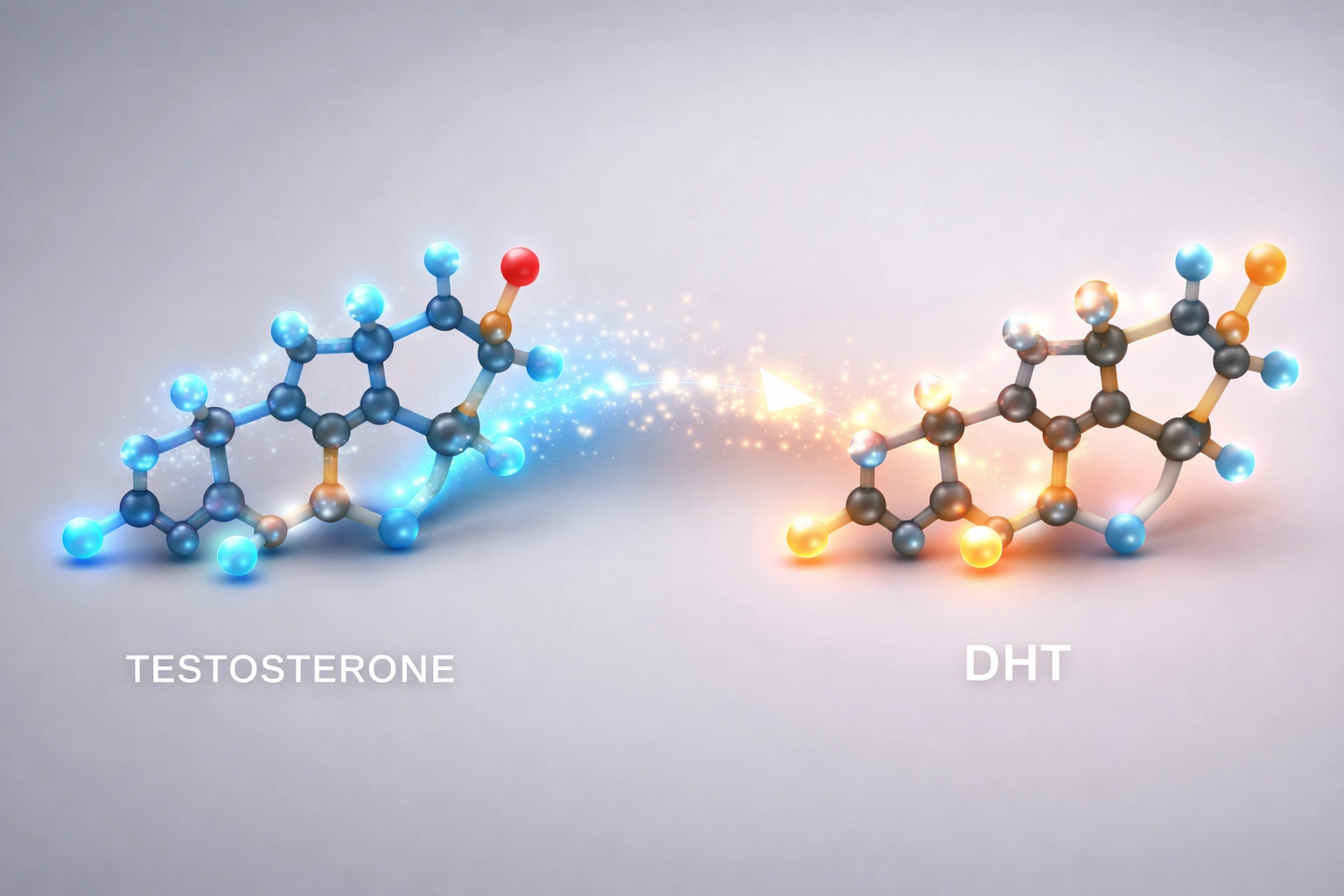
Dihydrotestosterone (DHT) is an androgen hormone derived from testosterone. The body produces it through a conversion process involving an enzyme called 5-alpha reductase. This enzyme takes regular testosterone and transforms it into DHT, which is roughly 2-3 times more potent than its predecessor.
DHT plays several important roles in the body:
- Development: It's crucial for male sexual development during puberty
- Body hair growth: It promotes facial and body hair
- Prostate function: It affects prostate health throughout life
- Muscle and bone density: It contributes to overall physical development
The problem arises when DHT interacts with hair follicles on the scalp. While it encourages hair growth in some areas (like the beard and chest), it has the opposite effect on the head: particularly around the temples and crown.
How DHT Attacks Hair Follicles
The process of DHT-induced hair loss follows a predictable pattern. Once DHT circulates in the bloodstream, it seeks out androgen receptors throughout the body. Hair follicles on the scalp contain these receptors, and when DHT binds to them, it triggers a cascade of biochemical changes that disrupt normal hair growth.
The Hair Growth Cycle Disruption
Hair grows in cycles with three distinct phases:
- Anagen (growth phase): Hair actively grows for 2-7 years
- Catagen (transition phase): Growth stops and the follicle shrinks for about 2-3 weeks
- Telogen (resting/shedding phase): Hair falls out and the cycle restarts
In DHT-sensitive individuals, this cycle becomes unbalanced. The growth phase shortens significantly while the resting and shedding phases lengthen. The result? Hair has less time to grow to its full length and thickness before falling out. Worse still, the replacement hair comes in thinner and weaker each time.
The Miniaturisation Process
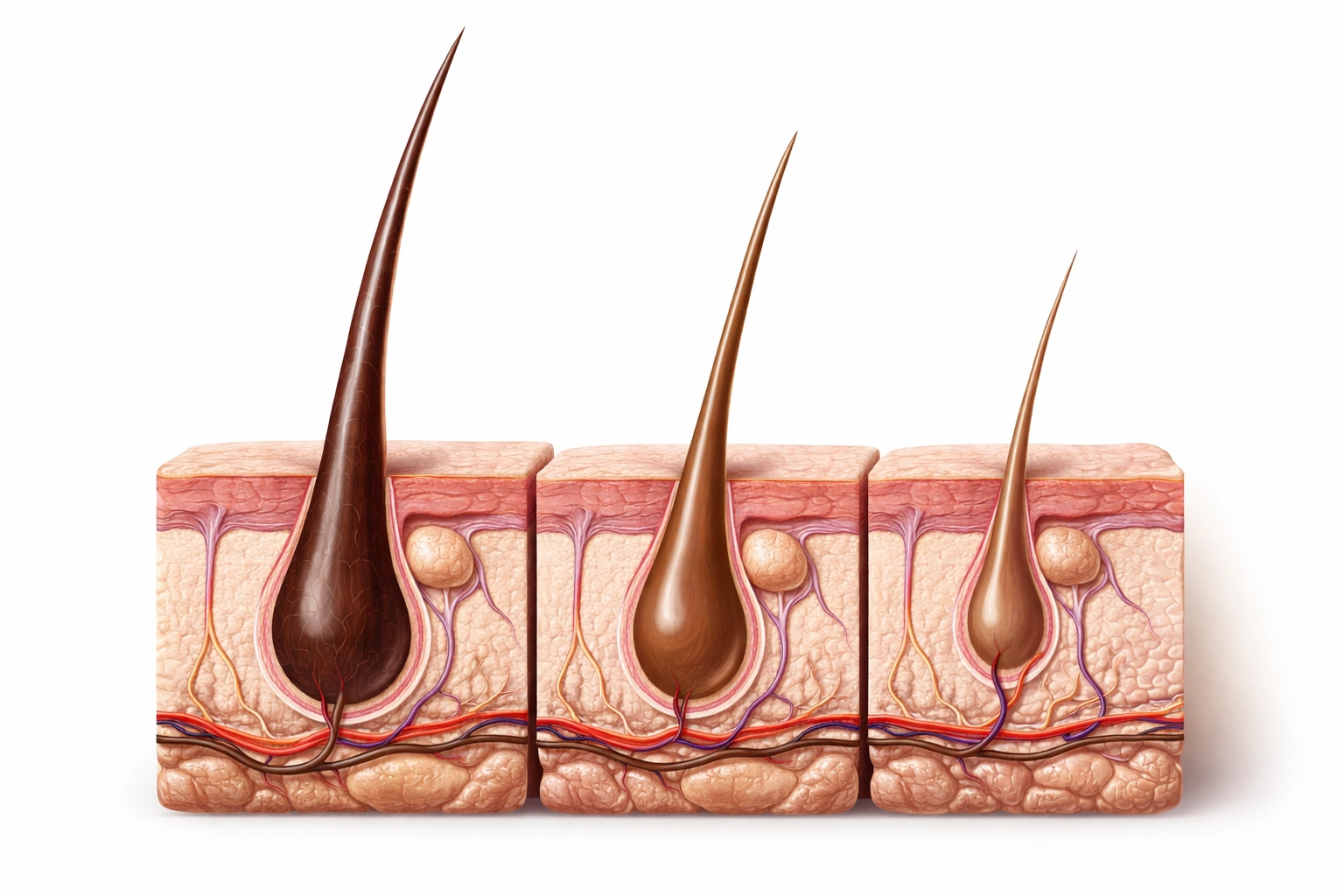
Over time, repeated exposure to DHT causes affected follicles to physically shrink: a phenomenon called miniaturisation. What starts as thick, pigmented terminal hair gradually transforms into fine, colourless vellus hair (similar to peach fuzz).
This process doesn't happen overnight. It typically takes years or even decades for miniaturisation to progress to the point of visible baldness. The follicles don't die immediately; they simply become less and less productive until they may eventually go dormant altogether.
Why Some People Lose Hair and Others Don't
Here's where things get interesting: and where the "high testosterone equals baldness" myth falls apart.
Having elevated testosterone or DHT levels doesn't automatically mean someone will experience hair loss. The critical factor is genetic predisposition, specifically how sensitive an individual's hair follicles are to DHT in the first place.
The Androgen Receptor Gene
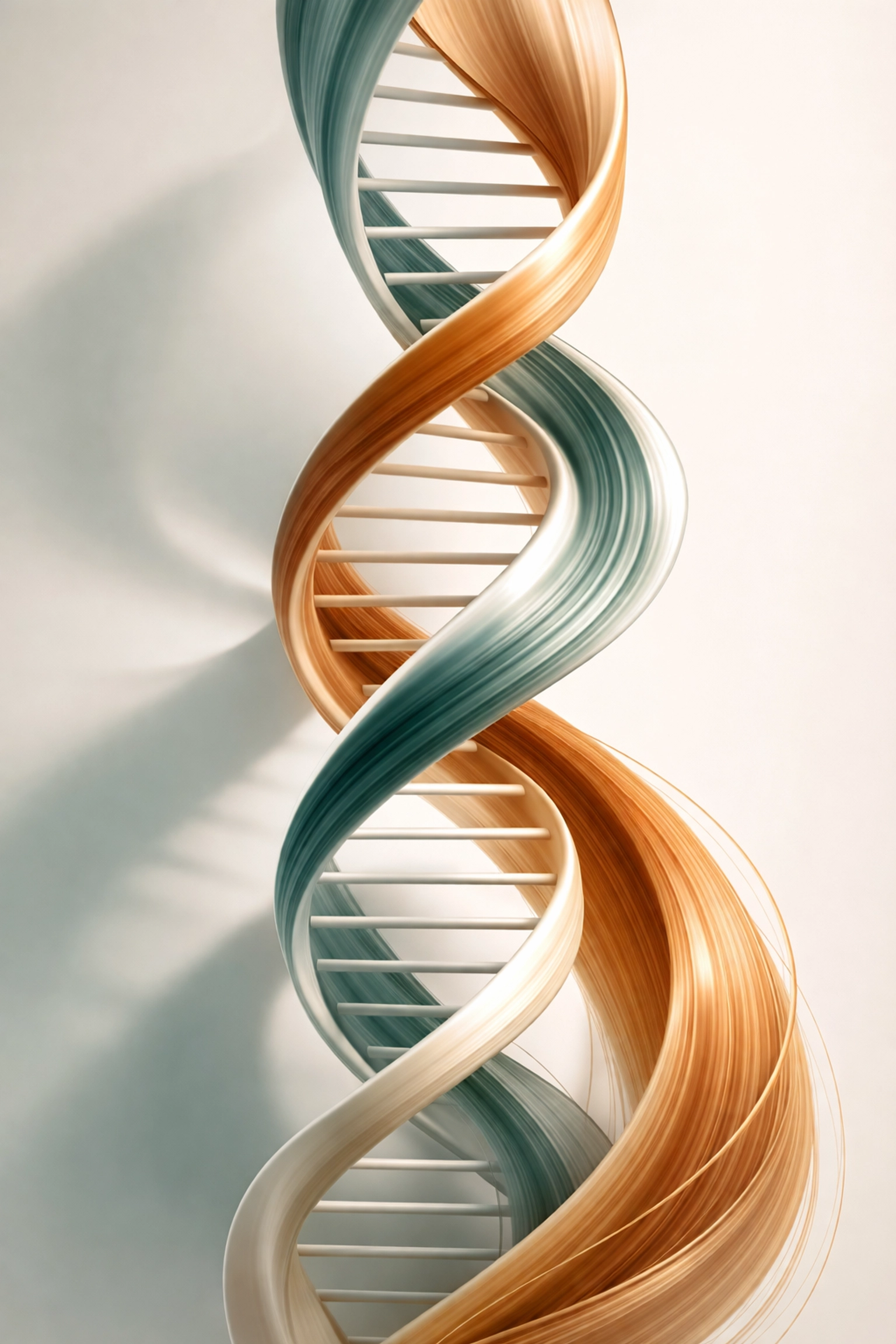
Sensitivity to DHT depends largely on variations in the androgen receptor (AR) gene. This gene controls how receptive hair follicles are to DHT binding. Some people inherit AR gene variations that make their follicles highly sensitive: even normal DHT levels can trigger miniaturisation. Others have less sensitive receptors and can tolerate higher DHT levels without any noticeable hair loss.
This genetic component explains why:
- Two people with identical hormone levels can have completely different hair outcomes
- Pattern baldness tends to run in families
- Some bodybuilders with elevated testosterone maintain full heads of hair while others thin rapidly
The Inheritance Pattern
The AR gene sits on the X chromosome, which means the genetic predisposition for hair loss often (but not exclusively) comes from the maternal side. However, genes from both parents can influence susceptibility, making prediction somewhat complicated.
Key risk factors include:
- Family history: Close relatives with pattern baldness increase risk significantly
- Age: Sensitivity can increase over time, which is why hair loss often progresses with age
- Ethnicity: Some ethnic groups show higher rates of androgenic alopecia than others
Recognising the Signs of DHT-Related Hair Loss
Androgenic alopecia: the medical term for pattern baldness: follows characteristic patterns that distinguish it from other types of hair loss.
In Men
- Recession at the temples (creating an "M" shape)
- Thinning at the crown
- Eventual connection of these areas, leaving hair only on the sides and back
- Hair becomes progressively finer before disappearing
In Women
- Diffuse thinning across the top of the scalp
- Widening of the part line
- Generally maintains the frontal hairline
- Rarely progresses to complete baldness
Women can also be affected by DHT-related hair loss, though it typically presents differently due to lower overall androgen levels and the protective effects of oestrogen. Post-menopausal women often see increased hair thinning as this hormonal balance shifts.
Managing DHT Levels Naturally
For those concerned about DHT and hair health, several natural approaches may help support balanced hormone levels and overall scalp health.
Nutritional Support
Certain nutrients play important roles in maintaining healthy hair growth and supporting the body's natural processes:
-
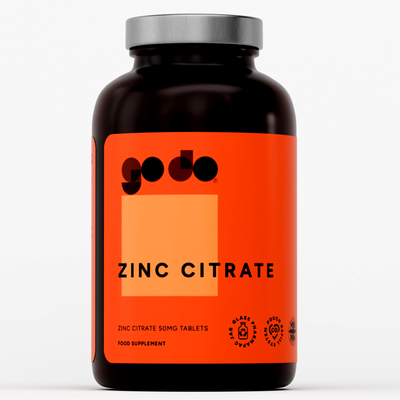
Zinc: This essential mineral is involved in numerous enzymatic reactions, including those related to hormone metabolism. Research suggests adequate zinc intake supports normal hair growth. Fitness Health's Zinc 50mg tablets provide a convenient way to ensure sufficient daily intake.
-
B Vitamins: The B-complex vitamins support cellular energy production and are essential for healthy hair follicle function. Biotin (B7) in particular is well-known for its role in hair, skin, and nail health. Fitness Health B Complex delivers the full spectrum of B vitamins in one convenient supplement.
-
Omega-3 Fatty Acids: These essential fats support scalp health and may help maintain the condition of hair follicles. Fitness Health Omega-3 Fish Oil provides high-quality omega-3s to support overall wellness.
Lifestyle Factors
Beyond supplementation, several lifestyle factors can support healthy hair:
- Manage stress: Chronic stress can exacerbate hair loss through various mechanisms
- Exercise regularly: Physical activity supports healthy circulation, including to the scalp
- Eat a balanced diet: Adequate protein and micronutrients are essential for hair production
- Avoid harsh hair treatments: Chemical processing and heat styling can compound existing weakness
The Bottom Line on DHT and Hair Loss
DHT-related hair loss is neither a sign of excessive masculinity nor a guaranteed consequence of high testosterone. It's a genetic lottery that determines how hair follicles respond to a hormone that everyone produces.
Understanding this distinction matters because it shifts the conversation from blame to biology. Someone experiencing pattern baldness isn't doing anything wrong: their follicles are simply more sensitive to DHT than average.
For those with a genetic predisposition, early awareness and proactive scalp care can make a meaningful difference. Supporting overall health through proper nutrition, quality supplements, and healthy lifestyle habits provides the foundation for optimal hair health.
At Fitness Health, all supplements are manufactured in the UK to high quality standards, with eco-conscious packaging that reflects a commitment to both personal health and environmental responsibility. Because looking after oneself shouldn't mean compromising on quality or sustainability.
Key Takeaways:
- DHT is converted from testosterone by the enzyme 5-alpha reductase
- Hair loss occurs when DHT binds to receptors on genetically sensitive follicles
- The androgen receptor gene determines individual susceptibility: not testosterone levels alone
- Miniaturisation is a gradual process that can take years to become visible
- Nutritional support and healthy lifestyle habits can help maintain optimal hair health