We’ve all been there, that Monday morning motivation hits, and you decide this is the week you’re going to crush every single workout. You want to lift the heaviest weights you've ever touched, and you want to do it every single day. It sounds like the perfect recipe for success, right? But as many of us eventually find out the hard way, your body has a very specific set of rules it likes to follow. According to experts at Healthline, finding the right balance between how hard you train and how often you train is the real secret to long-term progress without hitting a massive wall of burnout.
Table of Contents
- The Eternal Tug-of-War: Intensity vs. Frequency
- Why Your Central Nervous System (CNS) Needs a Break
- Training Frequency vs Intensity for Muscle Growth: The Sweet Spot
- Signs You're Overdoing the Intensity-Frequency Mix
- Fueling Your System for Peak Performance
- Benefits of a Balanced Training Approach
- Safety Warnings and Contraindications
The Eternal Tug-of-War: Intensity vs. Frequency
When we talk about intensity vs frequency weightlifting, we’re essentially looking at a see-saw. On one side, you have intensity, this is the "how hard" of your workout. It's the heavy plates, the near-failure sets, and the grunting that makes everyone else in the gym look over. On the other side, you have frequency, the "how often." This is how many times a week you’re hitting the squat rack or working your chest.
I remember when I first started training, I thought I was invincible. I tried to max out my deadlift three times a week while hitting the gym six days straight. Within a month, I wasn't just tired; I was completely fried. I couldn't even sleep properly, and my strength started going down. That was my first lesson in the inverse relationship between these two factors. If you want to push your intensity to 100%, you simply cannot do it five days a week. Your body needs time to repair the micro-tears in your muscles and, more importantly, let your nervous system reset.
Most successful training programs understand this trade-off. If you're following a high-frequency plan where you train a muscle group four times a week, the intensity usually has to be a bit more moderate. If you’re going for a "heavy duty" style where you push every set to absolute failure, you might only train that muscle once or twice a week. You can't max out both sides of the scale at the same time for very long without something giving way.

Why Your Central Nervous System (CNS) Needs a Break
It’s easy to focus on our muscles because we can see them in the mirror, but the real boss of your workout is your Central Nervous System (CNS). Think of your CNS as the electrical grid for your body. When you lift something incredibly heavy, your brain has to send a massive electrical signal to your muscles to get them to fire. This is a huge "cost" to your system.
Central nervous system fatigue recovery is something many lifters overlook. While your muscles might feel fine after a day or two, your nervous system can take much longer to bounce back from true max-effort sessions. This is why you’ll often see pro athletes taking deload weeks or rotating their heavy days. If you keep redlining your CNS by combining high intensity with high frequency, you’ll eventually experience what coaches call "getting fried." You might feel moody, lose your appetite, or just feel like you’ve lost your "pop" in the gym.
Keeping your nervous system healthy is just as important as hitting your protein goals. This is where a holistic approach comes in. Managing your overall stress and ensuring you're getting deep, restorative sleep are non-negotiables if you want to play the long game in fitness. It's not just about the hours in the gym; it's about the quality of the hours spent recovering.

Training Frequency vs Intensity for Muscle Growth: The Sweet Spot
So, what’s the magic formula? When it comes to training frequency vs intensity for muscle growth, the science generally suggests a middle-ground approach for most people. Training a muscle group 2 to 3 times per week with moderate-to-high intensity seems to be the "Goldilocks" zone for building size and strength.
If you’re a beginner, you can often get away with a bit more of both because you aren't yet strong enough to truly tax your CNS to its limits. But as you get stronger, the weights get heavier, and the recovery cost goes up. This is usually when people transition from a full-body routine (high frequency) to something like an upper/lower split or a PPL (Push/Pull/Legs) routine. This allows you to keep the frequency decent while giving each muscle group more dedicated recovery time.
A good rule of thumb is to listen to your "velocity." If the bar is moving slowly even on your lighter sets, or if you find yourself needing three scoops of pre-workout just to face the gym, your intensity-to-frequency ratio is probably out of whack. Sometimes, doing a little less can actually lead to much more progress in the long run.
Signs You're Overdoing the Intensity-Frequency Mix
It can be hard to admit when we're overreaching. We've been told to "no pain, no gain" for decades, but there's a big difference between working hard and working yourself into a hole. If you notice a persistent ache in your joints that doesn't go away after a warm-up, or if your resting heart rate is noticeably higher in the morning, those are big red flags.
Another subtle sign is your mental state. If you find yourself dreading your favorite lifts or feeling unusually irritable, your body is likely telling you that it's overstimulated. This is often linked to lifting heavy vs lifting often without enough downtime. Taking a few extra rest days or switching to a lower-intensity "technique" week isn't a sign of weakness, it's a sign of a smart trainee who understands how biology works.
If you want to read more about why progress sometimes stalls out, check out our post on why weight loss plateaus happen, as many of the same metabolic and physiological principles apply to strength plateaus too.
Fueling Your System for Peak Performance
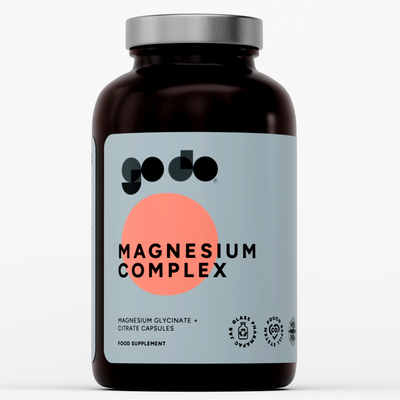
While programming is the foundation, what you put into your body can significantly tip the scales in your favor. When you're training with high intensity, your body’s demand for specific nutrients skyrockets. Magnesium, for example, is essential for muscle relaxation and nervous system health, yet many of us are running a bit low on it.
At Fitness Health, we’re big believers in supporting the body naturally. If you're pushing the limits of your training frequency, you might want to look into adaptogens. Something like Ashwagandha can be a total game-changer for managing cortisol levels, the stress hormone that tends to spike when we train too hard too often.
Our mission is to provide these high-quality, UK-made supplements in eco-friendly packaging so you can support your goals without the hefty price tag. Whether it's our Magnesium Complex for recovery or specialized vitamins, we’ve got your back.

Benefits of a Balanced Training Approach
Finding that "perfect" balance isn't just about avoiding injury; it's about maximizing your gains. Here are some of the evidence-backed benefits of managing your intensity and frequency correctly:
- Consistent Strength Gains: By avoiding CNS burnout, you can make linear progress for much longer periods.
- Improved Muscle Protein Synthesis: Proper frequency ensures you're triggering growth signals in the muscle more often throughout the week.
- Better Joint Health: Reducing the frequency of near-maximal loads gives your connective tissues time to strengthen and repair.
- Enhanced Mental Clarity: You'll avoid the "brain fog" that often accompanies overtraining and nervous system fatigue.
- Long-Term Sustainability: You're much less likely to quit the gym if you're not constantly exhausted and sore.
Safety Warnings and Contraindications
Even with the best supplements and a perfect plan, safety should always come first. Please keep the following in mind:
- Listen to Pain: Differentiate between "good" muscle soreness and "bad" sharp or joint pain. If it's sharp, stop immediately.
- Check with a Pro: If you have pre-existing heart conditions or joint issues, consult a doctor before starting a high-intensity program.
- Supplement Safety: While supplements like Ashwagandha and Magnesium are generally safe, always consult your GP if you are pregnant, breastfeeding, or on medication (especially for blood pressure or thyroid issues).
- Form over Weight: Never sacrifice technique for the sake of higher intensity. A heavy lift with bad form is just an injury waiting to happen.
- Rest is Productive: Remember that you don't grow in the gym; you grow while you sleep and recover.
Join the Fitness Health Family!
Ready to take your recovery as seriously as your training? At Fitness Health, we specialize in premium, affordable supplements designed for the everyday athlete. From our UK-made formulations to our plastic-free, eco-conscious packaging, we're here to help you hit your peak.
Shop our full range of Recovery Support here!