

A weight loss plateau is defined as a sustained period of at least 2–4 weeks where your weight stays stable despite strict adherence to your diet and exercise plan. Approximately 85% of dieters experience this at some point. That number tells you one thing clearly: a plateau is not a personal failure. It is a predictable biological event driven by metabolic adaptation, hormonal shifts, and behavioral changes your body makes in response to weight loss. Understanding why weight loss plateaus happen is the first step toward breaking through them.
Why do weight loss plateaus happen?
Metabolic adaptation is the primary reason weight loss stalls. When you lose weight, your body requires fewer calories to function because there is simply less of you to maintain. But the slowdown goes deeper than that. Adaptive thermogenesis accounts for roughly 40% of the total decline in resting metabolic rate during dieting. That means your metabolism suppresses itself beyond what your lower body mass alone would explain.
Think of it this way: your body interprets a calorie deficit as a threat to survival. It responds by becoming more fuel-efficient, burning fewer calories for the same activities. Research published in the International Journal of Obesity found that roughly 60% of resting metabolic rate decline comes from tissue loss, while the remaining 40% reflects active metabolic suppression. That active suppression is what catches most people off guard.

| Cause of RMR decline | Approximate contribution |
|---|---|
| Tissue loss (less body mass) | 60% |
| Adaptive thermogenesis (active suppression) | 40% |
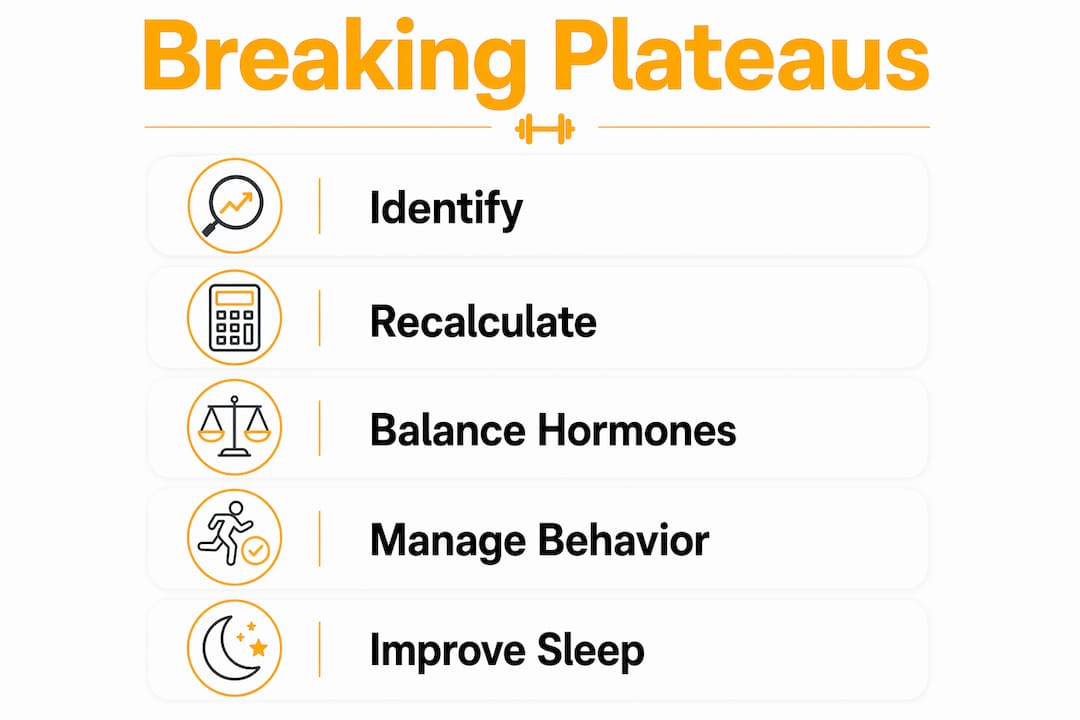
Pro Tip: Recalculate your daily calorie target every 10–15 pounds lost. Your original deficit may no longer create a deficit at your new weight.
How do hormonal changes drive hunger and stall fat loss?
Hormones play a central role in why weight loss stalls occur. When you lose fat, your body increases ghrelin, the hunger hormone, and decreases leptin, the satiety hormone. These hormonal shifts persist for at least 12 months after dieting ends. That persistence is why people feel hungrier long after they have reached their goal weight.
The practical effect is significant. You feel hungrier than you did before you started dieting, even though you weigh less. Your brain receives fewer satiety signals, so meals feel less satisfying. This combination pushes calorie intake up without you realizing it.
Cortisol adds another layer of difficulty. Chronic stress raises cortisol, which promotes abdominal fat storage and increases appetite. Many people under stress eat more and move less, compounding the plateau effect. Addressing hormone imbalance and weight gain is often the missing piece in a stalled weight loss plan.
Key hormonal factors that contribute to plateaus:
- Ghrelin increase: Signals hunger more aggressively after fat loss.
- Leptin decrease: Reduces the feeling of fullness after meals.
- Cortisol elevation: Promotes fat storage, especially around the abdomen.
- Insulin resistance: Can develop with prolonged calorie restriction and disrupt fat metabolism.
Pro Tip: Natural approaches to hormonal balance through nutrition can help moderate ghrelin and leptin levels, making it easier to stay on track.
Behavioral drift and hidden calorie creep
Behavioral changes are among the most common weight loss plateau causes, and they are the hardest to detect. Adherence drift describes the gradual loosening of dietary discipline over time. Clinical observations by Dr. Richard B. Rothman confirm that subtle calorie intake increases accumulate significantly over weeks, even when people believe they are following their plan.
Portion sizes creep up. Cooking oils get measured less carefully. A handful of nuts becomes two handfuls. None of these feel like cheating, but together they can add hundreds of calories per week.
Non-exercise activity thermogenesis, or NEAT, creates an equally invisible problem on the expenditure side. NEAT covers all movement outside formal exercise: walking, fidgeting, standing, and taking stairs. NEAT reductions can account for up to 51% of total energy expenditure decline in people who have lost significant weight. Your body unconsciously moves less when it is in a calorie deficit.
Here are four practical steps to address behavioral drift:
- Restart food logging. Use a food scale for one week every month to recalibrate your portion awareness.
- Audit your NEAT. Set hourly movement reminders. Small increases in daily steps add up to meaningful calorie burn.
- Ignore machine calorie estimates. Exercise machines overestimate calories burned, sometimes by a wide margin. Do not eat back those calories.
- Review your plan every four weeks. What worked at 200 pounds will not work at 175 pounds.
How do sleep and stress cause weight loss slowdowns?
Poor sleep and chronic stress are underrated weight loss slowdown reasons. Sleep deprivation increases ghrelin and decreases leptin, creating the same hormonal environment that makes dieting feel impossible. A meta-analysis on sleep and obesity risk confirmed this link directly. Beyond hunger hormones, chronic sleep deprivation impairs exercise performance and recovery, reducing the quality and intensity of your workouts.
Stress compounds the problem through cortisol. High cortisol signals your body to hold onto fat, particularly visceral fat around the midsection. It also drives cravings for high-calorie, high-sugar foods.
Practical strategies to address sleep and stress:
- Aim for 7–9 hours of sleep per night and keep a consistent sleep schedule.
- Limit screen exposure for 60 minutes before bed to protect melatonin production.
- Practice stress reduction techniques such as diaphragmatic breathing, walking, or journaling.
- Reduce caffeine intake after 2:00 PM to improve sleep quality.
How to break a weight loss plateau effectively
Breaking a plateau requires adjusting the variables your body has already adapted to. Plateaus typically occur around month six of a sustained weight loss effort, according to NIH-hosted data. Knowing this timeline helps you prepare rather than panic.
Effective strategies for overcoming weight loss stalls include:
- Recalibrate calories. Reduce your daily intake by 100–200 calories to restore a true deficit at your new weight.
- Change your exercise stimulus. Add resistance training if you only do cardio, or increase workout intensity through interval training. Adjusting your physical activity for weight loss is one of the most direct ways to boost energy expenditure.
- Prioritize sleep. Poor sleep undermines every other strategy you apply.
- Address stress directly. Cortisol management is not optional when fat loss has stalled.
- Consult a healthcare provider. Thyroid dysfunction, insulin resistance, and other conditions can mimic or worsen plateaus. Rule them out before assuming the problem is purely behavioral.
Key Takeaways
Weight loss plateaus are a predictable biological response to calorie restriction, driven by metabolic adaptation, hormonal changes, behavioral drift, and lifestyle factors like sleep and stress.
| Point | Details |
|---|---|
| Metabolic adaptation is primary | Adaptive thermogenesis suppresses RMR beyond what weight loss alone explains. |
| Hormonal shifts persist | Ghrelin and leptin changes last at least 12 months, keeping hunger elevated. |
| Behavioral drift is invisible | Gradual calorie creep and NEAT reduction can stall progress without obvious overeating. |
| Sleep and stress matter | Poor sleep and high cortisol directly disrupt fat loss through hormonal pathways. |
| Recalibrate regularly | Adjust calorie targets and exercise intensity every 10–15 pounds to maintain a real deficit. |
Plateaus are not the enemy
I have worked with enough people on their weight loss goals to say this with confidence: the plateau is not the problem. The reaction to it usually is. Most people either give up or overcorrect with extreme restriction, which deepens metabolic suppression and makes the next phase harder.
What actually works is patience combined with precision. When I see someone stuck at the same weight for three weeks, my first question is not “what are you eating?” It is “how are you sleeping?” Nine times out of ten, sleep and stress are the hidden variables. Fix those first, then look at calories and exercise.
The biology here is not working against you. It is doing exactly what it evolved to do: protect you from starvation. Respecting that mechanism, rather than fighting it with willpower alone, is what separates people who break through plateaus from those who stay stuck. Adjust the inputs, stay consistent, and the scale will move again.
— Rene
What Fitnesshealth offers when progress stalls
Hitting a wall with weight loss is frustrating, but the right resources make a real difference. Fitnesshealth provides expert-backed educational content, targeted supplement guidance, and practical tools designed for people who are serious about weight loss results and need more than generic advice.

The Fitnesshealth blog covers hormone balance, sleep science, nutrition timing, and supplement stacking in depth, giving you the knowledge to make informed adjustments. Whether you need to understand your hormonal environment better or find the right fat-burning supplement stack to support your next phase, Fitnesshealth has the resources to back your progress with science.
FAQ
What is a true weight loss plateau?
A true plateau is at least 2–4 weeks of stable weight despite consistent adherence to your diet and exercise plan. Sporadic fluctuations from water retention or sodium do not qualify.
Why do weight loss stalls occur even with consistent exercise?
Exercise machines overestimate calorie burn, and NEAT often drops unconsciously during calorie restriction, reducing total daily energy expenditure even when formal workouts continue.
How long do hormonal changes from dieting last?
Hormonal shifts such as increased ghrelin and decreased leptin persist for at least 12 months after dieting, which is why hunger remains elevated long after weight loss ends.
Can stress alone cause a weight loss plateau?
Chronic stress raises cortisol, which promotes abdominal fat storage and increases appetite. Stress alone can stall progress even when diet and exercise remain consistent.
When should I see a doctor about a plateau?
See a healthcare provider if your plateau persists beyond 6–8 weeks despite adjusting calories, exercise, sleep, and stress. Thyroid dysfunction and insulin resistance can cause or worsen stalls.










