Turkey tail, reishi, cordyceps, chaga, shiitake, and maitake are the best mushroom supplements for immunity with meaningful clinical or mechanistic support. The single most important buying decision: choose a dual-extracted, fruiting-body product that publishes a beta-glucan assay and carries a third-party certificate of analysis (COA). Everything else is secondary.
The reason these six species matter comes down to specific compounds. Beta-glucans and polysaccharides (including PSK in turkey tail) train innate immune cells. Triterpenes in reishi modulate cytokines. Cordycepin in cordyceps supports mitochondrial function and immune resilience. These are not interchangeable mechanisms, which is why species selection matters as much as brand.
Before you buy, run through this checklist:
- Verify the product uses fruiting body or dual-extracted mycelium (not raw myceliated grain)
- Check the label or COA for a beta-glucan assay (target 30% or higher)
- Confirm the dose aligns with clinical trial ranges for your chosen species
- Consult a clinician if you are immunocompromised, on immunosuppressants, anticoagulants, or active chemotherapy
Table of Contents
- 1. Turkey tail is the strongest immune evidence of any medicinal mushroom
- 2. Reishi modulates immunity rather than simply stimulating it
- 3. Cordyceps supports immune resilience through mitochondrial and energy pathways
- 4. Chaga delivers antioxidant support with limited but promising clinical data
- 5. Shiitake provides reliable beta-glucan content with solid immune evidence
- 6. Maitake activates macrophages and supports Th1 immune balance
- How mushroom compounds actually interact with your immune system
- What clinical studies actually show about dosing and evidence levels
- How to pick a mushroom supplement that actually works
- Safety, side effects, and who should talk to a clinician first
- How to actually use mushroom supplements day to day
- Key Takeaways
- The part most mushroom supplement guides get wrong
- Fitnesshealth mushroom supplements: built around the buying checklist
- Primary sources and further reading
1. Turkey tail is the strongest immune evidence of any medicinal mushroom
Best for: Adjunct immune support during or after cancer treatment; post-antibiotic immune recovery
Clinical dose range: 1–3 g/day PSK equivalent
Evidence level: Strong (oncology-adjunct context); moderate for general immune optimization
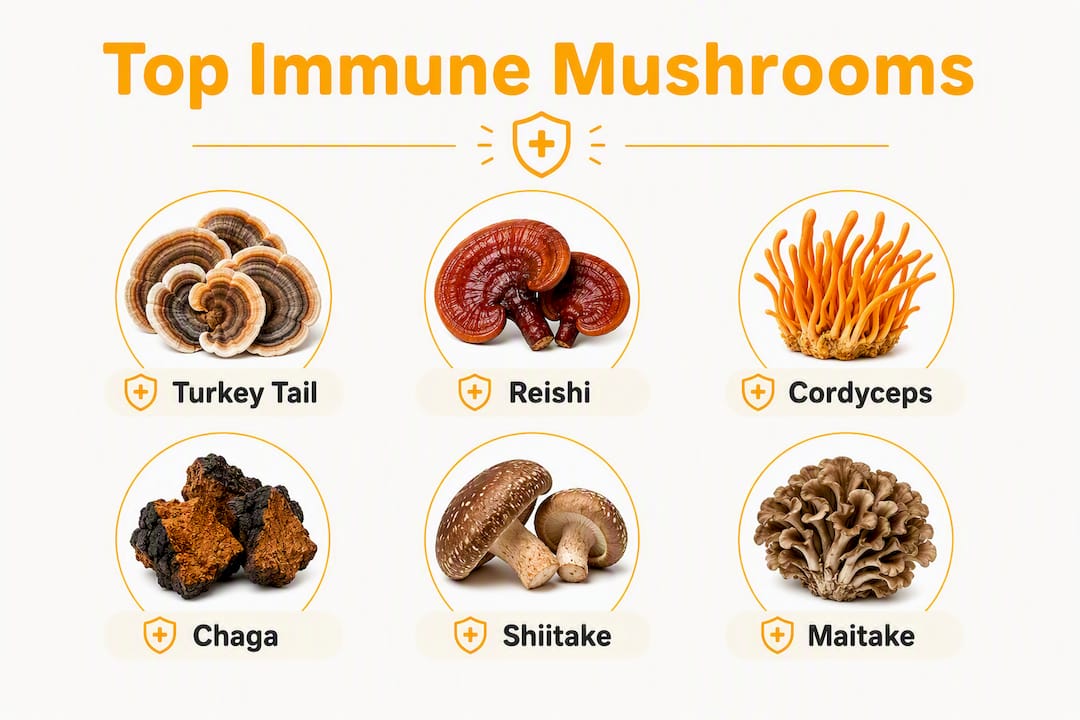
Turkey tail (Trametes versicolor) carries the most compelling clinical record of any mushroom on this list. Its key compound, polysaccharide-K (PSK), is an approved adjuvant therapy in Japan for gastric and colorectal cancers, used alongside chemotherapy to increase NK cell and T-cell counts and reduce chemo-induced immune suppression. RCTs and meta-analyses back this, not just in-vitro data.
PSP (polysaccharide-peptide) is a related compound found in some turkey tail products, particularly those sourced from Chinese research. Both PSK and PSP activate macrophages and natural killer cells through beta-glucan receptor pathways. For someone recovering from illness or finishing a course of antibiotics, turkey tail is the most evidence-grounded choice.
2. Reishi modulates immunity rather than simply stimulating it
Best for: Day-to-day immune resilience; allergic or overactive immune states; stress and sleep support
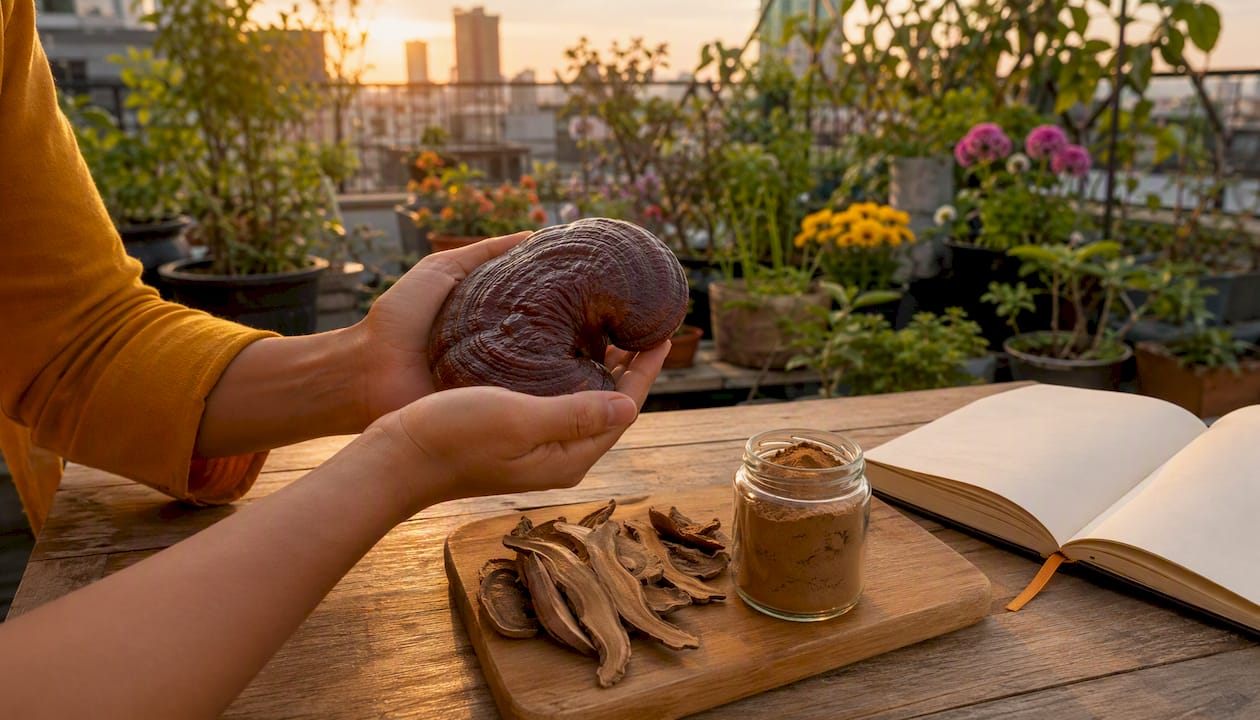
Clinical dose range: 1.5–9 g/day extract
Evidence level: Moderate (human trials for immune markers and well-being)
Reishi (Ganoderma lucidum) is the most nuanced species on this list. PMC research describes it as a bidirectional immune modulator: it can suppress overactive immune signaling in allergic or Th2-dominant states while simultaneously supporting deficient immune responses. That dual action makes it genuinely different from a blunt immune stimulant.
The active compounds are beta-glucans plus a dense array of triterpenes (ganoderic acids), which work on cytokine pathways and inflammatory signaling. The dose range is wide because extract concentration varies significantly across products. A 1.5 g/day dose of a concentrated extract may deliver more active compounds than 9 g of a low-ratio powder. Always check the extract ratio on the label.
3. Cordyceps supports immune resilience through mitochondrial and energy pathways
Best for: Athletes and active adults; immune support tied to energy and exercise recovery

Clinical dose range: 1–3 g/day
Evidence level: Moderate (exercise performance and immune markers)
Cordyceps (C. sinensis and the more widely cultivated C. militaris) takes a different route to immune support than the polysaccharide-heavy species above. Cordycepin, its primary bioactive, supports ATP production and mitochondrial efficiency. Immune cells are metabolically demanding, and a body under physical stress has less immune reserve. Cordyceps addresses that gap.
Human trials show improvements in exercise capacity and some immune markers, particularly in older adults and athletes. It pairs well with reishi in a morning routine because the energy-supporting effects complement reishi’s adaptogenic profile. C. militaris is the cultivated species used in most supplements and has its own clinical data, so it is not simply a substitute for wild C. sinensis.
4. Chaga delivers antioxidant support with limited but promising clinical data
Best for: High oxidative-stress states; general antioxidant and anti-inflammatory support
Clinical dose range: 1–2 g/day extract
Evidence level: Limited-to-moderate (biomarker improvements; no large RCTs)
Chaga (Inonotus obliquus) has a strong antioxidant profile driven by betulinic acid, melanin pigments, and polyphenols. Small human trials report reductions in oxidative stress markers, including 8-OHdG, over eight weeks of supplementation. Anti-tumor claims circulate widely online, but those are based on animal and in-vitro data that do not translate directly to human clinical outcomes.
Where chaga earns its place is in high-oxidative-stress contexts: heavy training loads, chronic inflammation, or environments with significant environmental stressors. Think of it as the antioxidant anchor in a mushroom stack rather than the primary immune driver. At 1–2 g/day of a standardized extract, it is well tolerated in most adults.
5. Shiitake provides reliable beta-glucan content with solid immune evidence
Best for: General immune maintenance; dietary beta-glucan supplementation
Clinical dose range: 1–3 g/day dried extract (or 5–10 g/day whole dried mushroom equivalent)
Evidence level: Moderate (immune cell activity, cytokine balance)
Shiitake (Lentinula edodes) is the most familiar culinary mushroom on this list, and that familiarity can cause people to underestimate it. Its primary immune compound, lentinan (a beta-1,3/1,6-glucan), has been studied in clinical settings for immune cell activation, particularly macrophage and NK cell function. Lentinan is also used as an injectable adjuvant in some Asian oncology protocols, though oral supplementation delivers different bioavailability.
For everyday immune maintenance, shiitake extract is one of the more practical choices because it is widely available, well-tolerated, and has a reasonable evidence base for cytokine modulation. It also contains eritadenine and sterols that contribute to broader metabolic health, making it a useful all-around addition to a supplement stack.
6. Maitake activates macrophages and supports Th1 immune balance
Best for: Immune activation; metabolic health alongside immune support
Clinical dose range: 0.5–1 g/day of D-fraction extract; 3–7 g/day whole mushroom equivalent
Evidence level: Moderate (immune cell activation, some clinical data in oncology contexts)
Maitake (Grifola frondosa) is best known for its D-fraction, a highly branched beta-1,6/1,3-glucan that activates macrophages and promotes Th1 immune responses. Th1 dominance is associated with stronger antiviral and antibacterial defenses, which is why maitake is often cited in immune-support contexts.
Clinical studies are smaller than those for turkey tail, but the mechanistic data is solid. Maitake D-fraction has been studied in breast cancer patients as an adjunct, with some evidence of immune cell activation. For general immune support, a whole-mushroom extract at 3–7 g/day provides the full beta-glucan profile rather than just the isolated D-fraction.
How mushroom compounds actually interact with your immune system
Beta-glucans are the primary reason medicinal mushrooms affect immunity, but the mechanism is more specific than “they boost your immune system.” Research on fungal beta-glucans shows they bind to Dectin-1 receptors on macrophages and dendritic cells, triggering a Syk kinase and NF-κB signaling cascade that activates innate immune cells. The result is increased NK cell cytotoxicity, enhanced macrophage phagocytosis, and cytokine release that primes adaptive immunity.
The main immune actions across the species covered here:
- NK cell activation: Beta-glucans and PSK directly increase natural killer cell activity, relevant for viral defense and tumor surveillance
- Macrophage phagocytosis: Dectin-1 signaling increases macrophage engulfment of pathogens
- Cytokine modulation: Triterpenes (reishi) and polysaccharides regulate pro- and anti-inflammatory cytokines, steering Th1/Th2 balance
- Th1/Th2 balancing: Modern clinical application focuses on this cytokine steering rather than blunt stimulation, which is why reishi can suppress overactive immune responses while turkey tail amplifies deficient ones
Beta-glucans bind Dectin-1 receptors on immune cells, activating NK cell cytotoxicity and enhancing infection recovery and adjunct oncology support. PSK contributes T-cell amplification.
“Medicinal mushrooms act as ‘nutra-mycoceuticals’ that deliver beta-glucans and triterpenes to activate NK cells, macrophages, and neutrophils — creating balanced immune responses rather than indiscriminate stimulation.” Mushroom beta-glucan and polyphenol research frames this as the key distinction between mushroom-based immune support and conventional stimulants.
One important caveat: in-vitro assays frequently overstate inflammatory markers that behave differently in human trials. Prioritize RCT data and clinical biomarker outcomes over cell-culture results when you are evaluating a species or product claim.
What clinical studies actually show about dosing and evidence levels
Clinical trials support immune marker changes and some clinical benefits most strongly for turkey tail (PSK), with moderate evidence for reishi, cordyceps, chaga, and shiitake for specific endpoints. A systematic review of 34 RCTs on fungal beta-glucans found supplementation was well tolerated across dosages ranging from 2.5 to 1,000 mg daily, with outcomes including reduced respiratory infection incidence and improved immune markers, and no causal adverse events recorded across the trials.
| Mushroom | Key Evidence | Clinical Dose Range | Evidence Level |
|---|---|---|---|
| Turkey tail (PSK) | RCTs + meta-analyses; approved adjuvant in Japan for gastric/colorectal cancer | 1–3 g/day PSK equivalent | Strong (oncology-adjunct); moderate (general) |
| Reishi | Human trials for immune markers, cytokine modulation, well-being | 1.5–9 g/day extract | Moderate |
| Cordyceps | Exercise capacity and immune marker trials | 1–3 g/day | Moderate |
| Chaga | Small human trials; oxidative stress biomarker reductions | 1–2 g/day extract | Limited-to-moderate |
| Shiitake | Immune cell activity, cytokine balance trials | 1–3 g/day extract | Moderate |
| Maitake | Macrophage activation, some oncology adjunct data | 0.5–1 g/day D-fraction | Moderate |
Dose ranges shift significantly based on extract concentration. A 10:1 extract means 500 mg on a label delivers the equivalent of 5 g of dried mushroom. Always check the extract ratio before comparing products by milligrams alone. The clinical doses above assume a standardized extract; raw mushroom powder requires proportionally higher amounts to reach the same active compound levels.
One practical caution: in-vitro dosing studies often use concentrations that are not achievable through oral supplementation. Stick to the RCT-derived ranges above rather than extrapolating from cell-culture data.
How to pick a mushroom supplement that actually works
The single rule: choose fruiting-body or dual-extracted products that publish a beta-glucan assay and offer a third-party COA. Everything else on a label is secondary to those three criteria.
Prioritized buying checklist:
- Fruiting body vs. mycelium: Fruiting-body products contain higher beta-glucan concentrations. Myceliated-grain products (mycelium grown on oats or rice) often contain significant grain starch, which inflates polysaccharide readings without delivering mushroom-derived beta-glucans
- Extraction method: Hot water extraction pulls polysaccharides (beta-glucans, PSK). Alcohol extraction pulls triterpenes. Dual extraction gives you both. For reishi especially, a hot-water-only product misses the triterpene fraction entirely
- Beta-glucan assay: Target 30% or higher where measured. A label that says “polysaccharides 40%” is not the same as “beta-glucans 40%” — starch from grain filler reads as polysaccharide but delivers no immune benefit
- Standardized PSK/PSP: For turkey tail specifically, look for products that specify PSK or PSP content rather than generic polysaccharide percentages
- Third-party COA: An independent lab certificate of analysis confirms the stated beta-glucan content and screens for heavy metals, pesticides, and microbial contamination
- Raw material transparency: Country of origin and substrate (what the mushroom was grown on) matter for quality. Log-grown or wild-harvested fruiting bodies generally outperform grain-substrate mycelium
- Clear dosing guidance: The label should state extract ratio and daily dose in a way you can map to the clinical ranges above
- Allergen and label information: Mushrooms are fungi, not plants; some people with mold sensitivities react to them
Pro Tip: When reading a COA, look specifically for the beta-glucan figure, not total polysaccharides. A product with 50% total polysaccharides but no separate beta-glucan assay may be mostly grain starch. Legitimate manufacturers test with the Megazyme assay or equivalent and report beta-glucans as a distinct line item.
The science on medicinal mushroom quality is clear that dual extraction and verified beta-glucan content are the two non-negotiable quality markers. Many cheap powders on the market are majority grain filler with trace mushroom content.
Safety, side effects, and who should talk to a clinician first
Medicinal mushrooms are generally well tolerated, but they carry real interaction risks with immunomodulators, anticoagulants, and chemotherapy agents. Certain populations should consult a clinician before starting any mushroom supplement.
Common side effects and interaction risks:
- GI upset: The most common side effect, particularly at higher doses or when starting. Taking with food reduces this
- Allergic reactions: Rare but possible, especially in people with mold allergies or mushroom sensitivities
- Immunosuppressants: Mushrooms that stimulate NK cells and macrophages can theoretically counteract drugs like cyclosporine or tacrolimus used in organ transplant patients
- Anticoagulants: Reishi in particular has shown antiplatelet effects in some studies; combining it with warfarin or other blood thinners warrants clinician oversight
- Chemotherapy: Turkey tail PSK has been studied as an adjunct to chemo, but combining any immune-modulating supplement with active chemotherapy should always involve the oncologist
- Autoimmune disease: Immune-stimulating mushrooms may exacerbate autoimmune conditions; bidirectional modulators like reishi are lower risk but still warrant discussion
- Pregnancy and breastfeeding: Insufficient human safety data exists; avoid without clinician guidance
Who should always consult a clinician first: organ transplant recipients, anyone on active chemotherapy or immunotherapy, people with autoimmune conditions, and anyone taking anticoagulants.
Warning: Combining immune-stimulating mushroom supplements with immunotherapy drugs (checkpoint inhibitors, CAR-T therapy) or immunosuppressive medications carries unpredictable interaction risk. Do not self-manage this combination.
Pro Tip: If you are working with a patient or client on a complex drug regimen, consider a structured wash-in period (two weeks at half dose) with baseline immune markers (CBC with differential, CRP) before full dosing. A wash-out of two to four weeks before any surgical procedure is also prudent given reishi’s antiplatelet effects.
The Journal of Fungi literature review notes that product variability across the market makes standardization critical, particularly for clinical applications where interaction risk is a real concern.
This article provides general information, not medical advice. Confirm current guidance with a qualified clinician or pharmacist before starting any new supplement, especially if you take prescription medications or have a diagnosed health condition.
How to actually use mushroom supplements day to day
Match the product’s extract concentration to the clinical dose range for your chosen species. Standardized extracts give you predictable dosing; raw powders do not.
Format conversion reference:
| Format | Typical Label Claim | How to Convert to Clinical Dose |
|---|---|---|
| Capsule (10:1 extract) | 500 mg per capsule | 500 mg = 5 g mushroom equivalent; 2 capsules = 10:1 clinical dose |
| Powder (1:1, raw) | 1–2 g per serving | Multiply by extract ratio to compare; 3–6 g raw ≈ 0.3 g 10:1 extract |
| Tincture (dual extract) | 1–2 mL per serving | Check mg/mL of beta-glucans on COA; compare to clinical dose range |
| Standardized extract | Beta-glucan % stated | Use beta-glucan content directly; 1 g at 30% beta-glucans |
Three practical daily routines:
- Morning energy and immune blend (cordyceps + reishi): 1–2 g cordyceps extract plus 1.5–3 g reishi extract taken with breakfast. Cordyceps supports ATP production for the day ahead; reishi’s adaptogenic effect helps regulate the cortisol response to stress. This is the most popular combination for active adults
- Post-illness or post-antibiotic recovery (turkey tail): 1–3 g turkey tail PSK-equivalent extract daily for four to eight weeks after a significant illness or antibiotic course. Turkey tail’s NK and T-cell activation supports the immune rebuild phase. Pair with a probiotic supplement to address the gut microbiome disruption that follows antibiotics
- High-oxidative-stress evening routine (chaga): 1–2 g chaga extract taken in the evening, away from stimulants. The antioxidant load from training or environmental stress accumulates through the day; evening dosing lets the antioxidant compounds work during overnight recovery
Stacking with other immune supports: mushroom beta-glucans combine well with vitamin D and zinc for a broader immune foundation. Zinc supports T-cell development; vitamin D regulates the same innate immune pathways that beta-glucans activate. The combination is additive rather than redundant. One caution: stacking multiple immune-modulating agents increases the total immunomodulatory load, so keep the clinician interaction warnings above in mind when building a complex stack.
Key Takeaways
Turkey tail, reishi, cordyceps, chaga, shiitake, and maitake are the best-evidenced mushroom supplements for immunity, but only when sourced as dual-extracted, fruiting-body products with a verified beta-glucan assay and third-party COA.
| Point | Details |
|---|---|
| Turkey tail leads on evidence | PSK is an approved oncology adjuvant in Japan; 1–3 g/day supports NK and T-cell counts. |
| Dual extraction is non-negotiable | Hot water extracts beta-glucans; alcohol extracts triterpenes; you need both for full bioactivity. |
| Beta-glucan assay, not polysaccharides | Target 30% beta-glucans on the COA; generic polysaccharide claims often include grain starch. |
| Clinical dose ranges matter | Reishi 1.5–9 g/day, cordyceps 1–3 g/day, chaga 1–2 g/day; always check extract ratio on the label. |
| Fitnesshealth recommended option | Fitnesshealth curates fruiting-body, dual-extracted mushroom supplements with transparent COA and dosing guidance. |
The part most mushroom supplement guides get wrong
The conventional framing of mushroom supplements as “immune boosters” is the single biggest source of confusion in this category. Boosting is the wrong mental model. Reishi suppresses overactive immune signaling in allergic states while simultaneously supporting deficient immune responses. Turkey tail PSK amplifies NK cells in a chemotherapy-suppressed immune system. These are not the same action, and treating them as interchangeable leads people to buy the wrong species for their situation.
The second underappreciated issue is product quality variance. A comprehensive literature review on immunomodulatory mushroom compounds explicitly flags that marketed products vary enormously and that standardization remains a significant gap. This is not a minor caveat. A myceliated-grain powder with 40% “polysaccharides” on the label may contain almost no mushroom-derived beta-glucans. The starch from the grain substrate reads as polysaccharide in basic assays. This is why the Megazyme beta-glucan assay and a third-party COA are the only reliable quality signals.
The third thing people miss: species selection should follow your immune goal, not marketing copy. If you are recovering from illness or finishing antibiotics, turkey tail is the evidence-backed choice. If your immune system is overreactive (allergies, autoimmune tendencies), reishi’s bidirectional modulation is more appropriate than a stimulating species. If you are an athlete whose immune dips correlate with heavy training blocks, cordyceps addresses the mitochondrial and energy component that underlies that vulnerability. The science on medicinal mushrooms supports matching species to mechanism, not stacking everything at once.
*— Rene
Fitnesshealth mushroom supplements: built around the buying checklist
Fitnesshealth stocks mushroom supplements selected specifically against the criteria this article lays out: fruiting-body sourcing, dual extraction, stated beta-glucan or polysaccharide content, and third-party testing. The difference between a product that works and one that does not usually comes down to those four factors, and they are the filter Fitnesshealth applies to every product on the shelf.
For a ready-to-use option that combines six functional mushrooms with enhanced bioavailability, the Organic Fermented Mushroom Blend from PRYM Wellness is a partner-vetted choice worth considering alongside Fitnesshealth’s own range.
Why Fitnesshealth’s selection meets the standard:
- Fruiting-body or dual-extracted formulas, not raw myceliated grain
- Published beta-glucan or polysaccharide assay per product
- Third-party COA available for heavy metals, pesticides, and microbial testing
- Clear extract ratio and daily dose guidance on every label
- No proprietary blends that obscure individual species doses
If you want to boost your immune system naturally and want mushroom supplements you can trust against the clinical evidence, browse the Fitnesshealth range at fitnesshealth.co and check the COA before you add to cart.
Primary sources and further reading
The claims in this article draw on the following primary sources. Each is worth reading directly if you want to go deeper on the evidence.
- Immunomodulating Effects of Fungal Beta-Glucans: From Traditional Use to Medicine (PMC) — the most thorough review of beta-glucan mechanisms, covering Dectin-1 signaling, NK cell activation, and the clinical translation of in-vitro findings
- Immune Modulation From Five Major Mushrooms (PMC/NIH) — covers reishi’s bidirectional modulation and the Th1/Th2 cytokine steering that distinguishes medicinal mushrooms from blunt stimulants
- Effects of Fungal Beta-Glucans on Health: Systematic Review of RCTs (Food & Function, RSC Publishing) — 34 RCTs; the primary evidence base for beta-glucan’s effect on respiratory infections and immune markers
- Mushrooms and Cancer Treatment (NCI/cancer.gov) — NCI’s clinical summary on PSK, turkey tail’s role as an approved adjuvant in Japan, and the NK/T-cell data
- Mushroom Beta-Glucan and Polyphenol Formulations as Natural Immunity Boosters (ScienceDirect) — covers the nutra-mycoceutical framing and the molecular basis for macrophage and NK cell activation
- Immunomodulatory Effects of Edible and Medicinal Mushrooms (Journal of Fungi, MDPI) — comprehensive literature review on immunoregulatory compounds, pathways, and the product standardization gap
- Medicinal Mushrooms: Clinical Evidence for Reishi, Cordyceps, Turkey Tail, and Chaga — practical clinical summary covering dose ranges from trials, extraction quality guidance, and PSK meta-analysis results