

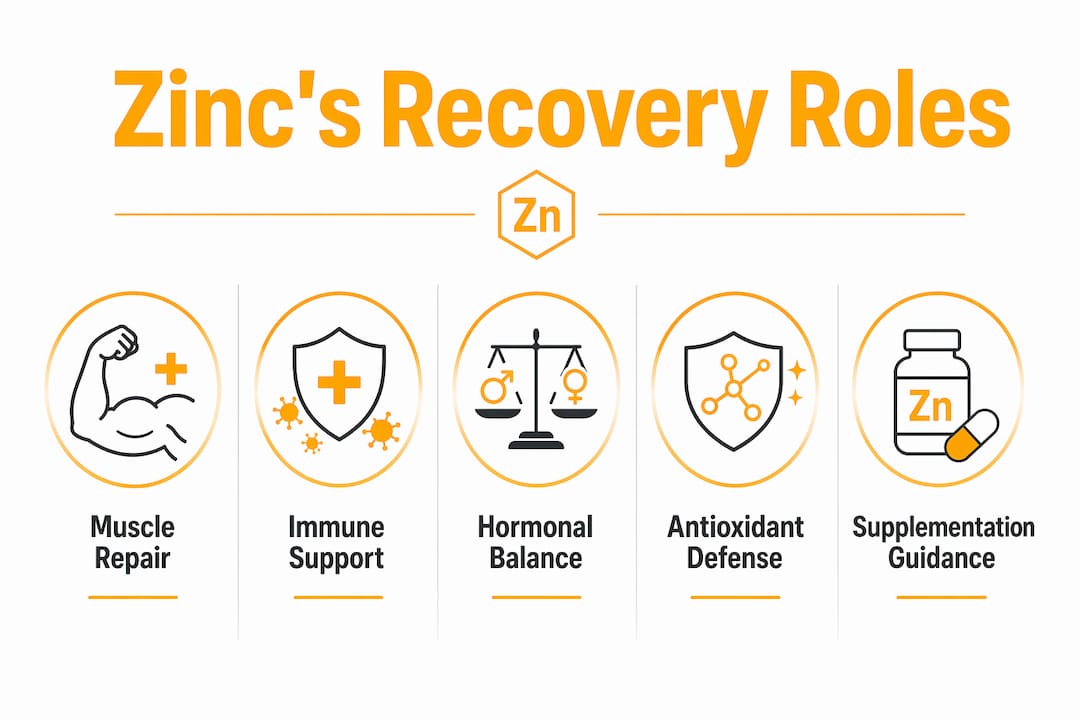
Zinc is defined as a trace mineral that directly regulates muscle repair, immune defense, and anabolic hormone production, making it one of the most consequential athletic recovery minerals in sports nutrition. The role of zinc in athletic recovery extends far beyond basic nutrition. It operates at the cellular level, influencing enzymatic reactions that govern protein synthesis, antioxidant defense, and inflammation control. Whether you train for strength, endurance, or sport, zinc status shapes how fast and how completely your body bounces back between sessions.
How does zinc support muscle recovery and repair?
Zinc functions as a cofactor in over 300 enzymatic reactions, many of which are directly involved in protein synthesis and cell division. When muscle fibers sustain micro-damage during resistance or endurance training, zinc activates the satellite cells responsible for rebuilding those fibers. Without adequate zinc, this repair cycle slows, and training adaptations stall.
Exercise-induced zinc depletion is a real and measurable phenomenon. Plasma zinc levels drop after both aerobic and resistance training sessions, particularly when heavy sweating is involved. This means athletes in high-volume training blocks face a compounding deficit if dietary intake does not keep pace with losses.
Zinc also acts as a cofactor in antioxidant enzymes, including superoxide dismutase, which neutralizes the free radicals generated during intense exercise. Antioxidant enzyme activity supported by zinc reduces oxidative damage to muscle tissue, which is a prerequisite for faster recovery. For a broader look at how antioxidants fit into recovery planning, the Fitnesshealth guide on antioxidants in recovery provides useful context.

One important nuance: direct evidence for zinc reducing DOMS or creatine kinase markers in athletes is limited. Most recovery claims are grounded in zinc’s immune and hormonal roles rather than robust randomized controlled trials measuring time-to-recovery specifically. That distinction matters when setting expectations.
Key mechanisms zinc activates during the post-exercise recovery window:
- Satellite cell activation for muscle fiber regeneration
- Protein synthesis via ribosomal enzyme support
- Antioxidant defense through superoxide dismutase cofactor activity
- Inflammatory signal modulation to prevent excessive tissue damage
- DNA replication support for new cell production during repair
Pro Tip: If you train twice a day or sweat heavily during sessions, track your dietary zinc intake for one week using an app like Cronometer. Most athletes are surprised by how far below the recommended daily intake they fall.
What is zinc’s role in immune function and its impact on recovery?
Zinc is the immune system’s most critical trace mineral. It regulates the activity of T-cells, natural killer cells, and macrophages, all of which are activated during the inflammatory response that follows hard training. When zinc status is low, immune signaling degrades and the body’s ability to resolve inflammation slows.
A 2026 study demonstrated that zinc aspartate increased IFN-γ production in zinc-deficient participants, restoring a key cytokine responsible for coordinating immune defense. IFN-γ is not just relevant to fighting illness. It also plays a role in regulating the inflammatory environment around damaged muscle tissue. Restoring its production means the body can better manage the post-training immune response.
A separate randomized clinical trial on zinc supplementation showed faster recovery times and lower rates of severe illness progression in zinc-supplemented groups, demonstrating zinc’s capacity to modulate inflammation and accelerate resolution. The biological mechanism is the same one that operates during exercise recovery: zinc shortens the inflammatory phase, which is the bottleneck in returning to full training capacity.
Zinc’s immune benefits translate directly to training consistency. An athlete who avoids the two-week training interruption caused by a respiratory illness maintains a compounding advantage in fitness adaptation over the course of a season.
The practical implication is straightforward. Athletes who support immune function through nutrition spend fewer days sick and more days adapting. Zinc is a central pillar of that strategy, not a peripheral one.
How does zinc affect hormonal regulation relevant to recovery?
Zinc is required for the synthesis of testosterone, the primary anabolic hormone governing muscle hypertrophy and recovery capacity. Zinc-deficient men show measurably lower testosterone levels, and supplementation partially restores testosterone in those with confirmed deficiency, supporting lean mass gains and recovery potential.
The hormonal pathway zinc influences follows a clear sequence:
- Zinc supports the hypothalamic-pituitary axis, which signals the testes to produce testosterone.
- Adequate testosterone levels increase muscle protein synthesis rates and accelerate repair of exercise-damaged fibers.
- Zinc also influences insulin-like growth factor 1 (IGF-1) activity, which works alongside testosterone to drive muscle hypertrophy.
- Zinc deficiency disrupts this cascade, reducing anabolic signaling and extending the time needed between productive training sessions.
The hormonal argument for zinc is strongest in athletes who are already deficient. For well-nourished athletes with normal zinc status, supplementation does not push testosterone above physiological norms. The benefit is restoration, not supraphysiologic enhancement. This is a critical distinction that separates zinc from anabolic compounds. Understanding how vitamins and minerals support strength training puts zinc’s hormonal role in proper proportion alongside other micronutrients.
When and how should athletes consider zinc supplementation?
Athletes face a higher baseline risk of zinc insufficiency than the general population. Up to 90% of athletes studied show risk of zinc deficiency, largely driven by high carbohydrate diets that crowd out zinc-rich foods and by sweat losses during training. Endurance athletes, vegetarians, and those in caloric restriction are the highest-risk groups.
| Factor | Dietary zinc | Supplemental zinc |
|---|---|---|
| Bioavailability | High from animal sources; lower from plant sources | Varies by form; zinc aspartate and zinc picolinate absorb well |
| Risk of excess | Very low from food alone | Real risk above 40 mg/day; copper depletion possible |
| Best use case | Primary source for all athletes | Correcting confirmed deficiency or marginal intake |
| Common forms | Red meat, shellfish, legumes, seeds | ZMA (zinc, magnesium, B6), standalone zinc aspartate |
| Cost and convenience | Requires dietary planning | Convenient but requires monitoring |
Excess zinc supplementation risks copper deficiency, which creates its own set of problems including anemia and impaired immune function. The tolerable upper intake level for zinc is 40 mg per day for adults. Most athletes do not need to approach that ceiling if their diet includes regular servings of red meat, shellfish, or legumes.
ZMA formulations, which combine 15 to 30 mg zinc with magnesium and vitamin B6, are widely used in strength sports. The magnesium component supports sleep quality and muscle relaxation, while B6 enhances zinc absorption. This combination addresses multiple recovery pathways simultaneously, which is why it remains one of the most popular sports recovery nutrients in the market.
Pro Tip: Get a serum zinc test before starting supplementation. Supplementing without confirmed deficiency adds cost and risk without meaningful recovery benefit. Most sports medicine clinicians can order this as part of a standard micronutrient panel.
How does zinc interact with other nutrients and what are the best dietary sources?
Zinc does not operate in isolation. Its absorption and effectiveness depend significantly on what else is in your diet and supplement stack.
| Food source | Zinc content (per 100g) | Notes for athletes |
|---|---|---|
| Oysters | ~78 mg | Highest zinc density of any food |
| Beef (lean) | ~8 mg | Practical daily source; pairs with protein goals |
| Pumpkin seeds | ~7.5 mg | Good plant-based option; pair with vitamin C foods |
| Lentils | ~3.3 mg | Phytates reduce absorption; soaking improves it |
| Cashews | ~5.6 mg | Convenient snack; moderate zinc density |
Phytates found in whole grains and legumes bind zinc and reduce its absorption by up to 50%. Athletes on plant-based diets need to account for this by soaking or sprouting legumes, consuming fermented grains, and potentially increasing total zinc intake targets. The Granavitalis guide on plant-based recovery strategies covers this in detail for athletes avoiding animal products.
Zinc and magnesium work synergistically in the context of recovery. Both minerals are lost through sweat, both support muscle function, and both influence sleep quality, which is the most underrated recovery variable in training. Vitamin B6 enhances the cellular uptake of both minerals, which is why ZMA formulations include all three. For athletes focused on post-workout nutrition, pairing zinc-rich foods with protein sources in the recovery meal maximizes both muscle repair and mineral replenishment simultaneously.
Calcium and iron compete with zinc for intestinal absorption when consumed in large amounts at the same time. Athletes taking iron supplements for anemia should separate iron and zinc doses by at least two hours to avoid this interference.
Key takeaways
Zinc supports athletic recovery through immune regulation, hormonal balance, and antioxidant defense, but its benefits are strongest when correcting a deficiency rather than supplementing on top of adequate intake.
| Point | Details |
|---|---|
| Zinc drives muscle repair | It activates satellite cells and supports protein synthesis enzymes critical for post-exercise tissue rebuilding. |
| Immune function is the clearest benefit | Zinc restores IFN-γ production and reduces inflammation duration, keeping training cycles consistent. |
| Hormonal impact requires deficiency | Testosterone and IGF-1 benefits from zinc appear primarily in athletes with confirmed zinc insufficiency. |
| Excess supplementation carries risk | Doses above 40 mg/day can deplete copper and impair immune function, reversing the intended benefit. |
| Diet first, supplement second | Red meat, oysters, and pumpkin seeds cover zinc needs for most athletes without supplementation risk. |
Zinc’s real value in recovery: what the evidence actually shows
I have spent years reviewing supplement research, and zinc is one of the minerals most consistently oversold and most consistently underappreciated at the same time. Oversold because the marketing around ZMA and testosterone claims often implies benefits that only materialize in deficient athletes. Underappreciated because the immune and inflammatory recovery benefits are genuinely significant and rarely get the attention they deserve.
The athletes I see getting the most from zinc are not the ones taking 50 mg capsules after every workout. They are the ones who identified a real dietary gap, corrected it through a combination of food and targeted supplementation, and then noticed they stopped getting sick every six weeks during heavy training blocks. That is not a small benefit. A two-week illness interruption twice per season can cost an athlete months of compounding adaptation.
My honest position is this: treat zinc like you treat sleep. You cannot out-supplement a structural deficit, and you cannot manufacture a benefit that was never missing. Assess your diet, assess your sweat rate, get your levels tested if you are in a high-risk group, and then make a targeted decision. The muscle recovery strategies that actually work long-term are always built on nutritional foundations, not single-mineral fixes.
— Rene
Support your recovery with Fitnesshealth
Fitnesshealth offers a curated range of recovery supplements and programs designed specifically for athletes who want evidence-based support for muscle repair, immune health, and hormonal balance. Whether you are looking for zinc-inclusive formulations like ZMA, magnesium blends, or comprehensive recovery stacks, the platform pairs every product with detailed nutritional guidance so you understand exactly what you are taking and why. Explore the full catalog at Fitnesshealth to find the supplement strategy that fits your training load, dietary pattern, and recovery goals.
FAQ
What does zinc actually do for athletic recovery?
Zinc supports recovery by activating muscle repair enzymes, regulating immune cell activity, and maintaining testosterone production. Its strongest documented benefits are in immune function and inflammation modulation rather than direct reduction of muscle soreness.
How much zinc do athletes need per day?
The recommended dietary allowance for zinc is 11 mg per day for adult men and 8 mg for adult women, but athletes with high sweat rates or plant-based diets may need more. Supplementation above 40 mg per day risks copper depletion and should be avoided without medical guidance.
Does zinc supplementation improve testosterone levels?
Zinc supplementation restores testosterone in deficient men but does not raise testosterone above normal physiological levels in athletes who already have adequate zinc status. The benefit is correction, not enhancement.
What are the best food sources of zinc for athletes?
Oysters contain the highest zinc density of any food, followed by lean beef, pumpkin seeds, cashews, and lentils. Animal sources provide higher bioavailability than plant sources due to the absence of absorption-inhibiting phytates.
Can you take too much zinc?
Yes. Chronic intake above 40 mg per day depletes copper, which can cause anemia and impaired immune function. Excess zinc supplementation risks are real and documented, making targeted, deficiency-correcting doses the safest approach for athletes.










