

The fastest way to reduce muscle soreness between games is a short, sequenced routine: rehydrate immediately, refuel with carbs and protein within 30–60 minutes, run a brief cooldown, apply a targeted recovery tool (massage, foam rolling, or cold immersion), and protect your sleep. That order matters. Skip the refuel and your muscles stay in a catabolic state longer. Skip the cooldown and stiffness compounds overnight.
Here’s the priority checklist you can run through right after the final whistle:
- Immediate (0–15 min): Start sipping water or an electrolyte drink; begin a 5–10 minute light jog or walk to flush lactate.
- 0–30 min: Consume a carb-protein snack or shake (roughly 3:1 carb-to-protein ratio).
- 0–60 min: Foam roll or receive a short massage targeting the heaviest-worked muscle groups.
- 1–6 h: Apply cold immersion or contrast therapy if available; wear compression garments during travel or rest.
- 6–24 h: Prioritize 7–9 hours of sleep or a 20–30 minute nap; eat a full recovery meal with protein and complex carbs.
Keep this sequence on your phone. When you’re running on adrenaline after a game, a checklist is the only thing that actually gets followed.
Key Takeaways
The fastest way to reduce muscle soreness between games is a sequenced routine: rehydrate, refuel within 60 minutes, cool down actively, apply a targeted recovery tool, and protect your sleep above everything else.
| Point | Details |
|---|---|
| Rehydrate first | Replace fluids immediately post-game; use electrolytes after games over 60 minutes or in heat. |
| Refuel within 60 minutes | Target a 3:1 carb-to-protein ratio; chocolate milk, shakes, or wraps work when appetite is low. |
| Active cooldown reduces stiffness | Five to ten minutes of light movement and mobility immediately post-game measurably cuts next-day soreness. |
| Massage is the top evidence-backed tool | A meta-analysis found massage produces the strongest and most consistent reductions in DOMS and fatigue. |
| Sleep drives repair | Seven to nine hours of sleep is the highest-leverage recovery tool; a 20–30 minute nap offsets short deficits. |
| Fitnesshealth supplements | Protein, creatine, omega-3s, and magnesium from Fitnesshealth support recovery when layered with the routine above. |
Table of Contents
- 1. How to rehydrate and replace electrolytes between games
- 2. What to eat and when to refuel after a game
- 3. Cooldown and active recovery steps to do immediately after play
- 4. Why sleep is your highest-leverage recovery tool between matches
- 5. Massage and foam rolling to relieve soreness after games
- 6. When to use cold, contrast, and heat between games
- 7. How compression garments and elevation help between-game recovery
- 8. Supplements with the best short-term evidence for recovery between games
- 9. A sample 0–24 hour between-games recovery routine you can adapt
- 10. When soreness is a red flag and you need to see a clinician
- 11. Trainer and sport-medicine tips for tailoring recovery
- Recovery supplements and bundles from Fitnesshealth
- Sources
1. How to rehydrate and replace electrolytes between games
Dehydration amplifies perceived soreness. Even mild fluid loss (around 2% of body weight) impairs muscle function and slows the clearance of metabolic byproducts that contribute to post-game aches. HSS sports medicine guidance lists rehydration as the first post-match priority for a reason.
The simplest way to gauge your deficit: weigh yourself before and after the game. Each pound lost equals roughly 16 oz of fluid you need to replace. Urine color is your ongoing check — pale yellow means you’re on track; dark amber means you’re behind.
| Urine Color | Hydration Status | Action |
|---|---|---|
| Pale yellow | Well hydrated | Maintain current intake |
| Yellow | Mildly dehydrated | Add 16–24 oz over next hour |
| Dark yellow/amber | Significantly dehydrated | Prioritize fluids immediately |
| Brown/orange | Severely dehydrated or red flag | Seek medical attention |
Plain water works for short turnarounds, but games lasting over 60 minutes or played in heat demand electrolyte replacement. Sodium is the key mineral: it drives fluid retention and signals thirst. A sports drink, coconut water, or a pinch of salt in water with a carb source covers the basics without overcomplicating it.
Pro Tip: Weigh yourself before and after every game for two weeks. Once you know your average sweat rate per hour, you can pre-load fluids more precisely and cut your post-game deficit in half before recovery even starts.
2. What to eat and when to refuel after a game
The 30–60 minute post-game window is when your muscles are most receptive to glycogen resynthesis and protein uptake. Miss it and recovery slows measurably. Carilion Clinic guidance identifies nutrition as one of the central strategies for reducing DOMS severity and duration.
Target a 3:1 carbohydrate-to-protein ratio in that first window. Practically, that means roughly 60–90 g of carbs and 20–30 g of protein for most athletes. A full sit-down meal isn’t always realistic post-game, so portable options matter.
Good portable refuel options:
- Chocolate milk (hits the 3:1 ratio naturally and is cheap)
- A banana plus a protein shake or Greek yogurt
- Rice cakes with peanut butter and a sports drink
- A turkey or chicken wrap with fruit
- A recovery bar with at least 20 g protein and 40+ g carbs
If your appetite is suppressed after intense play, liquid options (shakes, smoothies, chocolate milk) are easier to get down than solid food. Don’t skip the window entirely — even a partial refuel is better than nothing. For post-workout nutrition timing, the first hour is where the biggest gains in recovery speed are made.
When the next game is more than 24 hours away, shift toward a full meal with complex carbs (oats, rice, sweet potato) and a complete protein source within 2 hours. When turnaround is under 12 hours, liquid carbs and fast-digesting protein (whey, milk) become the smarter call.
3. Cooldown and active recovery steps to do immediately after play
A proper cooldown is not optional padding. Five to ten minutes of light movement after a game keeps circulation elevated, helps clear lactate, and measurably reduces next-day stiffness. Cleveland Clinic guidance is clear: gentle movement is acceptable and beneficial while sore, but heavy loading should be avoided.
A practical 10–15 minute post-game sequence:
- Light jog or brisk walk (3–5 min): Keeps heart rate elevated just enough to maintain blood flow without adding stress.
- Dynamic mobility (5 min): Hip circles, leg swings, shoulder rolls, and ankle rotations targeting the joints you used most.
- Static stretching (3–5 min): Hold each stretch 20–30 seconds. Focus on quads, hamstrings, calves, and hip flexors for field sport athletes.
Avoid any heavy eccentric loading (weighted squats, plyometrics) immediately post-game. That’s the movement pattern most associated with DOMS onset, and adding more of it when muscles are already stressed accelerates soreness rather than reducing it.
Pro Tip: If you’re in a tournament with limited space, a warm-up and cool-down routine adapted for a hallway or locker room works fine. The goal is circulation, not range of motion records.
For team sports, build the cooldown into the post-game huddle. Three minutes of walking while coaches debrief costs nothing and starts the recovery process before athletes even hit the locker room.
4. Why sleep is your highest-leverage recovery tool between matches
Sleep is where most of the actual repair happens. Growth hormone release, protein synthesis, and inflammatory regulation all peak during deep sleep stages. Carilion Clinic and HSS both list sleep as a core recovery strategy, and the science linking sleep quality to muscle repair is consistent: less sleep means slower recovery and higher perceived soreness the next day.
For between-game recovery, target 7–9 hours. When that’s not possible (late-night games, travel, early morning starts), a 20–30 minute nap in the early afternoon can partially offset the deficit without disrupting nighttime sleep.
Practical sleep habits that support recovery:
- Keep the room cool (around 65–68°F) to support deep sleep onset.
- Eat a small protein-carb snack 30–60 minutes before bed (cottage cheese, a glass of milk, or a small bowl of oats) to support overnight muscle protein synthesis.
- Avoid screens for 30 minutes before sleep; blue light delays melatonin release.
- If post-game adrenaline makes sleep hard, try a brief breathing protocol (4-7-8 breathing or box breathing) to bring heart rate down.
Track sleep with a wearable or even a simple notes app. Patterns matter: if you consistently sleep poorly after away games, that’s a scheduling or environment problem you can solve before the next tournament.
5. Massage and foam rolling to relieve soreness after games
Massage is the single most effective technique for reducing DOMS and perceived fatigue. A meta-analysis published in PMC found small-to-large effect sizes across recovery techniques, with massage producing the strongest and most consistent results on both soreness and fatigue markers. It also reduced creatine kinase (CK) and inflammatory markers in multiple trials when applied soon after exercise.
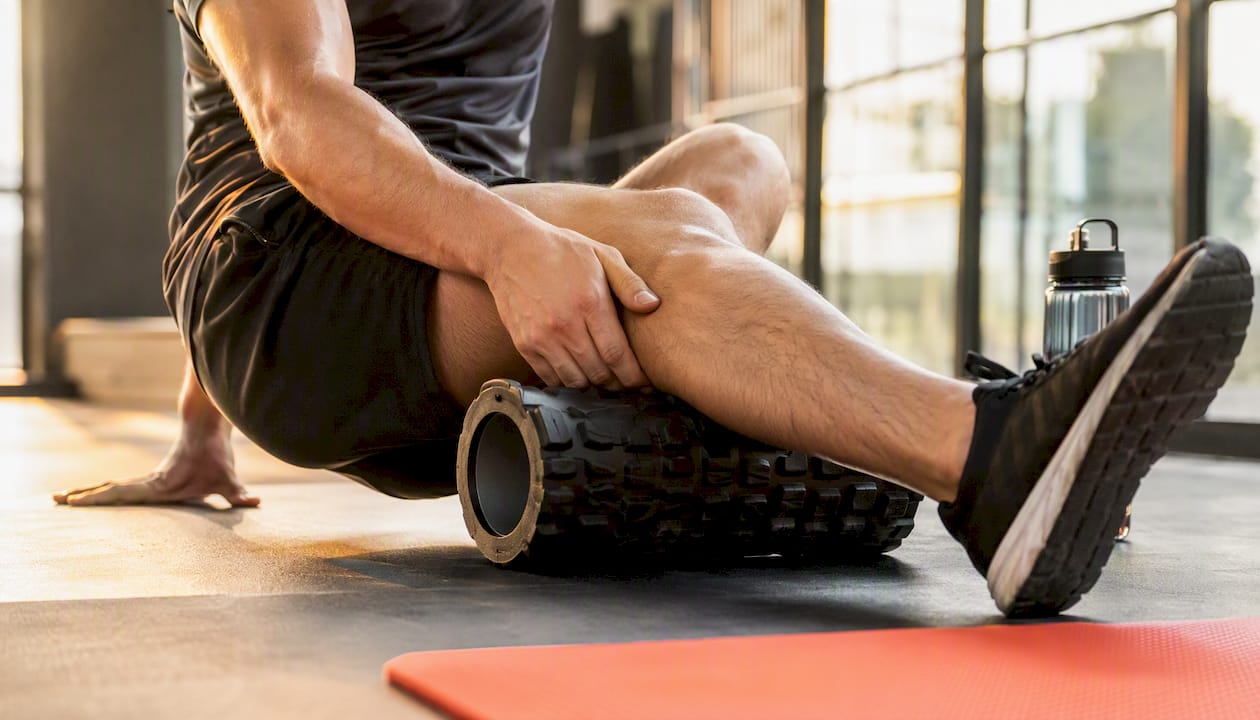
Foam rolling produces similar benefits through self-myofascial release: it increases tissue pliability, reduces perceived tightness, and improves range of motion without requiring a therapist.
| Technique | Best Timing | Duration | Priority Areas |
|---|---|---|---|
| Professional massage | Within 2 h post-game | 20–30 min | Quads, hamstrings, calves |
| Foam rolling | Immediately post-game or next morning | 10–15 min | IT band, glutes, thoracic spine |
| Percussion massager | Any time | 2–3 min per muscle group | Wherever soreness is highest |
A simple foam-rolling sequence for field sport athletes:
- Calves (60 seconds each leg, slow passes)
- Hamstrings (60 seconds each leg)
- Quads and IT band (90 seconds each side)
- Glutes and piriformis (60 seconds each side)
- Thoracic spine (30–60 seconds, gentle extension)
Roll slowly. Pause on tender spots for 5–10 seconds rather than rushing through. Intensity should feel like firm pressure, not sharp pain.
6. When to use cold, contrast, and heat between games
Cold immersion reduces inflammation and perceived soreness in the 24–48 hour window after intense play. Short ice baths of 10–15 minutes at around 10–15°C (50–59°F) are commonly used in congested schedules to help athletes feel ready for the next session. A 2026 network meta-analysis in Frontiers in Physiology ranked portable cold-compression therapy highest for reducing subjective muscle soreness in soccer players, with a SUCRA score of 98.9%.
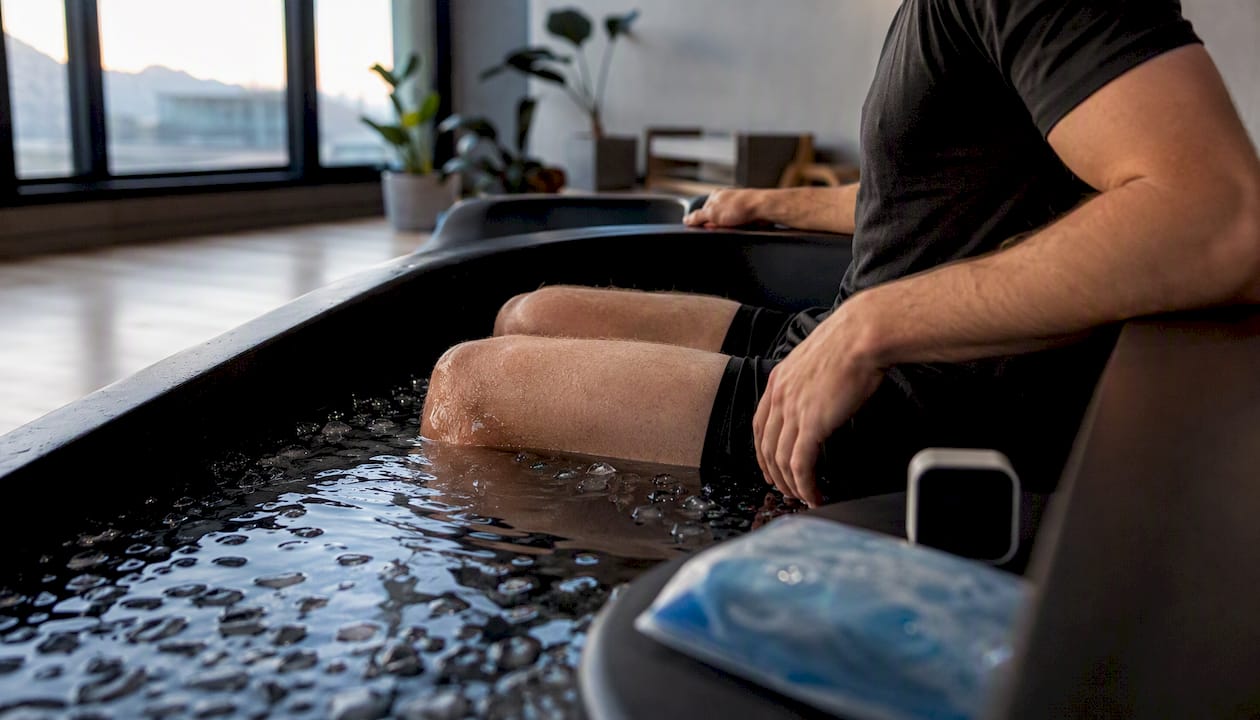
The trade-off: repeated cold immersion immediately after strength-focused sessions can blunt long-term hypertrophy adaptations. For in-season athletes prioritizing availability over muscle growth, that trade-off is usually worth it.
Practical protocols:
- Ice bath: 10–15 minutes at 50–59°F. Enter gradually. Never exceed 20 minutes.
- Contrast bath: Alternate 1–2 minutes cold (50–59°F) and 1–2 minutes warm (95–104°F) for 3–4 cycles. Finish cold for soreness; finish warm for stiffness.
- Heat pack: Apply 15–20 minutes to stiff areas 12–24 hours post-game, not immediately after. Heat increases blood flow and helps with stiffness, not acute inflammation.
Cold early, heat later. Cleveland Clinic guidance is explicit: cold manages early inflammation and pain; heat addresses stiffness in the later recovery window. Using heat too early can increase swelling.
7. How compression garments and elevation help between-game recovery
Compression garments reduce perceived soreness and swelling by improving venous return and limiting fluid accumulation in fatigued muscle tissue. The PMC meta-analysis found small-to-large effect sizes for compression on DOMS, making it one of the more accessible tools in a competitive schedule.
Compression works best when worn continuously in the hours after a game, not just during play. For tournament athletes traveling between venues, compression tights or sleeves during the bus or flight ride are a practical, zero-effort recovery strategy.
Key do’s and don’ts:
- Do put compression garments on within 30 minutes of the final whistle.
- Do wear them for 2–4 hours post-game, or overnight if tolerated.
- Don’t wear garments so tight they restrict circulation or cause numbness.
- Do elevate legs above heart level (lying with legs on a wall or chair) for 10–15 minutes when resting between games.
- Don’t rely on compression alone — it works best layered with hydration, nutrition, and sleep.
Athletes in single-game contexts benefit less than those in back-to-back tournament play, where cumulative fatigue makes every marginal recovery tool count.
8. Supplements with the best short-term evidence for recovery between games
No supplement replaces sleep, hydration, and nutrition. That said, a few have consistent short-term evidence for reducing soreness or supporting readiness between games. For a deeper look at how these work at the cellular level, protein synthesis and muscle recovery explains the mechanisms clearly.
Supplements to use cautiously or skip:
- High-dose antioxidant supplements (vitamin C and E in large doses) may blunt adaptation signals — use antioxidants for recovery at moderate, food-first levels.
- Caffeine helps performance but can disrupt sleep if taken within 6 hours of bedtime.
- NSAIDs (ibuprofen) mask soreness but may impair muscle protein synthesis with repeated use.
Always check supplements against the NSF Certified for Sport or Informed Sport databases before competition. Anti-doping rules apply regardless of sport level, and contaminated supplements are a real risk.
9. A sample 0–24 hour between-games recovery routine you can adapt
The goal of this routine is simple: restore glycogen, reduce inflammation, and protect sleep quality. Adjust the timing based on your schedule.
Immediate (0–15 min post-game):
- Begin sipping 16–24 oz of water or electrolyte drink.
- Walk or light jog for 5 minutes to start cooldown.
- Dynamic mobility sequence (hip circles, leg swings, shoulder rolls).
Early recovery (15–60 min): 4. Consume a 3:1 carb-protein snack or shake (chocolate milk, protein bar + banana, or a wrap). 5. Foam roll major muscle groups for 10–15 minutes. 6. Apply ice bath or cold pack for 10–15 minutes if available.
Mid-recovery (1–6 h): 7. Put on compression garments for travel or rest. 8. Eat a full recovery meal (rice, chicken, vegetables, or equivalent). 9. Elevate legs for 10–15 minutes while resting.
Night-time recovery (6–24 h): 10. Eat a small protein-carb snack 30–60 minutes before bed. 11. Sleep 7–9 hours in a cool, dark room. 12. Light walk or pool session the next morning if soreness is high and a game is later that day.
For short turnarounds under 12 hours, compress steps 4–9 into the first 2 hours and prioritize sleep above everything else. For youth athletes, reduce cold immersion duration and intensity. For travel days, compression garments and hydration carry the load when other tools aren’t available.
10. When soreness is a red flag and you need to see a clinician
Normal DOMS peaks at 24–72 hours after exercise and resolves on its own. It feels like diffuse muscle aching, stiffness, and tenderness to touch. It does not feel like sharp, localized pain, and it does not cause significant swelling, loss of function, or fever. Cleveland Clinic notes that rest is usually the best treatment for DOMS, but certain symptoms require a different response.
Stop and seek evaluation if you notice:
- Sharp, stabbing, or localized pain (not diffuse aching)
- Significant swelling or bruising around a joint or muscle
- Loss of range of motion that doesn’t improve with gentle movement
- Fever or systemic symptoms alongside muscle pain
- Dark brown or cola-colored urine (a sign of rhabdomyolysis)
- Soreness that does not improve after 5–7 days
When you see a clinician, describe the onset (during play vs. after), the location, the quality of pain (sharp vs. dull), and any associated symptoms. An athletic trainer or sports medicine physician can rule out muscle tears, stress fractures, and compartment syndrome. Use recovery biomarkers to track your baseline so deviations are easier to spot.
Never play through sharp joint pain or significant swelling. The cost of a missed game is far lower than the cost of a missed season.
11. Trainer and sport-medicine tips for tailoring recovery
The most consistent message from practitioners at the elite level: individualize. What works for one athlete’s recovery may not work for another’s, and WNBA trainers have made this a core principle, using Pilates, pool sessions, and foam rolling based on each athlete’s response rather than a fixed protocol.
Scheduling is as important as the modality. Elite trainers build “blackout” rest days into congested schedules, where athletes do nothing beyond light walking and sleep. Skipping these days in favor of more active recovery is one of the most common mistakes in competitive sport.
Pro Tip: Track your body weight and urine color every morning during a tournament. A weight drop of more than 1–2% from your baseline, combined with dark urine, tells you that hydration is the bottleneck in your recovery, not the modality you’re using.
Coaches can use simple readiness questionnaires (rate fatigue, mood, and muscle soreness on a 1–10 scale each morning) to identify athletes who need a modified training day. This costs nothing and catches overtraining before it becomes injury. For a structured approach to monitoring, recovery biomarkers for athletes covers the practical tools teams use.
The case for choosing recovery tools based on the specific demands of your next game
Most athletes treat recovery as a single category. It isn’t. A 2026 network meta-analysis showed that different modalities produce different outcome-specific benefits: cold-compression ranked highest for reducing subjective soreness, while far-infrared therapy showed stronger effects on jump performance restoration. That distinction has real implications.
If your next game demands explosive power (basketball, volleyball, soccer), prioritize the modality that restores jump performance. If it demands endurance and pain tolerance, prioritize the one that reduces perceived soreness. Treating every recovery session identically regardless of what you need to perform next is leaving readiness on the table.
The other thing most athletes underestimate: DOMS signals adaptation, not damage. Cleveland Clinic is clear that progressive intensity over time is the only reliable way to reduce DOMS severity long term. Aggressive recovery tools manage the symptom; consistent, graded training reduces the cause. Use both, but don’t confuse them.
Recovery supplements and bundles from Fitnesshealth
When the routine above is in place, targeted supplementation can fill the gaps that food and sleep alone don’t fully cover, especially during compressed tournament schedules.
Fitnesshealth carries recovery-focused supplements including protein formulas, creatine, omega-3s, magnesium, and antioxidant blends, all available through the Fitnesshealth store. Before adding any supplement to your competition routine, check it against a third-party testing database (NSF Certified for Sport or Informed Sport) and confirm it complies with your sport’s anti-doping rules. If you’re unsure which products fit your recovery needs, a sports medicine clinician or registered sports dietitian can help you build a protocol that’s both safe and effective.
Sources
- Frontiers in Physiology — 2026 network meta-analysis of recovery interventions in soccer
- HSS — Post-game recovery: 5 key strategies for soccer players
- Cleveland Clinic — Delayed onset muscle soreness (DOMS): What it is & treatment
- Carilion Clinic — How to prevent and care for sore muscles
This article is general information, not a substitute for advice from a qualified doctor. Consult a qualified healthcare professional about your own circumstances before acting on anything here.










