

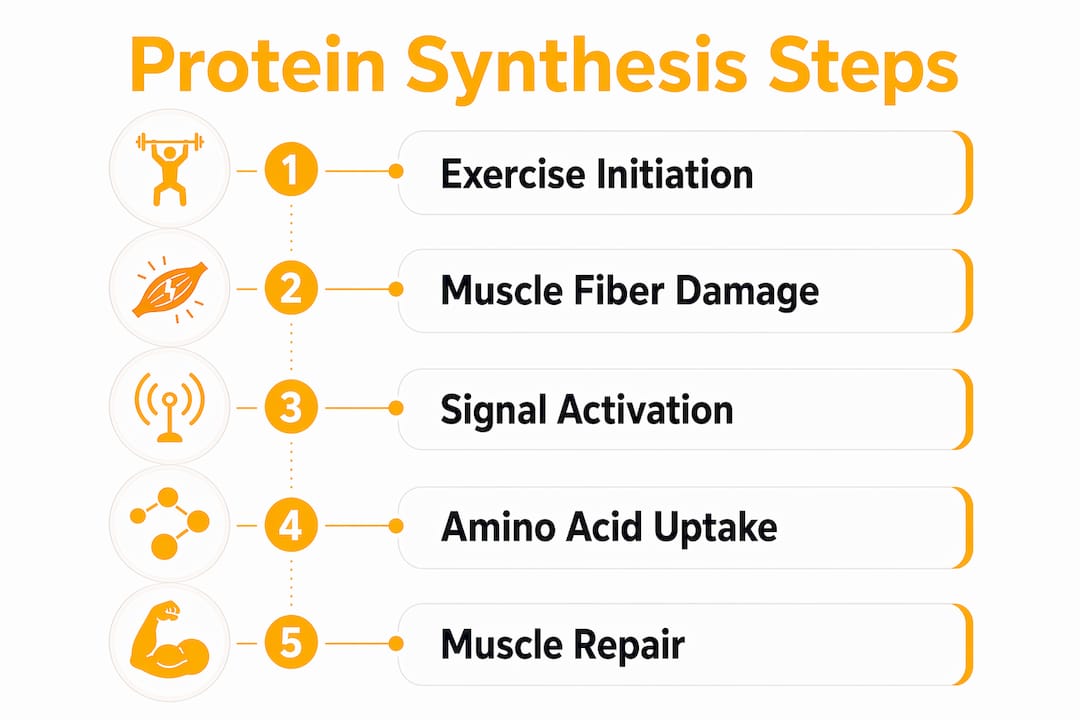
Muscle protein synthesis (MPS) is the biological process where your body repairs and rebuilds muscle fibers after exercise-induced damage, and it is the central mechanism behind every strength gain and recovery outcome you experience. The role of protein synthesis recovery cannot be overstated: without it, training stress accumulates without adaptation. MPS is triggered by resistance exercise and fueled by dietary protein, particularly the amino acid leucine, which activates the mTOR signaling pathway to initiate repair. Getting this process right determines whether you recover faster, grow stronger, or stall entirely.
How does protein synthesis support muscle recovery and growth?
Muscle recovery depends on the balance between muscle protein breakdown (MPB) and muscle protein synthesis. After a hard training session, both processes accelerate. Net muscle gain happens only when MPS exceeds MPB. That balance is what separates productive training from spinning your wheels.

MPS stays elevated for 24–48 hours after resistance exercise. That window is your recovery opportunity, and it is wider than most athletes assume. You do not need to slam a shake the moment you rack the bar. What matters is supplying amino acids consistently across that extended period.
Dietary protein provides the raw amino acids your muscles need to rebuild. Without adequate intake, MPS cannot outpace breakdown. The body will pull amino acids from existing muscle tissue instead, which defeats the purpose of training.
- Leucine acts as the primary trigger for MPS via the mTOR pathway. It signals the muscle cell to begin repair.
- Essential amino acids (EAAs) supply the building blocks that MPS requires once signaling is activated.
- Caloric adequacy supports the energy demands of synthesis itself, since MPS is metabolically costly.
Pro Tip: If you train fasted, prioritize a protein-rich meal within two hours post-session. The absence of pre-workout amino acids makes post-workout supply more time-sensitive than usual.
What protein intake strategies optimize recovery?
Evidence-based protein targets for active individuals sit at 1.6–2.2 grams per kilogram of bodyweight per day. For a 180-pound (82 kg) athlete, that means roughly 131–180 grams daily. Most recreational athletes fall short of this range without tracking.
Per-meal protein dose matters as much as daily totals. 20–40 grams per meal is the effective range for stimulating MPS. Eating 80 grams in one sitting does not produce double the MPS response. The synthesis machinery saturates, and excess protein gets oxidized for energy instead.
Spreading protein across meals throughout the day maintains MPS better than one large dose. Four meals with 35–40 grams each outperforms two meals with 70 grams each for muscle recovery outcomes.
Here is a practical daily structure for a 170-pound athlete targeting 150 grams of protein:
- Breakfast: 4 eggs plus Greek yogurt (35–40 g protein)
- Lunch: 6 oz chicken breast with legumes (40–45 g protein)
- Post-training snack: Whey or pea protein shake (25–30 g protein)
- Dinner: Salmon or lean beef with vegetables (35–40 g protein)
The so-called “anabolic window” myth overstates the urgency of immediate post-workout protein. Daily protein adequacy and distribution matter far more than hitting a 30-minute post-workout deadline. For athletes training twice daily, however, faster protein replenishment between sessions does become relevant since the recovery window is compressed.
Pro Tip: Athletes over 50 need protein at the higher end of the 1.6–2.2 g/kg range. Age-related anabolic resistance means older muscles require more leucine per meal to trigger the same MPS response as younger adults.
How do different protein sources affect muscle protein synthesis?
Not all proteins are equal when it comes to MPS stimulation. The key variable is leucine content and overall amino acid profile.
| Protein Source | Leucine Content | MPS Stimulation | Notes |
|---|---|---|---|
| Whey protein | High (~11%) | High | Fast-digesting; ideal post-training |
| Eggs | High (~8.5%) | High | Complete amino acid profile |
| Chicken/beef | High (~8%) | High | Versatile whole-food sources |
| Soy protein | Moderate (~8%) | Moderate-high | Best plant option for MPS |
| Pea protein | Moderate (~8%) | Moderate | Combine with rice for full profile |
| Wheat/rice protein | Low (~6%) | Lower | Requires higher dose to match animal protein |
Animal proteins produce slightly higher MPS than plant proteins, linked primarily to leucine content. The difference is modest and can be closed by eating more total protein or combining plant sources strategically.
Leucine triggers MPS via the mTOR pathway and is especially important for older adults facing anabolic resistance. In catabolic states like critical illness or post-surgery recovery, leucine-enriched protein can partially restore suppressed MPS rates.
One important caveat: leucine supplementation alone did not prevent muscle loss during immobilization in a randomized trial. Without the anabolic signal from physical activity, no supplement can sustain MPS on its own. Leucine works as a trigger, not a substitute for training.
- Whey protein remains the gold standard for post-training MPS due to its leucine content and fast absorption.
- Plant-based athletes should prioritize soy, pea, and rice protein combinations to hit adequate leucine per meal.
- Securing enough leucine per meal is the practical priority for recovery, regardless of whether your diet is plant-based or omnivorous.
Practical tips to maximize protein synthesis recovery
Total daily protein adequacy is the single most impactful variable for most athletes. Nail that before worrying about timing, source, or supplementation.
- Aim for at least 3–4 protein-containing meals per day, each with 25–40 grams.
- Include a leucine-rich protein source (eggs, whey, chicken, soy) at each meal.
- Adjust intake upward during injury recovery. Post-surgery protein needs increase to support tissue healing and immune function alongside muscle repair.
- Hydration supports amino acid transport. Dehydration slows protein delivery to muscle tissue.
- Sleep is when MPS peaks. A casein-rich snack before bed (cottage cheese, Greek yogurt) extends overnight synthesis.
Protein supports immune function and hormone regulation beyond muscle repair. Adequate intake reduces fatigue and injury risk across a full training cycle. Athletes who under-eat protein do not just recover slower. They also get sick more often and sustain more overuse injuries.
Pro Tip: Track your protein intake for one week using an app like Cronometer or MyFitnessPal. Most athletes are surprised to find they are hitting only 60–70% of their target. Awareness alone tends to fix the gap.
Key takeaways
Protein synthesis is the engine of muscle recovery, and feeding it correctly requires daily consistency over perfect timing.
| Point | Details |
|---|---|
| MPS window is 24–48 hours | Distribute protein across the full recovery window, not just immediately post-workout. |
| Per-meal dose matters | Aim for 20–40 g of protein per meal to maximize MPS stimulation at each eating occasion. |
| Leucine is the trigger | Prioritize leucine-rich sources like whey, eggs, and soy to activate the mTOR pathway effectively. |
| Daily totals beat timing | Hitting 1.6–2.2 g/kg per day consistently outperforms any single post-workout timing strategy. |
| Supplements have limits | Leucine and protein supplements support MPS only when paired with physical activity and adequate total intake. |
What the research actually changed for me
The timing myth is the one I see cause the most unnecessary stress among athletes I talk to. People skip meals, rush shakes, and stress about 30-minute windows when the real gap in their recovery is simply not eating enough protein across the day.
What shifted my thinking was seeing how wide the actual MPS window is. Twenty-four to forty-eight hours is a long time. That reframes the whole conversation from “what do I eat right now” to “am I consistently fueling my body well.” The second question is harder to answer but far more productive.
I also think the supplement industry has oversold leucine as a standalone fix. The immobilization trial data is a cold reminder: without the mechanical stimulus of training, no amino acid triggers meaningful synthesis. Supplements are useful for hitting your daily targets conveniently. They are not a shortcut around the fundamentals.
My practical advice is to build your protein strategy around whole foods first. Whey, eggs, Greek yogurt, chicken, and legumes cover most athletes’ needs without complexity. Supplements fill gaps, not foundations. And if you are plant-based, the gap between animal and plant protein MPS is real but small. Eat enough total protein, hit your leucine targets per meal, and you will recover just as well.
— Rene
Protein synthesis recovery support at Fitnesshealth
Fitnesshealth offers a range of protein supplements and recovery programs built around the same evidence covered here, from leucine-rich whey formulas to plant-based protein blends designed for consistent daily intake.

Whether you are managing post-training recovery, returning from injury, or simply trying to hit your daily protein targets more reliably, the Fitnesshealth programs and supplements are structured to support MPS at every stage. The platform also pairs products with educational guides on post-workout nutrition and recovery timing, so you can apply the science without guessing. For athletes who want to go deeper on supplement options, the muscle recovery supplement guide covers what works and what does not in 2026.
FAQ
What is muscle protein synthesis in recovery?
Muscle protein synthesis (MPS) is the process where your body uses dietary amino acids to repair and rebuild muscle fibers damaged during exercise. It is the primary mechanism behind muscle growth and reduced soreness after training.
Does protein help recovery after every workout?
Yes. Protein supports repair after every resistance or endurance session by supplying amino acids for MPS. Even low-intensity sessions create some muscle protein turnover that benefits from adequate protein intake.
How soon after a workout should I eat protein?
The post-workout window is wider than most people think. MPS stays elevated for 24–48 hours after exercise, so eating protein within a few hours is sufficient for most athletes training once daily.
Is leucine the most important amino acid for recovery?
Leucine is the primary trigger for MPS via the mTOR pathway, making it the most critical single amino acid for initiating muscle repair. However, all essential amino acids are needed to complete the synthesis process.
Do plant proteins support muscle recovery as well as animal proteins?
Animal proteins produce slightly higher MPS due to greater leucine content, but the difference is small. Plant-based athletes can match recovery outcomes by eating higher total protein and combining sources like pea and rice protein.










