

B vitamins are defined as water-soluble micronutrients that function as coenzymes, enabling the cellular machinery that converts food into ATP, the body’s primary energy currency. The role of B vitamins in energy metabolism is not optional. Without them, the biochemical reactions that extract energy from carbohydrates, fats, and proteins would grind to a halt. Every athlete, fitness enthusiast, or health-conscious person who wants to understand their energy levels needs to understand what these vitamins actually do at the cellular level.
How do B vitamins function in energy metabolism?
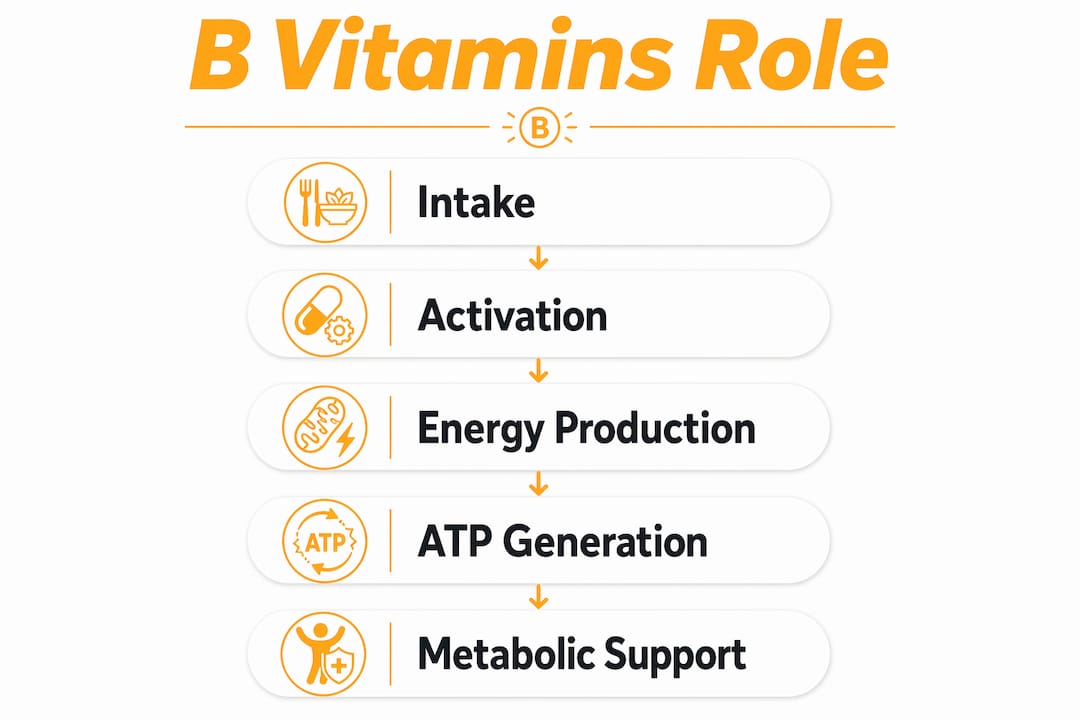
B vitamins do not provide calories or energy directly. They unlock energy stored in food by activating the enzymes that drive glycolysis, the citric acid cycle (also called the TCA cycle), and the electron transport chain. These three pathways are the core of cellular energy production. Each B vitamin plays a specific role in at least one of them.
Here is how each key B vitamin contributes to B vitamins energy production:
- B1 (Thiamine): Converted to thiamine pyrophosphate (TPP), which is required to turn pyruvate into acetyl-CoA. This step is the gateway from glycolysis into the TCA cycle. No TPP means the process stalls before it starts.
- B2 (Riboflavin): Precursor to FAD and FMN, two coenzymes that carry electrons through the electron transport chain. B1, B2, B3, B5, and B7 are all directly involved in ATP synthesis pathways.
- B3 (Niacin): Precursor to NAD+, the most critical electron carrier in the body. NAD+ derived from niacin not only supports ATP production but also regulates mitochondrial biogenesis, influencing muscle function and how the body ages.
- B5 (Pantothenic acid): Required to form coenzyme A (CoA), which carries acetyl groups into the TCA cycle and is central to fatty acid metabolism. Without CoA, fat cannot be burned for fuel.
- B7 (Biotin): Acts as a cofactor for carboxylase enzymes. Pyruvate conversion to energy via the citric acid cycle depends on biotin alongside pantothenic acid.
- B6 (Pyridoxal 5’-phosphate): Critical for mitochondrial oxidative phosphorylation capacity and iron-sulfur cluster biosynthesis, which is required for electron transport chain function.
- B9 (Folate) and B12 (Cobalamin): Support one-carbon metabolism and red blood cell synthesis, which affects how efficiently oxygen reaches cells to support aerobic energy production.
Pro Tip: If you train regularly, your B vitamin needs are higher than a sedentary person’s. Vitamins for strength training often include a full B-complex because exercise accelerates the metabolic pathways that consume these coenzymes.
What happens when B vitamin levels are too low?

B vitamin insufficiency produces symptoms that are easy to miss. Suboptimal intake is common and under-recognized because the symptoms are nonspecific. Fatigue, brain fog, and muscle weakness are the most frequent complaints. These same symptoms appear in dozens of conditions, so a B vitamin gap rarely gets identified first.
The metabolic consequences are real and measurable. When B vitamins are insufficient, mitochondrial function declines because the coenzymes needed to run the TCA cycle and electron transport chain are in short supply. The result is less ATP per unit of food consumed. People feel tired even when they eat enough calories.
Groups at higher risk include:
- Vegetarians and vegans: B12 is found almost exclusively in animal products. Deficiency is common without supplementation.
- Adults over 50: Stomach acid production declines with age, reducing absorption of B12 and other B vitamins.
- People with gut health issues: Conditions like Crohn’s disease or celiac disease impair absorption across the board.
- Those taking certain medications: Metformin, for example, is well documented to reduce B12 absorption over time.
B12 deficiency impairs neurological function and red blood cell synthesis, disrupting energy metabolism and causing fatigue. B12 is essential for methylmalonyl-CoA mutase in mitochondria, directly affecting the citric acid cycle.
Recognizing B12 deficiency symptoms early matters because prolonged deficiency causes nerve damage that does not always reverse with supplementation. The same logic applies across the B-complex. Catching a gap early is far easier than correcting a long-standing deficit.
Are B vitamins actually direct energy boosters?
No. This is the most common misconception in sports nutrition marketing. B vitamins are cofactors, not stimulants. They do not raise alertness, increase heart rate, or produce the immediate lift that caffeine or sugar delivers.
The perceived energy boost from products marketed around B vitamins follows this pattern:
- A person with a subclinical B vitamin deficiency takes a supplement.
- Their metabolic pathways begin running more efficiently.
- They feel less fatigued and attribute it to an energy boost.
- A person with adequate B vitamin status takes the same supplement and notices nothing, because excess water-soluble B vitamins are rapidly excreted and have no stimulant effect.
Energy drinks are the clearest example of misleading marketing. The perceived boost from energy drinks comes from added sugars and caffeine. The B vitamins in those drinks support the cellular machinery that processes those fuels, but they are not the source of the buzz. Listing B vitamins on the label creates a health halo that the biochemistry does not support.
Pro Tip: Before spending money on high-dose B vitamin supplements, get a blood panel that includes serum B12 and folate. Supplementing beyond sufficiency has limited energetic benefits. The real gains come from correcting an actual deficit.
How to get enough B vitamins to support your metabolism
Food is the most reliable source. A varied diet that includes whole grains, legumes, eggs, dairy, meat, fish, and leafy greens covers most B vitamin needs for healthy adults. The table below shows the strongest dietary sources for each key B vitamin.
| B Vitamin | Top Food Sources |
|---|---|
| B1 (Thiamine) | Pork, sunflower seeds, black beans, fortified grains |
| B2 (Riboflavin) | Beef liver, dairy products, almonds, eggs |
| B3 (Niacin) | Chicken breast, tuna, peanuts, brown rice |
| B5 (Pantothenic acid) | Chicken liver, avocado, sunflower seeds, mushrooms |
| B7 (Biotin) | Eggs, salmon, sweet potato, almonds |
| B12 (Cobalamin) | Clams, beef, sardines, fortified plant milks |
Absorption is not guaranteed just because you eat these foods. Suboptimal absorption due to gut health, low stomach acid, or transport issues can impair energy metabolism even when dietary intake looks adequate. This is why gut health and B vitamin status are connected. Supporting your microbiome with probiotics can improve nutrient absorption across the board, which is why athletes who focus on gut health and performance often see improvements in energy alongside digestion.
A few practical points on supplementation:
- B vitamins are water-soluble, so the body does not store them long-term. Daily intake matters more than occasional high doses.
- Taking B vitamins with meals improves absorption and reduces the chance of nausea from high-dose supplements.
- B vitamins and magnesium work together. Magnesium activates the ATP molecule itself, so combined micronutrient support produces better results than either alone.
- For athletes following a sports supplement protocol, a B-complex is often a foundational addition before more specialized products.
Key Takeaways
B vitamins are indispensable coenzymes that drive ATP production, and no amount of supplementation beyond sufficiency will substitute for correcting an actual deficiency.
| Point | Details |
|---|---|
| B vitamins are coenzymes, not fuel | They activate enzymes that release energy from food but provide no calories themselves. |
| Each B vitamin has a specific role | Thiamine, riboflavin, niacin, pantothenic acid, and biotin each target distinct steps in the TCA cycle and electron transport chain. |
| Deficiency is often missed | Fatigue and brain fog are nonspecific symptoms that mask B vitamin gaps, especially in at-risk groups. |
| Supplements help only the deficient | Excess B vitamins are excreted. Blood testing before supplementing gives you real information. |
| Food plus gut health is the foundation | Absorption depends on gut function, stomach acid, and consistent daily intake from varied whole foods. |
B vitamins and energy: what the biochemistry actually tells us
The thing that strikes me most about B vitamins is how invisible they are when they are working correctly. Nobody notices their mitochondria running smoothly. People only notice when something breaks down, and by then they have usually blamed sleep, stress, or their workout program before anyone checks their nutrition.
What I have seen repeatedly is that people reach for high-dose B-complex supplements expecting a caffeine-like lift, then feel disappointed when nothing happens. That disappointment is actually good news. It means their baseline is adequate. The real wins come when someone who has been eating a restricted diet, or dealing with gut issues for years, finally corrects a genuine deficit. The change in energy and mental clarity can be significant, and it is entirely explained by the biochemistry.
My honest view is that B vitamins deserve more attention as a foundation, not a shortcut. Whole foods, gut health, and consistent daily intake matter far more than any single high-dose supplement. If you are serious about energy metabolism, start with what you eat every day, not what you add on top.
— Rene
Fitnesshealth resources for B vitamin and energy support
Knowing the science is the first step. Putting it into practice is where most people need support.

Fitnesshealth brings together evidence-based nutrition guides and quality supplements designed for people who take their health seriously. Whether you want to understand which B vitamin forms absorb best, how to structure your intake around training, or which products actually match your goals, Fitnesshealth has the resources to help. The endurance supplement guides and strength training vitamin picks are good places to start if you want practical, sport-specific direction. For a broader look at everything Fitnesshealth offers, visit fitnesshealth.co.
FAQ
What is the role of B vitamins in energy metabolism?
B vitamins function as coenzymes that activate enzymes in glycolysis, the TCA cycle, and the electron transport chain. Without them, cells cannot convert food into ATP efficiently.
Do B vitamins give you energy directly?
No. B vitamins enable the metabolic pathways that produce ATP but are not stimulants. They do not provide an immediate energy boost the way caffeine or sugar does.
Which B vitamin is most important for energy production?
B3 (niacin) is critical because it produces NAD+, the primary electron carrier in ATP synthesis. B1, B2, B5, and B7 are equally necessary for the TCA cycle to function.
Can you get enough B vitamins from food alone?
Most healthy adults can meet their needs through a varied diet that includes whole grains, legumes, eggs, meat, and leafy greens. Vegetarians, older adults, and those with gut health issues often need supplementation.
How do I know if I have a B vitamin deficiency?
A blood panel measuring serum B12 and folate is the most reliable starting point. Symptoms like persistent fatigue, brain fog, and tingling in the hands or feet warrant testing before supplementing.










