For competition day, your single best amino-acid strategy is a free-form essential amino acid (EAA) supplement taken 30–60 minutes before your event, with targeted adjuncts added based on your sport. The ISSN position stand confirms that free-form EAAs raise blood amino-acid levels faster than intact protein and stimulate muscle protein synthesis (MPS) at doses as low as 1.5–3 g, with the response plateauing around 15–18 g. That speed advantage matters when you have a narrow window before a weigh-in, a race, or a lifting session.
Here is a short protocol you can trial in training before applying it on competition day:
- Pre-event (30–60 min out): a moderate dose of free-form EAAs, dissolved in water. Add the recommended beta-alanine range if your event lasts 30 seconds to 10 minutes and you have been loading for at least four weeks. Add a moderate dose of citrulline malate if you compete in endurance or high-rep strength events.
- During long events (60+ min): low to moderate amounts of BCAAs or EAAs mixed into a carbohydrate-electrolyte drink to limit central fatigue and support recovery between efforts.
- Post-event (within 30–60 min): a moderate dose of EAAs again to restart MPS and accelerate tissue repair.
- Anti-doping check: All amino acids listed here are permitted under WADA rules. The risk is contamination, not the amino acids themselves. Only buy products with a third-party certificate of analysis (COA) from NSF Certified for Sport or Informed Sport before competition.
Table of Contents
- What the human-trial evidence says for each amino-acid class
- How amino acids actually work on competition day
- Timing amino-acid supplements around competition
- A competition-day protocol you can trial in training
- Safety, side effects, and anti-doping considerations
- What the research does and does not support
- How to pick a competition-safe amino-acid supplement
- Key Takeaways
- A practitioner’s view on amino acids and competition
- Fitnesshealth carries competition-ready amino-acid supplements
- Key sources and further reading
What the human-trial evidence says for each amino-acid class
Not every amino acid earns its place in a competition bag. Here is what the research actually supports, class by class.
| Amino-acid class | Typical trial dose range | Most-supported outcome | Evidence strength |
|---|---|---|---|
| Free-form EAAs | 1.5–3 g to 15–18 g | MPS stimulation, anabolic signaling | Strong |
| BCAAs (leucine, isoleucine, valine) | a typical daily BCAA dose range | Reduced soreness, faster recovery | Moderate |
| Beta-alanine | the recommended beta-alanine dosing range (4–10 weeks loading) | Buffering in 30s–10min efforts | Strong (for that effort range) |
| Citrulline / citrulline malate | a moderate pre-event dose of citrulline | Blood flow, endurance work capacity | Moderate |
| Taurine | a small to moderate dose of taurine | Antioxidant, cell volume support | Limited |
| Glutamine | a moderate dose of glutamine | Immune support post-event | Limited to moderate |
| Arginine | a moderate dose range for arginine | NO precursor (less reliable than citrulline) | Limited |
| Tyrosine | a dose range of tyrosine used in some trials | Cognitive performance under stress | Limited |
| NAC (N-acetylcysteine) | a moderate daily dose range of NAC | Antioxidant, oxidative stress reduction | Moderate |
| Ashwagandha | a moderate daily dose of ashwagandha | Stress adaptation, recovery | Moderate |
EAAs vs. BCAAs: the distinction that matters most. EAAs supply all nine essential amino acids your body cannot synthesize. BCAAs (leucine, isoleucine, valine) are just three of them. Leucine is the primary trigger for MPS, but without the other EAAs present, the MPS response is blunted because the building blocks for new protein are incomplete. A systematic review covering 22 RCTs found moderate evidence that BCAAs reduce post-exercise muscle soreness and support recovery, but the evidence for direct strength or endurance gains was inconsistent across trials. That positions BCAAs as a recovery tool, not a standalone ergogenic.
Beta-alanine is one of the most reliably effective amino-acid adjuncts for competition. Loading at 3.2–6.4 g per day for 4–10 weeks raises muscle carnosine concentrations by a substantial increase in muscle carnosine which improves buffering during high-intensity efforts. If your event involves repeated sprints, a 400m run, a wrestling match, or a CrossFit workout, this is worth the loading phase. The tingling (paresthesia) is harmless but distracting; split doses of 1.6 g reduce it.

Citrulline malate outperforms arginine as a nitric oxide precursor because it bypasses first-pass liver metabolism. A moderate pre-event dose shows moderate support for improved endurance work capacity and reduced fatigue in trained athletes. Multi-ingredient pre-workout trials that include citrulline alongside caffeine and creatine show performance benefits, but attributing those gains to citrulline alone is difficult. Use it as a single ingredient when you want clean data on how it affects you.
Glutamine gets oversold. Its strongest evidence is for immune support after prolonged, exhausting competition rather than for direct performance enhancement. At a typical daily dose range for BCAAs and a moderate daily dose range of NAC, the Stanford Lifestyle Medicine recovery summary places both in a practical recovery context for elite athletes. Ashwagandha at a moderate daily dose of ashwagandha also appears in that framework for stress adaptation across training blocks.
Tyrosine is worth noting for athletes competing under cognitive load (combat sports, tactical events, team sports). It is a precursor to dopamine and norepinephrine, and limited trials suggest it can blunt stress-induced cognitive decline. The evidence is not strong enough to recommend it universally, but it is low-risk and may help in mentally demanding competition formats.
How amino acids actually work on competition day
Understanding the mechanism tells you when a supplement is likely to do something meaningful and when it is just expensive water.
Muscle protein synthesis (MPS) is the process by which your body builds new contractile tissue. EAAs, particularly leucine, activate the mTORC1 signaling pathway, which kicks off MPS. Free-form EAAs absorb faster than whole-food protein because they skip the digestion step, which is why they are useful in tight competition windows. Older athletes and those in a caloric deficit face anabolic resistance, meaning they need a higher leucine proportion or a larger EAA dose to trigger the same MPS response that a younger, well-fed athlete gets from a smaller amount. For masters competitors or anyone cutting weight, this is not a minor detail.
Central fatigue is the theory that rising plasma tryptophan during prolonged exercise increases serotonin in the brain, contributing to perceived fatigue. BCAAs compete with tryptophan for the same blood-brain barrier transporter, so supplementing BCAAs during long events may slow that serotonin rise. The theory is well-constructed; the human trial evidence is more mixed. Treat it as a plausible mechanism rather than a proven effect, and use BCAAs during long events for their recovery benefit rather than banking on a central fatigue block.
Beta-alanine → carnosine → buffering. Beta-alanine combines with histidine in muscle cells to form carnosine, which acts as an intracellular pH buffer. During high-intensity efforts, hydrogen ion accumulation drops muscle pH and accelerates fatigue. More carnosine means more buffering capacity and a longer time before that pH drop becomes limiting. This mechanism is well-established, and the loading requirement (weeks, not days) is real.
Citrulline and arginine → nitric oxide → vasodilation. Nitric oxide relaxes blood vessel walls, increasing blood flow and oxygen delivery to working muscle. Citrulline converts to arginine in the kidneys, raising plasma arginine more effectively than supplemental arginine itself. The downstream effect on performance is real but modest in well-trained athletes who already have good cardiovascular adaptation.
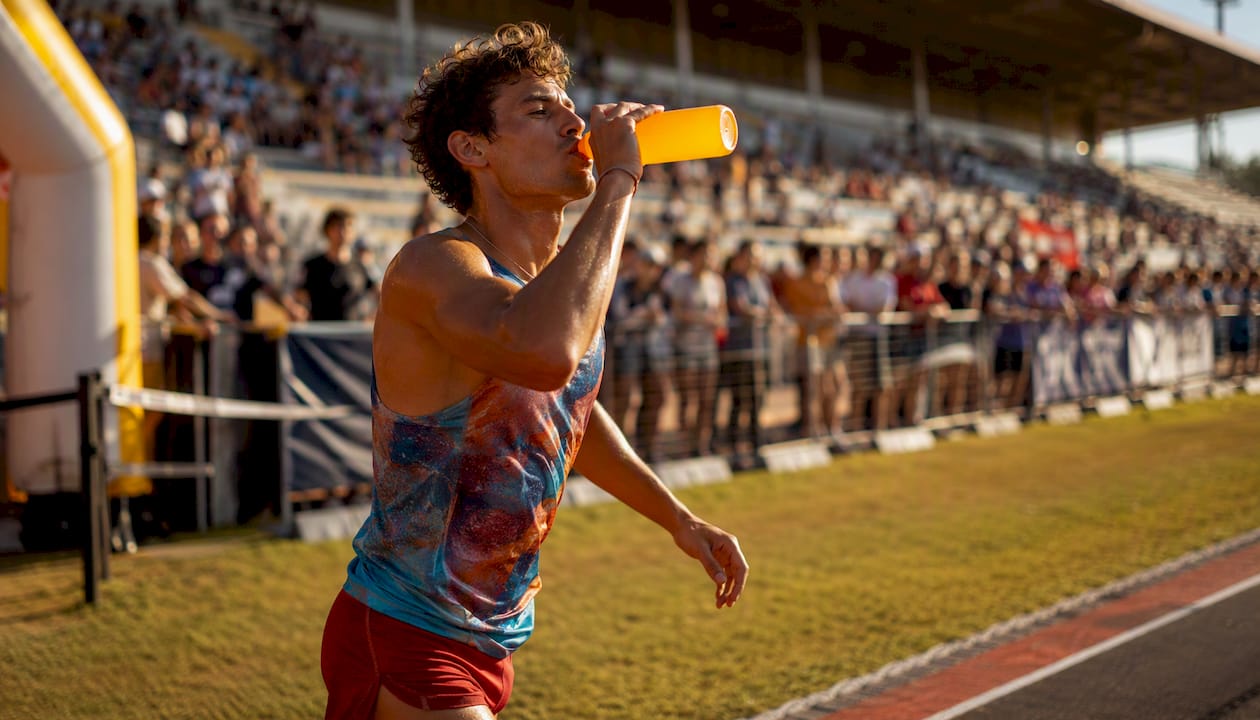
Taurine and NAC work primarily as antioxidants and cell-volume regulators. They do not drive acute performance the way beta-alanine does, but they can reduce exercise-induced oxidative stress, which matters across multi-day competitions or back-to-back events.
Pro Tip: If you are competing in multiple events over a weekend, the antioxidant and recovery-focused amino acids (NAC, taurine, glutamine) become more relevant than they are for a single-event day. Build your protocol around the competition format, not just the sport.
Here is how the mechanisms connect to outcomes:
- EAAs → mTORC1 activation → MPS → faster tissue repair and adaptation
- BCAAs → tryptophan competition → reduced central fatigue signal (modest, event-length dependent)
- Beta-alanine → carnosine loading → pH buffering → extended high-intensity output
- Citrulline → plasma arginine → NO → vasodilation → improved blood flow and endurance
- Taurine / NAC → antioxidant activity → reduced oxidative damage → better multi-event recovery
Timing amino-acid supplements around competition
Timing is where most athletes leave performance on the table. The right amino acid taken at the wrong time does less than you think.
| Timing window | Recommended amino acid(s) | Typical dose |
|---|---|---|
| 30–60 min pre-event | Free-form EAAs + citrulline malate | 10–15 g EAAs + 6–8 g citrulline |
| 60 min pre-event (loaded) | Beta-alanine (if loading phase complete) | 3.2 g |
| During event (60+ min) | BCAAs or EAAs in carb-electrolyte drink | a moderate dose of glutamine |
| Within 30–60 min post-event | Free-form EAAs | 10–15 g |
| Daily (loading phase, weeks out) | Beta-alanine | the recommended beta-alanine dosing range split |
| Daily (recovery block) | NAC, glutamine, ashwagandha | Per trial dose ranges |
Free-form EAAs absorb faster than intact protein because they require no enzymatic digestion. A whole-food protein meal takes 2–4 hours to fully digest and raise plasma amino acids. Dietary protein from whole foods remains the foundation of any athlete’s nutrition, but in the 60-minute window before competition, a dissolved EAA powder is a more precise tool. You get the MPS signal without the GI load of a full meal.
Form factor matters more than most athletes realize. Powder dissolved in water is the fastest-absorbing format. Capsules add 15–30 minutes to absorption time because the capsule shell must dissolve first. Ready-to-drink (RTD) amino-acid beverages sit between the two in convenience but often contain lower doses than powders. For competition-day use, powder wins on speed and dose flexibility. Capsules work well for daily loading phases (beta-alanine, ashwagandha) where timing precision is less critical.
Combining amino acids with carbohydrates during long events is not just convenient. Carbohydrate co-ingestion can enhance amino-acid uptake and spare muscle glycogen, which is relevant for endurance athletes. A simple mix of EAAs or BCAAs in a sports drink covers both bases without requiring separate products.
A competition-day protocol you can trial in training
This is a single, testable protocol. Run it in a hard training session before you use it on competition day. The goal is to confirm GI tolerance, timing fit, and perceived recovery before the stakes are real.
- Within 30 minutes post-event: Take a moderate dose of free-form EAAs again. This is the most important dose for muscle recovery and MPS restart. Follow it with a real meal within 90 minutes.
Pro Tip: When trialing this protocol in training, track three things: GI comfort during the session, perceived soreness at 24 and 48 hours post-session, and your subjective energy at the start of the effort. Those three markers will tell you whether the timing and doses work for your physiology before competition day.
For strength athletes (powerlifters, Olympic lifters), the pre-event EAA dose is the priority. For endurance athletes (marathoners, triathletes), the intra-event dose and post-event recovery dose carry more weight. Adjust accordingly rather than following the protocol rigidly. You can find a deeper breakdown of how recovery nutrition timing affects adaptation in training blocks.
Safety, side effects, and anti-doping considerations
The amino acids covered in this article are all WADA-permitted. The anti-doping risk is not the amino acids themselves but the products they come in.
The contamination problem is real and well-documented. Independent testing programs have found prohibited substances in supplements that listed no banned ingredients on the label. Adulteration with stimulants, anabolic agents, or diuretics has been detected in products sold as amino-acid supplements. A certificate of analysis (COA) from a batch-tested, third-party program (NSF Certified for Sport, Informed Sport, or Banned Substances Control Group) is the only reliable way to reduce this risk before competition.
Common side effects by amino acid:
- Beta-alanine: Paresthesia (tingling, flushing) at doses above 800 mg taken at once. Harmless but distracting. Split into 1.6 g doses to minimize it.
- Citrulline malate: GI discomfort at high doses (above 8 g) in some athletes. Test in training.
- EAAs/BCAAs: Generally well-tolerated. Very high chronic doses (above 30 g/day of BCAAs) have theoretical concerns around amino-acid imbalance, though human trial evidence for harm at typical doses is limited.
- NAC: Nausea at higher doses; take with food. At a moderate daily dose range of NAC, it is well-tolerated in most trial populations.
- Tyrosine: Can interact with MAO inhibitors and thyroid medications. If you take prescription medication, check with a physician before adding tyrosine.
- Pre-workout blends: The biggest safety risk for competitive athletes. Multi-ingredient pre-workout formulas often combine amino acids with caffeine, stimulants, and proprietary blends where individual doses are hidden. Excess caffeine impairs sleep and can cause anxiety or heart rate irregularities on competition day. Know exactly what is in your product and at what dose.
Before buying any amino-acid supplement for competition, run this checklist:
- Full ingredient list with grams per serving (no proprietary blends)
- Third-party COA available for the specific batch
- NSF Certified for Sport or Informed Sport certification
- Transparent country of manufacturing
- No undisclosed stimulants or hormone precursors
The role of amino acids in workout performance and the contamination risks that come with poorly labeled products are covered in detail by independent supplement educators as well.
What the research does and does not support
The amino-acid supplement literature is larger than it looks and more equivocal than the marketing suggests. Historical reviews of amino-acid supplements in sport describe a pattern that still holds: strong theoretical mechanisms, a large body of small trials, and outcomes that are more consistent for recovery than for direct performance enhancement.
Where the evidence is consistent:
- Reduced muscle soreness and faster subjective recovery with BCAAs (moderate evidence, 22 RCTs)
- MPS stimulation with free-form EAAs, dose-responsive up to a dose plateau
- Improved buffering capacity and performance in 30-second to 10-minute maximal efforts with beta-alanine loading
Where the evidence is inconsistent or context-dependent:
- Strength gains from BCAAs alone: inconsistent across trials, likely confounded by total protein intake
- Endurance improvement from BCAAs: mixed results; effect size small in well-trained athletes
- Body composition changes from amino-acid supplementation without controlled diet: unreliable
- Arginine as a standalone NO booster: largely superseded by citrulline in the literature
Why the literature is hard to interpret. Most trials are short (under 12 weeks), use small samples (often under 30 participants), and mix athlete populations with untrained subjects. The biggest confounder is co-ingredients: multi-ingredient pre-workout supplements that include caffeine, creatine, and electrolytes alongside amino acids make it nearly impossible to attribute performance gains to any single compound. Trials that isolate a single amino acid in a controlled diet are the most trustworthy, and they are also the least common.
What would meaningfully change recommendations: larger RCTs with sport-specific populations, strict dietary control, and longer study durations (16+ weeks). Until those exist, the conservative read is to use amino acids for recovery and buffering, where the evidence is strongest, and treat direct performance claims with skepticism.
How to pick a competition-safe amino-acid supplement
Quality varies enormously in this category. The checklist matters more than the brand name.
| Purchase criterion | What to look for | Red flag |
|---|---|---|
| Ingredient transparency | Full grams per serving for every ingredient | “Proprietary blend” with no individual doses |
| Third-party testing | NSF Certified for Sport or Informed Sport badge | No COA available or COA not batch-specific |
| Banned substance testing | Explicit batch-tested claim with certificate | Generic “tested” language with no certifying body |
| Manufacturing | cGMP-certified facility, US or EU preferred | No manufacturing info on label or website |
| Form factor | Powder for pre/post-event; capsules for daily loading | RTD with low amino-acid dose per serving |
| Label accuracy | Amino-acid profile matches label claim | Amino acid spiking (glycine or taurine inflating protein content) |
Price ranges for quality products. A quality EAA powder with full ingredient transparency and third-party testing typically runs in the range of $30–$60 for a 30-serving container in the US market. BCAA powders tend to be slightly less expensive. Capsule formats cost more per gram of amino acid because of the manufacturing process. Ready-to-drink amino-acid beverages are the most expensive per gram and often the lowest dose per serving. For competition use, powder is the best value and the most flexible.
Sport-specific form factor guidance:
- Strength sports (powerlifting, weightlifting, CrossFit): Powder pre- and post-event; capsules for beta-alanine loading during the training block.
- Endurance sports (running, cycling, triathlon): Powder mixed into carbohydrate-electrolyte drink for intra-event use; powder post-event for MPS.
- Combat sports and weight-class sports: EAA powder during weight cuts to preserve muscle while in a caloric deficit. Anabolic resistance is a real concern during aggressive cuts; higher leucine proportion matters here.
- Team sports and multi-event competitions: Daily BCAA or EAA use across a multi-day competition; prioritize recovery-focused amino acids (glutamine, NAC) between rounds or days.
For a broader look at how amino-acid supplements fit alongside performance supplements for competition, including creatine and other ergogenics, the Fitnesshealth blog covers combined strategies in detail.
Key Takeaways
Free-form EAAs are the highest-priority amino-acid supplement for competition, with BCAAs, beta-alanine, and citrulline filling specific, evidence-backed roles depending on sport type and event duration.
| Point | Details |
|---|---|
| EAAs first | MPS stimulation begins at 1.5–3 g and plateaus near 15–18 g; take 15–18 g pre- and post-event. |
| BCAAs for recovery | Moderate evidence supports reduced soreness across 22 RCTs; inconsistent for direct strength or endurance gains. |
| Beta-alanine requires loading | the loading dose range for beta-alanine over weeks raises carnosine and improves buffering in efforts lasting 30 seconds to 10 minutes. |
| Timing is non-negotiable | Free-form EAAs 30–60 min pre-event; repeat within 30–60 min post-event for fastest MPS restart. |
| Fitnesshealth for COA-verified options | Check Fitnesshealth’s amino-acid range for products with third-party testing and full ingredient transparency before competition. |
A practitioner’s view on amino acids and competition
The gap between what amino-acid supplements promise and what they reliably deliver is narrower than the skeptics claim and wider than the marketing suggests. Here is where I land after working through the evidence.
EAAs are genuinely useful, and the ISSN position stand on them is one of the cleaner pieces of sports nutrition science. The MPS signal at small doses is real, the absorption advantage over whole food is real, and the application to competition windows is logical. What gets oversold is the idea that amino acids are a substitute for total protein intake. They are not. A well-fed athlete eating adequate protein across the day gets most of the MPS benefit from food. The supplement earns its place in the narrow windows where food is impractical: the hour before competition, during a long event, or immediately post-event when a meal is not available.
The BCAA situation is more nuanced than either camp admits. The recovery evidence is real enough to justify use, especially across multi-day competitions or during weight cuts. The direct ergogenic claims are not. A powerlifter cutting to make weight has a stronger case for BCAAs than a well-fed marathoner who eats adequate protein. Context determines value.
Beta-alanine is the amino-acid adjunct I would put on the short list for almost any competitive athlete whose events involve sustained high-intensity effort. The loading requirement is the barrier, but the mechanism is clean and the evidence is consistent. A marathoner does not need it. A 400m runner, a wrestler, or a CrossFit competitor absolutely does.
For a powerlifter, the protocol looks like: EAAs pre-event, creatine loaded across the training block (see the creatine performance guide for dosing), and beta-alanine if the competition involves repeated maximal efforts. For a marathoner, it looks like: EAAs or BCAAs in the intra-event drink, EAAs post-race, and NAC or glutamine across a multi-day recovery window. Older athletes and those in caloric restriction need to push the leucine proportion higher to overcome anabolic resistance. That is not a minor adjustment; it is the difference between a dose that triggers MPS and one that does not.
Fitnesshealth carries competition-ready amino-acid supplements
If you have read this far, you know what to look for: full ingredient transparency, batch-tested COAs, and doses that match what the trials actually used. That is exactly the standard Fitnesshealth applies to its amino-acid range.

Before your next competition, check the Fitnesshealth store for EAA powders, BCAA formulas, and beta-alanine products with third-party testing documentation. Every product page lists the ingredient profile per serving so you can confirm the dose matches the protocol above. No proprietary blends, no hidden stimulants. For athletes who want to go deeper on recovery-specific supplements alongside amino acids, the vitamins for muscle recovery guide from RankOfSupplements covers complementary options worth reviewing. Browse the Fitnesshealth amino-acid range, check the COA for your chosen product, and run the protocol in training before competition day.
This article is general information, not medical or nutritional advice. Confirm supplement choices with a qualified sports dietitian or physician, particularly if you take prescription medication or compete under a tested federation.
Key sources and further reading
- International Society of Sports Nutrition Position Stand: Effects of essential amino acid supplementation on exercise and performance
- The Effect of Oral Pure Branched-Chain Amino Acid Supplementation on Exercise Performance and Body Composition: A Systematic Review — PMC
- Supplements for Elite Athletic Recovery — Lifestyle Medicine
- The acute metabolic and perceptive responses following a 5- and 15-min HIFT AMRAP — Frontiers in Nutrition
- Dietary supplements and sports performance: amino acids (historical review) — PMC
- Dietary proteins — MedlinePlus