Most competitive athletes use supplements, but the gap between what’s marketed and what’s actually proven is enormous. Choosing the right performance supplements for competition means cutting through that noise and focusing on what the science consistently supports. This article covers the three supplements with the strongest evidence base for endurance, strength, and recovery: creatine, beta-alanine, and caffeine. You’ll also get clear dosing protocols, a side-by-side comparison, and practical guidance for matching each supplement to your specific competition demands.
Table of Contents
- How to evaluate performance supplements for competition
- Creatine for power, strength, and anaerobic bursts
- Beta-alanine to buffer fatigue in high-intensity exercise
- Caffeine for endurance, focus, and reduced fatigue
- Comparing creatine, beta-alanine, and caffeine for competition
- Which supplements work best for your competition goals?
- A balanced approach to supplements in serious competition
- Explore evidence-based supplements and programs at Fitness Health®
- Frequently asked questions
Key Takeaways
| Point | Details |
|---|---|
| Evidence-based selection | Choose supplements with strong scientific support like creatine and caffeine for competition. |
| Supplement purpose | Use creatine for power, beta-alanine for endurance buffering, caffeine for focus and fatigue reduction. |
| Proper dosing | Follow recommended doses and timing to maximize benefits and minimize side effects. |
| Foundation first | Prioritize nutrition, hydration, sleep, and training before adding supplements. |
| Certified products | Use third-party tested supplements to ensure safety and compliance with competition rules. |
How to evaluate performance supplements for competition
Before you spend money on any supplement, you need a filter. The supplement industry is full of products making bold claims backed by nothing stronger than a single poorly designed study or a paid endorsement. Knowing how to evaluate competitive sports supplements protects your wallet and your health.
Start with the basics. Athletes with balanced diets usually need few extra supplements, and evidence-based use is key. That means food quality, hydration, sleep, and training load come first. Supplements work at the margin, not the foundation.
When assessing any supplement, look for:
- Randomized controlled trial (RCT) evidence supporting the claimed benefit in athletes similar to you
- Established dosing protocols with known timing and duration requirements
- Third-party certification (NSF Certified for Sport, Informed Sport) to verify the product is free of banned substances
- Documented side effects and contraindications relevant to your health profile
- Specificity to your sport — a supplement that helps marathon runners may do nothing for a powerlifter
Understanding what are performance supplements at a mechanistic level also matters. Some work by increasing energy availability (creatine), some by buffering metabolic byproducts (beta-alanine), and some by acting on the central nervous system (caffeine). Knowing the mechanism helps you time them correctly and stack them intelligently. For a deeper look at what goes into effective pre-competition formulas, the pre-workout ingredients guide breaks this down by ingredient category.
Pro Tip: If a supplement’s website cites only animal studies or internal research, treat it as unproven. Look for peer-reviewed human trials published in indexed journals.
Having set the criteria to judge supplements, let’s examine the top evidence-backed options.
Creatine for power, strength, and anaerobic bursts
Creatine is the most studied performance-enhancing product in sports nutrition history, and the evidence is not close. Creatine monohydrate is the most effective ergogenic nutritional supplement for high-intensity capacity and lean mass, according to the International Society of Sports Nutrition. That conclusion comes from hundreds of independent studies.
Here’s what creatine actually does: it replenishes phosphocreatine in your muscles, which your body uses to regenerate ATP during short, explosive efforts. More phosphocreatine means more fuel for sprints, heavy lifts, and repeated high-intensity intervals. Creatine enhances power and speed in short anaerobic bursts like HIIT safely and reliably.
Key facts for competition use:
- Maintenance dose: 3 to 5g per day, taken consistently
- Loading phase (optional): 20g per day split into 4 doses for 5 to 7 days to saturate muscles faster
- Timing: Post-workout with carbohydrates and protein improves muscle uptake
- Best for: Sprinters, powerlifters, Olympic lifters, HIIT athletes, team sport players with repeated sprint demands
- Side effects: Minor water retention in muscle tissue, which is not fat gain
One thing athletes often miss: creatine is not a pre-workout stimulant. It works through daily accumulation in muscle tissue, not a single dose before training. Consistency matters more than timing. For guidance on how creatine interacts with other compounds, see the resource on creatine and caffeine timing.
Pro Tip: Skip the loading phase if you have a competition within two weeks. The extra water weight from rapid muscle saturation can affect weight-class athletes or those who need to feel light and fast.
Next, let’s explore beta-alanine, an important supplement for buffering muscle fatigue.
Beta-alanine to buffer fatigue in high-intensity exercise
Beta-alanine works differently from creatine. Rather than fueling explosive efforts, it extends how long you can sustain high-intensity work before fatigue forces you to slow down. It does this by increasing muscle carnosine concentrations. Carnosine acts as a buffer against the hydrogen ions that accumulate during intense exercise and cause that burning, heavy-leg sensation.
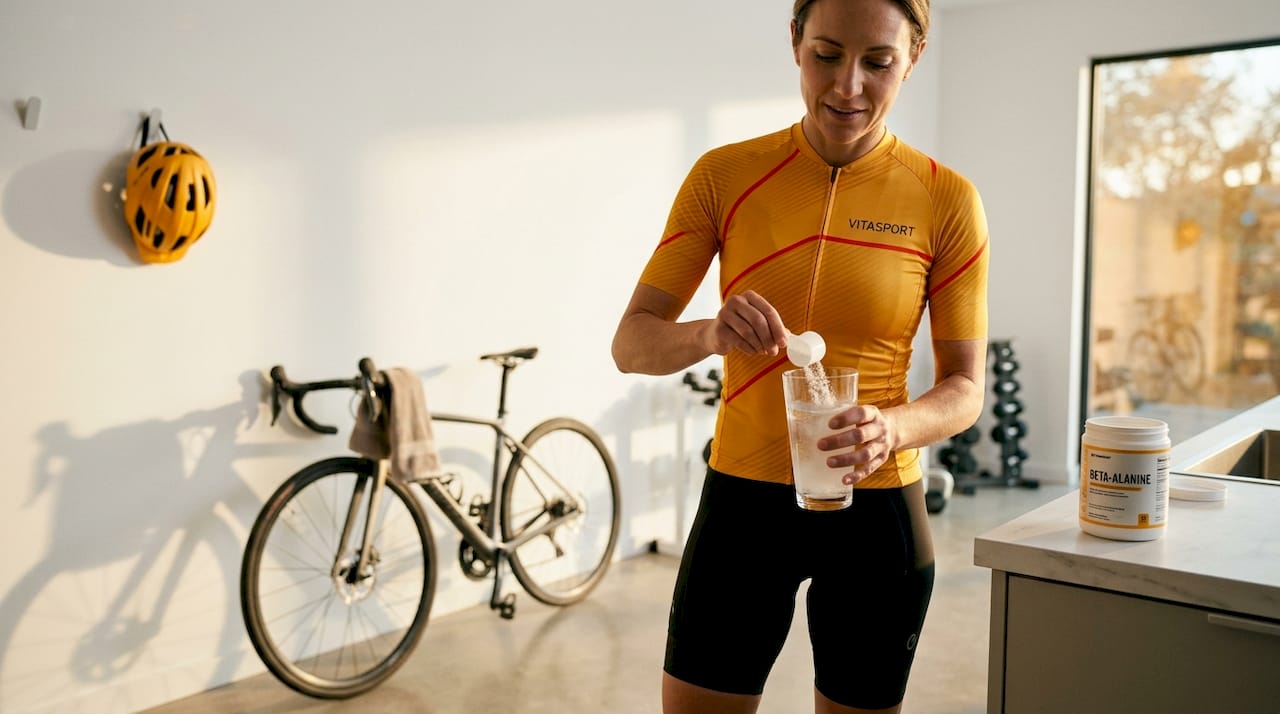
Beta-alanine supplementation improves high-intensity exercise by raising muscle carnosine and buffering capacity, making it particularly effective for efforts lasting one to four minutes. That window covers 400m and 800m runners, rowers, wrestlers, cyclists in breakaway efforts, and team sport athletes dealing with repeated high-intensity bouts.
The research is specific enough to be useful. In volleyball players, beta-alanine increased vertical jump by 4.6 cm and peak power compared to creatine, suggesting it has a distinct role in explosive athletic performance beyond just endurance buffering.
Practical dosing for competition:
- Daily dose: 4 to 6g split into 2 to 3 smaller doses throughout the day
- Loading period: 4 to 6 weeks of consistent use to meaningfully raise muscle carnosine levels
- Side effect management: Paresthesia (a harmless tingling in the skin) is the main complaint; sustained-release forms reduce it significantly
- Best for: High-intensity efforts lasting 1 to 4 minutes, resistance training, combat sports, team sports
- Stacking: Combines well with creatine for synergistic effects in HIIT-style training
For more on how beta-alanine performance benefits translate across different training styles, including endurance and strength work, that resource is worth reviewing.
Pro Tip: The tingling from beta-alanine is not dangerous, but it can be distracting during competition. Test your dose during training weeks, not the day before an event.
Building on power supplements, caffeine offers benefits for endurance and reaction time.
Caffeine for endurance, focus, and reduced fatigue
Caffeine is the most widely used energy supplement for competition in the world, and it earns that status. It works primarily through the central nervous system by blocking adenosine receptors, which reduces the perception of fatigue and effort. The result is that hard feels easier, and you can sustain output longer before hitting the wall.
Research in esports competitors found that caffeine at 1 to 3 mg/kg improves attention, executive function, vitality, reduces fatigue, and reaction time. That cognitive dimension matters for any sport requiring quick decisions under pressure, not just esports. And for physical performance, a 200 to 400 mg dose taken 30 to 60 minutes before exercise enhances endurance by sparing glycogen through increased fat burning.
What competitive athletes need to know:
- Effective dose: 3 to 6 mg per kg of bodyweight; a 75 kg athlete targets roughly 225 to 450 mg
- Timing: 30 to 60 minutes before competition for peak blood concentration
- Genetics matter: CYP1A2 gene variants affect how quickly you metabolize caffeine; slow metabolizers face greater side effect risk at higher doses
- Tolerance and cycling: Regular high caffeine users see diminished returns; reducing intake 7 to 10 days before a major competition restores sensitivity
- Sleep impact: Avoid caffeine within 6 hours of sleep to protect recovery quality
For sport-specific caffeine dosage and timing strategies, including how to adjust for morning versus afternoon competitions, that guide covers the variables in detail.
Pro Tip: If you’re new to caffeine supplementation, start at 100 to 150 mg and assess your response before moving to competition doses. Jitteriness and GI distress at high doses can hurt performance more than the caffeine helps.
After examining single supplements, let’s compare these options side-by-side for informed decision-making.
Comparing creatine, beta-alanine, and caffeine for competition
Understanding each supplement individually is useful. Seeing them together makes the decision clearer.
| Supplement | Primary benefit | Best use case | Daily dose | Side effects | Evidence level |
|---|---|---|---|---|---|
| Creatine | Anaerobic power, strength, lean mass | Sprinting, lifting, HIIT | 3 to 5g maintenance | Mild water retention | Very strong (hundreds of RCTs) |
| Beta-alanine | Fatigue buffering, sustained intensity | 1 to 4 min high-intensity efforts | 4 to 6g split doses | Tingling (paresthesia) | Strong (multiple RCTs) |
| Caffeine | Endurance, focus, reaction time | Endurance events, any sport requiring alertness | 3 to 6 mg/kg | Jitteriness, GI upset, sleep disruption | Very strong (extensive human trials) |
A few things stand out in this comparison. Creatine and beta-alanine both require weeks of consistent loading to work, while caffeine delivers acute effects within an hour. That means creatine and beta-alanine are training-phase supplements as much as competition supplements, while caffeine is the tool you reach for on race day.
The supplement efficacy overview covers additional natural competition supplements and performance-enhancing products that may complement this core stack depending on your sport and training demands.
Which supplements work best for your competition goals?
The right stack depends on what you’re competing in and what your limiting factor actually is. Here’s how to think through it:
- Sprinters and power athletes should prioritize creatine first, add beta-alanine if their event involves repeated efforts or lasts longer than 10 seconds, and use caffeine on competition day for focus and reduced perceived effort.
- Endurance athletes (runners, cyclists, rowers) get the most from caffeine pre-event for glycogen sparing and sustained alertness. Creatine is less critical unless the sport involves surges or sprints to the finish.
- Combat sport athletes (wrestlers, MMA, boxing) benefit from the creatine and beta-alanine combination because their sport demands both explosive power and the ability to maintain intensity across rounds lasting several minutes.
- Esports and cognitive sport competitors can use caffeine for reaction time and sustained attention, with evidence supporting doses on the lower end of the range (1 to 3 mg/kg) to avoid jitteriness that impairs fine motor control.
- Team sport athletes (soccer, basketball, rugby) benefit from all three supplements given the mixed demands of the sport: explosive sprints, sustained running, and cognitive sharpness under fatigue.
Regardless of sport, prioritize food-first nutrition, hydration, sleep, and training before adding supplements. These are complements to a solid foundation, not shortcuts around one. Always check for third-party certification before purchasing, especially if you compete in tested sports. And cycle your supplement use through training phases rather than running the same stack year-round without reassessment.
For broader training and supplement guidance tailored to competitive athletes, including how to periodize supplement use around your competition calendar, that resource is a strong starting point.
Pro Tip: Keep a training log that tracks supplement use alongside performance metrics. After 6 to 8 weeks, you’ll have real data on whether a supplement is moving the needle for you specifically, not just in a study population.
A balanced approach to supplements in serious competition
Here’s the uncomfortable reality most supplement content won’t tell you: the athletes who benefit most from creatine and caffeine are already doing everything else right. They sleep 8 hours. They eat enough protein. They train with structure and intent. For those athletes, the right supplements for peak performance add a few percentage points on top of an already high baseline.
For athletes who aren’t doing those fundamentals, supplements are a distraction. You cannot caffeine your way out of chronic sleep debt, and creatine won’t compensate for a caloric deficit during a heavy training block. Most vitamins and minerals provide little benefit beyond a balanced diet, and the performance gains that do exist come primarily from creatine and caffeine.
Genetics also shape how much you’ll respond. Some athletes are creatine non-responders due to already-high baseline muscle creatine levels. Caffeine metabolism varies significantly by genotype. This is why individual experimentation during training, not competition, is non-negotiable.
The other issue is marketing. The best supplements for athletes are often the least exciting ones. Creatine monohydrate costs almost nothing and has decades of research behind it. Caffeine is in coffee. The evidence-based supplement guides on this site will consistently point you back to those fundamentals rather than toward whatever is trending.
Periodizing your supplement use is also worth considering. Running a creatine loading phase during your highest-volume training block, then maintaining through competition season, is smarter than taking the same dose year-round with no strategic intent. Treat supplements the way you treat training variables: adjust them based on phase, goal, and response.
Explore evidence-based supplements and programs at Fitness Health®
If this article clarified what actually moves the needle for competitive athletes, the next step is putting that knowledge into action with products and programs you can trust.
At Fitness Health, you’ll find curated supplement options with proven efficacy, third-party testing, and transparent ingredient labeling. Whether you’re building a creatine protocol for a strength block or dialing in your pre-competition caffeine timing, the platform connects you with science-backed products and training programs designed for serious athletes. Every recommendation is grounded in the same evidence standards covered in this article, so you’re never guessing about what’s in the bottle or whether it works.
Frequently asked questions
Are all performance supplements equally effective for competition?
No, only a few supplements like creatine and caffeine have strong scientific evidence supporting performance benefits for competition. Most provide little benefit beyond a balanced diet.
How should athletes dose caffeine for performance benefits?
Generally, 3 to 6 mg/kg taken 30 to 60 minutes before exercise is effective, but starting with a lower dose helps assess tolerance. A 200 to 400 mg dose pre-exercise reliably enhances endurance in most athletes.
Is creatine safe for long-term use in competition athletes?
Yes, creatine at 3 to 5g per day is safe for long-term use. Safety is confirmed across hundreds of studies with no adverse effects in healthy individuals.
Can beta-alanine cause side effects?
Beta-alanine may cause a harmless tingling sensation called paresthesia, particularly at higher doses. Splitting the dose or using a sustained-release form eliminates most of this discomfort.
Should supplements replace good nutrition and training?
No. Supplements should complement solid nutrition, hydration, sleep, and training, never replace them. Food-first nutrition and training remain the primary drivers of competition performance.