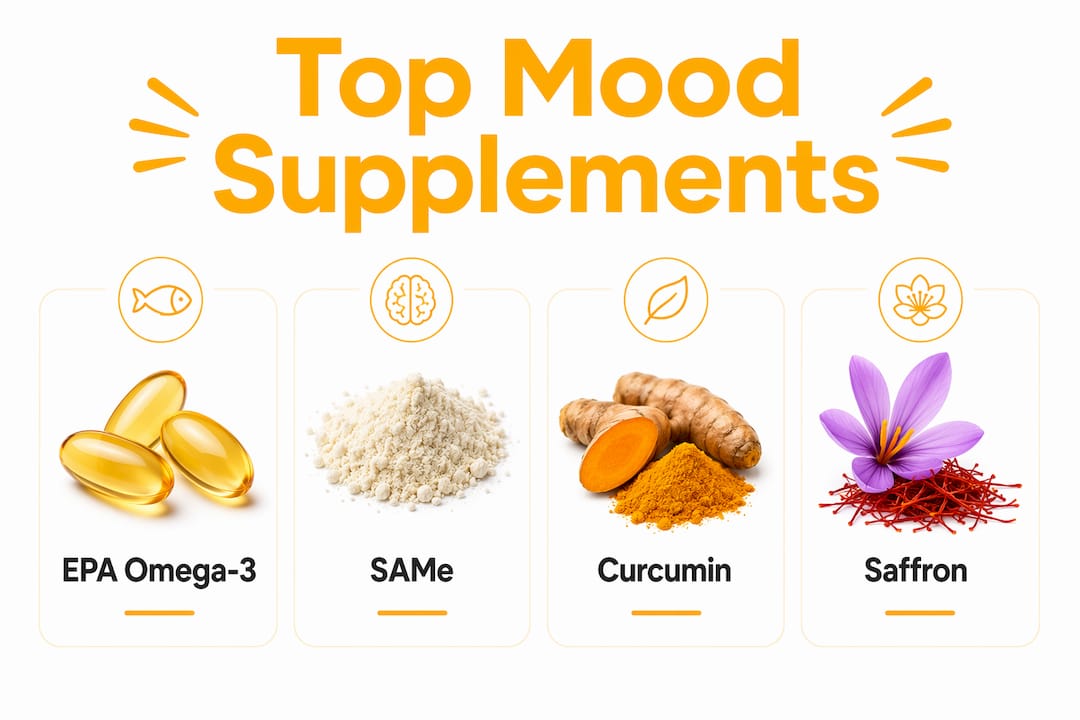
The supplements with the strongest clinical evidence for low mood are EPA-rich omega-3 fatty acids, SAMe, curcumin, saffron, vitamin D, and methylfolate, with probiotics and St. John’s wort showing meaningful but more conditional support. A 2025 network meta-analysis of 192 trials and 17,437 patients ranked EPA+DHA, SAMe, curcumin, and saffron among the most effective nutraceuticals for depressive symptoms, either alone or alongside antidepressant therapy.
Before you scan the list below, one safety note: St. John’s wort interacts with dozens of prescription drugs, and several supplements carry real risks in pregnancy, bipolar disorder, and severe depression. Talk to a clinician before starting anything new.
Evidence at a glance:
- Strongest evidence: EPA-rich omega-3 (EPA+DHA), SAMe, curcumin, saffron
- Moderate evidence: Vitamin D, methylfolate/folate, St. John’s wort (mild-to-moderate depression only), select probiotics
- Limited or emerging evidence: Magnesium, rhodiola rosea, ashwagandha, B-complex vitamins, 5-HTP
The sections below cover clinical trial doses and timelines, drug interactions and red flags, how to pick a quality product, and what a realistic trial timeline looks like.
Table of Contents
- What do the clinical trials actually say about supplements for low mood?
- What are the real safety risks and drug interactions you need to know?
- How do you choose a high-quality supplement?
- What should you realistically expect from a supplement trial?
- What do the major meta-analyses actually conclude?
- Key Takeaways
- The gap between supplement hype and what the evidence actually supports
- Ready to find third-party tested supplements for mood support?
- Useful sources and further reading
What do the clinical trials actually say about supplements for low mood?
Each supplement below gets a brief mechanism note, the dose range used in trials, a realistic time-to-effect window, and an evidence badge. The table that follows lets you compare them side by side.
Omega-3 fatty acids (EPA + DHA)
Omega-3s are the most studied nutraceutical for depression. EPA appears to be the active driver: it modulates neuroinflammation and serotonin signaling, while DHA supports membrane fluidity. The Cambridge NMA found an EPA+DHA effect size of approximately 0.6 (SMD), which is clinically meaningful. Trial doses typically run 1–2 g of EPA daily, often in an EPA-dominant formula. Expect 4–8 weeks before a noticeable shift in mood; full benefit may take 12 weeks. Evidence: Strong.
SAMe (S-adenosylmethionine)
SAMe is a methyl donor involved in neurotransmitter synthesis, including serotonin and dopamine. It has performed well both as monotherapy and as an add-on to antidepressants. Harvard Health lists SAMe among the supplements with encouraging evidence, though it notes the need for clinician supervision. Trial doses range from 400–1,600 mg/day; most studies use 800 mg. Onset is typically 2–4 weeks. SAMe can trigger mania in people with bipolar disorder and raises serotonin levels, so combining it with SSRIs or other serotonergic agents needs medical oversight. Evidence: Strong.

Curcumin
Curcumin, the active compound in turmeric, reduces inflammatory cytokines that are elevated in many people with depression. The 2025 NMA placed it among the top performers. Standard trial doses use 500–1,000 mg of a bioavailability-enhanced form (such as BCM-95 or with piperine) daily. Effects tend to appear around 4–8 weeks. Bioavailability is the main practical issue: plain turmeric powder delivers very little curcumin to the bloodstream. Evidence: Strong (as adjunct or monotherapy in trials).
Saffron
Saffron (Crocus sativus) inhibits serotonin reuptake and has antioxidant properties. Several RCTs have compared 30 mg/day of saffron extract to low-dose antidepressants with comparable results in mild-to-moderate depression. The 2025 NMA ranked it alongside curcumin and SAMe. Effects appear in 4–6 weeks. Cost is the main barrier: pharmaceutical-grade saffron extract is significantly more expensive than most other supplements on this list. Evidence: Strong (mild-to-moderate depression).

Vitamin D
Low vitamin D is common in people with depression, and deficiency correlates with worse mood outcomes. Supplementation in deficient individuals tends to produce the clearest benefit. Trial doses for mood support range from 1,500–4,000 IU daily. Effect timelines vary: correcting a deficiency can take 8–12 weeks to show mood changes. Cleveland Clinic guidance lists vitamin D among the most commonly studied supplements for depressive symptoms. Getting your 25-OH vitamin D level checked before supplementing is worth the effort. Evidence: Moderate (strongest in deficiency).
Methylfolate and folate
Folate is a cofactor in the synthesis of serotonin, dopamine, and norepinephrine. L-methylfolate (the active form) bypasses the MTHFR gene variant that prevents some people from converting dietary folate. Adjunctive use of methylfolate alongside antidepressants has shown positive results in systematic reviews. Trial doses are typically 7.5–15 mg/day of L-methylfolate. If you carry an MTHFR variant, standard folic acid may not be adequate. Evidence: Moderate (especially adjunctive; stronger in MTHFR carriers).
St. John’s wort
St. John’s wort has more RCT data than almost any other herbal supplement for mild-to-moderate depression. The active constituents (hypericin, hyperforin) appear to inhibit reuptake of serotonin, dopamine, and norepinephrine. Standard extracts are standardized to 0.3% hypericin; typical doses run 300 mg three times daily. The problem is the interaction profile. Mayo Clinic explicitly warns against combining it with SSRIs, blood thinners, birth control, HIV medications, transplant drugs, and chemotherapy. It can also trigger mania in bipolar disorder. Evidence: Moderate (mild-to-moderate depression only; major interaction risk).
Probiotics
The gut-brain axis is real: certain probiotic strains influence serotonin production and inflammatory signaling. Strains with the most trial data for mood include Lactobacillus acidophilus, Lactobacillus rhamnosus, and Bifidobacterium longum. Trial doses typically range from 1–10 billion CFU daily. Effects on mood tend to emerge over 4–8 weeks of consistent use. The gut-brain connection is an active research area, and results are more consistent when probiotics are used alongside dietary improvements. Evidence: Moderate (strain-dependent).
Magnesium
Magnesium deficiency is associated with anxiety and low mood, and it plays a role in NMDA receptor regulation. Small RCTs have shown benefit for mild-to-moderate depression, particularly in magnesium-deficient individuals. Typical trial doses are 125–300 mg of elemental magnesium (as glycinate or malate for tolerability). Effects can appear in as little as 2 weeks in some studies. The evidence base is smaller than for omega-3 or SAMe, but the safety profile is favorable and cost is low. Evidence: Limited-to-moderate.
Rhodiola rosea
Rhodiola is an adaptogen that may reduce cortisol and fatigue-related low mood. It is better studied for stress and burnout than for clinical depression. Typical doses in trials are 200–400 mg/day of a standardized extract (3% rosavins, 1% salidroside). Effects on energy and stress resilience can appear in 2–4 weeks. It is not a substitute for antidepressant therapy in moderate-to-severe depression. Evidence: Limited (stress/burnout; not clinical depression).
Ashwagandha
Ashwagandha (Withania somnifera) reduces cortisol and has shown anxiolytic effects in RCTs, with some secondary mood benefit. Typical doses are 300–600 mg/day of a root extract (KSM-66 or Sensoril are the most studied forms). Effects on anxiety and stress appear in 4–8 weeks. Evidence for depression specifically is thinner than for anxiety. Evidence: Limited (anxiety/stress; indirect mood benefit).
B-complex vitamins
B vitamins, particularly B6, B12, and folate, are cofactors in neurotransmitter synthesis. Deficiency in B12 is common in older adults and vegans and can cause depressive symptoms. Supplementing a true deficiency reliably improves mood. For people without deficiency, the evidence for B-complex supplementation as a mood intervention is weaker. Typical B-complex doses follow label recommendations; B12 may need to be in methylcobalamin form for optimal absorption. Evidence: Limited (strongest in deficiency states).
5-HTP
5-HTP is a direct precursor to serotonin. Small trials show mood benefit, but combining it with SSRIs, MAOIs, or SAMe raises a genuine serotonin syndrome risk. It should not be used alongside prescription antidepressants without direct clinician supervision. Typical trial doses are 50–300 mg/day. Evidence: Limited (significant safety caveats).
| Supplement | Evidence strength | Typical trial dose | Time to effect | Main safety concerns | Approx. monthly cost |
|---|---|---|---|---|---|
| Omega-3 (EPA+DHA) | Strong | 1–2 g EPA/day | 4–12 weeks | Blood thinners at high dose | $15–$40 |
| SAMe | Strong | 400–1,600 mg/day | 2–4 weeks | Serotonin risk; bipolar mania | $30–$60 |
| Curcumin | Strong | 500–1,000 mg/day | 4–8 weeks | Low; GI upset at high doses | $20–$45 |
| Saffron | Strong | 30 mg extract/day | 4–6 weeks | Low; expensive | $30–$60 |
| Vitamin D | Moderate | 1,500–4,000 IU/day | 8–12 weeks | Toxicity at very high doses | $5–$15 |
| Methylfolate | Moderate | 7.5–15 mg/day | 4–8 weeks | Low; may mask B12 deficiency | $20–$40 |
| St. John’s wort | Moderate | 900 mg/day (300 mg 3x/day) | 4–6 weeks | Major drug interactions; mania risk | $10–$25 |
| Probiotics | Moderate | 1–10 billion CFU/day | 4–8 weeks | Low; strain-dependent | $20–$50 |
| Magnesium | Limited–Moderate | 125–300 mg elemental/day | 2–4 weeks | Diarrhea at high doses | $10–$25 |
| Rhodiola rosea | Limited | 200–400 mg/day | 2–4 weeks | Low; mild stimulant effect | $15–$30 |
| Ashwagandha | Limited | 300–600 mg/day | 4–8 weeks | Thyroid interaction; pregnancy risk | $15–$35 |
| B-complex | Limited | Per label | 4–8 weeks | Low; B12 form matters | $10–$20 |
| 5-HTP | Limited | 50–300 mg/day | 2–4 weeks | Serotonin syndrome risk | $15–$30 |
Key figure: A recent comprehensive meta-analysis found an EPA+DHA effect size that places omega-3 among the most consistently effective nutraceuticals studied to date.
What are the real safety risks and drug interactions you need to know?
“Natural” is not a synonym for safe. Mayo Clinic is direct about this: herb-drug interactions and variable product quality are common hazards, and patients should always disclose supplement use to their providers.
St. John’s wort: the interaction you cannot ignore
St. John’s wort is the most interaction-prone supplement on this list. It induces CYP3A4 and P-glycoprotein enzymes, which accelerates the breakdown of many drugs. Medications affected include:
- SSRIs and SNRIs (serotonin syndrome risk)
- Warfarin and other blood thinners (reduced anticoagulant effect)
- Oral contraceptives (reduced effectiveness)
- HIV antiretrovirals (reduced drug levels)
- Cyclosporine and transplant immunosuppressants (organ rejection risk)
- Certain chemotherapy agents (reduced efficacy)
- Digoxin (reduced plasma levels)
If you take any prescription medication, check for St. John’s wort interactions before starting it.
Serotonergic risk: SAMe, 5-HTP, and prescription antidepressants
SAMe and 5-HTP both raise serotonin activity. Combining either with SSRIs, SNRIs, MAOIs, or tramadol can push serotonin levels into dangerous territory. Symptoms of serotonin syndrome include agitation, rapid heart rate, muscle twitching, and in severe cases, seizures. This is not a theoretical risk.
High-risk groups
- Bipolar disorder: SAMe, St. John’s wort, and 5-HTP can trigger manic episodes. These supplements are contraindicated without close psychiatric supervision.
- Pregnancy: St. John’s wort, ashwagandha, and high-dose vitamin A are not considered safe in pregnancy. Omega-3 at moderate doses is generally considered safe, but confirm with your OB.
- Severe depression or suicidal ideation: Supplements are not a substitute for urgent clinical care. If you or someone you know is in crisis, contact the 988 Suicide and Crisis Lifeline.
- Organ transplant recipients: St. John’s wort can cause acute rejection by reducing cyclosporine levels.
- Blood thinners: High-dose omega-3 (above 3 g/day) may increase bleeding risk when combined with warfarin or aspirin.
What to bring to your clinician
Before starting any supplement for mood, prepare a short list: every medication you take (including dose and timing), any supplements you already use, your symptom timeline, and the specific supplement label you plan to use. That 10-minute conversation can prevent a serious interaction.
Pro Tip: Add one new supplement at a time and wait at least two weeks before adding another. Keep a simple daily log of mood, sleep quality, and any new physical symptoms. This makes it much easier to identify what is helping and what is not.
How do you choose a high-quality supplement?
The FDA does not regulate dietary supplements the same way it regulates pharmaceuticals. Manufacturers are not required to prove efficacy or even accurate labeling before a product hits shelves. That gap is where third-party testing becomes your most practical tool.
Third-party testing: what the badges actually mean
Three organizations run the most credible independent verification programs in the U.S.:
- USP (U.S. Pharmacopeia): Verifies that a product contains what the label states, in the declared amount, without harmful contaminants, and that it will dissolve properly.
- NSF International: Covers ingredient identity, potency, and contaminant testing; NSF Certified for Sport also screens for banned substances.
- ConsumerLab: Independently purchases and tests products; publishes pass/fail results and comparative reviews.
A product carrying one of these seals has been tested by a party with no financial stake in the outcome. Third-party testing is the single most reliable quality signal available to consumers given the current regulatory environment.
Reading the label: what to look for
- Active dose per serving: Confirm the dose matches what trials used. A fish oil capsule listing “1,000 mg fish oil” may contain only 300 mg of EPA+DHA.
- Standardized extract (for herbs): St. John’s wort should state “standardized to 0.3% hypericin.” Rhodiola should list “3% rosavins, 1% salidroside.” An unstandardized herbal product delivers unpredictable amounts of the active compound.
- Form of the nutrient: L-methylfolate is active; folic acid requires conversion. Methylcobalamin is generally better absorbed than cyanocobalamin for B12. Magnesium glycinate or malate causes less GI upset than magnesium oxide.
- Fillers and allergens: Check for unnecessary binders, artificial colors, and common allergens if relevant to you.
- Lot-specific certificate of analysis (CoA): Reputable brands make these available on request or on their website. A CoA from a third-party lab confirms that specific batch was tested.
Typical monthly cost ranges
| Category | Generic price band (monthly) | Notes |
|---|---|---|
| Omega-3 (EPA-dominant) | $15–$40 | Higher-EPA formulas cost more |
| SAMe | $30–$60 | Enteric-coated forms preferred |
| Vitamin D3 | $5–$15 | Widely available; inexpensive |
| Probiotics (multi-strain) | $20–$50 | Refrigerated strains cost more |
| Curcumin (enhanced bioavailability) | $20–$45 | BCM-95 or piperine formulas |
| Saffron extract | $30–$60 | Pharmaceutical-grade is expensive |
| St. John’s wort (standardized) | $10–$25 | Standardization to hypericin matters |
| Magnesium (glycinate/malate) | $10–$25 | Oxide forms are cheaper but less absorbed |
| Methylfolate | $20–$40 | Active form costs more than folic acid |
What should you realistically expect from a supplement trial?
Supplements are not fast-acting drugs. Cleveland Clinic guidance is clear that most nutraceuticals require 4–12 weeks of consistent daily use before producing measurable changes in mood. Some people notice a subjective lift in energy or sleep quality earlier, but that is not the same as objective remission of depressive symptoms.
Timeline for a typical trial
- Weeks 1–2: Establish baseline. Note current mood, sleep, energy, and any physical symptoms. Start your first supplement at the lower end of the trial dose.
- Weeks 2–4: Some supplements (magnesium, SAMe, rhodiola) may produce early subjective changes. Do not stop if you feel nothing yet.
- Weeks 4–8: The window where most trials show statistically significant effects for omega-3, curcumin, saffron, and probiotics.
- Weeks 8–12: Full assessment point. If you have seen no change by week 12, the supplement is unlikely to be effective for you at that dose.
Monitoring checklist
- Rate your mood daily on a simple 1–10 scale and note sleep hours
- Log any new physical symptoms (GI changes, headache, skin reactions)
- Note energy levels and concentration separately from mood
- Contact your clinician if mood worsens, if you experience new manic symptoms, or if suicidal thoughts emerge at any point
Combining supplements safely
The general rule: avoid stacking multiple serotonergic agents. Specifically, do not combine SAMe + 5-HTP, or either of those with St. John’s wort, without direct medical supervision.
Relatively safe pairings (still disclose to your clinician):
- Omega-3 + vitamin D
- Omega-3 + magnesium
- Methylfolate + B-complex
- Probiotics + any of the above
Higher-risk combinations (require clinician oversight):
- SAMe + any SSRI or SNRI
- 5-HTP + St. John’s wort
- St. John’s wort + any prescription medication
- High-dose omega-3 + warfarin
Exercise and sleep quality also shape how well supplements work. Fitness and mood are closely linked: regular aerobic exercise amplifies the anti-inflammatory effects of omega-3 and supports the gut microbiome changes that probiotics are trying to produce.
What a 3-month trial might cost
A practical starting stack for someone without contraindications might be EPA-dominant omega-3 ($25/month) plus vitamin D3 ($10/month). That runs roughly $105 for a 3-month trial, which is a reasonable investment to assess response before adding anything else. Adding methylfolate ($30/month) brings a 3-month total to approximately $195, still well within the range of a single therapy copay in many U.S. markets.
What do the major meta-analyses actually conclude?
The evidence base for nutraceuticals in depression has grown substantially, but it is not uniform. Here is what the highest-quality reviews say.
A recent network meta-analysis is the most comprehensive synthesis to date, covering a large number of trials and patients. It found that EPA+DHA, SAMe, curcumin, and saffron showed superior efficacy versus antidepressant therapy alone in key outcomes. This is a meaningful finding: these supplements outperformed placebo and, in some comparisons, added measurable benefit on top of standard antidepressants.
The 2016 AJP systematic review of adjunctive nutraceuticals found consistent positive signals for SAMe, methylfolate, omega-3, and vitamin D when added to antidepressants, reinforcing the adjunct-first model.
Where the evidence is still weak
- Small trial sizes: Many individual RCTs have fewer than 100 participants, limiting statistical power.
- Heterogeneity: Trials use different products, doses, populations, and outcome measures, making direct comparison difficult.
- Product quality variation: A trial using pharmaceutical-grade saffron extract tells you little about a generic capsule with no standardization.
- Short follow-up: Most trials run 6–12 weeks. Long-term safety and efficacy data beyond 6 months are sparse for most nutraceuticals.
- Publication bias: Positive results are more likely to be published than null results, which inflates apparent effect sizes across the literature.
What guidelines suggest
Professional guidance consistently frames nutraceuticals as adjunctive tools, not replacements for established treatments. Harvard Health recommends careful, clinician-supervised trials and notes that the evidence for many agents remains mixed. The practical takeaway from the literature: if you have a partial response to antidepressant therapy, EPA-rich omega-3, SAMe, or methylfolate are the supplements with the most replicated adjunctive evidence. For mild-to-moderate depression without prescription treatment, saffron and curcumin have the strongest standalone trial data.
Because product quality varies so widely, clinicians and patients should favor replicated trials using standardized, pharmaceutical-grade preparations when interpreting the evidence and selecting products.
Key Takeaways
Omega-3 (EPA-dominant), SAMe, curcumin, and saffron have the strongest clinical trial support for low mood, and all four work best as adjuncts to, not replacements for, established care.
| Point | Details |
|---|---|
| Strongest evidence supplements | EPA-rich omega-3, SAMe, curcumin, and saffron ranked highest in the 192-trial Cambridge NMA. |
| Trial dose and timeline | Most supplements require 4–12 weeks at trial doses before mood changes become measurable. |
| Safety first | St. John’s wort interacts with dozens of drugs; SAMe and 5-HTP raise serotonin syndrome risk with antidepressants. |
| Choose third-party tested products | Look for USP, NSF, or ConsumerLab seals to confirm potency, purity, and accurate labeling. |
| Fitnesshealth for vetted options | Fitnesshealth offers third-party tested omega-3, vitamin D, probiotics, and other mood-support supplements with educational guidance to help you choose. |
The gap between supplement hype and what the evidence actually supports
Most supplement marketing for mood targets people who are desperate for something that works without side effects or a prescription. That desperation is understandable. But the honest read of the evidence is more nuanced than either the enthusiasts or the skeptics admit.
The strongest finding from the 2025 NMA is not that supplements replace antidepressants. It is that specific nutraceuticals, used alongside antidepressants in people with partial response, produce meaningfully better outcomes than antidepressants alone. That is a clinically significant result, and it is being underused. Most people who take omega-3 or SAMe are doing it instead of talking to a prescriber, when the evidence actually supports doing both.
The other thing the evidence makes clear: the supplement you buy at a discount retailer is probably not the supplement used in the trial. Pharmaceutical-grade saffron extract at 30 mg standardized is not the same as a generic “saffron supplement” with no CoA. This is where third-party testing matters more than brand reputation or price. A USP or NSF seal on an omega-3 product tells you the EPA content is what the label says. That is not a small thing when the trial dose is 1–2 g of EPA and the product delivers 300 mg per capsule.
For readers who want to take a practical next step: emotional regulation strategies and behavioral supports are not in competition with supplements. The best outcomes in the literature come from combining evidence-based behavioral approaches with targeted nutraceuticals, not from choosing one over the other. Supplements work better when sleep, exercise, and diet are also being addressed, and mental health self-care practices give supplements a better environment to work in.
My practical recommendation: start with EPA-dominant omega-3 at 1–2 g EPA daily, get your vitamin D level checked, and have one honest conversation with your clinician about what you are taking and why. That combination of actions costs almost nothing and covers the two most evidence-backed, lowest-risk interventions on the list.
Ready to find third-party tested supplements for mood support?
Choosing the right supplement starts with knowing what is actually in the bottle. Fitnesshealth carries a range of third-party tested supplements, including EPA-dominant omega-3, vitamin D3, probiotics, and magnesium, with product pages that detail testing standards and active doses so you can match what the trials actually used.

Browse the full supplement range at Fitnesshealth and look for products carrying USP, NSF, or ConsumerLab verification. If you are starting with omega-3 or vitamin D, check the EPA content per serving and confirm the form (D3, not D2, for better absorption). This is educational content, not medical advice. Talk to your clinician before starting any new supplement, especially if you take prescription medications.
Useful sources and further reading
These are the primary sources used to build this article, selected for peer review, sample size, clinical relevance, and recency.
| Source | Type | Why it matters |
|---|---|---|
| Cambridge NMA, 2025 | Network meta-analysis (192 trials, 17,437 patients) | Largest and most recent comparative analysis of nutraceuticals for depression; primary source for evidence rankings |
| AJP Adjunctive Nutraceuticals Review, 2016 | Systematic review and meta-analysis | Key source for adjunctive use evidence (SAMe, methylfolate, omega-3, vitamin D) |
| Mayo Clinic: Natural Remedies for Depression | Clinical guidance | Primary source for drug interaction warnings, St. John’s wort risks, and disclosure guidance |
| Harvard Health: Dietary Supplements and Depression | Clinical review | Balanced overview of evidence and safety considerations; supports mixed-evidence framing |
| Cleveland Clinic: Natural Antidepressants | Clinical guidance | Covers commonly studied supplements, dosing timelines, and clinician-discussion recommendations |
| USP, NSF International, ConsumerLab | Third-party testing organizations | Independent verification programs that confirm potency, purity, and label accuracy for dietary supplements |
Source selection criteria: peer-reviewed publication or major clinical institution, sample size sufficient for meaningful conclusions, clinical relevance to the U.S. adult population, and publication within the last 10 years (with the 2025 NMA as the anchor for current evidence rankings).
This article is general educational information, not medical advice. Confirm current supplement guidance with a qualified healthcare provider before making changes to your treatment plan.