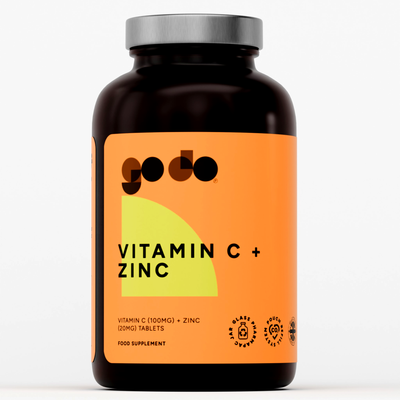
Taking vitamin C with zinc is a reasonable, low-risk strategy that can shorten a cold by a day or two when started early, but neither nutrient reliably prevents colds in well-nourished adults. The strongest evidence favors treatment over prevention. Check your diet first, keep doses within safe limits, and consider zinc lozenges at the very first scratchy throat rather than daily megadosing. If you’re pregnant or on regular medication, talk to a clinician before adding either supplement.
TL;DR:
- Taking zinc lozenges within the first two days of symptom onset can reduce cold duration by about one to two days, especially when used early.
- Supplement doses should stay within safe limits, with excess zinc risking copper deficiency and high vitamin C causing gastrointestinal upset.
- Daily supplementation of vitamin C and zinc offers limited prevention benefits for well-nourished adults but helps fill nutrient gaps in specific populations.
- Timing the intake of these nutrients around meals and avoiding concurrent high doses of calcium or iron enhances absorption and reduces interactions.
- Supplements are most effective as early treatment tools rather than daily preventive measures, and a balanced diet remains the best foundation for immune health.
Table of Contents
- What Vitamin C and Zinc Do for Immune Support
- How Vitamin C and Zinc Work Together at the Cellular Level
- What the Research Actually Shows About Prevention Versus Treatment
- Safety, Dosing, and Interactions to Watch
- When and How to Take Vitamin C With Zinc
- Food First: When Diet Is Enough and When Supplements Help
- Where the Evidence Actually Points
- Building Your Immune Support Routine With Fitnesshealth
- Sources
- FAQ
What Vitamin C and Zinc Do for Immune Support
Vitamin C and zinc land near the top of every credible list of immune-relevant nutrients, and each earns that spot through a different mechanism. Vitamin C works mostly as an antioxidant and structural helper. It protects immune cells from oxidative damage during an infection fight, supports the collagen that keeps your skin and mucous membranes intact as a physical barrier, and helps neutrophils and other phagocytes do their job of hunting down pathogens.
Zinc operates more like a supervisor. It acts as a cofactor for hundreds of enzymes, supports the development of lymphocytes (the white blood cells behind your adaptive immune response), boosts natural killer cell activity, and helps maintain the mucosal lining in your respiratory and digestive tracts. Zinc also has a hand in dialing inflammation up or down as needed, according to the NIH’s zinc fact sheet.
The two nutrients get paired in supplements because their roles are complementary, not because they amplify each other in every scenario:
- Vitamin C protects and repairs; zinc builds and regulates immune cells.
- Both support barrier tissue, just through different biological routes.
- Deficiency in either one measurably weakens immune response, based on the Review of Micronutrients and the Immune System.
- Combining them targets more of the immune system’s moving parts than either nutrient alone.
How Vitamin C and Zinc Work Together at the Cellular Level
The biology behind this pairing is more nuanced than “two immune vitamins are better than one.” Vitamin C accumulates at high concentrations inside white blood cells, where it acts as an antioxidant buffer, letting neutrophils generate the reactive compounds they need to kill pathogens without also damaging themselves in the process. It’s also required for making collagen, which is why chronic vitamin C deficiency shows up as slow wound healing and fragile skin, both of which double as broken immune defenses.
Zinc’s job is different. It stabilizes the structure of proteins involved in immune signaling, regulates cytokine production so your inflammatory response doesn’t overshoot, and directly supports the barrier function of your gut and respiratory lining. Zinc deficiency measurably impairs both your innate immune response (the fast, general defense) and your adaptive response (the slower, targeted one), according to the NIH’s health professional fact sheet on zinc.
What’s still uncertain is whether combining them produces a true synergy or simply covers two separate bases at once. Absorption of one doesn’t meaningfully block the other at typical supplement doses, but researchers note that most clinical trials tested these nutrients separately, not as a fixed combination, which leaves a real gap in the evidence for the pairing itself.
What the Research Actually Shows About Prevention Versus Treatment
Here’s the honest split: the evidence for treating an existing cold is decent, and the evidence for preventing one in a healthy, well-fed adult is thin.
Zinc and vitamin C can shorten the duration of common cold symptoms by roughly one to two days when used early, though results vary by formulation and dose, according to meta-analyses on the topic.
That effect shows up most consistently when zinc lozenges are started within the first day or two of symptoms, delivering the mineral directly to the oropharynx where cold viruses tend to replicate. Oral tablets swallowed whole skip that local contact and generally show weaker results. Timing matters more than most people assume. A dose taken on day four of a cold does far less than the same dose taken on day one.
Prevention is a different story. A comprehensive review notes that prophylactic vitamin C intakes in the range of 100 to 200 milligrams per day have been studied for reducing infection risk, but treatment-level doses in some trials ran far higher, up to roughly 6 grams per day in specific infection contexts, according to the Review of Micronutrients and the Immune System. For someone already eating enough fruit and vegetables, daily supplementation hasn’t shown a reliable drop in how often they catch a cold.
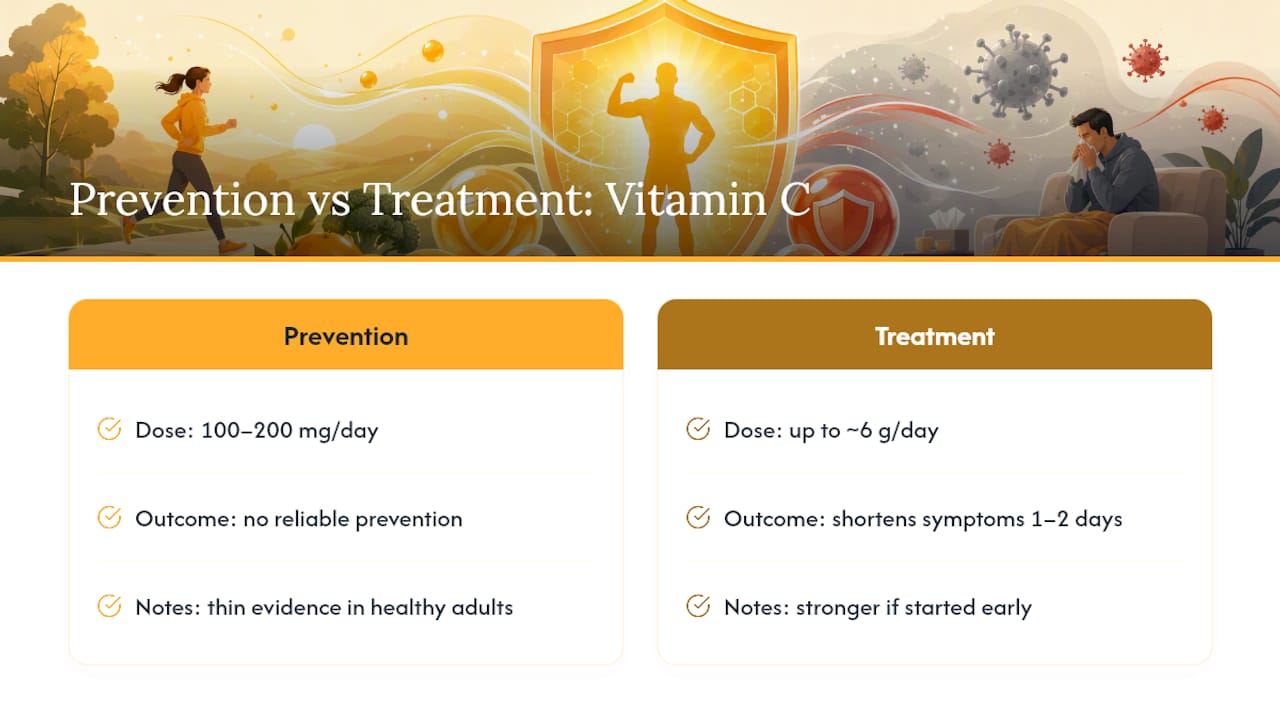
The gaps in this research are real. Trials vary wildly in dose, formulation, participant health status, and how “duration” gets measured, which makes it hard to draw one clean number. Well-designed trials testing the vitamin C and zinc combination, rather than each nutrient alone, remain surprisingly rare.
Safety, Dosing, and Interactions to Watch
Both nutrients are safe within established limits, but “more is better” does not apply here. The National Institutes of Health’s Office of Dietary Supplements provides guidance on the safe upper intake levels of vitamin C and zinc for adults.
- Excess vitamin C mainly causes gastrointestinal upset like diarrhea, nausea, or cramping.
- High-dose zinc can trigger headaches, nausea, and, with chronic use, copper deficiency, since zinc and copper compete for absorption in the gut.
- People with hemochromatosis or other iron-storage conditions should be cautious with high vitamin C, since it increases nonheme iron absorption.
- Pregnant readers and anyone on regular prescription medication should check with a clinician, since zinc can interact with certain antibiotics and other drugs.
Pro Tip: If you’re using zinc lozenges for more than a week straight, ask a pharmacist about copper intake. Chronic high-dose zinc use is one of the more overlooked causes of unexplained fatigue and low white blood cell counts.
When and How to Take Vitamin C With Zinc
Trials that showed benefit generally used one of two approaches, and it’s worth matching the approach to your goal.
- Daily maintenance dosing. A modest daily amount (vitamin C in the 100 to 200 milligram range, zinc in the 15 to 25 milligram range) supports baseline immune function without pushing near the upper limits.
- At-first-symptom dosing. Higher, short-term zinc lozenge use started the moment you feel a cold coming on tends to track with the duration reductions seen in trials.
- Pick your formulation deliberately. Ascorbic acid and buffered vitamin C both work; buffered forms are gentler on sensitive stomachs. Zinc gluconate and zinc acetate are the two forms most used in lozenge trials.
- Space it from iron and calcium supplements by a couple of hours if you take those too, since high doses of minerals can compete for absorption.
- Take with food if you notice stomach upset; it won’t meaningfully change absorption for most people but will improve tolerance.
Food First: When Diet Is Enough and When Supplements Help
Whole foods deliver these nutrients alongside fiber, other vitamins, and compounds that a capsule can’t replicate, so treat supplements as backup, not the main plan.
- Vitamin C sources: citrus fruit, bell peppers, strawberries, and broccoli all deliver well above 50 milligrams per serving.
- Zinc sources: oysters top the list by a wide margin, followed by beef, pumpkin seeds, and legumes like chickpeas and lentils.
- Supplementation makes more sense for older adults, people with restrictive diets, and anyone with a condition that limits absorption, since suboptimal micronutrient status is common in these groups.
- When you do buy a supplement, look for third-party testing seals and a label that lists exact doses per ingredient rather than a vague “proprietary blend.”
Clinical guidance is consistent on one point: supplements should fill a gap, not replace the basics that actually drive immune resilience, including sleep, vaccination status, and a genuinely varied diet.
Where the Evidence Actually Points
Most immune-supplement marketing implies these nutrients act like a shield you switch on daily. The research doesn’t back that framing. What it backs is narrower and, frankly, more useful: vitamin C and zinc are genuinely helpful once you’re already fighting something, especially if you catch it early with a zinc lozenge, and they’re valuable insurance if your diet actually falls short on either nutrient.
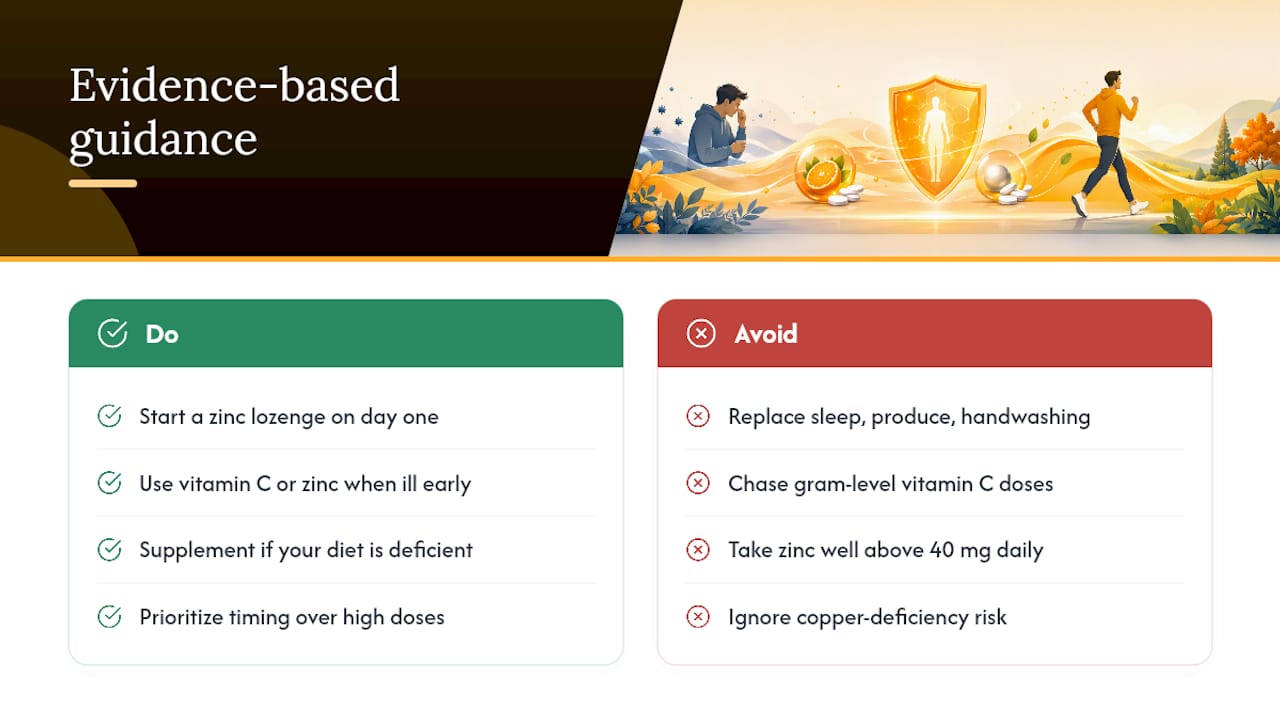
Where conventional advice overreaches is in treating supplementation as a substitute for the boring stuff, sleep, produce intake, and hand washing, that does more heavy lifting for immune health than any pill. I’d also push back gently on the megadose instinct. Chasing gram-level vitamin C doses or zinc well above 40 milligrams a day isn’t where the evidence lives, and the copper-deficiency risk from chronic high-dose zinc is a real cost that rarely gets mentioned alongside the benefit.
If you take one thing from this, prioritize timing over quantity. A zinc lozenge on day one of symptoms will likely do more for you than a year of daily megadosing ever will.
— Rene
Building Your Immune Support Routine With Fitnesshealth
Some brands emphasize transparent ingredient amounts rather than vague blends, so customers can match a supplement to evidence-based dose ranges. If your diet is already solid and you just want a reliable daily option or a zinc lozenge on hand for cold season, browse the Immunity collection to compare formulations side by side and pick a dose that fits your own numbers rather than a marketing claim.
This article is general information, not a substitute for advice from a qualified doctor. Consult a qualified healthcare professional about your own circumstances before acting on anything here.
Sources
Fitnesshealth builds its immune-support content around primary research rather than marketing claims, drawing on sources like the NIH’s Office of Dietary Supplements and peer-reviewed reviews on micronutrients and immunity. For readers who want to go deeper on either nutrient individually, Fitnesshealth has published dedicated breakdowns on vitamin C and immune function and on zinc’s role in recovery for active people who lose more minerals through sweat and training stress.
This article was written by Rene, drawing on NIH/ODS fact sheets, the PMC review on micronutrients and immune function, and published clinical trial data on cold duration, weighing the strength of each source rather than treating every claim as equally solid.
- A Review of Micronutrients and the Immune System–Working in Harmony to Reduce the Risk of Infection - PMC
- Zinc - Health Professional Fact Sheet - ODS/NIH
- PubMed: relevant clinical trial / meta-analysis (example)
FAQ
Is It Good to Take Vitamin C With Zinc?
Yes, for most healthy adults, taking both within recommended limits is safe and can help shorten a cold when started early. It’s less proven as a daily prevention strategy if your diet already covers your needs, based on NIH guidance on immune function supplements.
Is It Best to Take Vitamin C and Zinc in the Morning or at Night?
Timing of day doesn’t meaningfully change how well either nutrient works; consistency matters more than the clock. Take them with food if you notice stomach upset, and keep the timing the same each day so you don’t forget a dose.
What Are the Benefits of Taking Vitamin C and Zinc Tablets?
Vitamin C supports antioxidant defense and barrier tissue, while zinc supports immune cell development and mucosal integrity. Together they can shorten the duration of a cold by roughly one to two days when started early, according to research on zinc and cold duration.
Which Two Vitamins Should Not Be Taken Together?
Vitamin C and zinc don’t conflict with each other, but very high doses of zinc taken long term can reduce copper absorption, so it’s copper, a mineral, not a vitamin, that needs watching alongside chronic high-dose zinc use. Separately, very high doses of calcium can interfere with zinc absorption if taken at the exact same time, so spacing those two out by a couple of hours is a reasonable habit.