Bottom line: some standardized ashwagandha extracts modestly improve certain sleep measures for some adults after weeks of use, but benefits are modest and evidence is limited. A 2021 meta-analysis pooling five trials found a small but statistically significant improvement in sleep scores, strongest in people with diagnosed insomnia who took higher doses for eight weeks or more. It is not a fast-acting sedative, and it is not a guaranteed fix: treat it as a multi-week trial, not a one-night experiment.
Key Takeaways
Ashwagandha provides modest sleep benefits in some adults, especially with higher doses and longer use, but its effects are limited and evidence remains small.
| Point | Details |
|---|---|
| Use standardized extracts | Choose products with KSM-66 or Shoden to match the doses and formulations tested in clinical trials. |
| Expect gradual improvement | Commit to at least six to eight weeks of daily use before evaluating if it benefits your sleep. |
| Monitor dosage carefully | Aim for 250-600 mg per day with a standardized extract, favoring higher doses for better effects. |
| Consider timing based on effects | Take ashwagandha in the evening if it makes you sleepy; otherwise, follow the label and watch for next-day grogginess. |
| Consult a healthcare professional | Speak with a clinician before use if you have underlying health conditions, take medications, or are pregnant. |
Table of Contents
- What the research shows: trials and meta-analyses
- Dosage and timing used in studies and practical rules
- Safety, side effects, and when to check with a clinician
- Why extract type matters and a shopper’s checklist
- How to try ashwagandha safely and measure results
- Publisher E-E-A-T and how this guide was constructed
- Author perspective: cautious optimism and practical next steps
- Finding a standardized ashwagandha product
- FAQ
- Sources
What the research shows: trials and meta-analyses
The most useful evidence on ashwagandha for sleep comes from a systematic review and meta-analysis that pooled five randomized, double-blind, placebo-controlled trials. In plain terms, people taking ashwagandha reported meaningfully better sleep scores than those on placebo, but the effect is nowhere near what you would get from a prescription sleep medication, and the studies showed moderate heterogeneity, meaning results varied somewhat from trial to trial.
The trials measured several distinct sleep outcomes, and not all of them improved equally:
- Sleep onset latency, or how long it takes to fall asleep, improved in multiple trials.
- Total sleep time increased modestly in several studies.
- Sleep efficiency, the percentage of time in bed actually spent asleep, showed gains in some trials.
- Wake after sleep onset, the amount of time spent awake after initially falling asleep, decreased in a subset of studies.
Most of the underlying trials ran 6 to 12 weeks and many were conducted in India, which limits how confidently the findings generalize to other populations and health systems. The NIH Office of Dietary Supplements echoes this caution, noting that trials found modest improvements in sleep quality, sleep efficiency, total sleep time, and sleep latency, while flagging that the evidence base remains small.
The meta-analysis found a pooled effect of SMD −0.59 (95% CI −0.75 to −0.42) across five trials, with moderate heterogeneity (I²=62%), according to the systematic review and meta-analysis. That heterogeneity matters: it means the size of the benefit differed depending on the population studied, the dose used, and how long the trial lasted.
The subgroup data are arguably more useful than the headline number. People with clinically diagnosed insomnia saw larger improvements than healthy adults without a sleep complaint. Trials using doses of 600 mg per day or higher produced stronger signals than lower-dose studies. And trials lasting eight weeks or longer tended to show better results than shorter ones. Five trials is a small evidence base for a supplement this widely marketed, and it argues for realistic expectations rather than either dismissal or hype.
Dosage and timing used in studies and practical rules
Clinical trials have not settled on one dose or one extract, but there are clear patterns worth following if you want to replicate what was actually tested. The Sleep Foundation reports that most studies used 300 to 600 mg per day for 6 to 8 weeks, with benefits appearing greater at the higher end of that range, around 500 to 600 mg daily. Separately, several trials used a specific extract called Shoden at a much lower dose, 120 mg per day, a root-and-leaf formulation standardized for withanolide content rather than raw weight.
Here is a practical way to approach dosing and duration based on what trials actually tested:
- Pick a standardized extract, either a KSM-66 root extract in the 250 to 600 mg range or a Shoden formulation around 120 mg, rather than an unstandardized powder.
- Favor the higher end of the trial range if your goal is sleep specifically, since subgroup data suggest doses at or above 600 mg of standardized root extract produced stronger effects.
- Commit to at least 6 to 8 weeks before judging whether it is working, since most positive trials ran that long or longer.
- Track your sleep from day one using a simple diary or app so you have a real baseline to compare against at the end of the trial period.
Timing is genuinely unresolved in the research. No trial has directly tested morning versus evening dosing head-to-head for sleep outcomes. Harvard Health notes that the timing question remains scientifically open, and that patient-reported drowsiness is a reasonable guide: if you notice it makes you sleepy, take it in the evening; if not, follow the label and watch for next-day grogginess either way.
Pro Tip: Set a calendar reminder for week 6 and week 8 of your trial to re-rate your sleep quality; memory alone tends to smooth over small night-to-night changes that a diary catches.

Safety, side effects, and when to check with a clinician
Short-term trials, generally lasting up to 12 weeks, report mostly mild adverse events, according to the NIH Office of Dietary Supplements. The most commonly reported issues were gastrointestinal: upset stomach, diarrhea, and nausea, along with daytime sleepiness in some participants. Serious adverse events were rare within these short study windows, but “rare in a 12-week trial” is not the same as “safe indefinitely.”
Long-term safety data are limited, a gap the NIH factsheet explicitly flags, which means the actual risk profile beyond three months of continuous use is not well characterized in controlled research. That is a meaningful unknown for anyone considering daily use for months or years rather than a defined trial period.
A few groups warrant extra caution or a conversation with a clinician before starting:
- People taking sedatives or sleep medications, since combined effects on drowsiness have not been well studied.
- People on thyroid medication, since ashwagandha may affect thyroid hormone levels.
- People taking immunosuppressants, given ashwagandha’s proposed immune-modulating effects.
- People on diabetes or blood pressure medications, since interactions with these drug classes are plausible but not well mapped.
- Anyone with liver disease, since rare case reports have linked ashwagandha to liver issues, a caution Harvard Health also raises alongside thyroid disease.
- Anyone who is pregnant or breastfeeding, where safety data are insufficient to support routine use.
Stop and check with a clinician if you notice new or worsening symptoms, signs that could suggest liver trouble such as unusual fatigue or yellowing skin, sleep that gets worse rather than better, or if you become pregnant during a trial period. Behavioral treatment and clinical evaluation remain the right path for persistent or severe insomnia rather than relying on a supplement alone.
Why extract type matters and a shopper’s checklist

Most of the positive trial results trace back to two specific standardized extracts: KSM-66, a root-only extract used in four of the five trials in the main meta-analysis, and Shoden, a root-and-leaf extract used at a much lower 120 mg dose in at least one cited trial, per the NIH factsheet. This is why comparing products by milligrams alone can mislead you: a 600 mg generic ashwagandha powder and a 120 mg Shoden capsule are not interchangeable, because standardization controls for withanolide content, the compounds believed to drive the plant’s effects, not just raw plant material weight.
Before buying, run through a short checklist:
- Extract name and standardization: look for KSM-66 or Shoden by name on the label, not just “ashwagandha root extract.”
- Dose per serving: confirm it falls within the ranges actually tested, 250 to 600 mg for KSM-66-style extracts or around 120 mg for Shoden.
- Third-party testing: look for independent verification of potency and contaminants.
- Ingredient transparency: check whether the product is a single-ingredient extract or part of a multi-ingredient blend, which makes it harder to isolate what is actually helping.
- Clear labeling: the extraction method (root only versus root and leaf) and withanolide percentage should be stated, not buried or omitted.
Pro Tip: A generic “ashwagandha powder” with no extract name listed almost certainly was not the formulation used in any clinical trial, so treat label vagueness as a reason to look elsewhere.
How to try ashwagandha safely and measure results
A short, structured trial beats guessing. The Sleep Foundation describes a reasonable template: track your baseline sleep for one to two weeks before starting, then stay on a standardized product for six to eight weeks while measuring the same outcomes throughout.
- Choose a standardized product at a dose supported by trial data, either a KSM-66 extract or a Shoden formulation.
- Record a baseline for one to two weeks: note how long it takes you to fall asleep, roughly how many hours you sleep, and how you feel the next day.
- Set a start date and take the same dose consistently, ideally at the same time each day.
- Rate your sleep weekly on the same measures: sleep latency, total sleep time, sleep efficiency, daytime alertness, and any side effects.
- Reassess at week 6 and again at week 8, comparing your ratings against your baseline rather than against vague memory.
After the trial window, apply a simple decision rule. If you see a clear, consistent improvement with no troubling side effects, continuing at the same dose is reasonable. If you see no real change after eight full weeks, or if you experience adverse effects such as persistent stomach upset, unusual fatigue, or anything concerning enough to ask a doctor about, stop and move on to discussing other options with a clinician rather than extending the trial indefinitely on hope alone.
Publisher E-E-A-T and how this guide was constructed
We operate as a supplements retailer, and we also publish educational guides like this one, including a longer piece on ashwagandha side effects observed across short-term trials. This article interprets published clinical research rather than our own testing, and nothing here substitutes for a conversation with your own clinician, especially given the open questions around long-term safety.
We link to relevant product pages where they match the formulations discussed, purely for convenience if you are already researching a purchase, but every claim about efficacy, dosage, and safety in this guide rests on the external trial and review sources linked throughout. Author qualifications for Rene are not publicly listed beyond authorship of this piece.
Author perspective: cautious optimism and practical next steps
My honest read: ashwagandha is a reasonable low-risk experiment for mild sleep trouble, not a replacement for good sleep habits or medical care. The research supports modest benefit at best, over weeks, not overnight.
If you try it, pair it with consistent sleep hygiene and give it the full six to eight weeks before judging. If you are pregnant, managing a thyroid or autoimmune condition, have liver concerns, or take interacting medications, talk to a clinician before starting, not after.
— Rene
Finding a standardized ashwagandha product
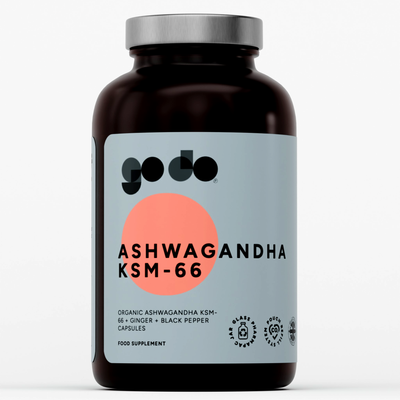
If you decide to run your own trial, our Organic Ashwagandha KSM-66 Capsules use the same extract type most commonly tested in the sleep trials discussed above, which makes it easier to compare your experience against the research rather than guessing at an unlabeled blend. We also carry a higher-strength ashwagandha extract and a 1000 mg tablet formulation if you want to compare dose and format options side by side.

Before you buy anything, run through this quick checklist:
- Confirm the extract name (KSM-66 or Shoden) matches what trials actually used.
- Check the dose per serving against the 250 to 600 mg (KSM-66) or roughly 120 mg (Shoden) ranges.
- Look for third-party testing and clear labeling of other active ingredients.
- If you are also curious about magnesium’s role in sleep, a partner overview of magnesium spray for sleep covers a complementary approach worth comparing.
If anything about your health history gives you pause, check with a clinician first, then browse our full collections to find the option that fits your plan.
This article is general information, not a substitute for advice from a qualified doctor. Consult a qualified healthcare professional about your own circumstances before acting on anything here.
FAQ
Does ashwagandha actually help you sleep?
For some adults, yes, modestly. A meta-analysis of five randomized trials found a small but statistically significant improvement in sleep scores, with stronger effects in people with insomnia who took higher doses for eight weeks or longer.
Is it okay to take ashwagandha at night before bed?
Evening dosing is common and reasonable if you notice the supplement makes you drowsy, since no trial has directly compared morning versus evening timing. Harvard Health notes the timing question remains unresolved, so following the product label and watching for next-day grogginess is the safest approach.
Why be careful with ashwagandha?
Short-term trials report mostly mild side effects like stomach upset, diarrhea, and sleepiness, but the NIH Office of Dietary Supplements notes long-term safety data are limited. People who are pregnant, have thyroid or liver conditions, or take sedatives, thyroid medication, or immunosuppressants should check with a clinician first.
How quickly does ashwagandha make you sleepy?
Ashwagandha is not designed for immediate, single-dose sedation the way a sleep medication is. The clinical benefits seen in trials developed over six to twelve weeks of consistent daily use, so a fair trial means weeks, not one night.
Sources
- Effect of Ashwagandha (Withania somnifera) extract on sleep: A systematic review and meta-analysis
- Ashwagandha: Is it helpful for stress, anxiety, or sleep? — NIH Office of Dietary Supplements
- Ashwagandha for Sleep: Benefits, Dosage, Safety, and Side Effects — Sleep Foundation
- Ashwagandha: Benefits, side effects, and safety concerns — Harvard Health