For most people, the best time to take an oral iron supplement is first thing in the morning on an empty stomach, roughly 30 to 60 minutes before breakfast. If that upsets your stomach, take it at bedtime, 2 hours after dinner. Pair it with vitamin C, keep it away from calcium, coffee, and antacids by at least 2 hours, and switch to alternate-day dosing if daily doses cause GI trouble. Always follow your clinician’s specific instructions and lab schedule.
TL;DR:
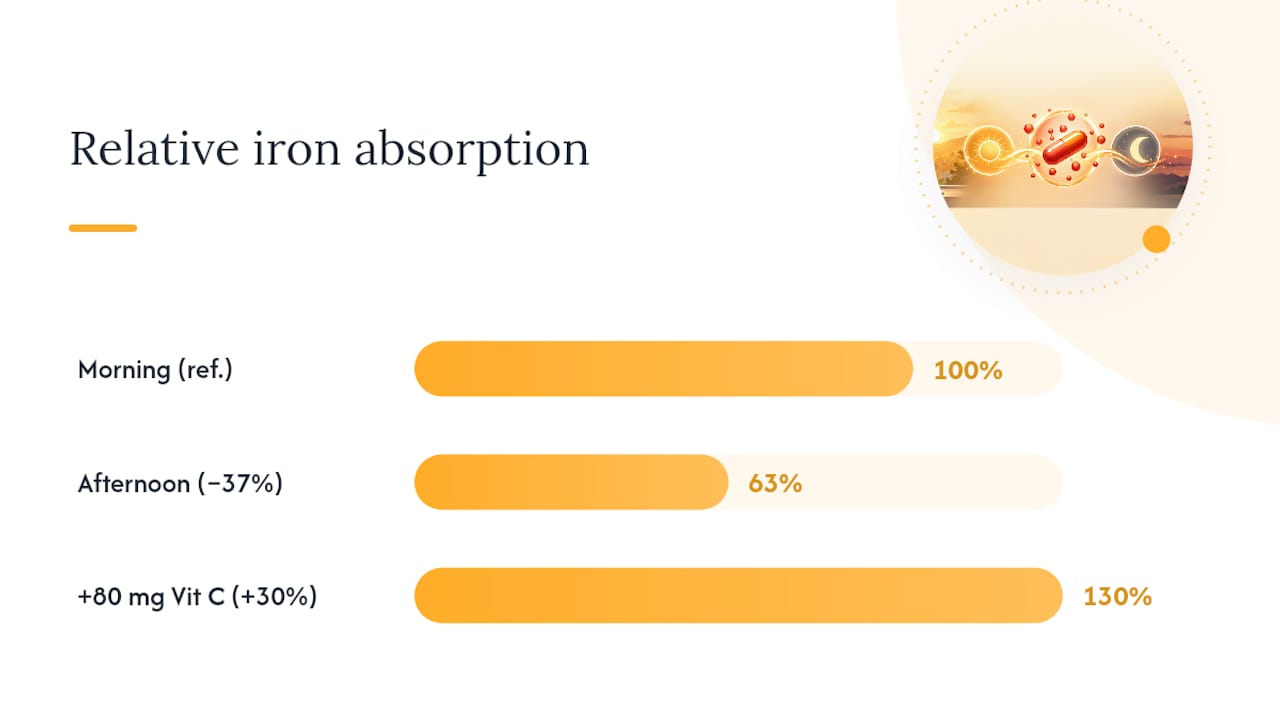
- Taking iron in the morning on an empty stomach results in about 37% higher absorption than a dose in the afternoon because hepcidin levels are lower then.
- Separating iron intake from calcium, coffee, and antacids by at least two hours significantly improves absorption of the supplement.
- Alternating every other day for iron dosing can match daily schedules’ long-term effectiveness while reducing gastrointestinal side effects.
- Consistency and practical routines are more important than perfect timing, especially since tolerability influences adherence over months.
- Pairing iron with vitamin C, such as a small glass of orange juice, can boost absorption by approximately 30%.
Table of Contents
- Why Iron Supplement Timing Actually Matters
- What Are the Best Timing Windows for Taking Iron?
- Should You Take Iron Daily or Every Other Day?
- What Should You Avoid Taking With Iron?
- How Do You Build a Schedule You’ll Actually Stick To?
- Why Trust This Guide on Iron Timing
- The Overlooked Trade-Off in Iron Timing Advice
- Where to Find Vitamin C Pairings and Gentler Iron Options
- Sources
- FAQ
Why Iron Supplement Timing Actually Matters
Your body regulates iron absorption through a hormone called hepcidin, produced mainly by the liver. Hepcidin acts like a gatekeeper at the lining of your small intestine: when levels are high, it blocks iron from moving out of gut cells and into your bloodstream. When levels are low, iron flows through more freely.
Hepcidin follows a daily rhythm. It sits lowest in the morning and climbs as the day goes on, which is the biological reason morning dosing tends to outperform afternoon or evening dosing for raw absorption. Summarized research on this diurnal pattern found afternoon absorption running about 37% lower than morning absorption in the same people.
A controlled isotope trial in iron-deficient women put hard numbers on this. Researchers tracked how much iron from a supplement actually made it into the bloodstream under different conditions, and the gaps were larger than most people expect.
- The morning reference dose produced a median fractional absorption notably higher than the same dose taken in the afternoon.
- Drinking coffee alongside the dose significantly reduced absorption.
- Taking iron with a full breakfast plus coffee markedly reduced absorption.
- Adding roughly 80 milligrams of ascorbic acid (vitamin C) to the dose increased absorption by about 30%.
A quick gut check on the numbers: taking your iron pill with your morning coffee and eggs could mean your body absorbs less than half of what it would absorb from the same pill, taken alone, an hour earlier. That single habit change, separating the pill from coffee and food, is arguably the highest-leverage adjustment in this entire article, according to the AJH/Wiley trial.
None of this means an evening dose is wasted. It means morning, fasted dosing is the efficient default, and everything else on this list is a workaround for people whose stomachs won’t tolerate that default.
What Are the Best Timing Windows for Taking Iron?
Once you understand the hepcidin curve, the practical choices get simple. Pick the window that fits your schedule and your stomach, then stay consistent.
- Morning, empty stomach. Take your dose 30 to 60 minutes before eating anything. Skip coffee and tea for at least 1 to 2 hours afterward, since both are strong absorption inhibitors even outside mealtime.
- Bedtime, post-dinner. If morning dosing causes nausea or cramping, take iron 2 hours after your last meal, at night. NHS guidance on ferrous sulfate confirms this still supports meaningful ferritin recovery, just at a slightly slower pace than fasted morning dosing.
- Around exercise, if you train hard. Intense training temporarily raises hepcidin for several hours afterward. Some research suggests dosing right before a workout or within 30 minutes after beats waiting 2 to 5 hours post-exercise, when hepcidin is likely still elevated. On heavy training days, bedtime dosing is often the simpler fix.
Pro Tip: If you’re an athlete stacking iron with a broader supplement routine, check how it lines up against your other timing needs in a supplement timing guide built around workouts before you lock in a schedule.
None of these windows are mutually exclusive. Many people run the morning fasted routine on rest days and shift to bedtime dosing after hard workouts.
Should You Take Iron Daily or Every Other Day?
The old default was daily dosing, once or twice a day, for months. Newer research complicates that, and for a lot of people, that’s good news for their stomach.
Alternate-day dosing appears to produce similar cumulative iron repletion compared with daily dosing, just spread over a longer stretch, with meaningfully fewer GI side effects. A commonly cited comparison: daily dosing for about three months can land in roughly the same place as alternate-day dosing over about six months, according to clinical commentary summarized by The Conversation. The mechanism traces back to hepcidin again. A dose on day one keeps hepcidin elevated into day two, blunting absorption from a second consecutive dose. Skipping a day lets the gate reopen.
That doesn’t mean everyone should switch to every-other-day dosing.
- Choose daily dosing if you have severe anemia, need faster repletion before a surgery or pregnancy milestone, or your clinician has specifically prescribed daily intake.
- Choose alternate-day dosing if you’ve had daily dosing and hit persistent nausea, constipation, or cramping that threatens adherence.
- Expect symptom improvement within 1 to 4 weeks, per Cleveland Clinic guidance, though full stores typically take 6 to 12 months to rebuild.
- Get labs rechecked (hemoglobin and ferritin) at intervals your clinician sets, often around the 2 to 3 month mark, then periodically after that.
Either schedule requires patience. Iron repletion is a months-long project, not a weeks-long one.
What Should You Avoid Taking With Iron?
Certain foods, supplements, and medications compete with iron for absorption or block it outright. Others help it along. Knowing which is which saves you from quietly undoing your own supplement routine.
Inhibitors to separate from your dose:
- Calcium, whether from dairy, fortified foods, or a calcium supplement. Keep at least 2 hours of separation.
- Antacids and acid-reducing medications (including PPIs). These change stomach pH in ways that reduce iron solubility. MedlinePlus recommends the same 2-hour buffer.
- Coffee and tea. Their polyphenols bind iron in the gut. A 1 to 2 hour gap on either side of your dose limits the damage.
Enhancers worth pairing with your dose:
- Vitamin C, in the ballpark of 80 milligrams, which the AJH trial linked to roughly a 30% absorption boost. A small glass of orange juice or a vitamin C tablet both work.
- Acidic fruit generally helps, though the effect plateaus. Very high vitamin C doses, around 500 milligrams, did not produce proportionally greater absorption in the same trial.
Medication interactions deserve their own caution. Iron can interfere with thyroid medications like levothyroxine and with certain antibiotic classes, including tetracyclines and fluoroquinolones. The safe move is a pharmacist check on your specific medication list, since interaction windows vary by drug.
Pro Tip: If you’re already juggling a multivitamin and a separate iron pill, look at how a daily vitamin routine can be sequenced so the calcium in your multivitamin doesn’t cancel out your iron dose.
How Do You Build a Schedule You’ll Actually Stick To?
Perfect timing that you abandon after two weeks helps nobody. Consistency usually beats precision, an idea backed by practical guidance from UC Davis, which frames a sustainable routine as more valuable than a technically optimal one you can’t maintain.
- Strict fasting schedule: Dose immediately on waking, 30 to 60 minutes before breakfast, no coffee until at least an hour after. Best absorption, requires the most discipline.
- Bedtime schedule: Dose 2 hours post-dinner, away from any late-night dairy or antacid. Slightly less efficient, but far gentler on a sensitive stomach.
- Tolerability-first schedule: Dose with a small, low-calcium snack (crackers, a banana) rather than a full meal. Absorption drops somewhat, but so does dropout from nausea.
If side effects still hit, work through fixes in order: try a different formulation (ferrous fumarate instead of ferrous sulfate, or a liquid drop version with a lower elemental dose), split one dose into two smaller ones, or move to alternate-day dosing. Constipation often responds to more water and fiber before you assume you need a different pill.
Call a clinician for severe abdominal pain, black tarry stools that seem excessive, or any sign of an allergic reaction, like hives or swelling. Those aren’t “wait it out” symptoms.
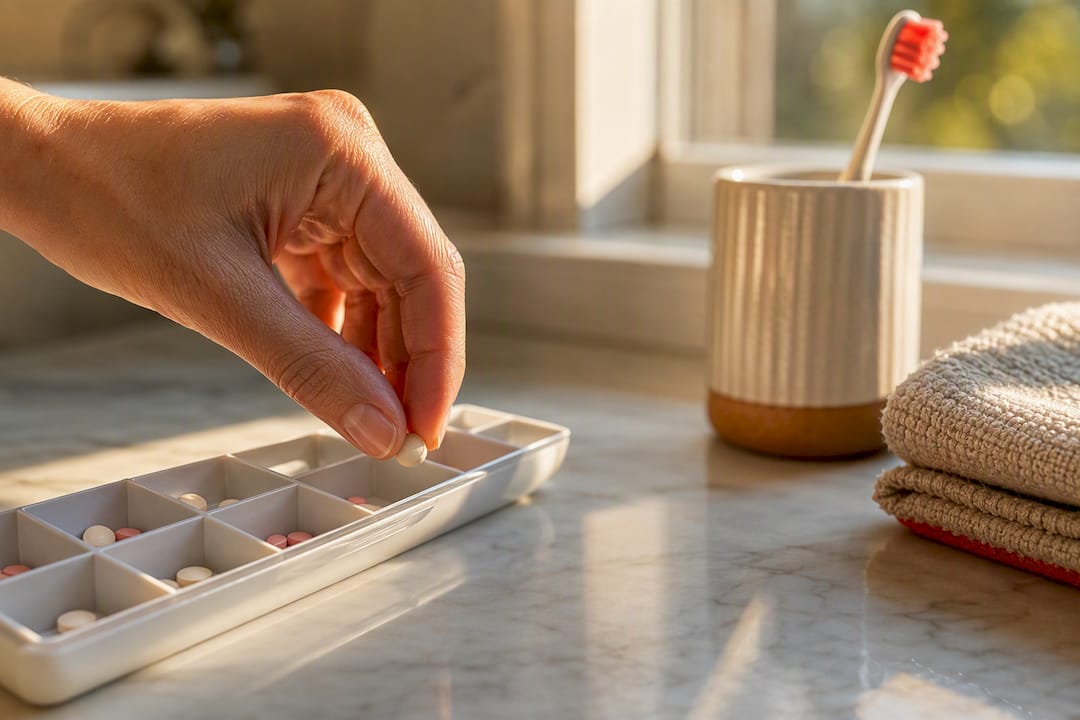
For adherence, tie the dose to an existing habit, brushing your teeth, starting the coffee maker (then waiting), or setting a phone alarm. A weekly pill organizer also catches missed doses before they turn into missed weeks. Keep it away from your calcium supplement slot in that organizer, a small detail that prevents a big absorption loss.
Why Trust This Guide on Iron Timing
This guide was put together by Rene, a contributing health writer for Fitnesshealth… The recommendations here synthesize peer-reviewed absorption research, including the isotope trial data from the AJH/Wiley study, alongside clinical guidance from the NHS, Cleveland Clinic, and MedlinePlus.
For readers building out a broader routine, Fitnesshealth’s guide to daily supplement checklists covers how to sequence multiple products without them working against each other. Nothing here replaces individualized medical advice. Pregnancy, chronic kidney disease, inflammatory bowel conditions, and severe anemia all change the calculus, and a clinician should set your actual dose and monitoring schedule.
The Overlooked Trade-Off in Iron Timing Advice
Most articles on this topic present morning, fasted dosing as the answer and treat everything else as a consolation prize. The isotope data backs the morning recommendation, but it doesn’t tell the whole story: a technically superior dose that gets skipped three days a week because it causes cramping loses to a technically inferior dose taken reliably every single day.
The alternate-day research is the part conventional advice tends to underplay. Telling someone with a sensitive stomach to “just push through” daily dosing, when a switch to every-other-day intake can hit similar ferritin targets with far less GI distress, is bad practical advice even if it’s defensible physiology.
If you take one thing from this, prioritize the routine you’ll actually follow for the next six months over the routine that looks best in a lab. Get your baseline labs, pick a schedule that fits your stomach and your day, and adjust with your clinician based on how your ferritin actually moves, not based on chasing a theoretical absorption percentage.
— Rene
Where to Find Vitamin C Pairings and Gentler Iron Options
Pairing decisions matter as much as timing decisions. Fitnesshealth’s supplement collections group vitamin C boosters alongside gentler, more tolerable formats, useful if capsules alone have been rough on your stomach. Rather than guessing which vitamin C dose or which iron format fits your routine, you can browse by category and match the product to the schedule you’ve already settled on, whether that’s a fasted morning dose or a bedtime routine.
If you train regularly, it’s worth checking how iron fits alongside other minerals that affect performance and recovery, covered in Fitnesshealth’s guide to gym performance minerals. Keep in mind that switching formulations or adjusting a prescribed iron regimen should happen with your clinician’s input, particularly if you’re being treated for diagnosed anemia. Start by browsing the collections page for a tolerability-focused option that matches the schedule you’ve chosen.
This article is general information, not a substitute for advice from a qualified doctor. Consult a qualified healthcare professional about your own circumstances before acting on anything here.
Sources
- PubMed summary of diurnal variation and iron supplement absorption (2024)
- How and when to take ferrous sulfate - NHS
- Iron Supplements for Anemia (Ferrous Sulfate): Benefits — Cleveland Clinic
- Taking iron supplements: MedlinePlus Medical Encyclopedia
FAQ
Can I eat 30 minutes after taking iron?
Yes. Thirty minutes is the minimum recommended gap before eating when taking iron on an empty stomach, per NHS guidance, though waiting a full hour gives absorption a bit more room.
Is iron a morning or night supplement?
Morning, on an empty stomach, is generally the more effective time because hepcidin is lowest then, but nighttime dosing 2 hours after dinner is a solid, well-tolerated alternative if morning dosing upsets your stomach.
Is it okay to take iron before bed?
Yes, as long as it’s at least 2 hours after your last meal and away from any calcium or antacid you’ve taken that day; it’s a common workaround for people who get nauseated by morning fasted dosing.
What are the early signs iron pills are working?
Energy and reduced fatigue often improve within 1 to 4 weeks, per Cleveland Clinic, though full lab normalization of blood counts typically takes around 2 months of consistent use.