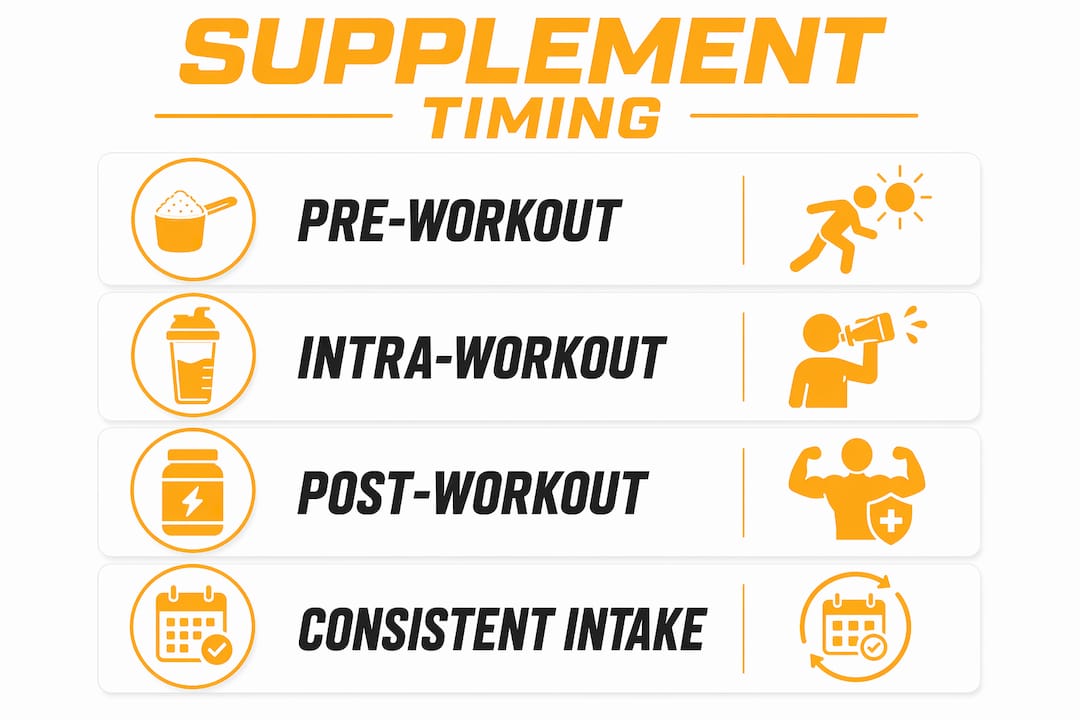
Supplement timing around workouts is the practice of consuming specific nutrients at precise intervals before, during, and after exercise to maximize performance and recovery. Nutrition authorities recognize nutrient timing as a distinct strategy within sports nutrition, separate from simply meeting daily intake goals. The three core windows are pre-workout, intra-workout, and post-workout. Each window targets a different physiological need: fuel, endurance, and repair. Getting the timing right can be the difference between a productive training block and stalled progress.
What is the best supplement timing around workouts?
The optimal supplement schedule depends on which phase of your workout you are targeting. Pre-workout supplements prime your nervous system and fuel your muscles. Intra-workout supplements sustain energy and hydration. Post-workout supplements repair tissue and replenish glycogen. Treating all three as a connected system produces better results than addressing any one phase in isolation.
Most athletes underestimate how much timing shifts the effect of the same dose. A caffeine dose taken at the wrong time delivers far less benefit than the same dose taken at the right moment. The same logic applies to protein, creatine, and carbohydrates.
When should you take pre-workout supplements?
Taking pre-workout supplements 30–60 minutes before exercise gives caffeine and other stimulants enough time to reach peak blood concentration. That window aligns with how long caffeine takes to absorb and act on the central nervous system. Arriving at the gym too early or too late means you miss the performance peak.
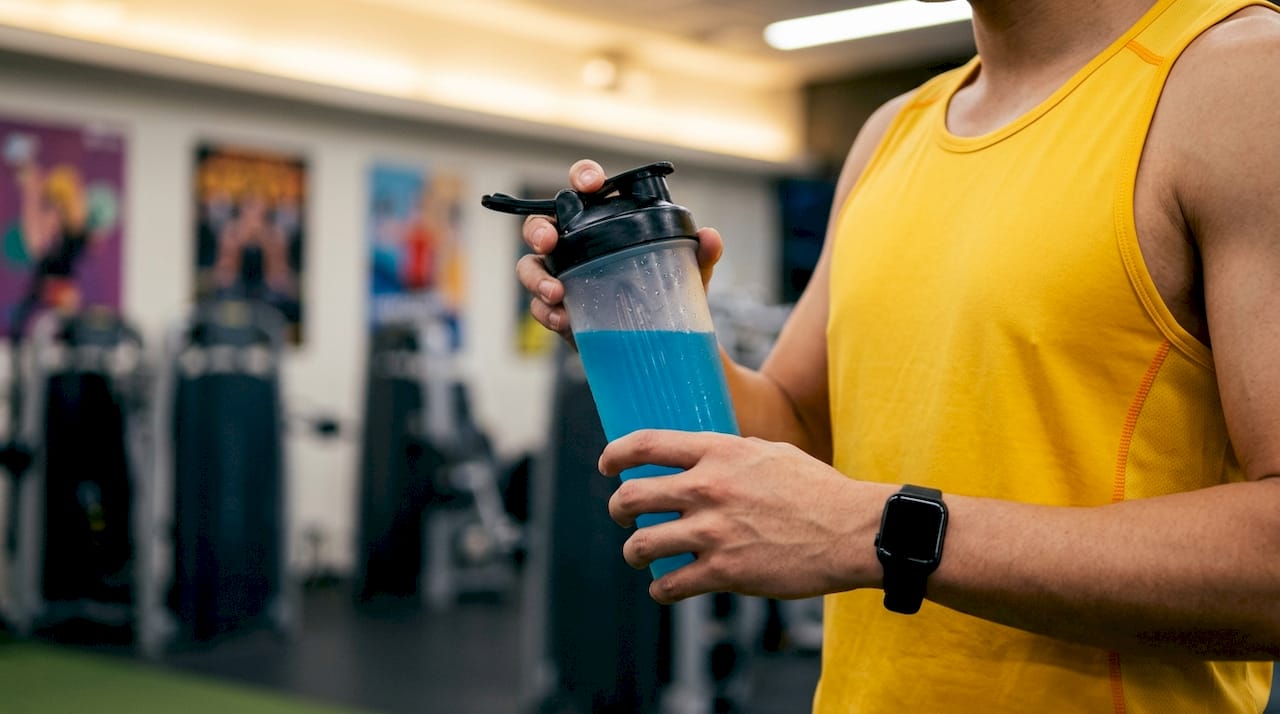
Caffeine timing matters even within that window. Caffeine taken 30 minutes before explosive training improves power output and muscle contraction speed more than caffeine taken at the 60-minute mark. For strength athletes doing heavy compound lifts, the 30-minute mark is the better target.
Key factors that shape your pre-workout timing:
- Metabolism: Faster metabolism means quicker absorption. Athletes with high metabolic rates may feel effects sooner and should adjust timing accordingly.
- Stomach contents: Taking pre-workout on an empty stomach accelerates absorption. A full meal slows it down by 15–30 minutes.
- Workout type: Endurance sessions benefit from a slightly earlier dose to sustain energy across a longer effort.
- Caffeine sensitivity: Lower-tolerance athletes should start with half a serving to assess their response before committing to a full dose.
- Evening workouts: Avoid caffeinated pre-workouts within 6 hours of bedtime to protect sleep quality. Caffeine’s half-life is long enough to disrupt restorative sleep cycles, which directly undermines recovery.
Creatine works differently from caffeine. Creatine requires consistent daily intake for about four weeks to saturate muscle stores. A single pre-workout dose of creatine does not produce an acute performance boost. Daily consistency matters far more than exact timing for creatine.
Pro Tip: Start with half the recommended dose of any new pre-workout formula for your first two sessions. This lets you gauge your tolerance to beta-alanine, caffeine, and other stimulants before committing to a full serving.
How do intra-workout supplements sustain performance?
Intra-workout nutrition is the most overlooked phase of an effective supplement protocol. Most athletes focus on pre and post, but sessions lasting longer than 60 minutes create a real need for fuel during the workout itself.
- Consume carbohydrates every 20–30 minutes. Intra-workout carbohydrate intake every 20–30 minutes maintains blood glucose and delays fatigue. Sports drinks and energy gels are the most practical delivery methods during training.
- Sip BCAAs throughout your session. BCAAs taken intra-workout reduce muscle breakdown and post-session soreness, especially in high-volume or long-duration training. Steady sipping works better than a single bolus dose.
- Replace electrolytes continuously. Sodium, potassium, and magnesium lost through sweat affect muscle contraction and hydration. Electrolyte tabs or drinks prevent the performance dip that comes from dehydration.
- Match carb intake to session intensity. Low-intensity sessions under 45 minutes rarely require intra-workout carbs. High-intensity or endurance sessions lasting 90 minutes or more benefit the most from consistent fueling. Explore endurance supplement strategies to match your sport’s demands.
Pro Tip: Prepare your intra-workout drink before you leave for the gym. Pre-mixing BCAAs and electrolytes in a shaker bottle removes any barrier to consistent fueling during training.
What are the best post-workout supplements and when to take them?
The post-workout window is the most studied phase in sports nutrition. Consuming fast-digesting protein within 30–60 minutes after exercise accelerates muscle repair and growth. This is when muscle protein synthesis rates are elevated and your body is primed to use nutrients efficiently.
Pairing protein with carbohydrates after training accelerates glycogen resynthesis. Carbs spike insulin, which drives amino acids and glucose into muscle cells faster. A ratio of roughly 3:1 carbohydrates to protein is a common starting point for athletes focused on recovery speed.
Post-workout supplement priorities at a glance:
- Whey protein or plant protein blend: Fast-digesting and rich in leucine, which triggers muscle protein synthesis directly.
- Simple carbohydrates: White rice, fruit, or a carbohydrate drink replenishes glycogen stores quickly.
- Creatine: Post-workout creatine intake complements recovery phases and supports fatigue reduction. Daily consistency matters more than the exact timing.
- Electrolytes: Replacing what you lost through sweat supports hydration and muscle function into the next session.
| Supplement | Timing | Primary benefit |
|---|---|---|
| Whey or plant protein | Within 30–60 min post-workout | Muscle repair and protein synthesis |
| Simple carbohydrates | Within 30–60 min post-workout | Glycogen replenishment |
| Creatine | Daily, post-workout preferred | Muscle saturation and recovery support |
| Electrolytes | During and after training | Hydration and muscle function |
For a full post-workout nutrition checklist, Fitnesshealth has a detailed athlete recovery guide worth bookmarking.
How does workout type change your supplement timing?
Strength training and endurance training have different fueling demands. Adjusting your supplement schedule to match your session type produces better results than applying a one-size-fits-all protocol.
- Strength training: Prioritize pre-workout caffeine and creatine consistency. Post-workout protein is the highest priority. Intra-workout carbs are optional for sessions under 60 minutes.
- Endurance training: Intra-workout carbohydrates become critical. Intra-workout carb supplementation is especially important for endurance athletes to sustain blood glucose across long efforts. Post-workout recovery nutrition timing matters for next-day performance.
- Morning workouts: Absorption is faster on an empty stomach. Pre-workout supplements hit quicker. Adjust your timing window to 20–30 minutes before training if you train fasted.
- Evening workouts: Stimulant sensitivity increases later in the day. Reduce caffeine dose or switch to a stimulant-free pre-workout formula. Metabolism and workout timing both affect supplement absorption and how strongly you feel the effects.
Individual factors like body weight, training age, and gut sensitivity also shift what works. Experiment over two to four weeks before drawing conclusions about what your body responds to best.
Common mistakes in supplement timing protocols
Most timing errors fall into predictable patterns. Recognizing them early saves weeks of suboptimal training.
- Taking pre-workout too early or too late. Missing the 30–60 minute window means caffeine peaks either before you start or after you finish your hardest sets.
- Ignoring caffeine’s effect on sleep. Stimulant-containing pre-workouts taken within 6 hours of bedtime disrupt sleep architecture, which undermines the recovery you are trying to build.
- Skipping intra-workout nutrition on long sessions. Athletes who train for 90 minutes or more without fueling mid-session experience avoidable performance drops in the final third of their workout.
- Delaying post-workout protein. Waiting two or more hours after training to eat protein reduces the muscle protein synthesis response significantly.
- Expecting creatine to work acutely. Single-dose creatine before a session does not produce immediate strength gains. Daily loading over weeks is what builds the effect.
Pro Tip: Keep a simple training log for two weeks. Record what you took, when you took it, and how your session felt. Patterns emerge quickly and tell you exactly where your timing protocol needs adjustment.
Timing is a skill, not a formula
Coaching athletes on supplement timing has taught me one consistent lesson: most people follow a protocol they read once and never revisit. They take the same pre-workout at the same time regardless of whether they are doing a 45-minute strength session or a two-hour endurance run. That rigidity costs real results.
The athletes I have seen make the most progress treat timing as a skill they refine over months. They start simple: protein after training, caffeine 30 minutes before, carbs during long sessions. Then they adjust based on how they feel and perform. They also prioritize sleep and whole food nutrition as the foundation. Supplements fill gaps; they do not replace fundamentals.
If you are just starting out, pick one timing habit and nail it for two weeks before adding another. Trying to implement a full three-phase protocol on day one usually leads to inconsistency. Build the habit layer by layer, and the results compound.
— Rene
Fitnesshealth resources for your supplement timing plan
Getting supplement timing right is easier when you have quality products and reliable guidance in one place.

Fitnesshealth offers a full range of workout performance supplements designed for athletes who take their training seriously. From pre-workout formulas to post-workout recovery blends, every product comes with clear dosing and timing guidance. The Fitnesshealth blog also covers building a supplement stack that fits your specific training goals, whether you focus on strength, endurance, or general fitness. For athletes interested in advanced recovery science, the peptides in muscle recovery guide covers emerging research on recovery-focused supplementation worth reading alongside your timing protocol.
FAQ
When should I take protein after a workout?
Consume fast-digesting protein within 30–60 minutes after training to take advantage of elevated muscle protein synthesis rates. Pairing protein with carbohydrates in this window also accelerates glycogen replenishment.
Does creatine timing matter for performance?
Creatine requires consistent daily intake over roughly four weeks to saturate muscle stores. Post-workout timing is a practical default, but daily consistency matters far more than the exact time of day.
Can I take pre-workout supplements in the evening?
Avoid stimulant-based pre-workouts within 6 hours of bedtime. Caffeine’s half-life is long enough to disrupt sleep quality, which directly reduces recovery and next-day performance.
What supplements should I take during a workout?
BCAAs and electrolytes are the core intra-workout supplements for most athletes. Endurance athletes and anyone training for more than 60 minutes should also add carbohydrates every 20–30 minutes to maintain blood glucose.
How do I know if my supplement timing is working?
Track your energy levels, performance, and recovery for two to four weeks after implementing a timing protocol. Consistent improvements in session quality and reduced soreness are reliable signs the timing is working.
Key takeaways
Supplement timing around workouts works best when pre-workout, intra-workout, and post-workout phases are treated as a connected system, each targeting a specific physiological need.
| Point | Details |
|---|---|
| Pre-workout window | Take stimulant-based supplements 30–60 minutes before training for peak caffeine effect. |
| Intra-workout fueling | Consume carbs every 20–30 minutes and sip BCAAs during sessions lasting over 60 minutes. |
| Post-workout protein | Eat fast-digesting protein within 30–60 minutes after training to support muscle repair. |
| Creatine consistency | Daily creatine intake over four weeks builds muscle saturation; single doses have limited acute effect. |
| Personalize your protocol | Adjust timing based on workout type, morning versus evening training, and individual caffeine tolerance. |