Turmeric’s anti-inflammatory power comes down to one compound: curcumin. This polyphenol, which gives turmeric its deep golden color, works by blocking inflammatory signaling pathways including NF-κB, MAPK, and JAK-STAT, while simultaneously scavenging the reactive oxygen species (ROS) that drive oxidative inflammation. The result is a measurable suppression of pro-inflammatory cytokines like IL-1β, IL-6, and TNF-α, plus enzymes like COX-2 and MMP-9 that would otherwise amplify tissue damage. Clinical research backs this up, not just lab models.
Here is what curcumin does at the cellular level:
- Blocks NF-κB activation by preventing IκBα degradation, which stops inflammatory gene transcription
- Suppresses MAPK components (ERK, JNK, p38) that relay stress signals into inflammatory responses
- Modulates JAK-STAT signaling and upregulates negative feedback proteins SOCS1 and SOCS3
- Inhibits the NLRP3 inflammasome, reducing caspase-1 activity and IL-1β secretion
- Neutralizes ROS and boosts protective enzymes like HO-1 and Nrf2
- Downregulates COX-2 and MMP-9, two enzymes central to pain and tissue degradation
The catch: curcumin is poorly absorbed on its own. Pairing it with black pepper (piperine) or healthy fats dramatically changes how much actually reaches your bloodstream. That detail matters more than most people realize when choosing a supplement or planning a recipe.
Table of Contents
- How turmeric reduces inflammation at the molecular level
- Health benefits linked to turmeric’s anti-inflammatory effects
- How to actually consume turmeric for anti-inflammatory benefits
- Safety, side effects, and drug interactions
- What experts and current research say about turmeric in 2026
- Fitnesshealth curcumin supplements: quality you can actually verify
- Key Takeaways
How turmeric reduces inflammation at the molecular level
Curcumin’s anti-inflammatory action is not a single switch. It operates across several interconnected pathways simultaneously, which is part of why researchers find it so pharmacologically interesting.
NF-κB: the master switch curcumin shuts down
NF-κB (nuclear factor kappa-light-chain-enhancer of activated B cells) is the transcription factor that controls the expression of dozens of inflammatory genes. Under normal conditions, it stays inactive, bound to IκBα in the cytoplasm. When a threat signal arrives, IκBα gets phosphorylated and degraded, freeing NF-κB to enter the nucleus and switch on inflammation.
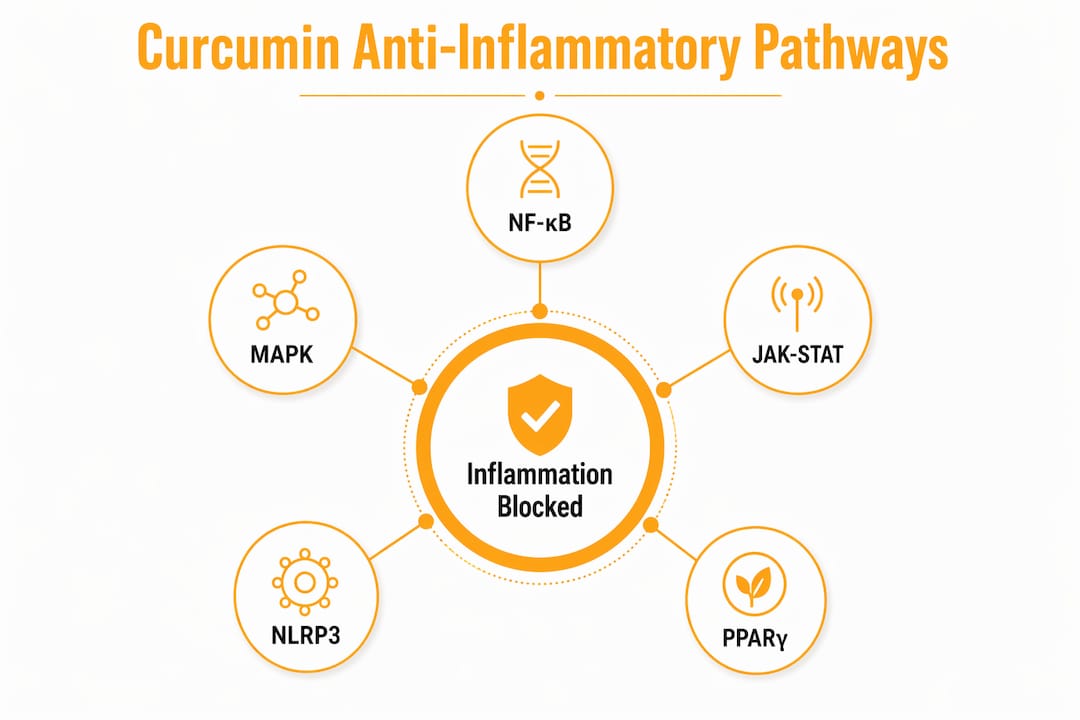
Curcumin interrupts this sequence. It prevents IκBα phosphorylation and blocks the nuclear translocation of NF-κB subunits, effectively keeping the inflammatory gene program switched off. The downstream effect is a broad reduction in cytokine production, including IL-6 and TNF-α, two of the most clinically significant drivers of chronic inflammation.
MAPK and JAK-STAT pathways
The MAPK pathway processes stress signals through three main kinases: ERK, JNK, and p38. Each one can amplify inflammatory output when overactivated. Curcumin modulates all three, reducing their phosphorylation and dampening the downstream inflammatory cascade.
JAK-STAT signaling is how cytokines communicate between cells. When pro-inflammatory cytokines bind to receptors, JAK kinases activate STAT proteins that travel to the nucleus and drive more cytokine production. Curcumin breaks this feedback loop by upregulating SOCS1 and SOCS3, proteins that act as natural brakes on JAK-STAT activity.
NLRP3 inflammasome suppression
The NLRP3 inflammasome is a protein complex that acts as an intracellular alarm system. When activated, it triggers caspase-1, which then cleaves pro-IL-1β into its active, secreted form. Chronic NLRP3 activation is implicated in conditions ranging from gout to Alzheimer’s disease. Curcumin reduces NLRP3 activation, caspase-1 activity, and IL-1β secretion, making it one of the few dietary compounds with a documented effect on this pathway.
Macrophage polarization via PPARγ
One mechanism that gets less attention: curcumin activates PPARγ (peroxisome proliferator-activated receptor gamma), which shifts macrophages from the pro-inflammatory M1 phenotype to the anti-inflammatory M2 phenotype. In the context of atherosclerosis, this macrophage polarization reduces foam cell formation and systemic inflammatory burden. It is a genuinely elegant mechanism that explains some of curcumin’s cardiovascular benefits.
| Pathway | Curcumin’s Action | Key Outcome |
|---|---|---|
| NF-κB | Prevents IκBα degradation, blocks nuclear translocation | Reduced IL-6, TNF-α, COX-2 expression |
| MAPK (ERK, JNK, p38) | Inhibits phosphorylation of kinase components | Dampened stress-driven inflammatory signaling |
| JAK-STAT | Upregulates SOCS1/SOCS3 negative feedback proteins | Reduced cytokine-driven gene activation |
| NLRP3 inflammasome | Suppresses caspase-1 and IL-1β secretion | Lower systemic inflammatory response |
| PPARγ / Macrophage | Promotes M1-to-M2 macrophage polarization | Reduced atherosclerotic and metabolic inflammation |
| Antioxidant (Nrf2/HO-1) | Scavenges ROS, boosts protective enzyme expression | Reduced oxidative stress-driven inflammation |
Pro Tip: If you are reading supplement labels, look for products that specify “curcuminoids” content rather than just “turmeric extract.” Curcuminoids are the active fraction; a product listing only turmeric powder may contain as little as 2–5% curcumin by weight.
Health benefits linked to turmeric’s anti-inflammatory effects
The molecular mechanisms above translate into real-world health outcomes across several conditions. The evidence is strongest for joint-related inflammation, but the research extends further than most people expect.
That quote from Johns Hopkins Medicine captures something important: turmeric’s benefits are not just about suppressing inflammation after it starts. The antioxidant action of curcumin also prevents the oxidative stress that triggers inflammation in the first place.
Here are the conditions where clinical evidence is most compelling:
-
Arthritis and joint pain. Multiple clinical trials show curcumin at doses between 100–2,000 mg daily decreased pain and stiffness with fewer gastrointestinal side effects than NSAIDs like ibuprofen. For athletes and older adults dealing with chronic joint inflammation, this comparison matters. Fitnesshealth’s guide on joint support supplements covers this in more detail for active individuals.
-
Cardiovascular inflammation. By shifting macrophages toward the M2 phenotype and reducing NF-κB-driven cytokine production, curcumin may slow the inflammatory processes underlying atherosclerosis. The PPARγ mechanism described above is particularly relevant here.
-
Metabolic syndrome and diabetes. Chronic low-grade inflammation is a defining feature of metabolic syndrome. Curcumin’s suppression of TNF-α and IL-6 addresses two of the key cytokines that impair insulin signaling and promote fat tissue inflammation.
-
Neurodegenerative conditions. Neuroinflammation, driven partly by NLRP3 inflammasome activation and NF-κB signaling, contributes to Alzheimer’s disease progression. Curcumin’s ability to cross the blood-brain barrier (in some formulations) and suppress these pathways has generated genuine research interest, though human trial data remains limited.
-
Mood and mental health. Emerging research links systemic inflammation to depression and anxiety. Curcumin’s anti-inflammatory and antioxidant effects may support mood regulation, with several small trials showing reductions in depressive symptoms alongside inflammatory markers.
-
Digestive health. Curcumin’s anti-inflammatory action on gut epithelial cells and its modulation of the gut microbiome are active research areas. Early evidence suggests benefits for inflammatory bowel conditions, though larger trials are needed.
Versus conventional anti-inflammatory drugs: NSAIDs block COX-2 directly and work fast, often within hours. Curcumin’s effects build over weeks of consistent use and operate through broader, more systemic pathways. The trade-off is that turmeric is not a substitute for acute pain management, but it carries a significantly lower risk of gastrointestinal damage with long-term use. Think of it as a different tool for a different job, not a head-to-head competitor.
How to actually consume turmeric for anti-inflammatory benefits
Getting curcumin into your bloodstream in meaningful amounts is harder than it sounds. The compound is poorly water-soluble, rapidly metabolized in the liver, and quickly eliminated. A teaspoon of turmeric powder in your morning smoothie delivers far less active curcumin than a well-formulated supplement.
Forms of turmeric available
- Fresh turmeric root: Contains roughly 3–5% curcumin by weight. Useful in cooking, but the dose is difficult to control.
- Turmeric powder: The dried, ground form used in cooking. Curcumin content varies by brand and processing.
- Standardized extracts: Concentrated to 95% curcuminoids. These are the forms used in most clinical trials.
- Supplements with enhanced bioavailability: Formulations using piperine (black pepper extract), phospholipid complexes (like Meriva), or nanoparticle delivery systems that significantly improve absorption.
Solving the bioavailability problem
Piperine, the active compound in black pepper, increases curcumin bioavailability by inhibiting the metabolic enzymes that break it down before it reaches circulation. Consuming curcumin with healthy fats (avocado, olive oil, coconut oil) also helps, since curcumin is fat-soluble and absorbs better in the presence of lipids.
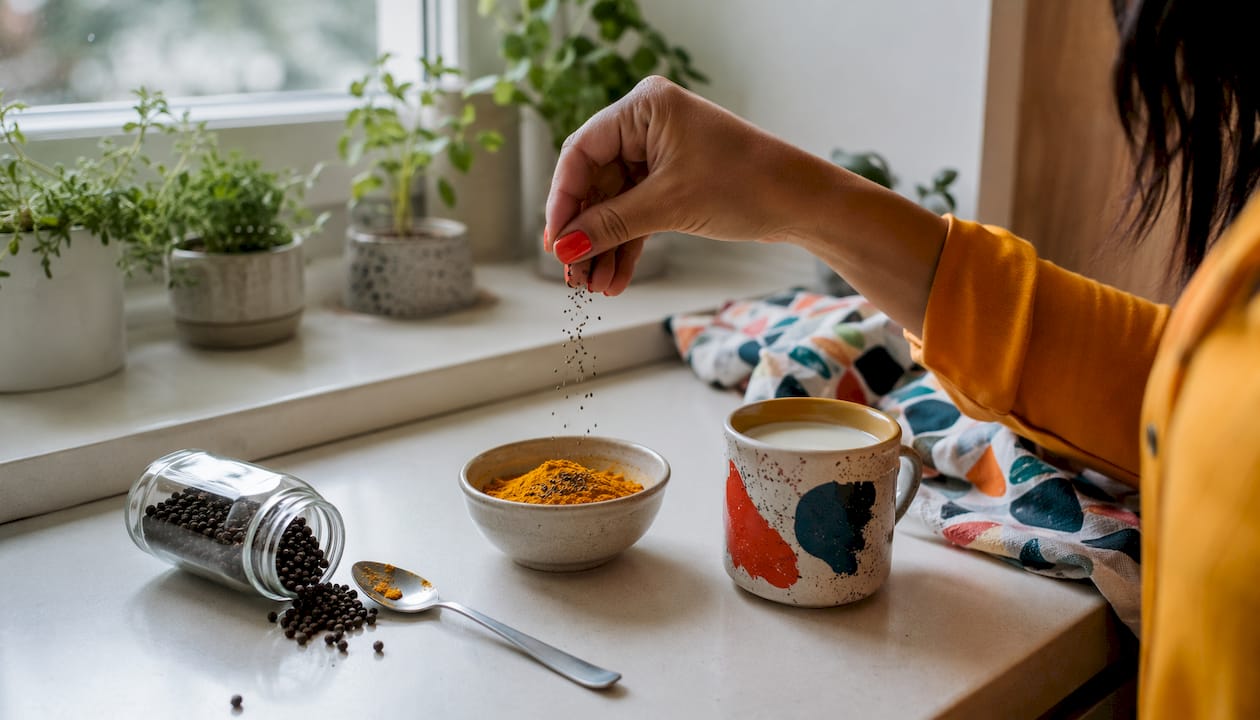
This is why the classic golden milk recipe works better than a dry capsule taken with water: the fat in the milk and the black pepper in the spice blend both serve a functional purpose.
Dosage guidance
Clinical trials have used a wide range, but the practical sweet spot for anti-inflammatory effects sits between 500–1,000 mg of curcuminoids daily for most adults. Doses above 1,200 mg per day increase the risk of side effects without proportionally greater benefit. Consistency matters more than the exact number: daily supplementation over several weeks produces measurably different outcomes than occasional use.
- Start with a moderate curcuminoid dose daily with a meal containing fat
- Add a piperine-containing supplement or choose a formulation that already includes it
- Give it at least four weeks before assessing effects on pain or stiffness
- Do not exceed 1,200 mg curcuminoids daily without medical supervision
Pro Tip: When buying a curcumin supplement, check whether the label specifies “curcuminoids” or just “turmeric root.” A product listing 500 mg of turmeric root powder contains roughly 10–25 mg of actual curcumin. A product listing 500 mg of curcuminoids (95% extract) is a fundamentally different dose.
The antioxidant role of curcumin is also relevant for recovery. For athletes specifically, antioxidants in recovery play a measurable role in reducing exercise-induced oxidative stress, and curcumin fits directly into that picture.
Safety, side effects, and drug interactions
Turmeric has a long history of culinary use, and at food-level doses it is safe for virtually everyone. Concentrated supplements are a different story, and the distinction is worth understanding before you commit to a high-dose regimen.
Common side effects
- Gastrointestinal discomfort: Bloating, nausea, and loose stools are the most frequently reported issues, particularly at higher doses.
- Itching: Some people experience skin itching, likely related to curcumin’s effects on bile production.
- Headache: Reported in a minority of users at high doses.
Side effects become noticeably more common above 1,200 mg of curcumin daily. Most clinical trials using doses in the 500–1,000 mg range report side effect profiles comparable to placebo.
Drug interactions to know
Caution: Curcumin has anticoagulant properties and may enhance the effects of blood-thinning medications like warfarin, aspirin, and clopidogrel. It may also potentiate blood sugar-lowering drugs, increasing hypoglycemia risk in people with diabetes. Anyone on these medications should consult a physician before starting curcumin supplementation.
- Anticoagulants (warfarin, aspirin, clopidogrel): Curcumin’s blood-thinning effect can compound these drugs’ action.
- Diabetes medications: Curcumin may lower blood glucose independently, raising hypoglycemia risk when combined with insulin or oral hypoglycemics.
- Chemotherapy drugs: Some evidence suggests curcumin may interfere with certain chemotherapy agents; oncology patients should always check with their care team.
Who should be cautious
People with gallbladder disease should avoid high-dose curcumin supplements, as curcumin stimulates bile production and can worsen gallstone-related symptoms. Pregnant individuals should limit turmeric to culinary amounts; high-dose supplementation has not been established as safe during pregnancy. Those scheduled for surgery should stop curcumin supplements at least two weeks beforehand given the anticoagulant effect.
For healthy adults without these conditions, turmeric supplementation at moderate doses is generally well-tolerated. The key is starting low, monitoring your response, and not treating “natural” as synonymous with “unlimited.”
What experts and current research say about turmeric in 2026
The scientific picture of turmeric’s anti-inflammatory effects has sharpened considerably over the past decade, but it has also gotten more nuanced. Researchers are no longer asking whether curcumin reduces inflammation. The current questions are about delivery, dose, and which patient populations benefit most.
This framing from Harvard Health reflects the current expert consensus: turmeric works, but it works best alongside established care, not instead of it.
Here is where the research stands and where it is heading:
-
Bioavailability engineering is the frontier. Nano-delivery systems, liposomal curcumin, and phospholipid complexes have shown dramatically improved absorption in early trials. Some nano-formulations achieve blood levels that were previously only possible with intravenous administration.
-
Human trial data is catching up to lab data. Most of the early mechanistic work was done in cell cultures and animal models. The past five years have produced a growing body of randomized controlled trials in humans, particularly for osteoarthritis, metabolic syndrome, and inflammatory bowel disease.
-
Standardization remains a problem. Supplement quality varies enormously. Products labeled as “turmeric” can contain anywhere from negligible to clinically relevant curcumin concentrations. Third-party testing (NSF, USP, or Informed Sport certification) is the most reliable way to verify what you are actually getting.
-
Combination approaches show promise. Researchers are exploring curcumin paired with other anti-inflammatory compounds, including boswellic acids and omega-3 fatty acids, with early results suggesting additive effects on inflammatory markers.
-
The NIH continues to fund curcumin research across multiple disease areas, reflecting institutional confidence in the compound’s potential. Active trials are investigating curcumin’s role in cancer prevention, cognitive decline, and post-surgical recovery.
-
Limitations are real. Curcumin’s rapid metabolism means that even with bioavailability enhancers, sustained high blood levels are difficult to achieve orally. Some researchers argue that the doses required to replicate animal-study effects may not be practically achievable through supplementation alone.
The honest summary: turmeric’s anti-inflammatory effects are real, mechanistically well-characterized, and supported by a growing body of human clinical data. The gap between the lab and the medicine cabinet is narrowing, but it has not closed. For most people, consistent moderate-dose supplementation with a bioavailability-enhanced formulation is the most evidence-aligned approach available right now.
Fitnesshealth curcumin supplements: quality you can actually verify
If you have read this far, you know that the supplement you choose matters as much as the decision to take one. Curcumin concentration, bioavailability enhancement, and third-party testing are not marketing details. They determine whether you get the effects the research describes or an expensive placebo.

Fitnesshealth sources supplements built around the science covered in this article: standardized curcuminoid extracts, piperine inclusion for absorption, and transparent labeling that tells you exactly what you are getting. The platform pairs each product with the kind of detailed educational content you just read, so you are not making decisions in the dark. Whether you are managing joint inflammation, supporting recovery after training, or addressing chronic low-grade inflammation, Fitnesshealth’s curcumin range is formulated to deliver what the clinical literature actually supports.
Browse the Fitnesshealth supplement range and find the curcumin formulation that fits your goals. Check the label, verify the curcuminoid content, and start with a dose your body can respond to.
Key Takeaways
Curcumin reduces inflammation by simultaneously blocking NF-κB, MAPK, and JAK-STAT signaling pathways while neutralizing reactive oxygen species that trigger and sustain inflammatory cascades.
| Point | Details |
|---|---|
| Core mechanism | Curcumin blocks NF-κB activation and suppresses COX-2, IL-6, and TNF-α across multiple pathways. |
| Bioavailability is critical | Pairing curcumin with piperine or healthy fats is required for meaningful absorption from oral supplements. |
| Safe dosage range | Clinical trials support 500–1,000 mg curcuminoids daily; side effects increase above 1,200 mg per day. |
| Drug interaction risk | Curcumin can amplify anticoagulant and blood sugar-lowering medications; consult a physician if relevant. |
| Fitnesshealth recommendation | Fitnesshealth offers standardized curcuminoid supplements with piperine, formulated to match clinical evidence. |