Most people reaching for ginger ale after an upset stomach are onto something real, even if they don’t know exactly why it works. Understanding how ginger supports digestive health goes far beyond folklore. Modern research, including a comprehensive 2026 review published in MDPI Nutrients, confirms that ginger’s bioactive compounds act on multiple points in your digestive system simultaneously. This article breaks down the science, explores ginger’s effect on your gut microbiome, and gives you practical ways to use it every day.
Table of Contents
- Key takeaways
- How ginger supports digestive health at the molecular level
- Ginger’s effect on your gut microbiome
- Practical ways to add ginger to your routine
- Ginger vs. other natural digestive aids
- My honest take after years of watching people use ginger
- Support your digestion with Fitnesshealth
- FAQ
Key takeaways
| Point | Details |
|---|---|
| Gingerols drive digestion | Gingerols and shogaols stimulate gastric motility, helping food move through your gut efficiently. |
| Microbiome impact is real | Short-term ginger intake measurably shifts gut microbiota composition, with ripple effects on immune and digestive function. |
| Form and timing matter | Fresh ginger delivers more gingerols; dried ginger concentrates shogaols. Each form has distinct digestive applications. |
| Ginger tea works after meals | Dietitians specifically recommend ginger tea post-dinner to ease bloating, gas, and fermentation discomfort. |
| Supplements beat culinary doses | Standardized ginger extracts offer consistent bioactive levels that everyday cooking amounts cannot reliably match. |
How ginger supports digestive health at the molecular level
The reason ginger works so well for digestion isn’t magic. It’s chemistry. Ginger contains two primary classes of bioactive compounds: gingerols (dominant in fresh ginger) and shogaols (concentrated in dried or heated ginger). Both compounds act on your gastrointestinal tract in distinct but complementary ways.
Gingerol benefits gastrointestinal motility, encouraging food to move through your digestive system at a healthy pace while simultaneously reducing nausea signals. This dual action is what makes ginger genuinely useful rather than just soothing. Slow gastric motility is a core driver of bloating, reflux, and that uncomfortable “brick in your stomach” feeling after meals. Ginger directly targets this mechanism.

According to a 2026 MDPI Nutrients review, ginger functions as a gastroprotective agent that improves digestion and stimulates intestinal motility through its multiple gastrointestinal actions. The review specifically highlights the interplay between gingerols and shogaols acting on different receptor pathways, which is why ginger’s benefits are broad rather than narrow.
Clinical data backs this up further. A clinical trial referenced in the MDPI review demonstrated that ginger produces clinically relevant antiemetic and prokinetic effects, reducing nausea, constipation, and abdominal pain. These aren’t minor symptom tweaks. They reflect real changes in how your gut contracts and moves food forward.
Here’s what ginger’s core digestive actions look like in practice:
- Speeds gastric emptying: Food exits the stomach faster, reducing bloating and acid reflux risk.
- Stimulates intestinal contractions: Coordinated gut movement prevents food stagnation and constipation.
- Protects the gastric lining: Gastroprotective properties reduce irritation from acid or inflammation.
- Blocks nausea signals: Acts on serotonin receptors in the gut to interrupt nausea pathways.
Pro Tip: If you’re using ginger specifically to speed up digestion after a heavy meal, fresh ginger steeped in hot water is your fastest route to relief. The gingerols absorb quickly and begin stimulating motility within 20 to 30 minutes.
Ginger’s effect on your gut microbiome
Your gut microbiome is not a passive bystander in digestion. It actively breaks down fiber, produces short-chain fatty acids, regulates immune responses, and influences how you absorb nutrients. What you put in your body shapes which microbial communities thrive, and ginger is no exception.
Research shows that short-term ginger intake changes gut microbiota composition and functional activity. The shift isn’t random. Ginger’s bioactives appear to interact selectively with microbial communities, favoring bacteria associated with healthy gut function. Understanding why gut microbiome matters for your overall health puts this finding in sharper context.
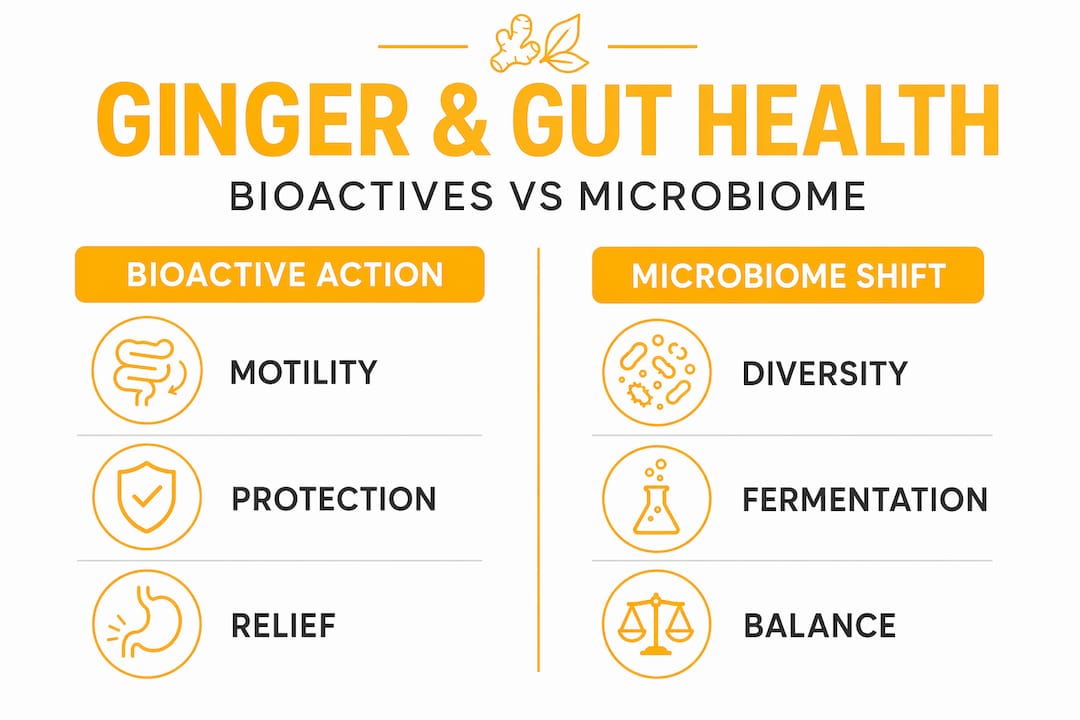
The connection between ginger’s bioactives and gut bacteria affecting weight is also worth noting. A microbiome that ferments food efficiently and maintains a healthy balance of bacterial species contributes directly to digestive comfort and metabolic health.
| Microbiome factor | What ginger may influence | Digestive outcome |
|---|---|---|
| Bacterial diversity | Shifts composition toward beneficial strains | Improved fermentation efficiency |
| Microbial activity | Modulates enzyme production in gut bacteria | Better nutrient breakdown |
| Immune signaling | Microbiota changes affect gut immune markers | Reduced gut inflammation |
| Short-chain fatty acid output | Indirectly through microbiome changes | Stronger intestinal lining integrity |
The honest caveat here is that microbiome research is still evolving. The direction and magnitude of ginger’s microbiome effects are not fully quantified yet. What is clear is that ginger consumption does not leave your microbial ecosystem unchanged, and the early signals point in a positive direction for digestive health.
Practical ways to add ginger to your routine
Knowing ginger works is one thing. Getting it into your daily life in a form that actually delivers results is another. The preparation method and timing both determine how much benefit you actually get.
Here’s a ranked approach to ginger consumption based on current evidence:
- Fresh ginger root steeped as tea: This is the top recommendation from dietitians for digestive support. Ginger tea after meals can soothe post-dinner symptoms including stomach pain and bloating. Slice 5 to 10 grams of fresh root, steep in hot water for 10 minutes, and drink while still warm.
- Grated fresh ginger in food: Add to soups, stir-fries, salad dressings, or smoothies. Fresh ginger contains higher gingerol concentrations compared to dried forms, making it the better choice when your goal is supporting digestion and post-meal relief.
- Dried or powdered ginger: Works well in baking, spice blends, and capsule supplements. Drying concentrates shogaols, which have distinct anti-inflammatory and motility effects. Organic ground ginger is a practical pantry option when fresh root isn’t available.
- Standardized ginger extract supplements: For therapeutic consistency, encapsulated standardized ginger extracts provide reliable bioactive levels that culinary use cannot guarantee. This matters if you’re managing a chronic digestive issue rather than just seeking general wellness.
- Ginger-based fermented drinks: Kombucha brewed with ginger combines prebiotic and probiotic effects, giving you microbial support alongside ginger’s direct motility actions.
Timing is genuinely important here. Taking ginger before meals primes your digestive system and may speed up gastric emptying before food even arrives. Taking it after meals addresses symptoms that have already started, such as gas and bloating from fermentation. Drinking ginger tea regularly has also been shown to reduce fermentation-related gas and ease constipation over time.
Pro Tip: Pair ginger with black pepper. Piperine in black pepper enhances the bioavailability of ginger’s active compounds, which means your body absorbs and uses more of what you consume. A pinch of black pepper in ginger tea or food adds real functional value.
One warning: more is not always better. High doses above 5 grams per day can cause heartburn, mouth irritation, or loose stools in some people. If you’re on blood thinners or pregnant, check with your healthcare provider before significantly increasing your ginger intake.
Ginger vs. other natural digestive aids
Ginger does not exist in isolation. Most people exploring natural digestive solutions will come across turmeric, peppermint, and probiotics. Each has its own strengths, and knowing where ginger stands relative to them helps you make smarter choices.
| Remedy | Primary mechanism | Best for | Limitations |
|---|---|---|---|
| Ginger | Motility stimulation, antiemetic, gastroprotective | Nausea, bloating, slow digestion, microbiome support | High doses may irritate; not ideal for acid reflux in all users |
| Turmeric | Anti-inflammatory via curcumin | Gut inflammation, IBS symptom reduction | Low bioavailability without black pepper or fat |
| Peppermint | Smooth muscle relaxation | IBS cramping, gas, abdominal spasms | Can worsen acid reflux; not suitable for GERD |
| Probiotics | Direct microbiome replenishment | Post-antibiotic recovery, immune support, microbiome diversity | Strain-specific benefits; effects vary by product |
What makes ginger stand out in this group is its multi-target profile. Ginger’s effects stem from multiple compounds acting simultaneously on motility, nausea pathways, and gut protection. Peppermint relaxes smooth muscle but doesn’t touch nausea. Turmeric reduces inflammation but doesn’t move food along. Probiotics support immune health and microbiome diversity but don’t directly speed up gastric emptying.
If you had to choose one natural digestive aid to start with, ginger covers the most ground. Combining it with a quality probiotic addresses both the motility and microbiome angles at the same time, which is arguably the most effective natural strategy for consistent digestive comfort.
My honest take after years of watching people use ginger
I’ve seen a lot of people approach ginger the same way they approach most supplements: they try it once, notice mild results, and give up before the real effects build. That’s a mistake, and here’s why.
Ginger’s value isn’t in a single dramatic dose. It’s in consistent, appropriately timed use. In my experience, the people who get the most from ginger for stomach health are the ones who make it a daily habit rather than a rescue remedy. A cup of ginger tea after dinner every night does more than a large dose taken randomly when symptoms appear.
What genuinely surprised me when I dug into the research was how different fresh and dried ginger actually are in terms of active compounds. Most people treat them as interchangeable. They’re not. Fresh ginger is your best tool for motility and nausea. Dried ginger leans more anti-inflammatory. Knowing which form to use and when changes the results you get.
I also think the microbiome angle is underappreciated. Most people think of ginger as a stomach soother. Fewer realize it’s quietly reshaping their gut bacterial communities with regular use, which has implications well beyond digestion, including immune function and possibly metabolic health. The gut health connection is bigger than most people give ginger credit for.
My one caution: don’t rely on ginger alone if you have a diagnosed digestive condition. Use it as part of a broader approach that includes dietary fiber, hydration, movement, and ideally a probiotic. Ginger is a powerful tool. It’s not a complete solution by itself.
— Rene
Support your digestion with Fitnesshealth

If ginger’s digestive benefits have you thinking about what else you can do to support your gut, Fitnesshealth has the products and programs to take that further. The Fitnesshealth supplement catalog includes ginger-containing formulas, targeted digestive support supplements, and wellness programs designed around real gut health science. You can also find organic ginger powder as a pure, high-quality ingredient for daily use. Whether you’re looking to address bloating, support your microbiome, or build a consistent gut wellness routine, Fitnesshealth offers standardized, research-backed options you can trust.
FAQ
What compounds in ginger help with digestion?
Ginger contains gingerols and shogaols, which stimulate intestinal motility, protect the gastric lining, and reduce nausea by acting on serotonin receptors in the gut.
When is the best time to drink ginger tea for digestion?
Dietitians recommend drinking ginger tea after meals, particularly after dinner, to ease bloating, stomach pain, and gas caused by post-meal fermentation.
Can ginger improve gut microbiome health?
Yes. Short-term ginger intake has been shown to shift gut microbiota composition and functional activity, with early evidence pointing toward beneficial microbial changes.
Is fresh or dried ginger better for digestive health?
Fresh ginger contains higher gingerol levels and works better for motility and nausea, while dried ginger concentrates shogaols that are more useful for inflammation-related digestive symptoms.
How much ginger per day is safe for digestion?
Most research supports up to 5 grams of fresh ginger daily for digestive benefits. Exceeding this can cause heartburn or irritation in sensitive individuals.