

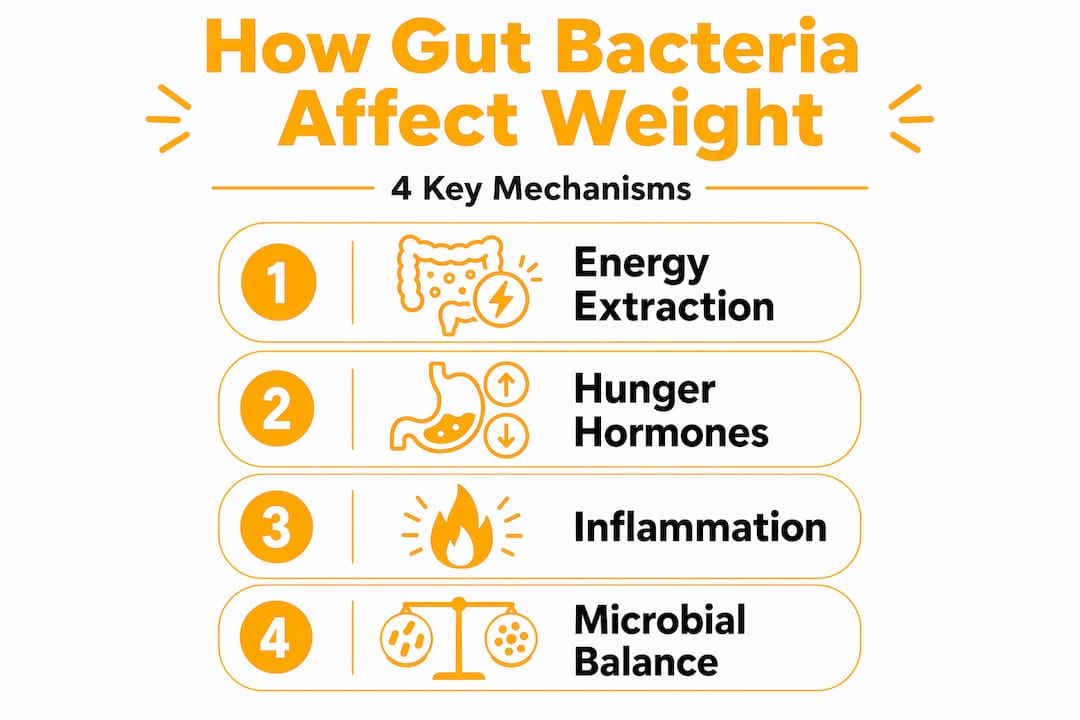
You count calories, you cut carbs, you hit the gym — and the scale still refuses to cooperate. The reason why gut bacteria affect weight might be the missing piece of that puzzle. Your gut is home to trillions of microorganisms, and they don’t just sit there passively. They extract energy from food, regulate hunger hormones, control inflammation, and influence how much fat your body stores. Understanding the gut microbiome weight loss connection fundamentally changes how you think about your body and what actually drives lasting results.
Table of Contents
- Key takeaways
- Why gut bacteria affect weight through energy extraction
- How gut bacteria control hunger hormones
- Inflammation, gut permeability, and fat storage
- Akkermansia muciniphila and the future of weight maintenance
- Practical strategies to support your gut microbiome
- My perspective on gut health and realistic expectations
- Support your gut health with Fitnesshealth
- FAQ
Key takeaways
| Point | Details |
|---|---|
| Gut bacteria extract calories | Different microbial profiles pull more or fewer calories from the same food, directly affecting weight. |
| Hormones are microbiome-driven | Gut microbes influence leptin, ghrelin, and GLP-1, shaping hunger and fullness signals. |
| Inflammation drives fat storage | Dysbiosis triggers low-grade inflammation that promotes insulin resistance and fat accumulation. |
| Akkermansia shows promise | Pasteurized Akkermansia muciniphila reduced weight regain by 62% in a 2026 clinical trial. |
| Lifestyle changes lead results | Fiber, exercise, sleep, and stress management have the strongest evidence for microbiome-driven weight control. |
Why gut bacteria affect weight through energy extraction
Most people assume two people eating the same meal absorb the same number of calories. They don’t. Your gut microbiome determines how efficiently your body extracts energy from food, and that efficiency varies dramatically based on which bacteria are dominant.
Some bacteria, particularly those from the Firmicutes group, are highly skilled at breaking down complex carbohydrates and dietary fiber into absorbable calories. When Firmicutes populations dominate over Bacteroidetes populations, your gut can pull significantly more energy from the same plate of food. Obesity-related dysbiosis shows reduced microbial diversity and altered Firmicutes-to-Bacteroidetes ratios, meaning this microbial imbalance is a consistent feature of excess weight, not a random coincidence.
Here’s where it gets more specific. Gut bacteria ferment fiber and resistant starches into compounds called short-chain fatty acids (SCFAs), including butyrate, propionate, and acetate. These metabolites do a lot of heavy lifting:
- Butyrate fuels the cells lining your gut and helps regulate fat oxidation
- Propionate signals the liver to reduce glucose production, supporting blood sugar stability
- Acetate travels into the bloodstream and plays a role in appetite signaling in the brain
- All three SCFAs influence how much energy is available versus stored as fat
The microbial balance also shifts in response to what you eat. High-fat diets inhibit beneficial bacteria, which in turn reduce fat metabolism efficiency and elevate metabolic disorder markers. The relationship runs both ways, creating a cycle that either works for or against your weight goals.
Pro Tip: Eating a wide variety of plant foods, particularly those high in prebiotic fiber, directly feeds the bacteria that produce beneficial SCFAs. Diversity on your plate drives diversity in your gut.
Specific bacterial ratios matter for weight outcomes too. Individuals with more Prevotella lost more body fat and showed better metabolic markers compared to those with higher Bacteroides populations, illustrating how bacteria and body weight are linked at a measurable, species-specific level.
How gut bacteria control hunger hormones
You’ve probably experienced a craving so strong it felt completely out of your control. There’s a biological explanation for that, and your gut microbiome is deeply involved. The gut-brain axis is a two-way communication network connecting your digestive system to your brain through nerve signals, immune pathways, and chemical messengers. Gut bacteria are active participants in that conversation.
SCFAs stimulate the release of gut hormones including GLP-1 (glucagon-like peptide-1) and PYY (peptide YY), both of which tell your brain that you’re full and slow down gastric emptying. When your microbiome is healthy and diverse, these signals fire reliably after meals. When it’s disrupted, that signaling becomes unreliable.
The hormonal consequences of dysbiosis, which is the term for an imbalanced microbial community, follow a predictable pattern:
- Reduced SCFA production blunts GLP-1 and PYY release, so fullness signals arrive late or weakly
- Ghrelin, the hunger hormone, remains elevated longer after meals, driving continued appetite despite adequate food intake
- Leptin signaling, which tells the brain about long-term fat stores, becomes impaired, leading to leptin resistance
- The result is that you feel hungry more often and feel less satisfied after eating, without any conscious failure of willpower
Gut microbiome composition changes during weight loss interventions strongly predict long-term success, emphasizing that microbial adaptation matters more than any static snapshot of your microbiome at a single point in time.
This hormonal disruption explains a frustrating real-world experience: two people can follow the exact same calorie-restricted diet and have completely different hunger levels and results. How gut bacteria impacts weight through hormone regulation is one of the most underappreciated reasons why dieting feels effortless for some and brutal for others.
Pro Tip: Fermented foods like Greek yogurt, kefir, kimchi, and sauerkraut introduce live bacteria that support microbial diversity and may help restore more consistent hunger hormone signaling over time.
Inflammation, gut permeability, and fat storage
If you want to understand the role of gut flora in obesity, you need to understand what happens when the gut barrier breaks down. Your intestinal wall is a single layer of cells separating your gut contents from your bloodstream. A healthy microbiome keeps that barrier tight. Dysbiosis weakens it.

When the gut lining becomes permeable, a condition often called “leaky gut,” bacterial fragments called lipopolysaccharides (LPS) enter the bloodstream. Your immune system treats LPS as an infection threat and launches an inflammatory response. The problem is that this happens at low levels chronically, not as an acute event, so it doesn’t feel like illness. It just quietly shifts your metabolism in the wrong direction.
| Effect | Mechanism | Weight impact |
|---|---|---|
| Chronic inflammation | LPS triggers immune activation | Impairs insulin sensitivity |
| Insulin resistance | Cells become less responsive to insulin | More glucose stored as fat |
| Reduced fat oxidation | Inflammation suppresses fat-burning pathways | Body preferentially stores fat |
| Increased appetite | Inflammatory signals disrupt leptin signaling | Overeating becomes more likely |
The Firmicutes-to-Bacteroidetes imbalance again plays a role here. Overgrowth of certain bacteria produces more LPS, while a reduction in bacteria like Bifidobacterium and Lactobacillus means less production of the compounds that strengthen the gut barrier.
The good news is that this is reversible. Restoring microbial diversity through diet and lifestyle can reduce gut permeability, lower circulating LPS, and improve insulin sensitivity, which directly supports your ability to lose fat and keep it off. Gut health and weight are not separate concerns. They’re the same problem viewed from different angles.
Akkermansia muciniphila and the future of weight maintenance
Weight loss is one challenge. Keeping it off is a completely different one. This is where emerging research on specific gut bacteria gets genuinely exciting. The question of whether gut health can influence weight over the long term now has some compelling answers.
Akkermansia muciniphila is a bacterium that lives in the mucus layer of your gut and plays a significant role in maintaining barrier integrity and metabolic function. In a landmark 2026 randomized controlled trial, pasteurized Akkermansia muciniphila delivered impressive results. A 62% reduction in weight regain was observed across 90 participants with overweight and obesity, with no serious adverse events reported.
The mechanisms behind this outcome are worth understanding:
- Pasteurization preserves the bacterium’s active outer membrane proteins, which modulate host metabolism without the unpredictability of live probiotic therapy
- The bacterium supports GLP-2 secretion, which directly strengthens the intestinal barrier
- Better gut barrier function reduces the LPS-driven inflammation cycle described above
- Improved metabolic flexibility means the body more readily shifts between burning carbohydrates and fats
That said, no single gut microbe acts as a cure-all for obesity. Human weight regulation depends on complex microbial communities working together, and the Akkermansia results reflect what happens when one crucial piece of a larger system is restored. The gut bacteria weight gain connection runs through networks of species, not individual heroes.
Pro Tip: Polyphenol-rich foods like dark berries, green tea, and pomegranate have been shown to increase Akkermansia populations naturally. You don’t need a supplement to start moving in this direction.
Practical strategies to support your gut microbiome
Knowing why gut bacteria affect weight is only useful if it changes what you actually do. The good news is that the microbiome responds quickly to lifestyle inputs, sometimes within days of dietary changes.
-
Prioritize fiber above almost everything else. Aim for 30 or more grams daily from vegetables, legumes, whole grains, and fruit. Each plant food feeds different bacterial species, so variety is as important as quantity. Think of fiber as food for your microbiome, not just roughage for digestion.
-
Eat adequate protein. Protein supports gut lining repair and muscle maintenance, both of which matter for metabolic health. It also promotes satiety, reducing the appetite dysregulation that dysbiosis creates. A minimum of 1.6 grams per kilogram of body weight is a solid starting target for active individuals.
-
Exercise regularly, including strength training. Physical activity increases microbial diversity independently of diet. Strength training supports metabolic health and specifically promotes the growth of bacteria associated with reduced inflammation and improved insulin sensitivity.
-
Prioritize sleep. Poor sleep alters microbial composition within days. Sleep and gut health share a two-way relationship, with each affecting the other. Seven to nine hours of quality sleep per night is not optional if you’re serious about gut microbiome weight loss outcomes.
-
Manage stress consistently. Chronic stress increases cortisol, which directly disrupts microbial balance and promotes gut permeability. Practices like structured breathing, daily walks, and limiting inflammatory media consumption genuinely matter for your gut, not just your mood.
On the topic of commercial gut microbiome tests: tests show microbial composition but should supplement, not replace, personalized diet and lifestyle strategies. They can provide directional guidance, but they are snapshots of a dynamic system. Don’t let a test result override the basics.
My perspective on gut health and realistic expectations
I’ve followed the gut microbiome research closely for years, and my honest take is this: the science is more exciting than the headlines suggest, but the application is simpler than the industry wants you to believe.
The biggest mistake I see is people jumping to probiotic supplements or expensive microbiome tests before they’ve nailed the fundamentals. Your gut bacteria respond to fiber, sleep, movement, and reduced stress. Those inputs are the mechanism. Supplements and tests are tools that can complement a solid foundation, not substitutes for one.
What genuinely surprises me in the recent data is how significant the weight maintenance angle is. Losing weight is hard. Keeping it off has always been where most approaches fall apart. The microbiome changes during weight loss now appear to be one of the strongest predictors of whether someone sustains results. That’s not a minor finding. That’s a fundamental reframing of why so many people regain weight despite their best efforts.
My advice is to stop looking for the single bacterial strain or supplement that solves everything. Focus on building a diverse, fiber-fed, well-rested microbiome through habits you can sustain. The bacteria will follow. The weight outcomes will too.
— Rene
Support your gut health with Fitnesshealth

Understanding the gut bacteria weight gain connection is the first step. Building the daily habits that shift your microbiome in the right direction is where real progress happens. Fitnesshealth offers a full range of programs and supplements designed to support gut health, metabolic function, and weight management from multiple angles. Whether you’re looking for targeted gut health support, structured weight loss guidance, or micronutrients that help your body function at its best, you’ll find evidence-backed resources built for people who take their health seriously. Explore the gut health blog and weight loss resources to build your personalized approach.
FAQ
Why do gut bacteria affect weight differently in different people?
Each person’s microbiome is unique, shaped by genetics, diet history, medications, and environment. These differences determine how efficiently calories are extracted from food and how well hunger hormones are regulated, which explains why identical diets produce different weight outcomes.
Can improving gut health actually help with weight loss?
Yes, particularly for weight maintenance. Diverse gut microbiomes correlate with better long-term weight loss outcomes, and microbial adaptation during a weight loss program predicts whether results are sustained.
What foods help gut bacteria support weight management?
Fiber-rich plant foods including vegetables, legumes, whole grains, and fermented foods like yogurt and kimchi provide the most evidence-backed support. Diversity of plant intake matters as much as total fiber quantity.
Is a gut microbiome test worth taking for weight loss?
Gut microbiome tests offer useful directional information, but they lack definitive evidence that they can reliably predict or guarantee weight loss outcomes. Use them as supplementary feedback alongside established diet and lifestyle strategies.
What is Akkermansia muciniphila and why does it matter for weight?
Akkermansia muciniphila is a gut bacterium that strengthens the intestinal barrier and supports metabolic health. A 2026 trial showed it reduced weight regain by 62% in overweight participants, making it one of the most promising microbes studied for weight maintenance.










