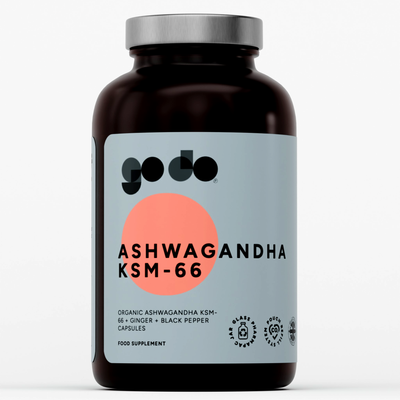
KSM-66 is a clinically studied, full-spectrum root-only ashwagandha extract produced by Ixoreal Biomed, standardized for withanolides using a green-chemistry process. If you’re looking for a well-researched adaptogen for stress relief, sleep support, or cognitive clarity, it’s one of the most credible options on the market. The NIH Office of Dietary Supplements summarized seven clinical trials showing reduced stress and anxiety, with the strongest effects at moderate daily doses over several weeks. You can purchase authentic KSM-66 directly from Fitnesshealth, or check with your clinician first if you’re on thyroid medication, immunosuppressants, or are pregnant.
Quick TL;DR:
- Buy if: You want a root-only, clinically backed adaptogen for stress, cortisol reduction, or sleep support at 300–600 mg/day.
- Caution if: You’re pregnant, nursing, managing an autoimmune condition, or taking thyroid or immunosuppressant medications.
- Verify before buying: Look for “KSM-66” on the label, a standardized withanolide percentage, and a Certificate of Analysis (COA) with batch tracking.
Table of Contents
- What is KSM-66 and how does it differ from generic ashwagandha?
- What are the main KSM-66 benefits backed by clinical research?
- Why KSM-66 is formulated the way it is — and why it matters
- How to take KSM-66: dosage, timing, and a simple routine
- Is KSM-66 safe? Side effects, contraindications, and drug interactions
- How to choose a KSM-66 supplement: what the label should tell you
- Where to buy authentic KSM-66 in the U.S.
- Key Takeaways
- The evidence is solid — but the label gap is where buyers get burned
- Get authentic KSM-66 from Fitnesshealth
- Authoritative sources and further reading
What is KSM-66 and how does it differ from generic ashwagandha?
KSM-66 is a branded ashwagandha extract made exclusively from the root of Withania somnifera, produced by Ixoreal Biomed. The “full-spectrum” designation means the extract preserves the natural ratio of the root’s active compounds rather than isolating a single constituent. That matters because ashwagandha’s effects likely come from a combination of withanolides, alkaloids, and other root constituents working together.
Generic ashwagandha supplements often use root-plus-leaf combinations or unspecified plant parts. Leaf extracts contain higher concentrations of certain alkaloids that aren’t present in the root at the same levels, which raises questions about both the safety profile and the clinical relevance. Most of the published human trials used root-only extracts, so a root-only product is more directly comparable to the research.
What sets KSM-66 apart on a label:
- “KSM-66” explicitly named as the ashwagandha source
- “Root extract” or “root-only” wording, not “root and leaf”
- Standardized withanolide content listed as a percentage
- Green-chemistry extraction (water and milk process, no chemical solvents)
- GMP-certified manufacturing and third-party testing marks
The full-spectrum root profile is also why practitioners tend to prefer branded extracts over commodity ashwagandha powder. You’re getting a consistent, traceable ingredient rather than a variable raw material.
What are the main KSM-66 benefits backed by clinical research?
The strongest evidence sits in three areas: stress and cortisol reduction, sleep quality, and mood. Cognitive and athletic performance benefits have clinical support too, but the effect sizes are less consistent across trials.
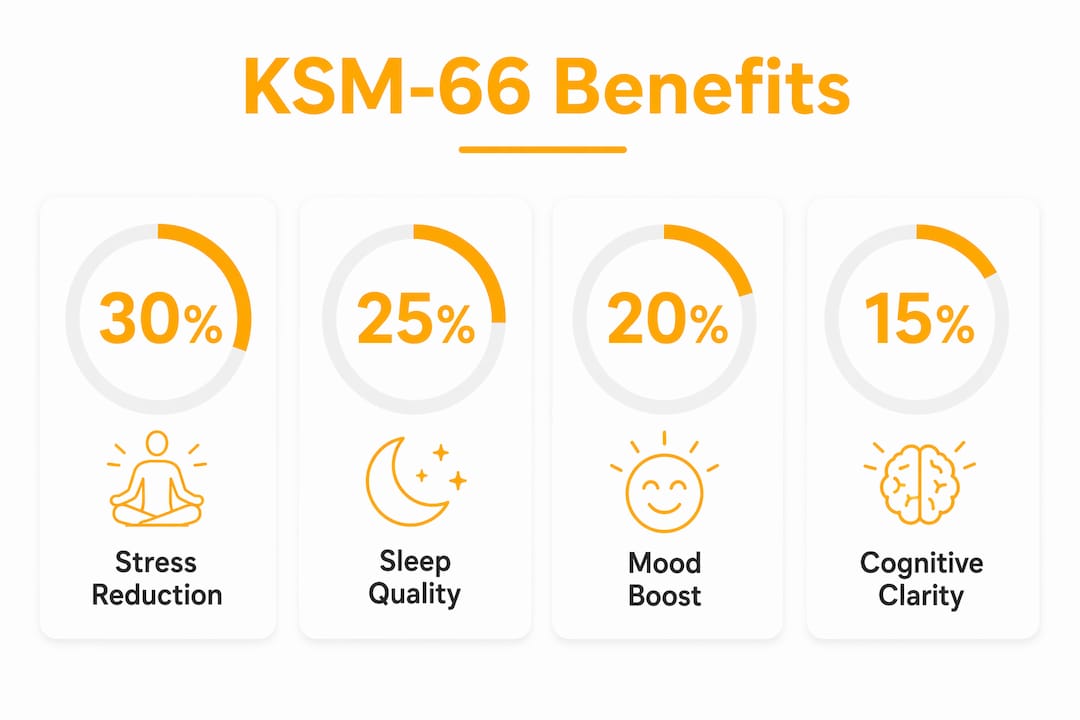
Stress and cortisol reduction is where the data is most reliable. The NIH review of seven trials found meaningful reductions in perceived stress and serum cortisol, particularly at 500–600 mg/day over 6–8 weeks. Most trials used validated scales like the Perceived Stress Scale (PSS) and the Hamilton Anxiety Rating Scale.

Sleep quality is a secondary but well-supported benefit. Several double-blind trials reported improved sleep onset, total sleep time, and subjective sleep quality scores, typically with evening dosing at moderate daily doses.
Mood and cognitive clarity show positive signals in trials, including improvements in memory, reaction time, and executive function. These outcomes are real but more variable across individuals. If cognitive support is your primary goal, stress reduction is likely the mechanism driving it.
Athletic recovery is an emerging area. Some trials report reduced exercise-induced muscle damage markers and improved strength outcomes. If you’re building a recovery-focused supplement stack, KSM-66 fits naturally alongside antioxidants and protein.
Key dosing anchors from the evidence:
- 300 mg/day: A reasonable starting point; some benefit in trials, especially for sleep.
- 600 mg/day: The dose where effects are most robust across outcomes, per IngredientMD’s evidence synthesis.
- Timeline: Noticeable changes often appear at 2–4 weeks; fuller benefit by 6–8 weeks.
Why KSM-66 is formulated the way it is — and why it matters
The extraction method is the detail most buyers overlook, and it’s actually the most important quality signal. KSM-66 uses a green-chemistry process based on water and milk, which mirrors traditional Ayurvedic preparation methods. This approach preserves both water-soluble and fat-soluble root constituents without introducing solvent residues that chemical extraction can leave behind. The result is a full-spectrum profile that closely matches what was used in clinical trials.
The clinical record behind KSM-66 is substantial. According to the manufacturer, KSM-66 has been evaluated in 31 clinical studies, including 22 published double-blind randomized controlled trials measuring serum cortisol, validated anxiety scales, sleep quality indices, and hormonal markers. A long-term safety study registered on ClinicalTrials.gov (NCT06244147) is tracking liver enzymes, thyroid parameters, and cortisol over 12 months at 300 mg twice daily. That kind of prospective safety monitoring is rare for botanical ingredients.
Key credibility signals to look for:
| Signal | What it tells you |
|---|---|
| Root-only extract | Matches the clinical trial material; avoids leaf alkaloid concerns |
| Standardized withanolide % | Confirms potency consistency batch to batch |
| GMP-certified facility | Pharmaceutical-grade manufacturing controls |
| Third-party testing (e.g., Intertek) | Independent verification of label claims |
| COA with batch ID | Traceability from production to your bottle |
Pro Tip: When reviewing a Certificate of Analysis, check four things: the declared withanolide percentage matches the label, heavy metals (lead, arsenic, cadmium, mercury) are below USP limits, microbial counts are within spec, and solvent residues are absent or below detection. A COA without a batch number is not traceable — skip it.
How to take KSM-66: dosage, timing, and a simple routine
The clinical sweet spot is a moderate daily dose often divided into one or two servings, with twice-daily dosing showing robust effects. IngredientMD’s meta-analysis review identifies 600 mg as the dose where effects were most robust across outcomes.

Timing your dose to your goal makes a real difference. Morning dosing tends to support energy and performance; evening dosing is better for sleep and calming effects. Taking it with food reduces the chance of stomach upset, which is the most common mild side effect.
A practical starting routine:
- Week 1–2: Start at 300 mg/day with a meal. Morning if your goal is energy or focus; evening if sleep is the priority.
- Week 3 onward: If well tolerated, increase to 600 mg/day split as 300 mg morning and 300 mg evening, both with food.
- Weeks 2–4: Expect subtle shifts in stress response and sleep quality. Don’t judge efficacy yet.
- Weeks 6–8: This is the realistic window for fuller effects. Reassess against your baseline.
- Every 8–12 weeks: Consider a 1–2 week break as a general practice for herbal adaptogens, then resume if benefits are ongoing.
If you’re building a broader supplement stack, KSM-66 pairs well with magnesium for sleep or with B vitamins for energy support. No known negative interactions with those combinations, but always confirm with your clinician if you’re adding multiple supplements.
Is KSM-66 safe? Side effects, contraindications, and drug interactions
KSM-66 is generally well tolerated in clinical trials. The most common adverse events are mild GI upset and occasional drowsiness, both of which tend to resolve with food co-administration or dose timing adjustments. The manufacturer reports no serious side effects across products containing KSM-66, which is used in over 2,000 products worldwide.
That said, rare but serious signals exist. Examine.com’s clinical review notes case reports of liver toxicity and other rare adverse events. These are uncommon, but they’re real, and they’re why monitoring matters for long-term use.
Who should avoid it or proceed with caution:
- Pregnant or breastfeeding: Avoid. Multiple clinical and review sources advise against use due to potential uterine stimulant effects and insufficient safety data in this population.
- Autoimmune conditions: Ashwagandha may stimulate immune activity, which could worsen conditions like lupus, rheumatoid arthritis, or multiple sclerosis.
- Thyroid medication users: Ashwagandha can affect thyroid hormone levels. If you’re on levothyroxine or similar medications, consult your clinician before starting.
- Immunosuppressant drugs: Potential interaction due to immune-modulating effects.
- Sedatives or CNS depressants: Additive drowsiness risk; timing and dose need clinician oversight.
- Planned surgery: Stop at least two weeks before any scheduled procedure due to potential effects on blood pressure and CNS sedation.
For lifestyle approaches to reduce cortisol naturally alongside supplementation, stress management and sleep hygiene remain foundational.
How to choose a KSM-66 supplement: what the label should tell you
Not every product labeled “ashwagandha” delivers what clinical trials used. Here’s what to check before buying:
Green flags on the label:
- “KSM-66” named explicitly as the ashwagandha source
- “Root extract” or “root-only” stated clearly
- Withanolide percentage listed (typically 5% or higher for standardized extracts)
- Serving size in mg (300 mg or 600 mg per serving)
- Servings per container clearly stated so you can calculate price-per-serving
- GMP certification and third-party testing marks (Intertek, NSF, or equivalent)
- COA accessible via batch ID on the retailer or manufacturer site
Red flags:
- “Ashwagandha extract” with no brand name specified
- Proprietary blends that list ashwagandha without disclosing the mg amount
- “Root and leaf” extract when you want root-only
- No withanolide standardization listed
- No third-party testing or COA available
On price: authentic KSM-66 at 300–600 mg per serving typically costs more than commodity ashwagandha powder. That premium reflects the clinical-grade standardization and manufacturing controls. Calculate price-per-serving rather than price-per-bottle to compare value accurately across different container sizes.
Verification steps: request the COA directly from the retailer, cross-reference the batch ID on the manufacturer’s site, and look for independent test results that confirm the withanolide percentage matches the label claim. Your daily wellness supplement checklist is a useful reference when adding KSM-66 to an existing regimen.
Where to buy authentic KSM-66 in the U.S.
Fitnesshealth carries authentic KSM-66 with full supplement facts transparency, including serving size, mg per serving, and standardization details. COA access and third-party testing information are available, which is the verification standard you should expect from any reputable retailer.
When comparing options, calculate price-per-serving at your target dose. At 600 mg/day, a 60-serving bottle at 300 mg per capsule lasts 30 days. At 300 mg/day, it lasts 60 days. Knowing your intended dose before buying prevents the common mistake of purchasing a bottle that runs out twice as fast as expected.
Practical buying checklist for any retailer:
- Supplement Facts panel visible before purchase (not just on the physical bottle)
- COA accessible by batch ID
- Clear return policy stated
- Shipping timeline and cost transparent at checkout
Safety reminder: If you’re pregnant, nursing, on thyroid medication, immunosuppressants, or planning surgery, consult your clinician before purchasing. KSM-66 is a potent botanical ingredient and clinician oversight is appropriate for those in higher-risk categories.
Key Takeaways
KSM-66 is the most clinically studied full-spectrum root-only ashwagandha extract, with the strongest evidence for stress reduction and cortisol lowering at 300–600 mg/day over 6–8 weeks.
| Point | Details |
|---|---|
| Effective dose range | 300–600 mg/day; 600 mg shows the most robust effects across clinical trials. |
| Timeline for results | Noticeable changes often appear at 2–4 weeks; fuller benefit by 6–8 weeks. |
| Key safety flags | Avoid in pregnancy; use caution with thyroid meds, immunosuppressants, and autoimmune conditions. |
| Authenticity check | Verify the COA for withanolide %, heavy metals, and batch ID traceability before buying. |
| Recommended purchase | Fitnesshealth carries authentic KSM-66 with supplement facts and COA access for U.S. buyers. |
The evidence is solid — but the label gap is where buyers get burned
Most of the skepticism around ashwagandha supplements isn’t about the herb itself. It’s about the gap between what the clinical trials used and what ends up in a random capsule on a retailer shelf. That gap is real, and it’s wider than most people realize.
The trials that produced the stress, cortisol, and sleep data used root-only, standardized extracts with traceable withanolide content. A product labeled “ashwagandha 500 mg” with no brand name, no standardization, and no COA is not the same ingredient. It may do something, but you have no way to know what or how much.
This is why the KSM-66 brand designation actually matters, not as marketing, but as a quality signal. It tells you the extraction method, the plant part, and the clinical trial basis. That’s more information than most supplement labels give you. The green-chemistry process is also worth taking seriously: solvent-free extraction isn’t just a marketing claim, it’s a meaningful difference in what ends up in the final product.
One thing that gets underemphasized: the 6–8 week commitment. People try ashwagandha for two weeks, feel nothing dramatic, and stop. The trials that showed the strongest cortisol reductions ran for 8 weeks. Stress physiology doesn’t reset in a fortnight. If you’re going to spend money on a clinical-grade extract, give it the timeline the research actually used.
Get authentic KSM-66 from Fitnesshealth

Fitnesshealth stocks authentic KSM-66 ashwagandha, root-only extract, standardized for withanolides, with supplement facts clearly listed and COA access available. You’re getting the same ingredient profile that clinical trials used, not a commodity powder with a vague label. Whether you’re targeting stress relief, better sleep, or adding an adaptogen to a sports supplement protocol, the product page gives you the serving size, mg per serving, and third-party testing details you need to verify before buying.
Before purchasing, confirm you’re not in a contraindicated category: pregnant, nursing, on thyroid medication, immunosuppressants, or scheduled for surgery. For everyone else, shop KSM-66 at Fitnesshealth and check the COA by batch ID once your order arrives.
Authoritative sources and further reading
| Source | What it’s useful for |
|---|---|
| NIH Office of Dietary Supplements — Ashwagandha Fact Sheet | Clinical trial summaries, dosing evidence, safety overview for health professionals |
| KSM-66 Manufacturer Overview (ksm66ashwagandhaa.com) | Extraction method, clinical trial count, certification details, and supply chain transparency |
| ClinicalTrials.gov — NCT06244147 | Long-term (12-month) safety and efficacy trial tracking liver, thyroid, and hormonal endpoints |
| IngredientMD — Ashwagandha (KSM-66) Evidence Analysis | Meta-analysis grade dosing guidance; identifies 600 mg/day as the primary effective dose |
| Examine.com — Ashwagandha | Broad clinical dosing summary, rare adverse event documentation, drug interaction notes |
| PubMed — Chandrasekhar et al. | Foundational double-blind RCT on KSM-66 for stress and cortisol reduction |
| PubMed — Recent ashwagandha meta-analysis | Updated systematic review of ashwagandha clinical outcomes |