Herbal supplements are defined as plant-based products used to support health through bioactive compounds found in roots, leaves, seeds, and bark. Approximately 80% of the global population relies on plant-based medicines for primary healthcare. That scale reflects centuries of use now backed by growing clinical research. This herbal supplement benefits guide covers the evidence behind key herbs, how to choose quality products, safe usage practices, and the risks you need to know before starting any regimen. Herbal remedies benefits range from stress relief and joint comfort to immune and digestive support, but they work best alongside, not instead of, conventional care.
What are the evidence-backed benefits of herbal supplements?
The strongest clinical evidence for herbal remedies benefits centers on five well-studied plants: ashwagandha, curcumin, ginger, garlic, and valerian. Each targets a specific health function, and the evidence behind each varies in strength.
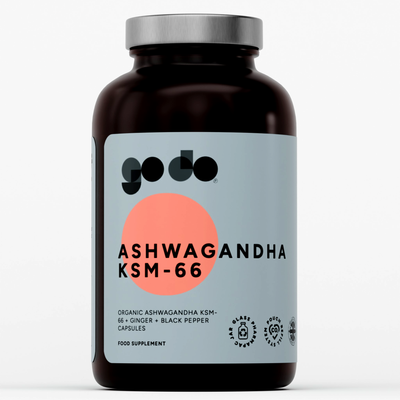
- Ashwagandha (stress and sleep): Daily doses of 240–600 mg of standardized ashwagandha root extract reduce perceived stress and improve sleep quality. Multiple randomized controlled trials as of 2026 support these findings, making ashwagandha one of the most evidence-backed adaptogens available. For people managing chronic stress, this herb is a practical starting point. You can also read about ashwagandha for mood support and how it compares to other evidence-backed stress herbs.
- Curcumin (joint comfort and inflammation): Standardized curcumin extracts can moderately reduce knee pain at a level comparable to low-dose NSAIDs, with fewer gastrointestinal side effects. Meta-analyses of randomized controlled trials support this finding. Curcumin is a strong option for people seeking natural joint support, particularly athletes and active adults. Fitnesshealth covers this in depth in its joint support supplement guide.
- Ginger (nausea relief): Ginger root extract has strong clinical support for reducing nausea from motion sickness, pregnancy, and chemotherapy. The evidence here is consistent across multiple trial designs.
- Garlic (cardiovascular health): Aged garlic extract and standardized allicin supplements show moderate evidence for modest reductions in blood pressure and LDL cholesterol. The effect size is meaningful for people managing borderline cardiovascular risk.
- Valerian (sleep quality): Valerian root shows moderate evidence for improving sleep onset and quality, particularly in people with mild insomnia. It works best when taken consistently over several weeks rather than as a one-off dose.
Evidence strength matters. Ashwagandha and ginger sit at the strong end. Garlic and valerian fall in the moderate range. Many other herbs carry only emerging evidence, meaning early studies look promising but larger trials are still needed.
Pro Tip: Match your herb to a specific, measurable goal. “I want to fall asleep faster” is a better target than “I want to feel healthier.” Specific goals make it easier to track whether a supplement is actually working for you.
How do you choose a high-quality herbal supplement?
Quality varies widely across the herbal supplement market. Standardized extracts with third-party verification are the clearest signal of a trustworthy product. Here is what to check before you buy.
- Look for standardized extracts. A standardized extract guarantees a consistent percentage of the active compound in every dose. “Ashwagandha 5% withanolides” tells you exactly what you are getting. A raw powder label tells you almost nothing.
- Verify third-party certification. Certifications from USP, NSF International, or ConsumerLab confirm that the product contains what the label claims and is free from common contaminants. These are independent bodies with no financial stake in the product.
- Read the full label. Check for the plant species (Latin name), the plant part used (root, leaf, seed), the dose per serving, and the country of origin. Missing any of these is a red flag.
- Avoid vague marketing claims. Phrases like “supports total body wellness” or “ancient formula” are not evidence. The FDA does not require herbal supplements to prove effectiveness before they reach store shelves, so marketing language is not a substitute for clinical data.
- Check for contamination risks. Some herbal products have tested positive for heavy metals, pesticides, or undisclosed pharmaceutical ingredients. Third-party certification is your best protection against this.
Natural origin does not guarantee safety. Herbal compounds are biologically active, which is exactly why they work. That same activity creates real risks if you choose the wrong product or dose.
Pro Tip: Search for your supplement on the ConsumerLab website before buying. It publishes independent test results on hundreds of products and flags those that fail quality standards.
How to use herbal supplements effectively and safely
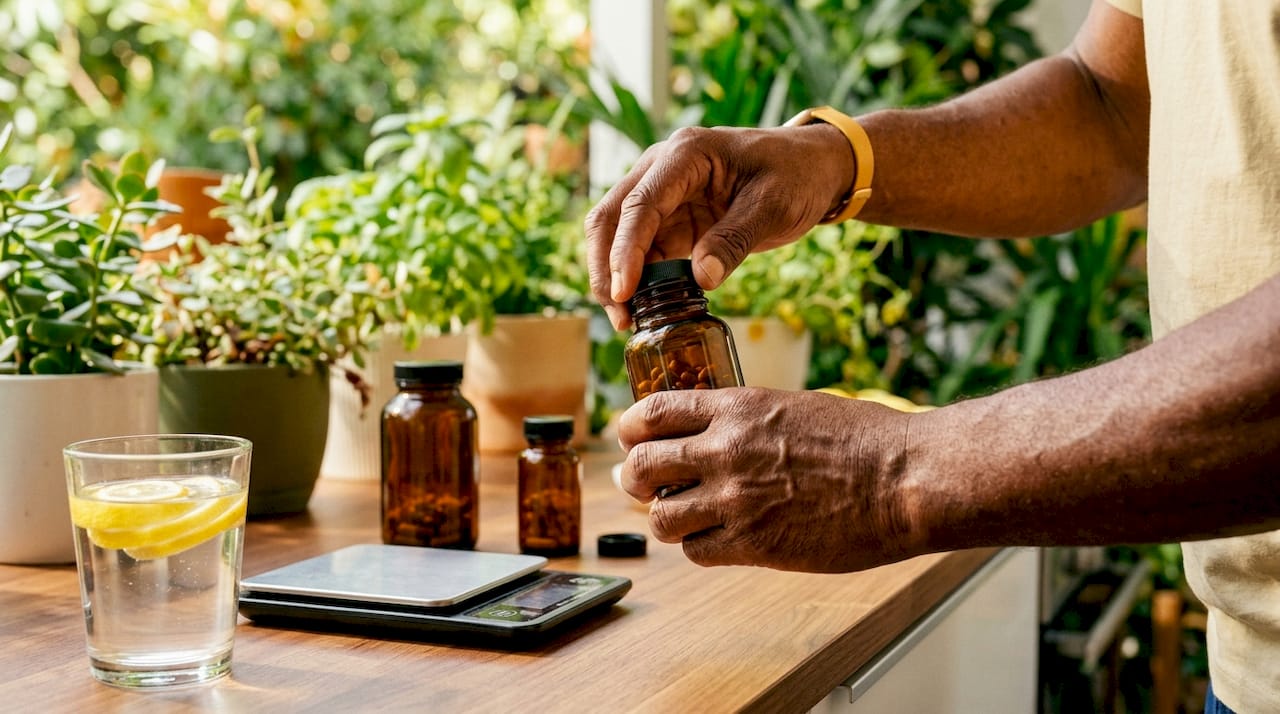
Dosing and timing determine whether you get results or waste money. These are the core principles for getting the most from your natural supplement guide.
- Start with the clinically studied dose range. Ashwagandha: 240–600 mg per day. Curcumin: 500–1,000 mg per day. These ranges come from the trials that produced positive results. Going higher does not automatically mean better outcomes.
- Start low and increase gradually. Begin at the lower end of the dose range for the first two weeks. This lets you monitor your response and catch any early side effects before they become a problem.
- Give it 4–8 weeks before judging results. Most herbal supplements work through gradual physiological changes, not overnight effects. Cutting a trial short gives you no useful information.
- Choose bio-enhanced formulations when available. Bioavailability enhancements like phytosomes dramatically improve how much of the active compound your body actually absorbs. Standard curcumin powder, for example, has very poor absorption without a delivery system like piperine or a phytosome complex.
- Disclose everything to your healthcare provider. Herbal supplements can interact dangerously with medications. St. John’s wort, for instance, reduces the effectiveness of SSRIs, birth control pills, and blood thinners. Your doctor cannot protect you from interactions they do not know about.
- Build on a lifestyle foundation. Supplements work best when diet, sleep, and exercise are already in place. An herb for stress relief will underperform if you are sleeping four hours a night and skipping meals. Fitnesshealth’s daily wellness checklist is a practical starting point for building that foundation.
What are the safety risks and common misconceptions?
The biggest misconception about herbal supplements is that “natural” means safe. The FDA does not test herbal supplements for safety or efficacy before they reach the market. Unlike prescription drugs, herbal products are regulated as foods. That means the burden of quality control falls almost entirely on the manufacturer and the consumer.
“Natural origin does not guarantee safety. Herbal supplements can have potent biological effects and real risks, particularly when combined with prescription medications or used by vulnerable populations.” — Mayo Clinic
Common misconceptions worth correcting:
- “It’s natural, so it can’t hurt me.” Hemlock is natural. Dosage and formulation determine safety, not origin.
- “If it’s sold in a store, it’s been approved.” 30% of prescription drugs are derived from plant compounds, which shows how potent plant bioactivity can be. That potency cuts both ways.
- “More is better.” Higher doses of herbs like kava or comfrey carry documented risks of liver damage.
Certain groups need extra caution. Pregnant and breastfeeding people, older adults, anyone with autoimmune conditions, and people on multiple medications face higher interaction and side effect risks. A healthcare provider should always be part of the conversation before starting any new supplement. Fitnesshealth’s guide on herbal immune support addresses specific herbs that require extra care in immunocompromised individuals.
Key Takeaways
Herbal supplements deliver real, evidence-backed benefits for stress, joint comfort, sleep, and immunity when you choose standardized extracts, verify third-party certification, and use clinically studied doses.
| Point | Details |
|---|---|
| Match herb to goal | Choose herbs with strong evidence for your specific health target, not general wellness claims. |
| Prioritize standardized extracts | Standardized extracts guarantee consistent active compound levels that raw powders cannot. |
| Verify third-party certification | USP, NSF, or ConsumerLab certification confirms purity and accurate labeling. |
| Use clinically studied doses | Ashwagandha 240–600 mg/day and curcumin 500–1,000 mg/day are the evidence-backed ranges. |
| Disclose use to your provider | Drug-herb interactions are real and potentially dangerous; your healthcare provider needs the full picture. |
Why I think most people use herbal supplements wrong
Most people treat herbal supplements like a shortcut. They pick something off a shelf because a label says “stress support,” take it for two weeks, feel nothing, and conclude that herbs do not work. That is not a fair test, and it is not how these compounds function.
The herbs with the strongest evidence, ashwagandha, curcumin, and ginger, work through cumulative physiological changes. You need consistent dosing, a quality product, and enough time to see a real signal. I have seen people get genuine results from ashwagandha for stress and curcumin for joint discomfort, but only when they used standardized extracts at the right dose for at least six weeks.
The other mistake I see constantly is treating supplements as a substitute for the basics. Sleep, nutrition, and movement are not optional add-ons. They are the foundation. A supplement can amplify a good foundation. It cannot replace a missing one.
My honest advice: pick one herb, match it to one specific goal, use a certified product at the studied dose, and track your results for eight weeks. That is the only way to know if it is working for you.
— Rene
Wellness resources and supplement guidance at Fitnesshealth
Fitnesshealth publishes research-backed guides on the herbs and supplements most relevant to active, health-conscious people. Whether you are looking at curcumin for joint comfort, ashwagandha for stress, or herbs that support immune function, the site covers each topic with clinical context and practical product guidance.

The Fitnesshealth natural pain relief supplement guide is a strong next read if joint or muscle discomfort is your primary goal. For a broader view of what to take and when, the site’s wellness supplement resources walk you through building a daily regimen that actually fits your life. Quality information and quality products in one place make the decision process significantly easier.
FAQ
What are the main benefits of herbal supplements?
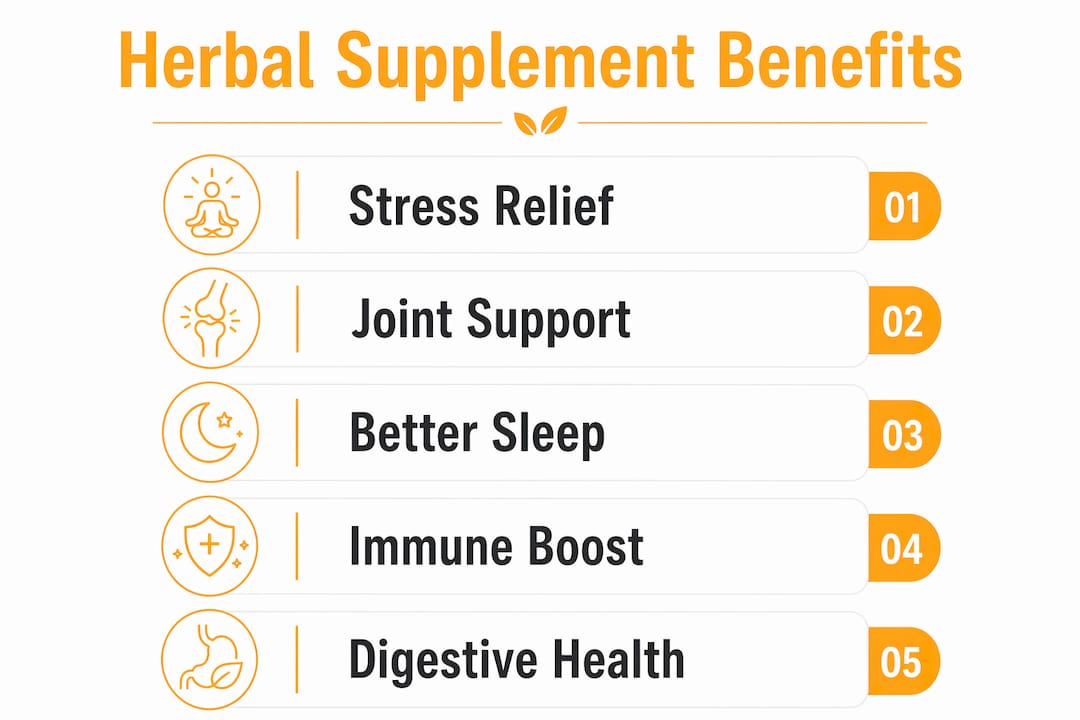
Herbal supplements support stress reduction, joint comfort, sleep quality, immune function, and digestive health through plant-based bioactive compounds. The strongest clinical evidence covers ashwagandha for stress, curcumin for joint comfort, and ginger for nausea relief.
How do herbal supplements work in the body?
Herbal supplements deliver concentrated plant compounds that interact with biological pathways, such as reducing inflammatory markers or modulating cortisol levels. Bioavailability varies widely, so choosing enhanced formulations like phytosomes significantly improves how much your body absorbs.
Are herbal supplements safe to take every day?
Most well-studied herbs are safe for daily use at clinically studied doses, but the FDA does not pre-approve herbal supplements for safety or efficacy. Always disclose supplement use to your healthcare provider, especially if you take prescription medications.
How long does it take for herbal supplements to work?
Most herbal supplements require 4–8 weeks of consistent use before you can accurately assess their effect. Herbs like ashwagandha and valerian work through gradual physiological changes, not immediate responses.
What certifications should I look for on herbal supplement labels?
Look for USP, NSF International, or ConsumerLab certification. These independent bodies verify that the product contains what the label claims and is free from common contaminants like heavy metals and pesticides.