

Knees aching after heavy squats. Shoulders grinding through overhead work. Hips locking up mid-run. These are real problems for real athletes, and joint support supplements for sports have become one of the fastest-growing categories in fitness nutrition for good reason. But the supplement aisle is full of products making bold claims with weak evidence behind them. This guide cuts through that noise. You will get a clear framework for evaluating what works, detailed breakdowns of the ingredients with actual science behind them, and a comparison table to help you make a decision that fits your training life.
Table of Contents
- Key takeaways
- 1. How to evaluate joint support supplements for sports
- 2. Glucosamine, chondroitin, and MSM for joint structure
- 3. Curcumin and Boswellia for inflammation control
- 4. Collagen peptides and omega-3s for tissue repair
- 5. CBD and hyaluronic acid: emerging options worth knowing
- 6. Quick comparison of top joint supplements for athletes
- My honest take on joint supplements and athletic longevity
- Support your joints with Fitnesshealth
- FAQ
Key takeaways
| Point | Details |
|---|---|
| Bioavailability determines results | Supplements like curcumin require piperine or liposomal delivery to be absorbed and effective. |
| Glucosamine and chondroitin have the strongest record | Meta-analyses show meaningful pain and function improvements after 8 to 12 weeks of consistent use. |
| Collagen timing matters | Taking hydrolyzed collagen with vitamin C 30 to 60 minutes before training may maximize cartilage synthesis. |
| Lifestyle is not optional | Strength training, sleep, and weight management do more for joint health than any supplement alone. |
| Third-party testing protects you | Products with independent certification are far more reliable, especially for CBD and newer ingredients. |
1. How to evaluate joint support supplements for sports
Before you spend money on any joint health product, you need a way to judge whether it is worth it. Most athletes skip this step and end up cycling through five products without knowing what worked or why.
Clinical evidence matters most. Look for ingredients backed by randomized controlled trials or meta-analyses, not just animal studies or manufacturer-funded research. Ingredients like glucosamine, chondroitin, and collagen peptides have years of human trial data. Newer options like CBD have early but promising evidence.
Bioavailability is the hidden variable. A supplement with a great ingredient list is useless if your body cannot absorb it. This is especially true for curcumin, which is poorly absorbed without enhanced delivery unless paired with piperine or formulated as a liposomal product.
Here is what to check before buying any joint supplement:
- Evidence tier: Is there human clinical data, and who funded the trials?
- Dosage transparency: Does the label show exact ingredient amounts or hide them in a proprietary blend?
- Third-party testing: Does it carry NSF Certified for Sport, Informed Sport, or USP certification?
- Formulation quality: Are bioavailability enhancers included where needed?
- Safety profile: Any known interactions with medications you take or conditions you have?
Pro Tip: If a product uses a proprietary blend, you cannot verify that each ingredient hits an effective dose. A clear, fully disclosed label is a baseline requirement, not a bonus.
Joint health resources covering training, nutrition, and sleep can also help you see the full picture beyond just supplementation.
2. Glucosamine, chondroitin, and MSM for joint structure
These three ingredients have been the backbone of joint support for decades, and for good reason. They target the structural side of joint health rather than just masking pain.
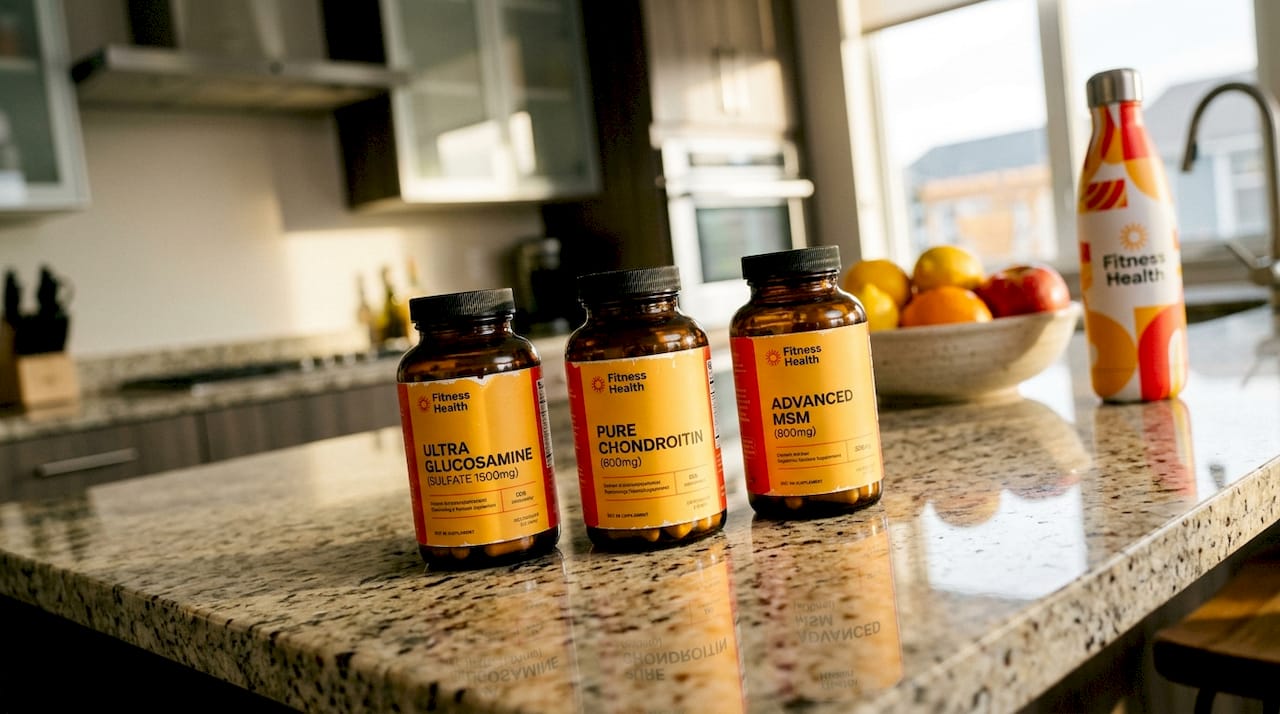
Glucosamine is an amino sugar your body uses to build cartilage. Chondroitin is a proteoglycan that draws water into cartilage tissue, keeping it cushioned and resilient. MSM (methylsulfonylmethane) provides sulfur, which is a building block for connective tissue repair. Together, they address both structure and inflammation.
The research on glucosamine and chondroitin shows consistent improvements in pain and function after 8 to 12 weeks of use, particularly in reducing joint discomfort during and after exercise. The key word is consistent. These are not overnight fixes.
What athletes need to know about these foundational ingredients:
- Glucosamine sulfate is generally preferred over glucosamine hydrochloride in research settings
- Standard doses are 1,500 mg of glucosamine and 1,200 mg of chondroitin daily
- MSM is typically dosed at 1,000 to 3,000 mg per day
- Benefits build over 8 to 12 weeks, so give them time before you judge results
- Shellfish allergies are relevant for glucosamine from crustacean sources; plant-based versions exist
These supplements are best suited for athletes who are already dealing with joint discomfort and want structural support alongside training, not just temporary relief.
3. Curcumin and Boswellia for inflammation control
If you want to address the inflammatory side of joint pain, curcumin and Boswellia serrata are the two most evidence-backed natural options available.
Curcumin, the active compound in turmeric, reduces inflammation comparably to NSAIDs like ibuprofen at effective doses, without the gastrointestinal risks of long-term NSAID use. The catch is absorption. Standard turmeric powder or even basic curcumin extracts are largely excreted before they reach circulation. You need a formulation with piperine (black pepper extract) or a liposomal delivery system to see real results.
Boswellia serrata works through a completely different pathway. It inhibits the 5-LOX enzyme, which is a key driver of inflammatory prostaglandins that contribute to joint swelling and stiffness. Products with standardized Boswellia resin content achieve consistent enzyme inhibition that generic extracts often miss. A systematic review documents pain reduction after at least 4 weeks of use.
Key points for choosing and using these anti-inflammatories:
- Look for curcumin with BioPerine, Meriva, or Theracurmin for proven bioavailability
- Effective curcumin dosing is around 1,000 mg daily with a bioavailability enhancer
- Boswellia works well alongside curcumin because they target different inflammatory enzymes
- For Boswellia, look for products standardized to at least 65% boswellic acids
- Neither ingredient is a pain killer. They reduce the inflammatory load over time.
Pro Tip: Stack curcumin and Boswellia together for broader anti-inflammatory coverage. They address different pathways, so the combination often outperforms either ingredient alone.
4. Collagen peptides and omega-3s for tissue repair
These two ingredients approach joint health from different angles but work together well for recovery-focused athletes.
Hydrolyzed collagen supplementation supports cartilage synthesis and reduces inflammatory markers in active individuals. Patented forms like FORTIGEL® show improved uptake and joint tissue specificity compared to generic collagen powders, making them worth the premium for athletes with serious joint goals. Type II collagen is the most joint-specific form, while Types I and III are more relevant for tendons and ligaments.
Collagen peptides sales have grown 10 to 15% per year since 2020, largely because younger athletes now view it as a proactive recovery tool rather than something reserved for aging populations. That shift in mindset is correct.
Omega-3 fatty acids (EPA and DHA from fish oil) provide small but statistically significant improvements in joint pain and mobility by reducing systemic inflammation. The mechanism is well understood: EPA and DHA compete with arachidonic acid in inflammatory pathways, blunting the cascade that drives chronic joint soreness.
What to know about both:
- Take hydrolyzed collagen with vitamin C 30 to 60 minutes before training for maximum effect
- Effective collagen doses range from 5 to 15 grams daily depending on goals
- For omega-3s, aim for at least 1,000 to 3,000 mg of combined EPA and DHA per day
- Fish oil quality matters; look for triglyceride-form omega-3s with low oxidation scores
- Both ingredients support muscle recovery and joint repair in parallel
5. CBD and hyaluronic acid: emerging options worth knowing
These two ingredients are not as established as the ones above, but they deserve a place in this conversation for specific athlete applications.
CBD (cannabidiol) has moved from fringe to mainstream in sports recovery, and recent research backs up some of the hype. CBD reduces peak pain and strength impairment post-exercise with fewer side effects than traditional pain management options, particularly at the 48-hour recovery mark. For athletes dealing with acute soreness and joint inflammation after hard sessions, sublingual CBD shows real promise.
The caveat is product quality. Many CBD products do not contain the CBD levels advertised on the label, which affects both efficacy and safety. Third-party testing from labs like Labdor or NSF is non-negotiable here.
Hyaluronic acid is well established as a clinical injection for knee osteoarthritis, but the oral supplement version tells a more nuanced story. Lower-molecular-weight oral forms appear to reach joint tissue and support synovial fluid quality, though the evidence is not as strong as for injectable forms.
Here is how to approach both:
- For CBD: start low (15 to 25 mg), sublingual delivery is preferred, always verify lab reports
- Hyaluronic acid oral doses typically range from 80 to 200 mg daily
- Post-traumatic joint care benefits from addressing underlying injury causes alongside supplementation
- Neither ingredient replaces structural support from glucosamine, collagen, or anti-inflammatories
- Both are best used as additions to an established foundation, not as standalone solutions
6. Quick comparison of top joint supplements for athletes
Use this table to weigh your options based on what matters most to your training goals.
| Supplement | Primary benefit | Evidence strength | Typical dose | Key consideration |
|---|---|---|---|---|
| Glucosamine + Chondroitin | Cartilage support, pain relief | Strong (meta-analyses) | 1,500/1,200 mg daily | Takes 8 to 12 weeks to work |
| Curcumin (bioavailable form) | Inflammation reduction | Strong with caveats | 1,000 mg + piperine | Formulation is everything |
| Boswellia serrata | Joint stiffness, inflammation | Moderate to strong | 300 to 500 mg (standardized) | Look for AKBA content |
| Hydrolyzed collagen | Cartilage synthesis, tendon support | Moderate to strong | 5 to 15 g daily | Time intake before training |
| Omega-3 (EPA/DHA) | Systemic inflammation | Moderate | 1,000 to 3,000 mg combined | Quality and oxidation matter |
| CBD (sublingual) | Post-exercise pain, recovery | Emerging | 15 to 50 mg | Third-party tested only |
| Hyaluronic acid (oral) | Joint lubrication | Moderate (oral form) | 80 to 200 mg daily | Less potent than injection |
My honest take on joint supplements and athletic longevity
I’ve spent years reading the research on joint health, and here is the part most articles skip: supplements yield only minor to moderate benefits when lifestyle factors are not addressed first. That is not pessimism. It is the clinical reality.
In my experience, athletes who get the most out of joint support products are the ones who already train smart, sleep well, manage their body weight, and eat enough protein. The supplement fills a gap. It does not build the foundation.
What I’ve learned from following this space closely is that the biggest mistake I see is athletes skipping the basics. Chronic inflammation from poor diet and insufficient sleep limits how much any joint supplement can do. You can take the best glucosamine and curcumin stack money can buy, and if you are sleeping five hours a night and eating processed food daily, you will feel underwhelmed.
My actual recommendation: start with the foundational four (glucosamine, chondroitin, collagen, omega-3s), add a bioavailable curcumin if you train hard and frequently, and integrate Boswellia if chronic stiffness is a persistent issue. Be patient. Six weeks is not long enough to judge structural supplements. Give them twelve.
I am also skeptical of products that load eight or ten ingredients into one formula at sub-effective doses. A product with 50 mg of curcumin and 100 mg of collagen is giving you the idea of those ingredients, not the dose. Check every number on the label, and do not be impressed by long ingredient lists.
The athletes I respect most treat joint health the same way they treat strength training: progressive, deliberate, and informed. Use that same mindset when selecting your supplements.
— Rene
Support your joints with Fitnesshealth

Fitnesshealth offers a targeted range of joint health and recovery supplements formulated specifically for athletes and active individuals. Every product in the lineup prioritizes bioavailability, transparent dosing, and third-party quality verification, so you know exactly what you are getting and in what amount. Whether you are building a foundation with glucosamine and collagen, dialing in your anti-inflammatory stack with curcumin and Boswellia, or exploring recovery-focused options like omega-3s, the Fitnesshealth catalog is built around what the evidence actually supports. You can also explore their performance supplement guides to see how joint support fits into a full athletic nutrition plan. Visit Fitnesshealth to browse products designed for the way you train.
FAQ
What are the best supplements for joint health in athletes?
Glucosamine, chondroitin, hydrolyzed collagen, and bioavailable curcumin have the strongest evidence for joint pain relief in athletes. Omega-3 fatty acids and Boswellia serrata round out a well-supported stack.
How long does it take for joint supplements to work?
Most structural supplements like glucosamine and collagen require 8 to 12 weeks of consistent use before meaningful benefits appear. Anti-inflammatory options like curcumin may show effects sooner, typically within 4 to 6 weeks.
Can I use CBD for joint pain after sports?
Yes. Research shows CBD reduces peak post-exercise pain and supports recovery at the 48-hour mark, with a favorable safety profile. Only use products with independent third-party lab verification to confirm actual CBD content.
Do I need collagen supplements if I eat enough protein?
General protein intake supports tissue repair, but hydrolyzed collagen provides specific peptides that target cartilage synthesis in ways standard dietary protein does not. Athletes with joint concerns benefit from adding it directly.
Are joint supplements safe for long-term use?
The foundational options including glucosamine, chondroitin, collagen, and omega-3s have strong long-term safety records. Curcumin and Boswellia are also well-tolerated. Always choose products that are third-party tested and consult a healthcare provider if you take medications or have underlying conditions.










