

The short answer is yes, certain skin supplements have real clinical support, but the list is shorter than the beauty aisle suggests. Omega-3 fatty acids, vitamin C, vitamin D, zinc, niacinamide (vitamin B3), collagen peptides, targeted probiotics, carotenoids, curcumin, and biotin all have at least some human-trial evidence behind them. The catch is that “evidence exists” covers a wide range, from robust randomized controlled trials to small preliminary studies, and no pill replaces sunscreen, a nutrient-dense diet, or a consistent topical routine.
Who benefits most? People with a confirmed micronutrient deficiency, those managing inflammatory skin conditions like eczema or psoriasis, and older adults experiencing thinning or drier skin tend to see the clearest gains. Healthy adults eating a varied diet often see little measurable change from adding more supplements on top.
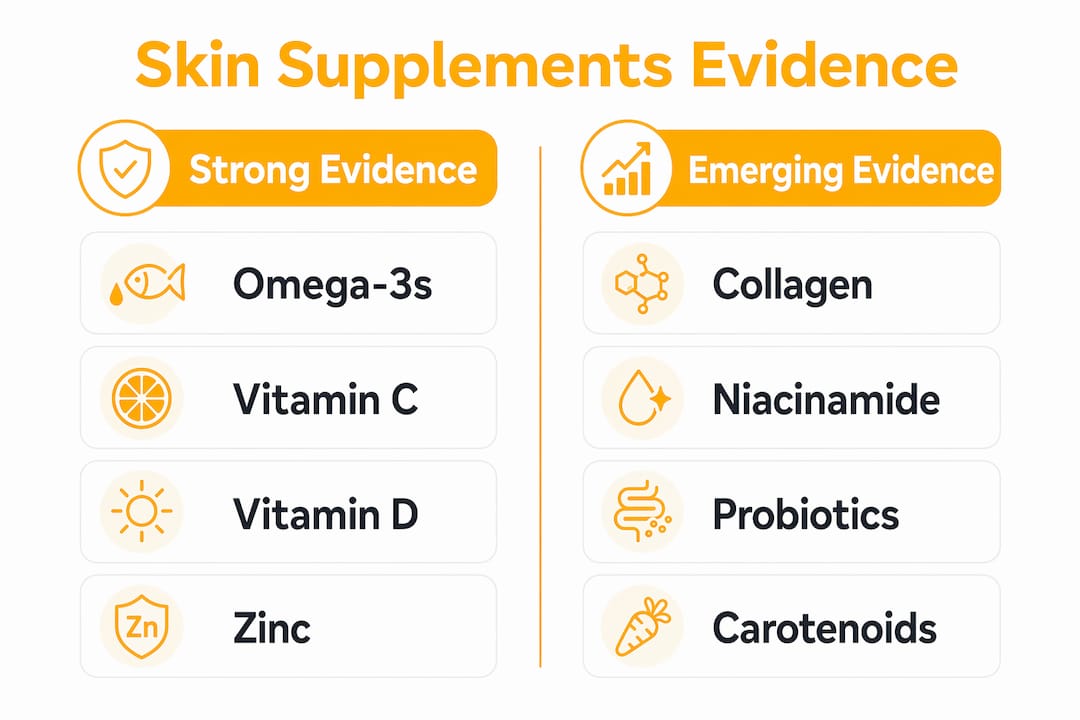
- Strongest evidence: Omega-3s (EPA/DHA), vitamin C, vitamin D, zinc, collagen peptides
- Moderate evidence: Niacinamide/B3, certain probiotic strains, carotenoids/lycopene
- Preliminary or condition-specific: Curcumin, biotin (mainly for diagnosed deficiency), GLA
- Safety baseline: Always check third-party seals (USP, NSF, ConsumerLab) and consult a clinician before starting, especially if you take prescription medications or are pregnant
The American Academy of Dermatology recommends a diet-first approach and clinician-directed supplementation for confirmed deficiencies. That framing is the right starting point. Fitnesshealth carries a curated range of quality-checked options for those ready to move from research to action, but the research comes first.
Table of Contents
- What the clinical evidence actually says for each skin supplement
- Who should take skin supplements, and when do they actually help?
- How to choose safe, quality skin supplements in the U.S.
- Marketing claims you should not believe
- What dermatologists and clinical reviews actually recommend
- How to add skin supplements to your existing routine without overcomplicating it
- Key Takeaways
- The case for going slower than the marketing wants you to
- Quality-checked skin supplement basics from Fitnesshealth
- Useful sources and further reading
What the clinical evidence actually says for each skin supplement
The table below gives a quick-reference overview. The sections that follow explain the mechanisms, realistic dose ranges from studies, and the conditions where each nutrient has the most support.
| Nutrient | Evidence strength | Typical study dose | Primary skin conditions with evidence |
|---|---|---|---|
| Omega-3s (EPA/DHA) | Strong | Doses used in studies vary | Eczema, psoriasis, acne, barrier function |
| Vitamin C | Strong | Typical study doses used | Photodamage, wound healing, hydration |
| Vitamin D | Moderate–Strong | Supplementation doses vary | Psoriasis, eczema, innate immunity |
| Zinc | Moderate | Supplementation doses vary | Acne, wound healing, photodamage |
| Niacinamide/B3 | Moderate | Dosing varies in studies | Aging, hyperpigmentation, acne |
| Collagen peptides | Moderate | Supplementation doses range in studies | Elasticity, hydration, wrinkle depth |
| Probiotics | Moderate (strain-specific) | Dosing varies | Eczema, acne, rosacea |
| Carotenoids | Moderate | Supplementation varies | Photoprotection, UV-induced redness |
| Curcumin | Limited | Dosing varies | Inflammatory conditions, wound healing |
| Biotin | Limited (deficiency only) | Supplementation depends on deficiency | Brittle nails, hair/skin in deficiency |
Omega-3 fatty acids (EPA/DHA)
Omega-3s work by competing with arachidonic acid in the inflammatory cascade, reducing production of pro-inflammatory eicosanoids. The VA Whole Health Library lists them among the best-supported nutrients for inflammatory skin conditions. Dermatologists commonly recommend EPA/DHA for eczema, psoriasis, and acne because dietary fish intake is often too inconsistent to deliver therapeutic amounts. Studies show improvements in skin barrier function and reduced itch severity at therapeutic doses. The main safety flag: high doses (above 3 g/day) can increase bleeding time, so anyone on anticoagulants needs clinician sign-off first.

Vitamin C
Vitamin C suppresses UV-triggered free radicals and is directly involved in collagen synthesis, which is why deficiency shows up so visibly in skin. A PMC review on micronutrient roles in skin confirms it attenuates UV-mediated damage, promotes wound healing, and increases epidermal moisture. Oral doses of 500–1,000 mg/day are typical in studies. One nuance worth knowing: the Linus Pauling Institute notes that topical delivery can be more efficient at reaching the epidermis than oral supplementation for some micronutrients, so pairing an oral supplement with a topical vitamin C serum is a reasonable strategy.
Vitamin D
Beyond bone health, vitamin D modulates inflammation, supports wound healing, and stimulates cathelicidin, an antimicrobial peptide that strengthens innate skin immunity. The PMC review links vitamin D to angiogenesis regulation and inflammatory control. Deficiency is common, particularly in northern U.S. states during winter months, and low levels correlate with worsened eczema and psoriasis severity. Study doses range from 1,000–4,000 IU daily; the tolerable upper limit set by the NIH is 4,000 IU for adults without medical supervision.
Zinc
Zinc is a cofactor for dozens of metalloenzymes and protects skin from photodamage partly by absorbing UV radiation before it penetrates deeper layers. Combined with vitamin C, it shows antimicrobial activity relevant to acne. Zinc deficiency has been documented in patients with epidermolysis bullosa, and low zinc levels appear in atopic dermatitis, though supplementation for eczema has not consistently produced clinical improvement in trials. For acne, oral zinc at 25–50 mg/day has a reasonable evidence base, though it is generally considered less potent than prescription antibiotics.
Niacinamide (vitamin B3)
Niacinamide works through multiple pathways: it inhibits melanosome transfer (reducing hyperpigmentation), supports the skin’s ceramide barrier, and has anti-inflammatory properties relevant to acne and rosacea. Dermatologists cite it as one of their go-to recommendations for aging and inflammatory conditions. Study doses for oral niacinamide typically fall within a moderate range. At very high doses (above 3 g/day), flushing and liver stress become concerns, so staying within studied ranges matters.
Collagen peptides
Collagen is the dermis’s primary structural protein, and its production declines with age and UV exposure. Hydrolyzed collagen peptides are absorbed as di- and tripeptides that appear to stimulate fibroblasts to produce more collagen. Randomized controlled trials consistently report measurable improvements in skin elasticity and hydration after 8–24 weeks of daily supplementation at doses of 2.5–10 g/day. Sourcing and hydrolyzation method affect absorption, so marine or bovine hydrolyzed peptides from transparent sources are preferable to generic “collagen” powders with no processing detail.
Probiotics
The gut-skin axis is real and increasingly well-characterized. Certain probiotic strains reduce systemic inflammation and modulate immune responses that show up in the skin. The VA Whole Health Library lists probiotics as having evidence for atopic dermatitis and acne. The critical caveat: strain specificity matters enormously. Lactobacillus rhamnosus GG and Lactobacillus reuteri have the most atopic dermatitis data; a generic “probiotic blend” with no strain identification is unlikely to replicate those results. For more on how the gut-skin connection works in practice, Fitnesshealth has a detailed guide worth reading alongside this one.
Carotenoids (beta-carotene, lycopene)
Carotenoids accumulate in skin tissue and act as endogenous photoprotectants, quenching singlet oxygen and reducing UV-induced erythema. Lycopene has evidence supporting photoprotection at typical supplemental intakes. They are not a sunscreen replacement, but they add a meaningful layer of internal UV defense. Plant-based carotenoids from tomatoes, carrots, and leafy greens provide the same molecules, making food sources a sensible first step before supplementing.
Curcumin and polyphenols
Curcumin, the active compound in turmeric, has potent anti-inflammatory and antioxidant properties in cell and animal studies. Human trial data for skin is more limited, but some studies show benefit for inflammatory skin conditions and wound healing at 500–1,000 mg/day. Bioavailability is the main obstacle: standard curcumin is poorly absorbed, so formulations using piperine (black pepper extract) or phospholipid complexes are worth seeking out.
Biotin
Biotin’s reputation for hair and nail growth is largely built on case reports of deficiency correction, not supplementation in people with normal levels. The NIH Office of Dietary Supplements confirms that biotin deficiency causes hair loss, skin rash, and brittle nails, and correcting it resolves those symptoms. For people without deficiency, evidence for cosmetic benefit is thin. One practical safety flag: high-dose biotin (above 5 mg/day) can interfere with thyroid and troponin lab tests, producing falsely elevated or suppressed results.
Pro Tip: Most skin-focused supplements need 8–24 weeks of consistent daily use before measurable changes appear. Hydration and itch relief tend to show up earlier (4–8 weeks for omega-3s and probiotics); structural changes like reduced wrinkle depth or improved elasticity from collagen peptides typically take the full 12–24 weeks. Set a calendar reminder before you judge whether something is working.
Who should take skin supplements, and when do they actually help?
Supplements are not universally useful. The people who see the clearest benefit fall into a few distinct categories.
- People with a confirmed micronutrient deficiency. A PubMed-indexed review estimates that over 2 billion people worldwide have micronutrient deficiencies affecting organs including skin. Correcting a documented deficiency (vitamin D, zinc, vitamin C) often produces visible skin improvement relatively quickly.
- People managing inflammatory skin conditions. Eczema, psoriasis, and acne all have inflammatory components that omega-3s, vitamin D, and targeted probiotics can modulate. These are adjuncts to prescribed treatment, not replacements.
- Older adults with thinning or drier skin. Collagen production declines with age; collagen peptides and vitamin C together support the synthesis pathway. Skin barrier lipids also thin with age, making omega-3s and GLA (gamma-linolenic acid) particularly relevant.
- People on restricted diets. Vegans and vegetarians are at higher risk for omega-3 (EPA/DHA), vitamin D, and zinc shortfalls. Algae-based omega-3s are a direct plant-based substitute for fish oil.
- People with high UV exposure or photodamage history. Carotenoids, vitamin C, and vitamin E provide internal antioxidant support that complements topical sunscreen.
Expected timelines:
- Hydration and itch relief: 4–8 weeks (omega-3s, probiotics, GLA)
- Acne improvement: 8–12 weeks (zinc, niacinamide, omega-3s)
- Elasticity and wrinkle depth: 12–24 weeks (collagen peptides, vitamin C)
- Photoprotection markers: 8–12 weeks (carotenoids, vitamin E)
Annual cost for a single-supplement approach varies depending on type and brand. A combined regimen of multiple targeted supplements may range in annual cost, which should be considered before starting supplementation without confirmed deficiency. Starting with foods that support skin health is always the lower-cost first step.
How to choose safe, quality skin supplements in the U.S.
Under the Dietary Supplement Health and Education Act (DSHEA), supplements sold in the U.S. do not require FDA premarket approval for safety or efficacy. Manufacturers are responsible for their own quality control, which means the burden of verification falls on you as the consumer.

| Safety concern | Details | Who it affects most |
|---|---|---|
| Vitamin A toxicity | Fat-soluble; accumulates in liver; >10,000 IU/day long-term is risky | Pregnant women (teratogenic risk) |
| Omega-3 bleeding risk | High doses (>3 g/day) prolong bleeding time | Anyone on anticoagulants (warfarin, aspirin) |
| Biotin lab interference | >5 mg/day can falsely skew thyroid and cardiac troponin tests | Anyone getting routine blood work |
| Zinc excess | >30 mg/day long-term can deplete copper and suppress immunity | People self-dosing for acne |
| Niacinamide flushing | >3 g/day causes flushing, GI upset, potential liver stress | General adult population |
| Pregnancy/nursing | Many supplements lack safety data for pregnancy; consult OB before use | Pregnant and nursing women |
The quality checklist for U.S. shoppers
Third-party testing seals are the single most useful filter. Look for USP (U.S. Pharmacopeia), NSF International, or ConsumerLab certification on the label. These organizations independently verify that what is on the label is actually in the bottle, at the stated dose, without contaminants. The American Academy of Dermatology explicitly recommends third-party verification as a practical consumer safeguard.
Beyond seals, check for:
- GMP (Good Manufacturing Practice) statement on the label, indicating the facility meets FDA manufacturing standards
- Active ingredient form (e.g., “vitamin D3” not just “vitamin D”; “hydrolyzed collagen peptides” not just “collagen”)
- Clear dose per serving in mg, mcg, or IU, with the percentage of Daily Value listed
- Batch testing documentation, sometimes available via QR code or the brand’s website
Pro Tip: IU (International Units) and mg are not interchangeable. Vitamin D is often listed in IU; 1,000 IU equals 25 mcg. Vitamin E is also commonly listed in IU. When comparing products, convert to the same unit so you are not accidentally doubling up on a fat-soluble vitamin.
Marketing claims you should not believe
The supplement aisle is full of promises that outrun the science. Knowing which claims are implausible saves money and prevents disappointment.
- “Instant wrinkle reversal” or “visible results in 7 days.” Collagen synthesis and skin cell turnover operate on weeks-to-months timescales, not days. Any product claiming otherwise is selling hope, not biology.
- “One pill for glowing skin.” No single nutrient controls all the variables that determine skin appearance: UV exposure, sleep, hydration, diet, hormones, and genetics all play larger roles than any supplement.
- Multi-ingredient “beauty gummies” with tiny active doses. A gummy containing 50 mg of collagen (versus the 2,500–10,000 mg used in trials) or 5 mg of vitamin C (versus 500 mg) is not delivering a therapeutic dose. The label looks impressive; the math does not.
- “Clinically proven” without a citation. This phrase has no regulatory definition in the U.S. It can mean a single unpublished in-house study or a cell-culture experiment with no human data.
- Celebrity endorsements as evidence. A dermatologist’s name attached to a product is meaningful only if they can cite the specific studies behind the formula. A celebrity’s skin is not a controlled trial.
The biological reality is that oral supplements face absorption and distribution hurdles before reaching skin. As the Linus Pauling Institute explains, topical delivery can be more efficient than oral intake for certain micronutrients because it bypasses systemic distribution entirely. That does not mean oral supplements are useless; it means they work best when the nutrient is genuinely needed systemically and when doses match what studies actually used.
Pro Tip: When evaluating a product page, look for three things: a specific dose per serving, a named clinical study (with a PubMed ID or journal citation), and a third-party seal. If all three are missing, the product is marketing-first, not evidence-first.
What dermatologists and clinical reviews actually recommend
The clinical consensus, drawn from the AAD, the VA Whole Health Library, and practicing dermatologists, is consistent: supplements work best as part of a broader plan that includes diet, sun protection, and topical care. No clinician recommends supplements as a standalone skin treatment.
“Dermatologists generally recommend supplements as an adjunct to lifestyle changes, not as a replacement for them. Niacinamide and antioxidants are among the most commonly suggested for aging and inflammatory conditions, and clinicians typically expect 3–6 months of consistent use before evaluating benefit.” — SkinCare Physicians clinical guidance
For specific conditions, the clinical picture looks like this:
Deficiency-correction plan: Get a blood panel (25-OH vitamin D, serum zinc, ferritin, complete metabolic panel). Supplement only what is low. Retest in 3 months.
Anti-inflammatory baseline (eczema, psoriasis, acne): Omega-3s (EPA/DHA, 1,000–2,000 mg/day) plus vitamin D (1,000–2,000 IU/day if deficient). Add a strain-specific probiotic if the gut-skin connection is a factor. For more on evidence-based probiotic use, Fitnesshealth’s guide covers the immune-skin overlap in detail.
Skin-aging baseline: Collagen peptides (5–10 g/day) plus vitamin C (500–1,000 mg/day) plus daily broad-spectrum SPF 30+. The collagen-vitamin C pairing makes biochemical sense because vitamin C is a required cofactor for collagen synthesis.
Monitoring matters as much as starting. A 3–6 month reassessment with your dermatologist or primary care provider, including a repeat blood panel where relevant, tells you whether the supplement is doing anything measurable. The PubMed review on micronutrient deficiencies supports this testing-first approach: targeted supplementation based on confirmed gaps is more productive than a broad daily beauty stack.
Fitnesshealth provides educational content and vetted product options that align with this evidence-first framework, making it a useful resource when you are ready to act on a clinician’s recommendation.
How to add skin supplements to your existing routine without overcomplicating it
The most common mistake is starting three or four supplements simultaneously. When something works (or causes a side effect), you will not know which one is responsible.
Step 1: Assess diet and labs. Before buying anything, identify your actual gaps. A basic blood panel covering vitamin D, zinc, and iron costs relatively little and tells you far more than a quiz on a supplement brand’s website.
Step 2: Pick one targeted supplement. Start with the nutrient most likely to be deficient or most relevant to your skin concern. Vitamin D is the most common deficiency in the U.S.; omega-3s are the most broadly useful for inflammatory conditions.
Step 3: Set a start date and take baseline photos. Photograph your skin in consistent lighting (same time of day, same angle) before you start. This is the only way to objectively track change over 12–24 weeks.
Step 4: Follow dose and timing guidance. Fat-soluble vitamins (A, D, E, K) and omega-3s absorb significantly better with a fat-containing meal. Collagen peptides can be taken any time, though some studies used morning dosing. Probiotics are generally taken with or just before a meal to improve survival through stomach acid. For practical day-to-day guidance on probiotic timing and dosing, Fitnesshealth’s guide covers the specifics.
Step 5: Schedule a clinician follow-up at 3 months. Bring your baseline photos and a list of what you are taking (dose, form, brand). Request a repeat blood panel if you were correcting a deficiency.
Combining with topical care: Oral vitamin C and a topical vitamin C serum are complementary, not redundant. Retinoids and oral collagen peptides also work through different mechanisms and can be used together. The one thing to avoid is adding a new topical and a new supplement at the same time; if your skin reacts, you will not know the source.
Pro Tip: Keep a simple weekly log: photo, a 1–10 rating for your primary concern (itch, dryness, breakouts), and any side effects. At 12 weeks, review the log before your clinician appointment. Objective data beats memory every time.
Key Takeaways
Supplements with the strongest clinical evidence for skin, including omega-3s, vitamin C, vitamin D, zinc, and collagen peptides, work best when used to correct confirmed deficiencies or support specific conditions, not as a blanket beauty routine.
| Point | Details |
|---|---|
| Supplements are adjuncts | No supplement replaces sunscreen, a nutrient-dense diet, or consistent topical care. |
| Test before you supplement | A blood panel identifying actual deficiencies makes supplementation far more productive than blind use. |
| Expect 8–24 weeks | Measurable skin changes from collagen peptides and omega-3s typically require 8–24 weeks of daily use. |
| Verify quality with third-party seals | Look for USP, NSF, or ConsumerLab certification to confirm dose, purity, and identity. |
| Fitnesshealth for vetted options | Fitnesshealth carries quality-checked supplements that meet the buying criteria outlined in this article. |
The case for going slower than the marketing wants you to
The supplement industry has a financial interest in making you believe your skin is one pill away from a fix. The clinical evidence tells a more measured story: a handful of nutrients have solid human-trial support, most work only when there is a genuine deficiency or inflammatory condition to address, and the timeline for results is months, not days.
What I find most useful about the current evidence base is how clearly it points toward a testing-first approach. The global data on micronutrient deficiencies is a reminder that deficiency is genuinely common, which means supplementation is genuinely warranted for a large share of the population. But that same data argues against the “everyone should take a beauty stack” logic. The people most likely to benefit are the ones who know what they are missing.
The other thing worth saying plainly: the gut-skin connection is one of the more credible emerging areas in dermatology, but strain specificity for probiotics in skincare matters enormously. A generic multi-strain blend is not the same as a clinically studied strain at a studied dose. That distinction separates a product worth buying from one that is mostly marketing.
My consistent advice: get the blood work, pick one or two evidence-backed supplements matched to your actual gaps, give them 12 weeks, and reassess with your clinician. That approach is less exciting than a 10-supplement stack, but it is the one the evidence actually supports.
Quality-checked skin supplement basics from Fitnesshealth
If you have done the research and you are ready to act, the practical next question is where to find supplements that actually meet the quality checklist this article describes.

Fitnesshealth carries a selection of foundational skin-support supplements, including high-quality omega-3s, vitamin D3, and hydrolyzed collagen peptides, chosen for transparent sourcing, clear dosing, and third-party quality standards. These are the same categories the clinical evidence supports most strongly, and they are available as single supplements so you can start with one targeted addition rather than a pre-bundled stack you may not need.
Browse the Fitnesshealth supplement range to find options that match your specific concern, whether that is barrier support, anti-inflammatory nutrition, or collagen synthesis. Every product page includes dosing information and sourcing details so you can verify the basics before you buy.
A reminder: supplements work best alongside clinician input. If you are managing a diagnosed skin condition or taking prescription medications, confirm your choices with your dermatologist or primary care provider before starting.
Useful sources and further reading
These are the primary sources behind this article. Sharing them with your clinician before starting any supplement regimen is a practical way to ground the conversation in the same evidence.
| Source | What it covers | Why it is useful |
|---|---|---|
| VA Whole Health Library: Supplements for Skin Health | Evidence summaries for omega-3s, GLA, probiotics, carotenoids, collagen, and safety flags | Clinician-authored, evidence-graded; covers both benefits and risks |
| American Academy of Dermatology: Vitamins and Supplements for Skin | AAD guidance on diet-first approach, third-party testing, and when supplements are warranted | The U.S. dermatology professional standard; directly applicable to U.S. consumers |
| PMC: Role of Micronutrients in Skin Health and Function | Peer-reviewed review of vitamins A, C, D, E, zinc, copper, selenium in skin biology | Foundational science review; useful for understanding mechanisms |
| PubMed: Global Micronutrient Deficiencies Review | Epidemiology of micronutrient deficiencies and their systemic effects including skin | Supports the testing-first rationale; useful for clinician discussions |
| Linus Pauling Institute: Skin Health | Detailed nutrient-by-nutrient review including topical vs. oral delivery differences | Oregon State University evidence synthesis; excellent for dose and mechanism detail |
| NIH ODS: Omega-3 Fatty Acids | Consumer fact sheet on omega-3 dosing, safety, and drug interactions | Primary government source; clear on upper limits and medication interactions |
| NIH ODS: Biotin | Biotin deficiency, supplementation evidence, and lab-test interference warning | Directly addresses the biotin-lab-test issue; important for anyone getting blood work |
| SkinCare Physicians: Guide to Supplements for Healthy Skin | Dermatologist-authored clinical guidance on regimen building and realistic expectations | Practical clinical framing; useful for the 3–6 month expectation-setting conversation |
| Allure: Dermatologists on the Supplements They Take | First-person dermatologist perspectives on personal supplement use | Real-world clinical perspective; useful for understanding what practitioners actually use |
This article is general educational information, not medical advice. Confirm supplement choices and dosing with your dermatologist or primary care provider before starting, particularly if you have a diagnosed condition, take prescription medications, or are pregnant or nursing.










