Probiotics are defined as live beneficial microorganisms that support gut health, while prebiotics are the fermentable dietary fibers that feed them. Together, probiotics and prebiotics daily use creates what researchers call a synbiotic effect, where each amplifies the other’s impact on your gut microbiome. The result is more than better digestion. Consistent intake supports immunity, metabolic function, and long-term microbial balance. Yet most Americans consume only 1–4 grams of prebiotic fiber daily, far below the 5–20 grams experts recommend for meaningful gut health outcomes.
What are probiotics and prebiotics, and how do they support gut health?
Probiotics and prebiotics serve distinct but complementary roles in your gut. Understanding both is the foundation of any effective daily routine.
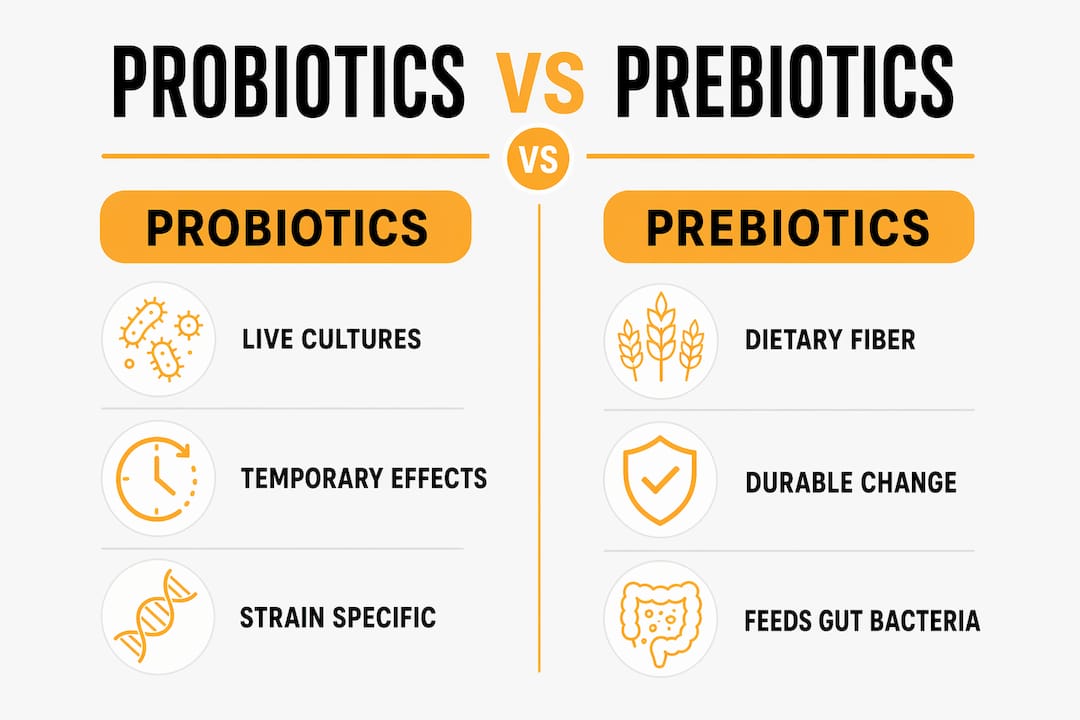
Probiotics are live bacteria or yeast that add directly to your gut microflora. Strains like Lactobacillus acidophilus, Bifidobacterium longum, and Saccharomyces boulardii are among the most studied. Each strain targets different outcomes, from reducing IBS symptoms to supporting immune response. The benefits of probiotics are real but often strain-specific and condition-dependent.

Prebiotics are non-digestible fibers found in foods like garlic, onions, leeks, chicory root, and green bananas. They do not add new bacteria. Instead, they feed the beneficial bacteria already living in your colon, allowing them to multiply and outcompete harmful microbes. Inulin, fructooligosaccharides (FOS), and galactooligosaccharides (GOS) are the most common prebiotic compounds in both food and supplement form.
The real power comes from combining both. Synbiotic combinations produce longer-term gut microbiome stability than either approach alone. Here is what consistent daily intake supports:
- Digestion: Prebiotics increase stool frequency and consistency by feeding fiber-fermenting bacteria that produce short-chain fatty acids.
- Immunity: Roughly 70% of your immune system resides in your gut. A balanced microbiome trains immune cells to respond appropriately.
- Metabolic health: Clinical data shows that 10–20 grams of daily prebiotic fiber reduces fasting glucose by approximately 30% in some groups and improves calcium absorption by roughly 50% in postmenopausal women over 8 weeks.
- Mental clarity: The gut-brain axis links microbiome health to mood and cognitive function through neurotransmitter production.
One critical distinction: prebiotic changes are durable and reproducible as long as intake continues, while probiotic benefits often stop shortly after supplementation ends. This means prebiotics are the long-game investment, and probiotics are the targeted, short-to-medium-term tool.
How to determine the right daily intake of prebiotics and probiotics
Getting the dose right matters more than most people realize. Too little produces no effect. Too much too fast causes bloating, gas, and cramps that push people to quit entirely.
-
Start with prebiotic fiber at 2–3 grams daily. This is the entry point recommended to minimize digestive discomfort. Increase by 1–2 grams every 3–4 days until you reach your target range. Most adults benefit from 5–20 grams daily, but individual tolerance varies widely.
-
Choose probiotics by strain, not just CFU count. Lactobacillus rhamnosus GG is the most studied strain for antibiotic-associated diarrhea. Bifidobacterium infantis targets IBS. Matching the strain to your goal produces better results than picking the highest colony-forming unit count on the shelf.
-
Time your intake strategically. Take prebiotics in the morning and split doses above 10 grams across two meals. Pairing prebiotics with probiotics at the same meal maximizes the synbiotic effect. Some research suggests morning dosing with black pepper improves tolerance and bioavailability.
-
Prioritize food sources first. Fermented foods like yogurt, kefir, kimchi, and sauerkraut deliver live cultures alongside other nutrients. Prebiotic-rich foods like Jerusalem artichokes, asparagus, and oats provide fiber in a matrix your gut handles well. Supplements fill gaps but should not replace dietary variety.
Pro Tip: If you are new to prebiotic fiber, start with cooked garlic or half a cup of oats rather than a supplement. Food-based sources are gentler on the gut and easier to adjust.
How to build a daily routine with probiotics and prebiotics
A consistent routine is what separates short-term results from lasting gut health. Here is a practical, week-by-week framework:
-
Week 1: Establish your prebiotic baseline. Add one prebiotic food source daily. A tablespoon of ground flaxseed in your morning smoothie or half a cup of cooked oats delivers roughly 2–3 grams of prebiotic fiber. Track any digestive changes.
-
Week 2: Introduce a probiotic source. Add one serving of a fermented food daily, such as plain kefir, unsweetened yogurt with live cultures, or a small portion of kimchi. If you prefer a supplement, choose a product with at least one clinically studied strain and clear CFU labeling.
-
Week 3: Combine and increase. Eat your prebiotic and probiotic sources at the same meal to maximize synergy. Gradually increase prebiotic fiber by 1–2 grams. Most people reach comfortable tolerance around 8–10 grams by this point.
-
Week 4 and beyond: Adjust and diversify. Rotate your food sources. Different prebiotic fibers feed different bacterial strains, so variety matters. The gut microbiome improvement guide from Fitnesshealth covers how nutrition and training habits compound these benefits over time.
Hydration is non-negotiable. Prebiotic fiber absorbs water during fermentation. Drinking at least 8 cups of water daily prevents the fiber from causing constipation rather than relieving it.
Pro Tip: Rotate between three to four different prebiotic foods each week. Garlic, leeks, green bananas, and chicory root each feed distinct bacterial populations, creating a more diverse and resilient microbiome.
Common challenges when using probiotics and prebiotics daily
Most people experience some adjustment symptoms in the first one to two weeks. Knowing what to expect prevents unnecessary panic or premature quitting.
- Gas and bloating are the most common early symptoms. They signal that your gut bacteria are actively fermenting the new fiber. This typically resolves within 7–14 days as your microbiome adapts.
- Cramps usually result from increasing prebiotic fiber too quickly. Slow the ramp-up to 1 gram every 5–7 days if discomfort is significant.
- No noticeable effect is also common. Individual microbiomes vary dramatically. What works for one person may produce no response in another, which is why strain selection and food diversity matter.
Daily probiotic supplementation is safe for most people, but individuals who are immunocompromised, post-surgical, or critically ill should consult a healthcare provider before starting any probiotic regimen due to rare but serious risks.
If symptoms persist beyond three weeks or worsen, stop supplementation and speak with a gastroenterologist. Conditions like SIBO (small intestinal bacterial overgrowth) can be aggravated by high prebiotic intake.
Food sources vs. supplements: which is better for daily use?
The honest answer is that food wins for most people, but supplements have a clear role in specific situations.
| Factor | Food Sources | Supplements |
|---|---|---|
| Strain diversity | High (varies by food) | Low to moderate (fixed strains) |
| Prebiotic fiber dose | Moderate (2–5g per serving) | High (up to 10g per serving) |
| Cost | Low | Moderate to high |
| Convenience | Requires meal planning | Easy, consistent dosing |
| Additional nutrients | Yes (vitamins, minerals) | No |
| Evidence strength | Strong for overall diet | Strong for specific conditions |
Whole foods like garlic, onions, and kefir deliver prebiotic fiber and live cultures alongside vitamins, minerals, and polyphenols that supplements cannot replicate. Food diversity also supports a broader range of bacterial strains than any single supplement product. That said, supplements like inulin powder, psyllium husk, or multi-strain probiotic capsules are practical tools when diet alone cannot reach the 10–20 gram prebiotic target or when a specific strain is needed for a targeted condition. For athletes, the impact of daily probiotic use on performance and recovery adds another layer of value beyond basic gut health.
Key takeaways
Daily prebiotic fiber intake, combined with consistent probiotic sources, produces more durable gut health improvements than either approach alone.
| Point | Details |
|---|---|
| Start low with prebiotics | Begin at 2–3 grams daily and increase slowly to avoid bloating and gas. |
| Match probiotics to your goal | Choose strains like Lactobacillus rhamnosus GG for specific conditions, not just high CFU counts. |
| Combine for synbiotic effect | Eating prebiotics and probiotics together at the same meal amplifies long-term microbiome stability. |
| Food first, supplements second | Whole foods deliver fiber, live cultures, and additional nutrients that supplements cannot replicate. |
| Prebiotics outlast probiotics | Prebiotic changes persist with continued intake; probiotic benefits often fade after stopping supplementation. |
Why I think most people are approaching this backwards
After years of working with health-conscious adults on gut health, I keep seeing the same pattern. People spend $60 a month on a high-CFU probiotic supplement and eat the same low-fiber diet they always have. Then they wonder why nothing changes.
The research is clear. Prebiotic intake drives durable microbiome change. Probiotics are transient visitors. Without the fiber to feed them and the existing bacteria already in your gut, even the best probiotic supplement passes through without taking hold. The food-first approach is not a compromise. It is the mechanism.
I also think people underestimate how individual microbiome variability affects outcomes. Two people can follow the exact same protocol and get completely different results. That is not a failure of the science. It reflects the fact that your microbiome is as unique as your fingerprint. Patience and gradual adjustment matter more than finding the “perfect” product.
The uncomfortable truth is that gut health depends on consistent habits built over months, not a supplement cycle. Start with food. Add supplements where they fill a genuine gap. And give your microbiome the time it needs to respond.
— Rene
Build your gut health foundation with Fitnesshealth

Fitnesshealth offers a curated range of gut health supplements, including prebiotic fiber blends and multi-strain probiotic formulas, designed to complement a food-first approach. Every product is selected based on clinical evidence and strain transparency, so you know exactly what you are putting in your body. Whether you are starting your first prebiotic routine or looking to refine an existing protocol, Fitnesshealth provides the tools and educational resources to support your goals. Explore the full range of gut health programs and supplements and find the right fit for your daily routine.
FAQ
What is the difference between prebiotics vs probiotics?
Probiotics are live microorganisms that add beneficial bacteria to your gut, while prebiotics are dietary fibers that feed the bacteria already there. Both serve different functions and work best when used together.
How often should you take probiotics for gut health?
Most research supports daily probiotic intake for consistent gut health benefits. Probiotic effects tend to stop shortly after supplementation ends, so regularity matters more than dose size.
What is a safe daily prebiotic intake for beginners?
Start at 2–3 grams of prebiotic fiber daily and increase by 1–2 grams every 3–4 days. The target range for meaningful gut health benefits is 5–20 grams per day.
Are the best prebiotic supplements better than food sources?
Food sources like garlic, oats, and leeks deliver prebiotic fiber alongside vitamins and minerals that supplements cannot replicate. Supplements are most useful when diet alone cannot reach the recommended daily intake.
Can you take probiotics and prebiotics at the same time?
Yes. Taking them together at the same meal creates a synbiotic effect that promotes greater microbiome stability than taking either one alone.