Probiotics are not magic performance pills. Yet why probiotics benefit competitive athletes is one of the most misunderstood questions in sports nutrition right now. The answer is almost never “probiotics make you faster directly.” The real story is about how a healthier gut translates into fewer sick days, faster recovery, better endurance, and a more resilient immune system. The science is catching up fast. A 2026 meta-analysis confirmed small-to-moderate performance gains for athletes, especially those in endurance sports. This guide breaks down exactly how that happens and what you need to act on it.
Table of Contents
- Key takeaways
- Why probiotics benefit competitive athletes through performance
- GI distress: the silent performance thief
- Immunity: staying healthy enough to train
- Recovery, stress, and the gut-brain connection
- My take: precision beats enthusiasm
- Get the right probiotic support from Fitnesshealth
- FAQ
Key takeaways
| Point | Details |
|---|---|
| Indirect performance gains | Probiotics work through gut and immune modulation, not as direct ergogenic aids. |
| Endurance athletes benefit most | Clinical data shows the strongest gains in VO2max and time-to-exhaustion metrics. |
| Dose range matters | The 1×10⁹ to 1×10¹¹ CFU per day range produces the most consistent results. |
| Strain selection is critical | Different strains target different outcomes: endurance, GI relief, or immune defense. |
| GI distress has a probiotic solution | Specific strains reduce nausea, bloating, and diarrhea that derail training and races. |
Why probiotics benefit competitive athletes through performance
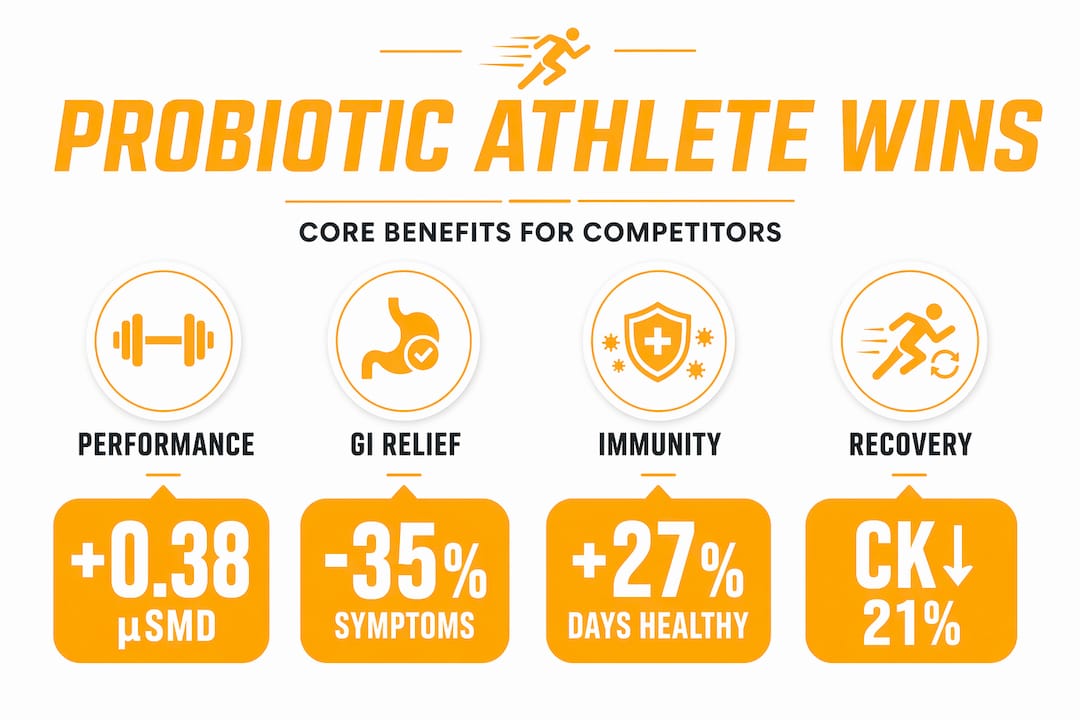
The 2026 Frontiers systematic review and Bayesian meta-analysis of 21 trials involving 685 participants is the clearest picture we have of probiotic effects on athletic performance. The overall standardized mean difference was 0.38, which qualifies as a small but real improvement. For endurance-specific outcomes, that number jumped to μSMD 0.74 for endurance metrics like VO2max and time-to-exhaustion. That is not a marginal rounding error. That is the difference between hitting your target pace and blowing up in the final miles.
The dose range that produced these results is telling. Medium-tier daily doses in the range of 1×10⁹ to 1×10¹¹ CFU per day delivered the clearest benefits. Going higher did not produce proportionally better outcomes. This challenges the athlete tendency to assume that more supplementation equals more gain.
How probiotics actually drive endurance gains
The mechanisms are indirect but powerful. Researchers point to mitochondrial function support, improved substrate utilization, and preserved gut barrier integrity as the core pathways. When your mucosal lining stays intact during prolonged exercise, you spend less energy managing gut-derived inflammation. That energy goes toward your output instead.
Multi-strain formulas appear to have an edge over single-strain products for endurance outcomes. The gut-brain-muscle axis modulation, which links neuroendocrine stress responses to training tolerance, requires broader microbial ecosystem support than a single strain can provide. Think of it as diversifying your bench rather than relying on one star player.
| Outcome | Effect Size (μSMD) | Recommended CFU Range |
|---|---|---|
| Overall athletic performance | 0.38 | 1×10⁹ to 1×10¹¹ CFU/day |
| Endurance (VO2max, time-to-exhaustion) | 0.74 | 1×10⁹ to 1×10¹¹ CFU/day |
| Strength/power outcomes | Weak/inconsistent | Not firmly established |
Pro Tip: If you are primarily an endurance athlete, prioritize multi-strain formulas and stick within the medium dose range for at least four to six weeks before assessing results. Shorter trials have too much noise to judge effectiveness.
GI distress: the silent performance thief
Up to 70% of endurance athletes report gastrointestinal symptoms during training or competition. Cramping, nausea, bloating, and diarrhea are not just uncomfortable. They force pacing changes, nutrition strategy failures, and sometimes outright DNS results. The digestive health concerns of athletes are fundamentally different from the average person’s.

Multi-strain Lactobacillus and Bifidobacterium probiotics moderately reduce GI symptom severity in athletes, according to a 2026 Quality in Sport review. The nuance is that not all probiotics work for all GI complaints, and the formulation of your other sports supplements matters too. High-FODMAP or high-osmolality products, including some gels and protein shakes, can negate the benefits probiotics provide by increasing GI burden.
Specific strains like Lactobacillus paracasei have shown promise for reducing GI symptoms and lowering inflammation markers in athletic populations. The mechanism involves mucosal barrier strengthening and nitric oxide pathway modulation, which helps maintain blood flow to the gut during hard efforts.
Here is what athletes dealing with chronic GI distress during training should address:
- Audit your sports nutrition stack. High-FODMAP gels, bars, and powders can worsen symptoms that probiotics are trying to fix. Supplement FODMAP profiles matter as much as the probiotic itself.
- Choose strain-specific products. Generic “digestive support” blends are not the same as formulas with documented GI evidence in athletes.
- Give it time. GI benefits from probiotics typically emerge after two to four weeks of consistent use, not after one race weekend.
- Pair with gut-supportive foods. Fermented foods and low-irritant carbohydrate sources during training windows reinforce what probiotic supplementation starts.
Pro Tip: If you are prone to race-day stomach issues, start your probiotic protocol at least four weeks before your target event. Last-minute supplementation is unlikely to shift your gut microbiome enough to change outcomes.
Immunity: staying healthy enough to train
You cannot adapt if you are sick. This is the simplest explanation of why immunity and training consistency are so tightly linked for competitive athletes. Upper respiratory tract infections are the number one reason elite athletes miss training blocks. Probiotics have demonstrated meaningful reductions in both the frequency and duration of URTIs in elite runner and university athlete populations.
The immune mechanisms at work are specific. Cytokine modulation, regulatory T cell induction, NF-κB and TLR signaling, and short-chain fatty acid production all contribute to a more balanced immune response. The gut accounts for roughly 70% of your immune system’s activity. Keeping it populated with the right bacteria is not a wellness cliché. It is immunology.
That said, immune benefits vary significantly by strain and by where you are in your training cycle. High training loads suppress immune function temporarily, making in-season supplementation more critical than off-season use for many athletes. Key points to keep in mind:
- Multi-strain formulas are frequently recommended during in-season blocks for their combined impact on barrier integrity and immune defense.
- Probiotic effects on immunity are strongest when taken consistently for at least three weeks, with benefits accumulating rather than appearing overnight.
- Athletes with higher baseline GI vulnerability tend to see more pronounced immune benefits, since their gut barrier disruption creates a larger surface for immune challenges.
For a deeper look at how nutrition and gut health interact with immune function, the Fitnesshealth guide on probiotic immune support covers the mechanisms in detail.
Recovery, stress, and the gut-brain connection
Recovery is where probiotics for athletes get genuinely exciting. We are not just talking about muscle soreness. We are talking about psychological fatigue, sleep quality, and the ability to show up ready for the next session. Studies in badminton and football players show reduced anxiety and improved brain wave activity associated with probiotic use, specifically patterns linked to focus and relaxation.
The mechanism is the gut-brain axis. Your enteric nervous system communicates constantly with your central nervous system via the vagus nerve and neurotransmitter precursors produced in the gut. When your microbiome is balanced, that signaling runs cleaner. You sleep better. Perceived exertion during hard sessions drops. Anxiety around competition decreases.
On the physical recovery side, Lactobacillus paracasei lowers creatine kinase and CRP levels in athletes after hard training blocks. These are two of the most-tracked markers of muscle damage and systemic inflammation. Lower numbers mean faster return to full training capacity.
| Recovery Marker | What It Indicates | Probiotic Effect |
|---|---|---|
| Creatine kinase (CK) | Muscle fiber damage | Reduced with specific strains |
| C-reactive protein (CRP) | Systemic inflammation | Lowered, faster return to baseline |
| Anxiety scores | Psychological fatigue | Improved in athlete populations |
Pro Tip: For recovery-focused probiotic use, pair supplementation with a post-workout nutrition strategy that includes adequate protein and carbohydrates. The two approaches work through different but complementary pathways.
The gut microbiome’s role in fatigue and recovery extends into sleep architecture as well. Gut microbiota influence serotonin and melatonin precursor availability. Better gut health contributes to more restorative sleep cycles, which is where most of your physiological adaptation actually happens.
My take: precision beats enthusiasm
I have spent years watching athletes throw money at probiotic supplements without any real framework for why or how. The enthusiasm is understandable. The execution is often sloppy.
What I have learned is that the athletes who get the most out of probiotic supplementation are not the ones taking the highest doses. They are the ones who have matched their strain selection to their actual problem. An endurance runner with chronic GI distress needs something different from a field sport athlete managing URTI frequency during a heavy competition schedule. The research is clear that strain-specific benefits and dosing are not interchangeable.
In my experience, the 1×10⁹ to 1×10¹¹ CFU range is where the sweet spot sits for most athletes. Going beyond 1×10¹¹ CFU does not appear to add proportional benefit and may just be expensive. I have also seen athletes ignore the training phase dimension entirely. Adding probiotics during a deload week or off-season is fine as a maintenance strategy. But the real return on investment comes during high-load training blocks and the four to six weeks leading into your main competition.
My blunt advice: read labels, not marketing claims. Look for the specific strain names on the label, not just “Lactobacillus blend.” Check whether the product has been studied in athlete populations. And evaluate probiotic best practices before assuming a bargain-bin product will do what a clinically-validated formula does.
Strength and power athletes should also temper their expectations. The endurance data is compelling. The strength and power data is not. That does not mean probiotics are useless for you. Immune and GI benefits still apply. But if you are a powerlifter hoping for a PR boost directly from probiotics, the evidence simply is not there yet.
— Rene
Get the right probiotic support from Fitnesshealth
Understanding the science is step one. Getting the right product for your specific goals is where it becomes real.

At Fitnesshealth, the probiotic and recovery supplement range is built with competitive athletes in mind, not casual wellness users. You will find strain-specific formulas designed to support endurance performance, GI comfort during training, and immune defense during heavy competition blocks. Pair them with the broader athlete supplement range that covers recovery nutrition, immune support, and performance optimization in one place. Whether you are targeting your first marathon or preparing for a national competition, Fitnesshealth provides the supplement quality and educational depth to match your training with the right recovery and gut health stack.
FAQ
What do probiotics actually do for athletes?
Probiotics improve athletic performance indirectly by supporting gut barrier integrity, reducing GI distress, lowering infection rates, and decreasing inflammation markers like CRP and creatine kinase. They are not direct ergogenic aids but create conditions where your body can train harder and recover faster.
Which probiotic strains work best for endurance sports?
Multi-strain formulas containing Lactobacillus and Bifidobacterium species perform best for endurance outcomes, with the strongest clinical effect sizes seen for VO2max and time-to-exhaustion in trials using 1×10⁹ to 1×10¹¹ CFU per day.
Can probiotics help with race-day stomach problems?
Yes. Specific strains, particularly Lactobacillus paracasei, have demonstrated reductions in GI symptoms including nausea, bloating, and diarrhea in athlete populations. Starting supplementation at least four weeks before your event gives the probiotic enough time to shift your gut microbiome meaningfully.
How long do probiotics take to work for athletes?
Most GI and immune benefits become measurable after two to four weeks of consistent daily use. Endurance performance improvements in clinical trials were typically measured after four to twelve weeks of supplementation.
Do probiotics help with muscle recovery?
Research shows that certain probiotic strains reduce post-exercise levels of creatine kinase and CRP, both markers of muscle damage and systemic inflammation. This translates to faster recovery between training sessions and reduced perceived muscle soreness over time.