

Muscle strength and cardio capacity get all the attention in athletic training circles, but why joint health matters for athletes is a question that often goes unanswered until something breaks down. Your joints are the physical anchors of every sprint, lift, jump, and throw. They transfer force, absorb impact, and keep you moving efficiently across an entire career. Neglect them, and no amount of muscle will save you from a sideline. This guide covers the anatomy behind joint vulnerability, the real injury risks you face, and the evidence-backed strategies that keep you competing at your best for the long haul.
Table of Contents
- Key takeaways
- Why joint health matters for athletes: the anatomy
- Common joint injuries athletes face
- How to protect your joints during training
- Nutrition’s role in joint health
- Recognizing problems and building long-term resilience
- My perspective on the joint-first mindset
- Support your joints with Fitnesshealth
- FAQ
Key takeaways
| Point | Details |
|---|---|
| Joints are the foundation | Every athletic movement runs through your joints; protecting them protects your performance ceiling. |
| Overuse is a hidden threat | Year-round high-intensity training without recovery can multiply mechanical fatigue injury risk dramatically. |
| Nutrition drives joint repair | Omega-3 supplementation above 2 grams daily reduces joint pain and supports cartilage recovery. |
| Load balance is non-negotiable | Too much load causes tendinopathy; too little causes atrophy. Finding the middle ground is the core of joint care. |
| Early action changes outcomes | Ignoring early joint discomfort allows structural damage to progress silently, worsening long-term prognosis. |
Why joint health matters for athletes: the anatomy
Before you can protect your joints, you need to understand what you are actually protecting. The joints most relevant to athletes are synovial joints, the type found at the knee, hip, shoulder, and ankle. These are built for movement, and their design is more complex than most athletes realize.
Here is what keeps a synovial joint functioning under athletic load:
- Cartilage: The smooth, shock-absorbing tissue that lines the ends of bones inside a joint. Cartilage has no blood supply of its own, which means it heals slowly and relies on the circulation of synovial fluid for nutrients.
- Synovial fluid: A viscous lubricant produced by the joint capsule. Movement stimulates synovial fluid production, which is why active warm-ups matter far more than passive stretching before training.
- Ligaments: Dense fibrous bands that connect bone to bone and define the joint’s range of motion. They provide passive stability but adapt slowly to new stresses.
- Tendons: The connective tissue linking muscle to bone. They transmit the force your muscles generate directly into joint movement.
Here is the critical insight most athletes miss. Tendons and ligaments remodel far more slowly than muscles because of their lower blood supply. That means your muscles can get stronger and more explosive in weeks, while the connective tissue anchoring those muscles to your skeleton takes months to adapt. This mismatch is the primary reason overuse injuries happen, especially when training loads spike too quickly.
Joint health is not a passive state. It is an active process where consistent, appropriate movement keeps tissues nourished and functional. Stop moving, and joints stiffen. Move recklessly, and structures fail before they can adapt.
Common joint injuries athletes face
Understanding the injury landscape is part of the importance of joint health. The risks are not abstract. They are specific, well-documented, and in many cases preventable.
ACL tears are the most feared joint injury in sport. ACL injuries occur at 68.6 per 100,000 people annually and are a leading cause of post-traumatic osteoarthritis down the line. That last part is critical. An ACL tear is not just a season-ending event. It significantly raises your lifetime risk of degenerative joint disease.
The overuse category is just as damaging, if less dramatic. Conditions like patellar tendinopathy, rotator cuff degeneration, and stress-related cartilage thinning develop gradually from repetitive submaximal loading without sufficient recovery. They rarely announce themselves loudly until the damage is well established.
The sports and movements most associated with joint stress include:
- Cutting and pivoting sports (soccer, basketball, football): High ACL and meniscus injury risk from rapid direction changes under load.
- Overhead sports (volleyball, swimming, baseball): Repeated shoulder and elbow joint loading that degrades cartilage and tendon over time.
- Distance running: Chronic compressive loading on the knee, hip, and ankle joints across thousands of repetitions per session.
- Weightlifting: Acute risk from improper loading mechanics and chronic risk from volume accumulation without recovery.
Year-round, high-intensity training is particularly destructive in younger athletes. Research shows that training without adequate active recovery raises mechanical fatigue injury risk up to 36 times compared to those who follow structured rest cycles. That number should stop any athlete in their tracks.
The long-term consequence nobody talks about early enough is post-traumatic osteoarthritis. Once cartilage degrades past a certain threshold, there is no regenerating it to original condition. Athlete joint pain prevention is not just about staying off the injured list this season. It is about being able to move well at 50.
How to protect your joints during training
Practical joint care for athletes comes down to one core principle: optimize load, do not just maximize it. The body’s connective tissues respond to mechanical stress by remodeling and strengthening, but only within a specific range. Push past it, and you get injury. Stay too far below it, and tissues weaken from the overload vs underload equation that governs all tendon and joint health.
Here is how to build that optimal range into your program:
- Train at moderate intensity with sufficient volume. Research on knee osteoarthritis symptom relief shows that resistance training at 43-47% 1RM across 35 to 37 weeks, with 610 to 640 weekly repetitions, produces meaningful reductions in joint pain and improved function. Moderate intensity is not a compromise. For joint health, it is often the prescription.
- Build in active recovery periods. Active recovery means low-intensity movement, not complete rest. Light cycling, swimming, or mobility work keeps synovial fluid circulating and connective tissue nourished without adding mechanical stress.
- Add high-speed resistance work strategically. High-speed resistance training improves neuromuscular efficiency and joint stability. Better neuromuscular control means your body can react to unexpected joint stress before injury occurs.
- Use eccentric and isometric loading for tendon health. Tendons need mechanical loading to trigger collagen synthesis. Collagen supplementation paired with eccentric loading 45 to 60 minutes before training has been shown to enhance tendon repair, especially in athletes over 30.
- Respect the adaptation timeline. A muscle can double in strength in 12 weeks. The ligament anchoring it may need twice that time to catch up. Program your load progressions with connective tissue, not just muscle, in mind.
Pro Tip: If a joint feels “off” after training but recovers fully within 24 hours, that is a yellow flag. If the same joint consistently aches beyond 48 hours, reduce load immediately and assess before continuing.
For youth and youth-adjacent athletes, exploring resources like safe youth training practices can provide additional sport-specific guidance on managing joint stress during development.
Nutrition’s role in joint health
You can train perfectly and still shortchange your joints through poor nutrition. The most researched dietary factor in athlete joint pain prevention is omega-3 fatty acids, and the evidence is compelling.
Omega-3s work through multiple pathways. They promote anti-inflammatory M2 macrophage polarization, reduce joint inflammation directly, and may slow the progression of post-traumatic osteoarthritis. They also support cartilage integrity, bone density, and synovium health, making them a genuine multi-target intervention for joint care.
| Omega-3 effect | What the research shows |
|---|---|
| Inflammation reduction | Modulates inflammatory pathways, reducing chronic low-grade joint inflammation |
| Cartilage support | Contributes to cartilage, bone, and synovium health in active individuals |
| Pain and stiffness | Improves pain, stiffness, and mobility in osteoarthritis and exercise-related joint stress |
| Recovery | Reduces muscle damage markers and subjective joint pain with daily intake above 2 grams |
The dietary context matters as much as supplementation. Most Western diets carry an omega-6 to omega-3 ratio of roughly 15:1 or higher, when the ideal is closer to 4:1. This imbalance creates chronic low-grade inflammation that quietly erodes joint tissue over years of training. Correcting that ratio through food and supplementation is one of the highest-leverage nutritional moves an athlete can make.
Female athletes and those in energy-deficit training phases deserve special attention here. Reduced caloric intake can impair the body’s ability to produce collagen and maintain joint tissue. Prioritizing omega-3 intake in these populations is not optional. It is a structural requirement for staying healthy under training load.
Pro Tip: Omega-3 supplementation above 2 grams daily consistently reduces subjective joint pain in athletes. Look for EPA and DHA combined, not just total omega-3 content on the label.
Recognizing problems and building long-term resilience
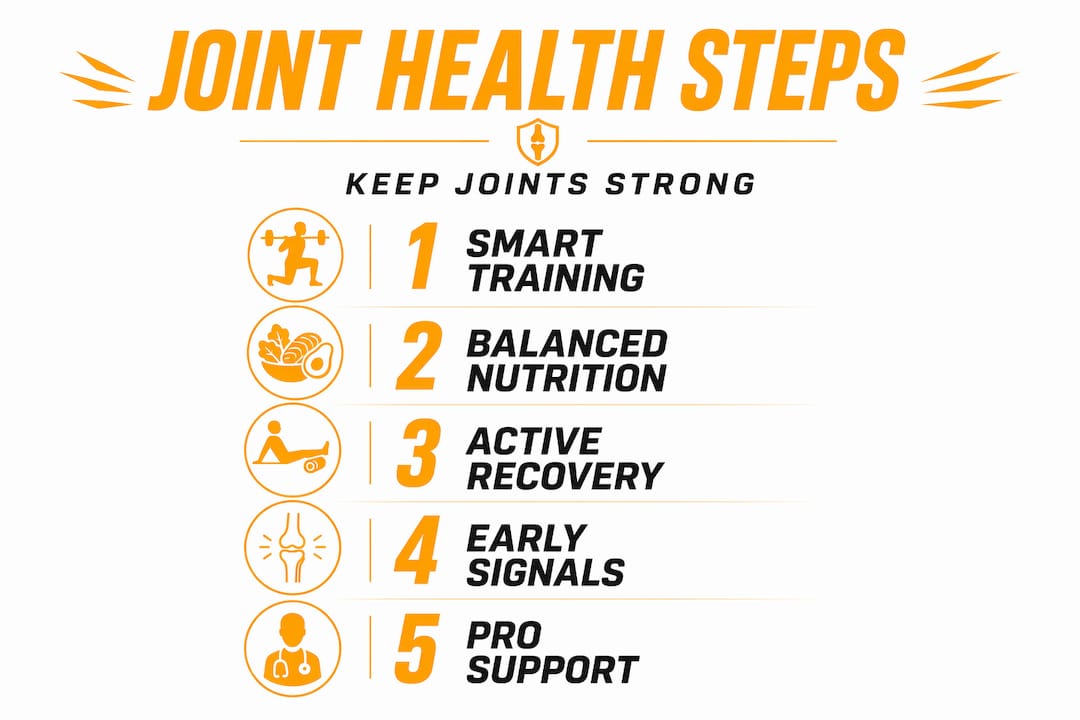
The biggest mistake in joint care for athletes is not bad training. It is ignoring early signals. By the time pain becomes undeniable, structural damage like cartilage thinning or tendon degradation is often already established. Athletes routinely misread these early signals as normal soreness.
Here is how to read what your joints are actually telling you:
- Normal training soreness: Dull, muscular ache that peaks at 24 to 48 hours and resolves fully. No joint swelling. No sharp sensations.
- Yellow flag discomfort: Joint-specific aching that lingers past 48 hours, mild swelling, or stiffness that does not clear with a warm-up. Reduce load and monitor closely.
- Red flag signals: Sharp or persistent joint pain, locking, catching, giving way, or significant swelling. Stop training on that joint and seek professional assessment.
Early intervention changes outcomes significantly. An athlete who addresses mild patellar tendinopathy at the yellow flag stage typically returns to full training in 4 to 8 weeks. An athlete who trains through it into degenerative tendinopathy may face a 6-month recovery or longer.
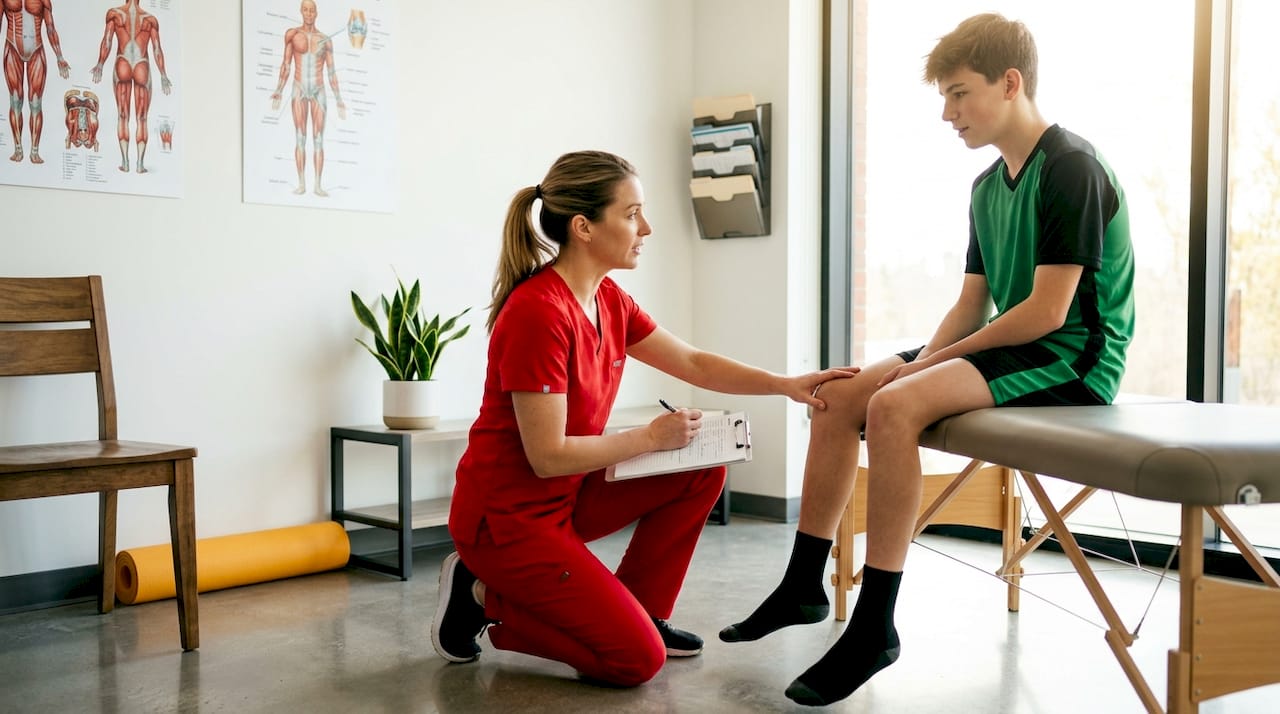
For long-term resilience, a biomechanical assessment from a sports physiotherapist is one of the most valuable investments you can make. Most joint injuries have identifiable mechanical contributors, whether it is hip weakness loading the knee, poor ankle mobility affecting the Achilles, or shoulder instability stressing the elbow. Fixing those upstream causes prevents the downstream injury. Explore the Fitnesshealth joint health resource hub for more guidance on building that foundation systematically.
My perspective on the joint-first mindset
What I’ve seen consistently, working with athletes across ability levels, is that joint health is treated like insurance nobody wants to buy until after the accident. Training culture glorifies intensity. Rest is seen as weakness. The result is a predictable cycle of injury, reactive treatment, return to training, and repeat.
In my experience, the athletes who stay in their sport the longest are not the ones who trained the hardest. They are the ones who trained the smartest. They understood that ignoring early joint pain is not toughness. It is a loan taken against future performance.
The shift I’ve found genuinely transformative is treating joint capacity as a training variable, just like strength or speed. You program for it. You track it. You protect it with the same seriousness you protect your sleep or your nutrition. When athletes start asking “what is this doing to my joints?” before adding a new training block, the injury patterns I see change dramatically.
Load management is not a performance limit. It is what keeps you performing.
— Rene
Support your joints with Fitnesshealth

If this article has you thinking about joint care more seriously, Fitnesshealth has built its supplement and program catalog specifically around athletes who want to stay training for the long term. From pharmaceutical-grade omega-3 formulas with validated EPA and DHA ratios to targeted training programs designed around load management and joint resilience, the platform covers the full picture. Every product is backed by the kind of research cited in this article, not just general wellness claims.
Visit Fitnesshealth programs and supplements to explore options tailored to your training load, whether you are managing an existing joint issue, building preventive habits, or looking to optimize recovery between sessions. The team is there to help you find the right combination.
FAQ
What makes joint health so critical for athletes?
Joints transfer every unit of force your muscles generate into movement, and they absorb impact from every landing and collision. Without healthy joint structures, muscle strength and fitness cannot be fully expressed, and injury risk climbs sharply.
How much omega-3 do athletes need for joint support?
Research consistently shows that daily intake above 2 grams of combined EPA and DHA reduces subjective joint pain and muscle damage markers in athletes. Look for products specifying EPA and DHA content rather than just total fish oil dose.
How can athletes prevent joint injuries from overtraining?
Structuring training with active recovery phases, avoiding year-round high-intensity loading without rest, and progressing loads gradually are the most evidence-backed strategies. Year-round intense training without recovery periods can multiply mechanical fatigue injury risk up to 36 times.
What is the difference between good pain and a joint warning sign?
Normal training soreness is muscular, peaks at 24 to 48 hours, and resolves completely. A joint warning sign includes joint-specific aching past 48 hours, swelling, sharpness, catching, or giving way, all of which require load reduction and professional assessment.
Can nutrition alone protect athletes’ joints?
Nutrition is one part of a larger picture. Omega-3 fatty acids address inflammation and support cartilage and tendon repair, but training load management, recovery protocols, and biomechanical correction are equally necessary for complete joint injury prevention in athletes.










