Muscle mass affects fat burning because muscle tissue burns more calories at rest than fat and actively improves your body’s metabolic health. The formal term for this is resting metabolic rate (RMR), which measures how many calories your body burns while doing nothing. More muscle raises your RMR, but the effect is more nuanced than most fitness content suggests. Muscle also improves insulin sensitivity, supports fat oxidation, and helps you maintain weight loss long term. Understanding the full picture is what separates lasting results from short-term fixes.
Why muscle mass affects fat burning at rest
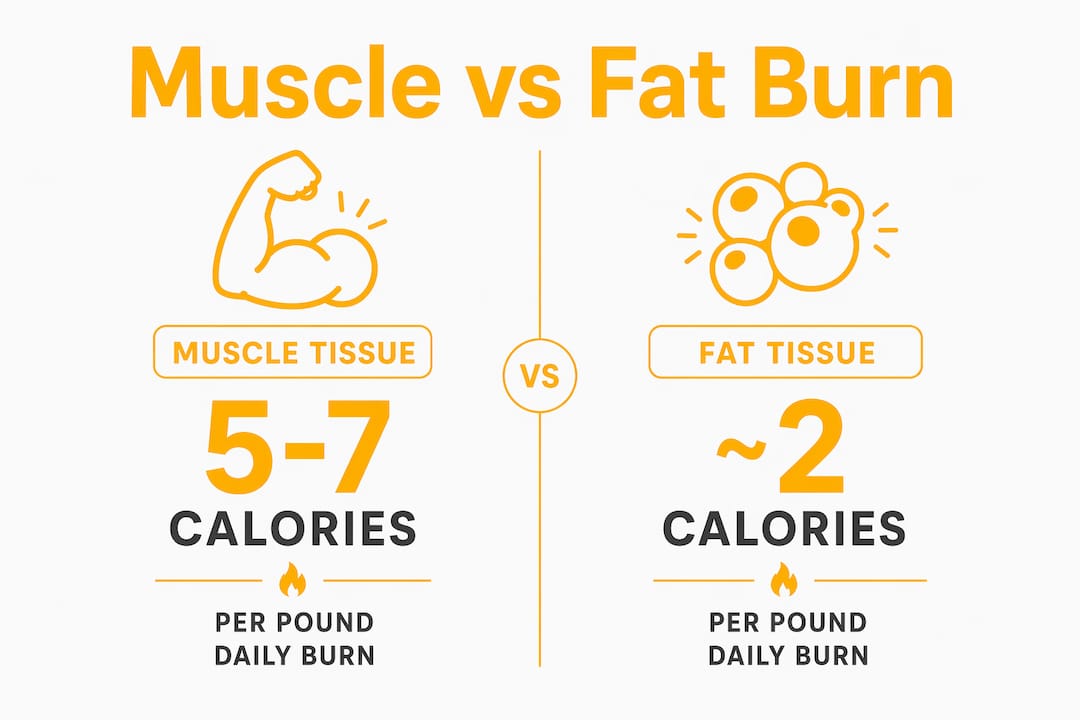
Muscle tissue burns approximately 5–7 calories per pound per day at rest. Fat tissue burns roughly 2 calories per pound per day. That difference is real, but it is smaller than most people expect.
Gaining 5 pounds of muscle adds about 20–30 calories daily to your resting metabolism. That is not hundreds of extra calories. It will not melt fat on its own. The metabolic boost from muscle is meaningful over months and years, not days.
| Tissue type | Calories burned per pound per day |
|---|---|
| Skeletal muscle | 5–7 calories |
| Fat tissue | ~2 calories |
| Net gain (5 lbs muscle) | +20–30 calories/day |
The table above shows why “muscle burns fat while you sleep” is technically true but overstated. The real power of muscle lies in what it does beyond resting calorie burn.
Pro Tip: Track your lean mass, not just your scale weight. A body composition scan gives you a clearer picture of whether you are losing fat or muscle during a calorie deficit.
How does muscle improve metabolic health beyond calorie burn?
Skeletal muscle accounts for roughly 40% of total body mass and functions as the body’s largest metabolic organ. That means muscle does far more than move your limbs. It regulates blood sugar, stores glycogen, and signals hormones that control energy balance.

Muscle is the primary site for glucose disposal after a meal. Greater relative muscle mass improves insulin sensitivity and reduces metabolic risk tied to excess body fat. Better insulin sensitivity means your body uses carbohydrates for energy more efficiently instead of storing them as fat.
Metabolic flexibility is another key benefit. Muscle with high metabolic flexibility can switch between burning carbohydrates and fat depending on what is available. This flexibility is vital for fat oxidation and is enhanced by resistance training and proper nutrition. People with poor metabolic flexibility tend to burn less fat even at rest.
“Focusing only on muscle’s calorie burn at rest oversimplifies its importance. The metabolic health benefits of higher muscle mass, including improved insulin sensitivity and fat oxidation, are far more impactful for long-term weight management.”
The hormonal effects matter too. Higher muscle mass supports better regulation of cortisol and insulin, both of which directly influence where your body stores and burns fat. Maintaining muscle mass also mitigates metabolic dysfunction risk associated with obesity, making it a protective factor well beyond aesthetics.
Why is preserving muscle during weight loss so important?
Muscle loss during weight loss is a real and common problem. About 25% of weight lost during rapid dieting comes from muscle, not fat. Losing muscle while cutting calories lowers your RMR, making future fat loss harder.
Extreme calorie restriction triggers muscle protein breakdown as the body converts muscle protein into glucose for energy. This process, called gluconeogenesis, accelerates when glycogen stores run out. Crash diets and very low calorie plans push the body into this state quickly.
The solution is a moderate pace. Losing 1–2 pounds per week with adequate protein and resistance training preserves muscle far better than rapid weight loss approaches. Gradual deficits give your body time to burn fat without cannibalizing lean tissue.
Here are the four practical steps to protect muscle during a fat loss phase:
- Set a moderate calorie deficit. Aim for a 300–500 calorie daily deficit. Larger cuts accelerate muscle loss.
- Prioritize protein at every meal. Protein provides the amino acids your muscles need to repair and maintain themselves under caloric stress.
- Lift weights at least twice per week. Resistance training sends a direct signal to your body to preserve muscle even when calories are low.
- Pace your weight loss. Rapid loss feels motivating but costs you lean mass. Slower progress protects the muscle that keeps your metabolism running.
Body recomposition, losing fat while gaining or maintaining muscle simultaneously, is achievable. High protein intake around 2.4g per kg of body weight combined with resistance training can preserve or even increase muscle during a moderate calorie deficit. This approach takes longer but produces better long-term results.
Pro Tip: Spread your protein intake across 3–4 meals rather than loading it all at dinner. Muscle protein synthesis responds better to consistent amino acid availability throughout the day.
How to build muscle to support fat burning
Building muscle to support fat loss requires a combination of the right training, nutrition, and recovery habits. No single factor works alone.
- Resistance training is the foundation. Compound lifts like squats, deadlifts, rows, and presses recruit the most muscle and produce the strongest metabolic response. Aim for 2–4 sessions per week. You can find balanced muscle training guidance that pairs resistance work with recovery for best results.
- Add aerobic exercise strategically. Concurrent training combining resistance and aerobic exercise maximizes fat oxidation while preserving lean mass. Aerobic work burns fat during the session; resistance training raises your RMR between sessions. Working at your optimal fat-burning heart rate during cardio sessions increases the fat you burn per minute.
- Hit your protein target daily. Protein is the raw material for muscle repair and growth. Without enough protein, resistance training produces limited results.
- Prioritize sleep and recovery. Muscle grows during rest, not during the workout itself. Poor sleep raises cortisol, which promotes fat storage and muscle breakdown.
- Use strength training equipment that matches your level. Whether you are starting out or progressing, strength training tools can support your resistance work at home or in the gym.
Muscle improves long-term weight maintenance not just by burning calories at rest but by increasing your capacity to train harder and recover faster. The more muscle you carry, the more total energy you burn across an active day.
Key Takeaways
Muscle mass drives fat burning primarily through improved metabolic health, insulin sensitivity, and resting energy expenditure, not through dramatic calorie burn alone.
| Point | Details |
|---|---|
| Muscle burns more at rest | Each pound of muscle burns 5–7 calories per day versus 2 calories for fat. |
| Metabolic health matters more | Muscle improves insulin sensitivity and fat oxidation beyond resting calorie burn. |
| Muscle loss during dieting | About 25% of rapid weight loss comes from muscle, lowering your metabolism. |
| Preserve muscle with protein and lifting | High protein intake and resistance training protect lean mass during a calorie deficit. |
| Concurrent training works best | Combining resistance and aerobic exercise maximizes fat loss while maintaining muscle. |
The number that misleads most people
Most people I talk to fixate on the metabolic math. They hear “muscle burns more calories” and expect that gaining 10 pounds of muscle will transform their metabolism overnight. The numbers do not support that. Twenty to thirty extra calories per day from 5 pounds of muscle is real, but it is not the reason to build muscle.
The reason to build muscle is everything else. Better blood sugar control. Stronger hormonal regulation. The ability to train harder and recover faster. These effects compound over months in ways that resting calorie math never captures. I have seen people lose the same amount of weight twice: once by cutting calories alone, and once by adding resistance training. The second time, they kept it off.
The importance of muscle fitness goes well beyond the scale. Patience and consistency with resistance training produce metabolic changes that no crash diet can replicate. If you are only chasing a number on the scale, you are optimizing for the wrong metric.
— Rene
What Fitnesshealth offers for muscle and fat loss
Fitnesshealth combines science-backed content with practical tools to help you build muscle and lose fat the right way.

The Fitnesshealth resource library covers resistance training programs, protein and nutrition guidance, and recovery strategies built around the same principles this article explains. Whether you are new to lifting or refining an existing program, the fat reduction fitness plan gives you a structured starting point. Fitnesshealth also offers supplements designed to support muscle recovery, energy, and metabolic health, so your nutrition keeps pace with your training. Visit Fitnesshealth to find the right program and products for your goals.
FAQ
Does muscle actually burn fat?
Muscle does not directly burn fat, but it raises your resting metabolic rate and improves fat oxidation. Higher muscle mass means your body burns more total calories, including fat, over time.
How much does muscle increase your metabolism?
Each pound of muscle burns approximately 5–7 calories per day at rest. Gaining 5 pounds of muscle adds roughly 20–30 calories daily to your resting metabolism.
Why do you lose muscle when losing weight?
Rapid calorie restriction depletes glycogen stores, prompting the body to break down muscle protein for energy through gluconeogenesis. Resistance training and adequate protein intake prevent most of this loss.
Can you lose fat and gain muscle at the same time?
Yes. Body recomposition is achievable with resistance training and high protein intake, around 2.4g per kg of body weight, during a moderate calorie deficit. Progress is slower but more sustainable.
How much protein do you need to preserve muscle while losing fat?
Research supports approximately 2.4g of protein per kg of body weight daily when combining resistance training with a calorie deficit. Spreading intake across multiple meals improves muscle protein synthesis throughout the day.