A structured daily vitamin routine for adults is defined as a consistent, timed regimen of targeted supplements designed to fill nutrient gaps that diet alone cannot reliably close. The COSMOS trial, which tracked 21,000+ participants over 2–3 years, found that daily multivitamin use produces modest but measurable cognitive benefits in older adults. That finding matters because it shifts the conversation from “do vitamins work?” to “which ones, at what dose, and when?” Supplements work best as nutritional insurance, not as a replacement for whole foods. The goal of any adult supplement regimen is targeted support, not a shotgun approach.
Which vitamins are essential in a daily vitamin routine for adults?

The four nutrients with the strongest evidence for daily supplementation in adults are Vitamin D3, Omega-3 EPA+DHA, Magnesium, and Vitamin B12. A quality multivitamin can serve as a baseline, but it rarely delivers therapeutic doses of these four. Think of the multivitamin as your floor, not your ceiling.
Here is what each nutrient does and who needs it most:
- Vitamin D3 (1,000–2,000 IU daily): Most adults living in northern climates or working indoors are deficient. D3 supports bone density, immune function, and mood regulation. Vitamin D3 absorption increases by up to 50% when taken with a fat-containing meal.
- Omega-3 EPA+DHA (1,000–2,000 mg daily): Adults who do not eat oily fish twice weekly need this dose to support cardiovascular and brain health. Fish oil capsules are the most practical delivery method.
- Magnesium Glycinate (300–400 mg daily): Most adults fall short of the dietary reference intake for magnesium. The glycinate form absorbs better than magnesium oxide and causes less digestive upset.
- Vitamin B12 (500–1,000 mcg daily): Adults over 35 and vegans should supplement B12 daily because stomach acid production declines with age, reducing absorption from food.
One rule applies across all four: look for 100% Daily Value on the label and avoid megadoses. Fat-soluble vitamins like A, D, E, and K accumulate in body tissue, and excess fat-soluble vitamins can reach toxic levels over time. Water-soluble vitamins are excreted, but that does not make unlimited doses harmless or useful.
How to personalize your supplement regimen by diet, age, and health
No two adults need the same daily supplement regimen. The right starting point is an honest audit of your diet and lifestyle, not a trip to the supplement aisle.
- Audit your diet first. If you eat fatty fish twice a week, you likely do not need an Omega-3 supplement. If you eat red meat regularly, B12 is probably covered. Identify the gaps before buying anything.
- Factor in your life stage. Adults in their 20s and 30s dealing with high stress or poor sleep benefit most from Magnesium Glycinate. Adults over 35 should prioritize B12 and Vitamin D3 due to age-related absorption decline.
- Get a blood panel. A standard panel checking serum 25(OH)D for Vitamin D, ferritin for iron, and B12 levels takes the guesswork out of supplementation. Symptoms like fatigue, brain fog, and muscle cramps often point directly to specific deficiencies.
- Skip the multivitamin if your diet is solid. Supplements fill dietary gaps; they do not add extra benefit on top of an already complete diet. A person eating a varied, whole-food diet may only need D3 and Omega-3.
- Choose the right chemical form. Magnesium glycinate absorbs better than magnesium oxide, and Vitamin D3 is more effective than D2. The form on the label matters as much as the dose.
Pro Tip: Ask your doctor to include ferritin, serum B12, and 25(OH)D in your next annual blood draw. These three markers reveal the most common adult deficiencies and cost little to test.
For adults focused on fitness, the daily wellness supplement checklist from Fitnesshealth covers sport-specific nutrient needs that a standard multivitamin often misses.
What is the best timing for taking vitamins to maximize absorption?
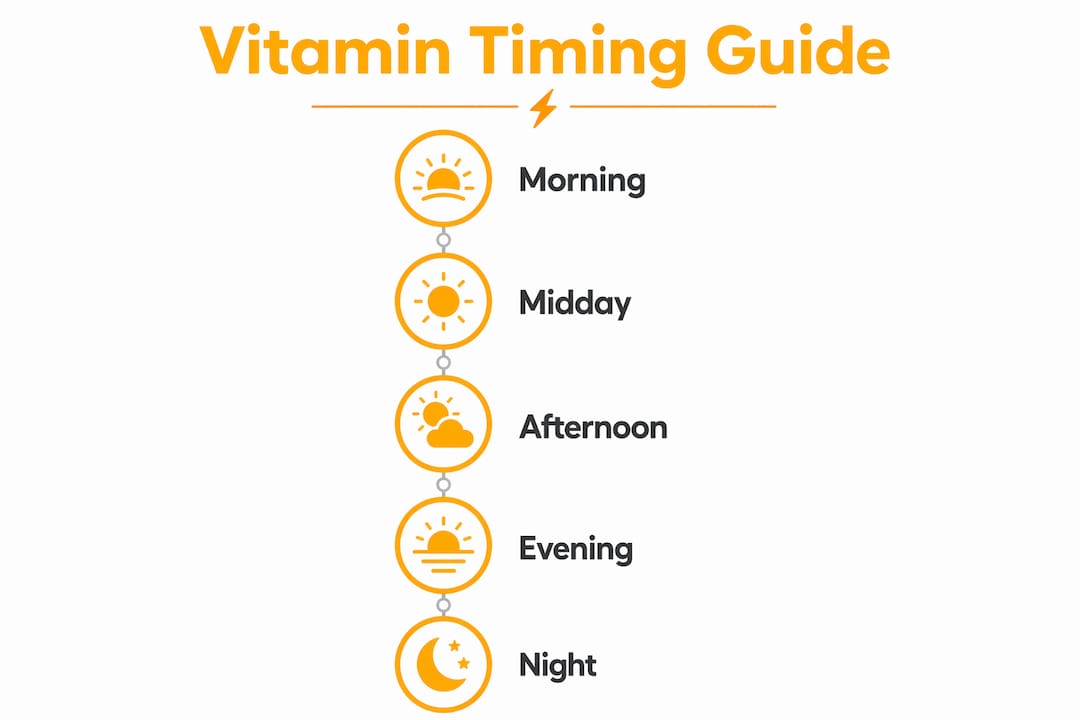
Timing your supplements correctly can meaningfully change how much your body actually uses. The table below summarizes the key rules.
| Supplement | Best Time | Take With | Avoid |
|---|---|---|---|
| Vitamin D3 | Morning or midday | Fat-containing meal | Empty stomach |
| Omega-3 EPA+DHA | With any meal | Dietary fat | Empty stomach |
| Magnesium Glycinate | Evening | Water or light snack | High-dose zinc |
| Vitamin B12 | Morning | Water | Nothing specific |
| Iron | Morning | Vitamin C | Calcium, coffee, tea |
Fat-soluble vitamins and fish oil require dietary fat for absorption. Taking them with water instead of a meal reduces uptake by up to 50%. That single mistake wipes out much of the benefit.
Iron follows different rules. Iron absorption increases 2–3 times when paired with Vitamin C, and drops by 50–70% when taken alongside calcium, coffee, or tea. Separate iron from calcium by at least two hours. Magnesium taken at night supports the parasympathetic nervous system, which is why adults with stress or sleep difficulties report better results from evening dosing.
Pro Tip: Set your Vitamin D3 and Omega-3 next to your breakfast items. Physical placement is the simplest cue to build the habit.
How to build a sustainable adult vitamin schedule
Consistency beats perfection in any supplement routine. Anchoring supplement intake to existing daily habits, like breakfast or brushing your teeth, produces better long-term adherence than trying to remember exact timing windows.
Follow these steps to build a routine that sticks:
- Start with two or three supplements, not ten. Adding too many at once makes it hard to identify which one causes a reaction and easy to abandon the whole routine.
- Keep supplements visible. A pill organizer on the kitchen counter works better than bottles buried in a cabinet. Out of sight means out of mind.
- Track your intake. A simple note in your phone or a weekly pill organizer prevents accidental double dosing, which is a real risk with fat-soluble vitamins.
- Review your routine every six months. Diet changes, new medications, and aging all shift your nutrient needs. What worked at 35 may not be right at 45.
A few additional habits that protect your results:
- Tell your doctor about every supplement you take. Some interact with medications, including blood thinners and thyroid drugs.
- Buy from brands that display third-party testing certifications like USP, NSF International, or Informed Sport on the label.
- Do not add a new supplement during a period of dietary change. Isolate variables so you know what is working.
For adults who train regularly, the best vitamins for active men guide from Fitnesshealth covers how physical output changes your micronutrient needs beyond the standard adult baseline. Understanding nutrition’s role in performance also helps you see where supplements fit within a broader dietary strategy.
Key Takeaways
A targeted daily vitamin routine built around Vitamin D3, Omega-3, Magnesium, and B12 delivers more measurable benefit than a generic multivitamin taken without a plan.
| Point | Details |
|---|---|
| Start with a blood panel | Test serum D, B12, and ferritin before buying any supplement. |
| Prioritize four core nutrients | Vitamin D3, Omega-3 EPA+DHA, Magnesium Glycinate, and B12 cover most adult gaps. |
| Time fat-soluble vitamins with meals | Taking D3 or fish oil without dietary fat cuts absorption by up to 50%. |
| Separate iron and calcium | Space them at least two hours apart to prevent absorption interference. |
| Anchor the habit to existing routines | Linking supplements to breakfast or bedtime builds consistency faster than reminders. |
What I have learned after years of tracking supplement habits
Most adults overcomplicate this. They buy a 10-supplement stack on January 1st, take it for three weeks, then quit because the routine feels like a part-time job. The adults who actually benefit from supplementation are the ones who start with two or three targeted nutrients and build from there.
The counterintuitive truth is that a cheap, well-timed Vitamin D3 capsule taken with breakfast every day outperforms an expensive premium stack taken inconsistently. Timing and consistency are the real variables. The supplement itself is almost secondary.
I have also seen adults waste money on megadose formulas because bigger numbers on the label feel more effective. They are not. Exceeding the Daily Value for fat-soluble vitamins does not accelerate results. It creates a toxicity risk that takes months to show up and longer to reverse.
My honest recommendation: treat your supplement routine the way you treat your training program. Start simple, track your results, and adjust based on data, not marketing copy. A blood panel every 12 months tells you more than any supplement brand ever will.
— Rene
What Fitnesshealth offers for your supplement routine
Building a supplement routine that actually fits your life takes more than a list of nutrients. Fitnesshealth carries a curated range of quality-tested supplements covering Vitamin D3, Omega-3, Magnesium Glycinate, and B12, along with detailed guidance on dosing and timing for each product.

Every product on the Fitnesshealth platform is selected with bioavailability and third-party testing in mind. Whether you are starting your first adult daily supplement regimen or refining an existing one, the site’s educational content and product range give you a clear path forward without the guesswork that derails most people in the first month.
FAQ
What vitamins should adults take every day?
Most adults benefit from Vitamin D3, Omega-3 EPA+DHA, and Magnesium Glycinate daily. Adults over 35 and vegans should also add Vitamin B12 at 500–1,000 mcg per day.
Is it safe to take a multivitamin every day?
Daily multivitamin use is safe for most adults and is associated with modest cognitive benefits, as shown in the COSMOS trial of 21,000+ participants. Choose a formula providing around 100% Daily Value and avoid megadose products.
When is the best time to take vitamins?
Fat-soluble vitamins like D3 and Omega-3 should be taken with a fat-containing meal. Magnesium works best in the evening, and B12 is most effective in the morning.
Can I take iron and calcium at the same time?
No. Calcium reduces iron absorption by 50–70%. Separate the two supplements by at least two hours, and take iron with Vitamin C to maximize uptake.
How do I know if I need a supplement?
A blood panel testing serum 25(OH)D, B12, and ferritin identifies the most common adult deficiencies. Symptoms like fatigue, brain fog, and muscle cramps often signal specific nutrient gaps worth testing.