

Collagen is the primary structural protein in the human body, making up 25%–35% of total protein in mammals and forming the backbone of every major connective tissue. Understanding how collagen supports connective tissue explains why joint stiffness, slower recovery, and reduced mobility often appear together as people age. Collagen provides tensile strength and elasticity to tendons, ligaments, cartilage, and fascia. Without adequate collagen, these tissues lose their ability to absorb force, transmit load, and repair after stress. For anyone focused on physical performance and joint longevity, collagen is not optional.
How collagen supports connective tissue structure
Connective tissue is the body’s structural framework. It connects muscles to bones, cushions joints, and transmits force across the entire musculoskeletal system. The four tissue types most relevant to joint health are tendons, ligaments, cartilage, and fascia. Each one depends on collagen for its mechanical properties.
Collagen lives inside the extracellular matrix (ECM), the scaffold that surrounds cells in connective tissue. The ECM is not passive filler. It actively transmits mechanical signals, supports cell function, and determines how tissue responds to load. Collagen is the ECM’s dominant structural protein, and its arrangement directly controls tissue strength.
Collagen fibers organize into a 3D meshwork that provides mechanical resilience in multiple directions. This is not a simple grid. Fibers separate and recombine to handle longitudinal, rotational, and transverse forces simultaneously. That architecture is why tendons can withstand the explosive forces of sprinting or heavy lifting without tearing.
- Tendons contain densely packed Type I collagen bundles that transmit muscle force directly to bone.
- Ligaments use Type I and Type III collagen to stabilize joints under shear and rotational stress.
- Cartilage relies on Type II collagen to create a cushioning matrix that absorbs compressive load.
- Fascia wraps and connects muscle groups using a web of Type I and Type III collagen fibers.
Pro Tip: Type II collagen is the form most directly linked to cartilage health. If joint cushioning and osteoarthritis prevention are your goals, look for supplements that specify Type II collagen.
How does collagen aid joint function and physical performance?
Collagen does more than hold tissue together. It actively enables the mechanics of movement. Tendons, for example, store and release elastic energy during running and jumping. That spring-like behavior depends entirely on the quality and organization of collagen fibers within the tendon.
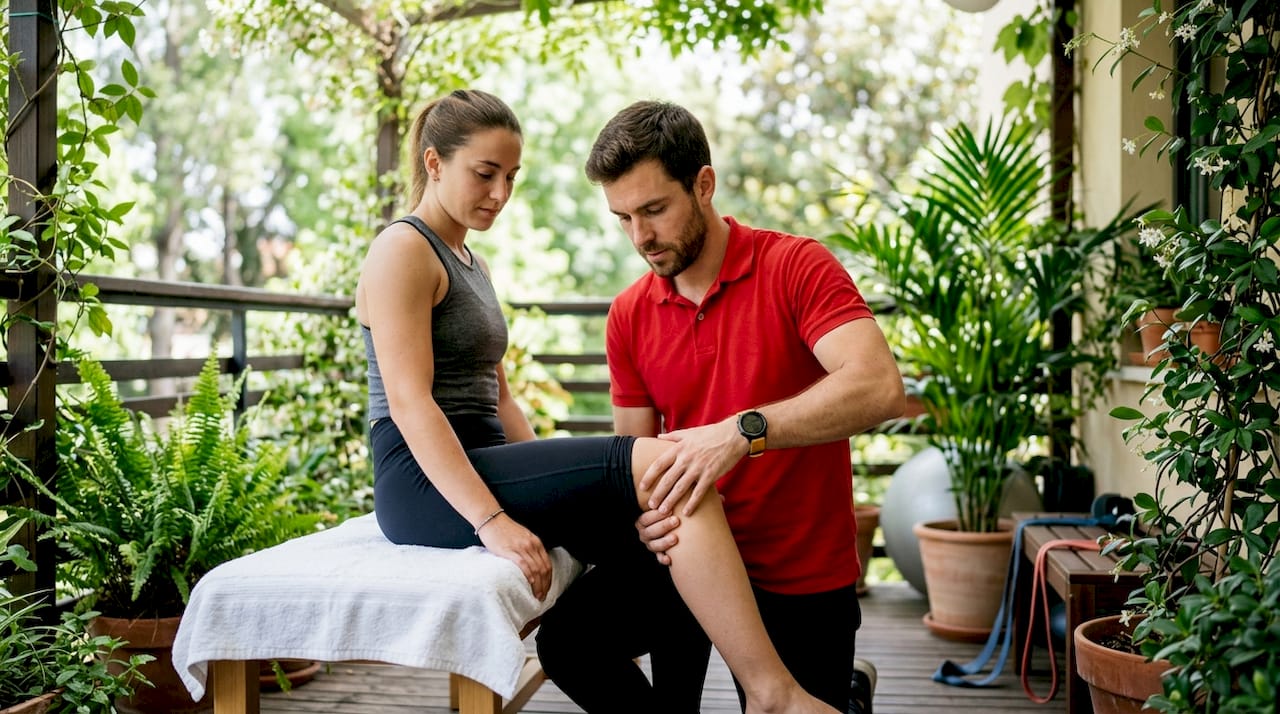
A critical but often overlooked factor is collagen cross-linking. Lysyl oxidase-mediated cross-linking regulates tendon material properties at the enzymatic level. Cross-links bind collagen fibers together, increasing stiffness and resistance to mechanical failure. Aging and overuse impair this process, which explains why two people with similar collagen levels can have very different tendon strength and recovery outcomes.
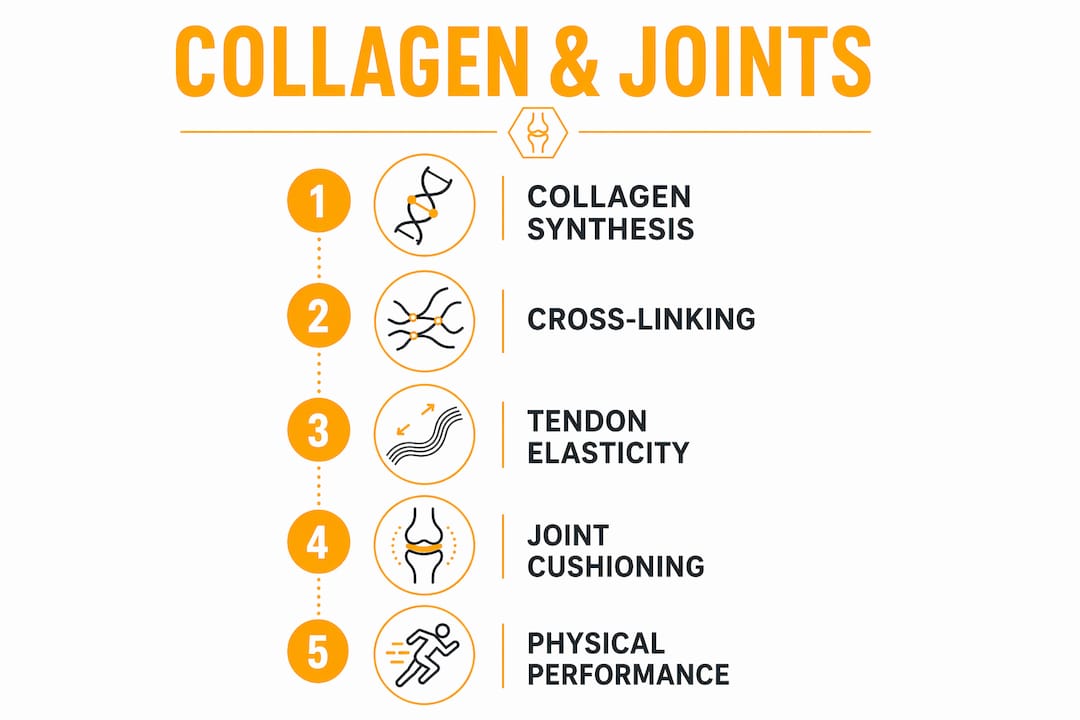
The ECM is not a static structure. Collagen constantly remodels in response to mechanical loading and physiological demand. Physical activity signals the body to deposit new collagen and reorganize existing fibers. Inactivity does the opposite, leading to disorganized fibers and weaker tissue over time.
Here is how collagen contributes to joint performance across four key functions:
- Force transmission. Collagen fibers in tendons carry contractile force from muscle to bone with minimal energy loss.
- Elastic energy storage. Well-organized collagen allows tendons to act like springs, reducing the metabolic cost of movement.
- Joint stabilization. Ligament collagen resists excessive joint movement, protecting against sprains and dislocations.
- Cartilage cushioning. Type II collagen in cartilage maintains the fluid-filled matrix that absorbs compressive forces during impact.
Collagen quality matters more than collagen quantity. Cross-link density and fiber organization determine how well connective tissue performs under load. Supplementation that ignores this mechanical context will always deliver incomplete results.
What happens to collagen production as you age?
Collagen production peaks between ages 20 and 25, then declines roughly 1% per year. That rate sounds modest, but the cumulative effect over decades is significant. By the time most people notice joint stiffness or slower recovery, they have already lost a meaningful portion of their connective tissue’s structural integrity.
A 2026 umbrella review of 113 randomized controlled trials involving 8,000 participants found that consistent, long-term collagen supplementation improves musculoskeletal health and reduces joint stiffness and osteoarthritis symptoms. That body of evidence is now large enough to treat collagen supplementation as a credible intervention, not just a wellness trend.
Dosage and duration matter. Clinical studies report benefits from 2.5 to 15 grams per day taken over 8 to 24 weeks. Shorter trials and lower doses show weaker results, which is why consistency is the most important variable.
| Factor | What it means for supplementation |
|---|---|
| Collagen type | Type I and III for tendons and skin; Type II for cartilage and joints |
| Dosage range | 2.5–15 grams per day based on clinical evidence |
| Duration | 8–24 weeks for measurable improvements |
| Vitamin C | Required for stable collagen synthesis; take alongside supplements |
| Exercise | Mechanical load amplifies collagen remodeling triggered by supplementation |
Vitamin C is a non-negotiable cofactor for collagen synthesis. Without it, the body cannot hydroxylate proline and lysine residues, which are the steps needed to form stable triple-helix collagen fibers. Taking collagen without adequate Vitamin C reduces the effectiveness of supplementation.
Pro Tip: Take collagen supplements 30–60 minutes before exercise. Mechanical loading during this window appears to direct newly synthesized collagen toward the tendons and ligaments under stress.
Practical ways to support connective tissue health
Supplementation alone does not rebuild connective tissue. The body needs a mechanical signal to direct collagen toward the right structures. Collagen supplementation combined with resistance training and a nutrient-dense diet produces the strongest outcomes for connective tissue health.
- Eat collagen-supporting foods. Bone broth, chicken skin, and fish skin provide collagen peptides directly. Citrus fruits, bell peppers, and kiwi supply Vitamin C for synthesis.
- Prioritize resistance training. Load-bearing exercise stimulates collagen remodeling in tendons and ligaments. Eccentric movements, such as slow lowering phases in squats or heel drops, are particularly effective for tendon adaptation.
- Avoid chronic overuse. Repeated mechanical stress without adequate recovery impairs cross-linking and leads to disorganized collagen fibers. Periodized training protects against this.
- Manage sleep and recovery. Collagen synthesis peaks during sleep. Chronic sleep deprivation reduces the body’s ability to repair connective tissue between training sessions.
- Check your joint health strategy. Athletes often underestimate connective tissue demands compared to muscle demands. Treating both equally prevents the imbalance that leads to overuse injuries.
Pro Tip: Glycine, proline, and hydroxyproline are the three amino acids that make up most of collagen’s structure. If your diet is low in animal protein, a targeted collagen peptide supplement fills that gap more efficiently than general protein powders.
Key Takeaways
Collagen is the structural foundation of connective tissue, and its quality, cross-link density, and continuous remodeling determine joint function, force transmission, and recovery capacity far more than collagen quantity alone.
| Point | Details |
|---|---|
| Collagen is structural | It forms the ECM framework in tendons, ligaments, cartilage, and fascia. |
| Cross-linking determines strength | Enzymatic cross-links control tendon stiffness and resistance to injury. |
| Production declines with age | Output drops roughly 1% per year after ages 20–25, compounding over time. |
| Supplementation needs context | Clinical evidence supports 2.5–15g daily over 8–24 weeks alongside exercise. |
| Vitamin C is non-negotiable | Without it, the body cannot synthesize stable collagen regardless of intake. |
What I’ve learned about collagen that most articles miss
Most collagen content focuses on quantity. How many grams per day. Which supplement brand. What the label says. That framing misses the real story.
After years of following the research on connective tissue health, the finding that changed my thinking was cross-linking. The enzymatic process controlled by lysyl oxidase determines whether collagen fibers actually hold together under load. You can have plenty of collagen and still have weak tendons if cross-linking is impaired by age, overuse, or poor nutrition.
The practical implication is that collagen supplementation works best as part of a system. Vitamin C, adequate sleep, periodized training, and consistent dosing over months are all part of the equation. Skipping any one of those elements reduces the return on the others. Readers who approach collagen as a quick fix will be disappointed. Those who treat it as one component of a well-structured recovery and performance plan will see real results.
The research is also still evolving. The 2026 umbrella review covering 8,000 participants is the strongest evidence base we have had to date, but it also highlights how much variation exists between individuals. Tailoring collagen interventions to age, training load, and specific tissue targets is the next frontier. For now, consistency and context are the two variables most within your control.
— Rene
Collagen and joint support resources at Fitnesshealth
Fitnesshealth covers collagen and connective tissue health with the same depth you found here, backed by research and built for people who train seriously.

If you want to go further, the athlete supplement guide breaks down joint support protocols by sport and training phase. For a focused look at collagen options, the collagen supplement comparison covers the top choices for joint health in 2026. Fitnesshealth also provides guidance on building a sports supplement protocol that integrates collagen with your full recovery stack. Every recommendation is grounded in clinical evidence, not marketing claims.
FAQ
What type of collagen is best for joint health?
Type II collagen targets cartilage directly and is the most studied form for joint pain and osteoarthritis. Type I and Type III collagen support tendons and ligaments.
How long does collagen supplementation take to work?
Clinical studies show measurable improvements in joint function after 8 to 24 weeks of consistent use at doses of 2.5 to 15 grams per day.
Does Vitamin C really affect collagen supplements?
Vitamin C is required for the hydroxylation of proline and lysine, the chemical step that stabilizes collagen’s triple-helix structure. Without it, supplementation is less effective.
Can exercise replace collagen supplements?
Exercise stimulates collagen remodeling but does not replace the amino acid supply that supplements provide. The two work best together, not as alternatives.
At what age should you start taking collagen?
Collagen production begins declining around age 25. Starting supplementation in your mid-to-late twenties, combined with resistance training, gives connective tissue the best long-term support.










