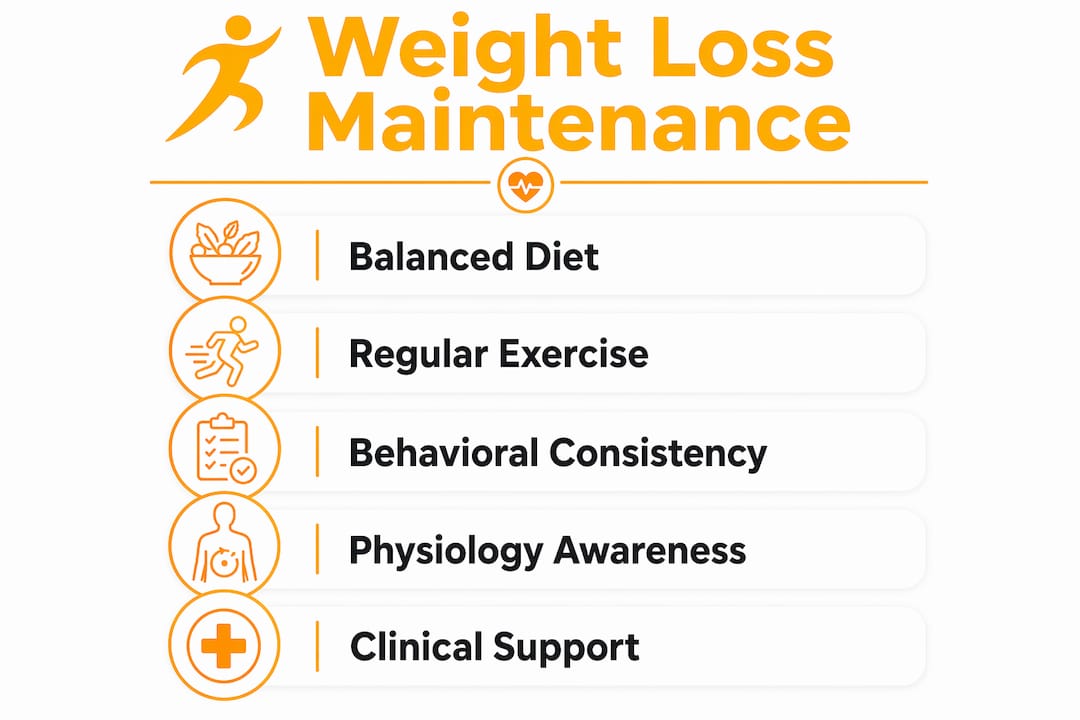
Sustainable weight loss maintenance is the process of keeping lost weight off through balanced habits that support your metabolism and prevent regain over the long term. Unlike dieting, which has a start and end date, weight maintenance is an active, ongoing process. Research confirms that most people regain one-third of lost weight within the first year after stopping a structured program, and half return to baseline within five years. That pattern is not a personal failure. It reflects real biological and behavioral forces that require a real system to counter. Sustainable weight loss, properly understood, is a system that must be biologically plausible and behaviorally repeatable to protect your metabolism and hormone health long term.
What is sustainable weight loss maintenance, and why does it matter?
Sustainable weight loss maintenance is defined as preserving a reduced body weight through consistent behavioral, nutritional, and physiological support. It differs from the active weight loss phase in one critical way: the tools that get weight off are not the same tools that keep it off. During active loss, calorie tracking and dietary changes dominate. During maintenance, physical activity becomes the primary lever for lasting success.
The stakes are high. Only 3.6% of adults with obesity seek formal physician help for weight management. That gap between need and action explains why so many people cycle through weight loss programs without lasting results. Long-term weight management requires treating weight not as a problem you solve once, but as a condition you manage continuously.
The CDC recommends a lifestyle incorporating balanced nutrition, consistent physical activity, good sleep, and stress management for the best long-term outcomes. That framework covers every system your body uses to regulate weight. Ignore one pillar and the others carry more load than they can sustain.
What role does physical activity play in preventing weight regain?

Physical activity is the single strongest predictor of sustained weight loss beyond two years. A meta-analysis of 568 participants in randomized controlled trials found that structured exercise reduces weight regain by approximately 2.8 kg compared to no exercise during the maintenance phase. That number is meaningful because it represents the difference between gradual drift back to baseline and genuine stability.
The type of activity matters less than the consistency. Effective options for maintenance include:
- Walking: Low impact, easy to sustain daily, and proven to support metabolic rate
- Stair climbing and incidental movement: Short bursts of activity throughout the day add up significantly over weeks
- Strength training: Preserves lean muscle mass, which directly protects your resting metabolic rate
- Moderate cardio: Supports cardiovascular health and calorie balance without requiring extreme effort
Physical activity shifts from a minor lever during active weight loss to the dominant factor at 24 or more months of maintenance. That shift is why people who lose weight through diet alone often regain it. They never built the movement habits that maintenance actually requires.
Pro Tip: Park farther away, take the stairs, and walk during phone calls. These micro-habits accumulate to hundreds of extra calories burned weekly without a single gym session.
For structured routines, Fitnesshealth covers exercises that speed up weight loss and translate directly into maintenance-phase habits.
How proper nutrition supports long-term weight maintenance
Nutrition during maintenance is not about restriction. It is about building a pattern of eating that keeps hunger manageable, metabolism stable, and energy consistent. Gradual weight loss paired with balanced nutrition preserves thyroid and insulin function better than rapid dieting with extreme calorie cuts. That metabolic protection is what makes the difference between a weight you can hold and one that slowly creeps back.
The most effective nutritional approach for maintenance follows these priorities:
- Prioritize protein at every meal. Protein preserves lean muscle and keeps you full longer. Fitnesshealth explains protein’s role in weight management in depth, including how much you actually need.
- Eat fiber-rich whole foods. Vegetables, legumes, and whole grains slow digestion, stabilize blood sugar, and reduce the urge to overeat between meals.
- Limit highly processed foods. Ultra-processed products are engineered to override your satiety signals. Reducing them lowers your risk of passive overeating.
- Include healthy fats. Fats from sources like avocado, nuts, and olive oil support hormonal health and extend meal satisfaction.
- Avoid extreme calorie deficits. Excessive restriction causes fatigue, irritability, and reduced workout performance, all of which undermine long-term consistency.
Meal planning does not require rigid calorie counting. Building plates around protein, fiber, and healthy fats creates a natural calorie balance that most people can sustain without tracking every gram.
Why behavioral consistency matters more than any single diet
Behavioral consistency is the foundation that holds every other maintenance strategy together. Registered dietitian Dr. Jared Meacham confirms that prioritizing protein intake and daily movement makes an energy deficit feel natural rather than forced. That feeling of ease is what separates habits you keep from habits you abandon.
Common pitfalls that break behavioral consistency include:
- Overtraining early in maintenance: Burning out physically leads to complete inactivity, which accelerates regain
- Skipping meals: Creates intense hunger later in the day, driving overeating at night
- Comparing your results to others: Weight maintenance timelines vary by individual metabolism, age, and history
- All-or-nothing thinking: One off-plan meal does not erase progress. Treating it as a failure does.
Mindful eating is one of the most practical tools for behavioral consistency. It means eating without screens, noticing hunger and fullness cues, and slowing down enough to register satisfaction before overeating. These habits stabilize hunger hormones like ghrelin and leptin, which directly influence how much you eat at the next meal.
Pro Tip: Set a consistent meal schedule and stick to it even on weekends. Your hunger hormones respond to timing, and regularity reduces the urge to snack impulsively.
How does your physiology work against weight maintenance?
Your body actively resists weight loss. After significant calorie restriction, metabolic rate slows, hunger hormones increase, and the body prioritizes fat storage. These are not signs of weakness. They are survival mechanisms that evolved over thousands of years.
| Physiological Factor | What Happens | How to Counter It |
|---|---|---|
| Metabolic slowdown | Resting calorie burn decreases after weight loss | Build lean muscle through strength training |
| Ghrelin increase | Hunger hormone rises, driving appetite | Eat protein-rich meals on a consistent schedule |
| Leptin decrease | Satiety signals weaken after fat loss | Prioritize sleep and avoid extreme restriction |
| Weight regain tendency | One-third regained in year one, half by year five | Transition calories gradually from loss to maintenance |
Gradual calorie transitions matter enormously. Moving too quickly from a deficit to maintenance calories causes rapid regain. Moving too slowly prolongs metabolic stress. Understanding how metabolism affects weight loss helps you time that transition correctly.
For people managing obesity as a chronic condition, clinical support plays a real role. The SURMOUNT-MAINTAIN trial found that participants continuing tirzepatide at maximum dose maintained greater weight reduction at 112 weeks compared to placebo. Obesity is increasingly recognized as a chronic condition requiring ongoing support, not a one-time fix.
Key Takeaways
Sustainable weight loss maintenance requires a system that combines physical activity, balanced nutrition, behavioral consistency, and physiological awareness working together continuously.
| Point | Details |
|---|---|
| Exercise is the long-term lever | Structured activity reduces weight regain by approximately 2.8 kg and becomes the dominant maintenance tool after two years. |
| Protein and fiber anchor nutrition | Eating protein-rich, fiber-dense meals stabilizes hunger hormones and supports metabolic health without rigid calorie counting. |
| Behavioral habits beat short-term diets | Consistent small habits like regular meals and daily movement make an energy deficit feel natural and sustainable. |
| Physiology works against you | Metabolic slowdown and hormonal shifts after weight loss are real. Strength training and gradual calorie transitions counter them. |
| Maintenance is a chronic process | Most people regain weight within five years without ongoing behavioral or clinical support. Treat it as a long-term commitment. |
What I’ve learned about building a system that actually lasts
Weight maintenance is where most people’s plans fall apart, and I think the reason is almost always the same. People treat reaching their goal weight as the finish line. The habits that got them there feel temporary, like something to endure rather than something to live with. So they relax, the weight comes back, and they blame themselves.
The real issue is that the plan was never designed for permanence. Restriction-based diets work for loss. They fail for maintenance because they are not built around what your body actually needs to stay stable. Balance is not a compromise. It is the only strategy that works long term.
Personalization matters more than most people realize. The protein targets, exercise types, and calorie levels that work for someone else may not work for you. Patience is not optional either. Metabolic adaptation takes months to stabilize after significant weight loss. Expecting your body to behave the same at month two as it does at month fourteen is unrealistic.
The people who maintain their weight successfully are not more disciplined. They built a system that fits their life well enough that they do not have to fight it every day.
— Rene
Fitnesshealth resources for your weight maintenance plan
Keeping weight off long term takes more than willpower. It takes the right information, the right habits, and the right support at each stage.

Fitnesshealth provides evidence-based guides, supplement resources, and practical tools built specifically for people focused on long-term weight management. Whether you want to understand why weight loss plateaus happen or find products that support metabolic health and recovery, Fitnesshealth covers the full picture. Visit Fitnesshealth to find resources matched to where you are in your maintenance phase, from nutrition guides to targeted supplement support.
FAQ
What is sustainable weight loss maintenance?
Sustainable weight loss maintenance is the ongoing process of keeping lost weight off through consistent behavioral, nutritional, and physical activity habits. It requires treating weight management as a long-term system rather than a temporary diet.
How much does exercise reduce weight regain?
A meta-analysis of 568 participants found that structured exercise reduces weight regain by approximately 2.8 kg during the maintenance phase compared to no exercise.
Why do most people regain weight after losing it?
Metabolic slowdown, increased hunger hormones, and the loss of structured program support all drive regain. Research shows most people regain one-third of lost weight within the first year and half within five years.
What foods best support long-term weight management?
Protein-rich foods, fiber-dense vegetables, legumes, and whole grains support satiety and metabolic stability. Limiting ultra-processed foods reduces passive overeating and supports consistent calorie balance.
Is weight maintenance harder than losing weight?
For most people, yes. The physiological and behavioral demands of maintenance differ from active loss, and physical activity becomes the primary tool for success beyond two years of keeping weight off.