Metabolism is defined as the sum of all chemical processes your body uses to convert food into energy, and it directly determines how many calories you burn each day. The role of metabolism in weight loss goes far beyond simply having a “fast” or “slow” rate. Your resting metabolic rate (RMR) accounts for the largest share of daily calorie expenditure, meaning what happens at rest matters as much as what happens at the gym. Understanding how metabolic rate shifts during weight loss, how it interacts with fat types, and how to support it through diet and exercise gives you a real advantage in managing your weight long term.
What is the role of metabolism in weight loss?
Metabolism governs every calorie your body burns, from breathing to digestion to movement. RMR alone accounts for the majority of total daily energy expenditure in most people. That means the calories you burn while doing nothing are your biggest metabolic lever.
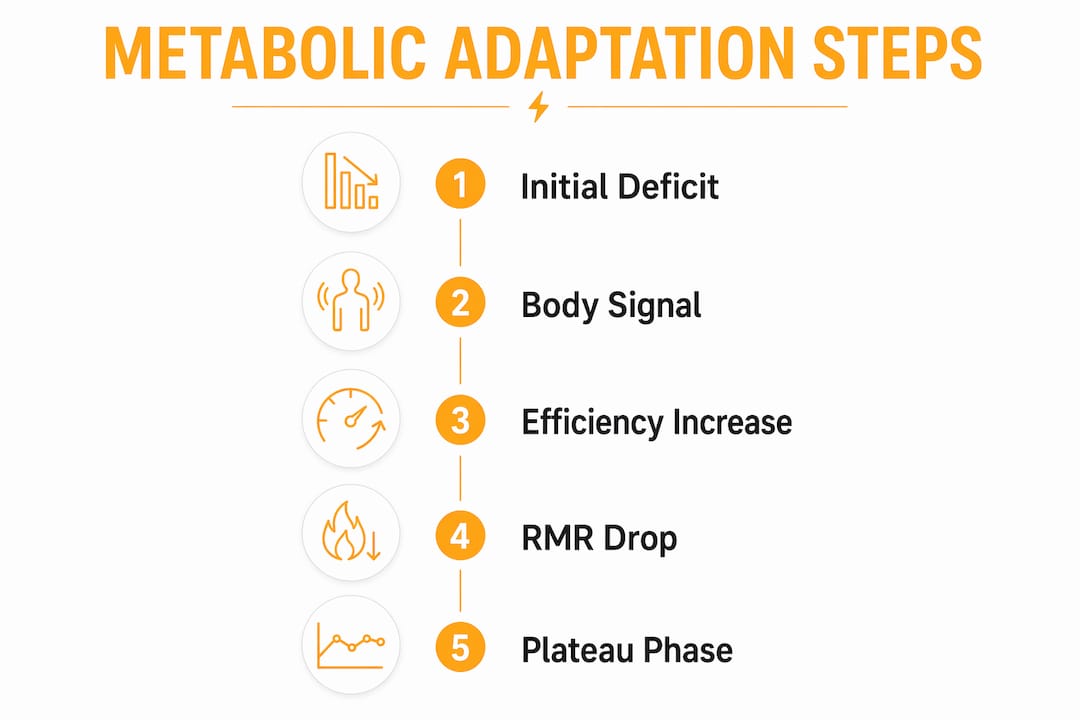
Metabolic adaptation causes resting metabolic rate to drop after losing about 5% of body weight. Energy burned through exercise also decreases after roughly 10% weight loss. This double decline is why weight loss slows even when you stay consistent with your habits.
The body interprets a calorie deficit as a threat. It responds by becoming more efficient, burning fewer calories to perform the same tasks. This is not a flaw in your willpower. It is a biological survival mechanism that every person faces during weight loss.
How does metabolic adaptation cause weight loss plateaus?
Weight loss tends to plateau around six months due to a combination of reduced basal metabolic rate, decreased non-exercise activity thermogenesis (NEAT), and hormone-driven appetite increases. NEAT includes all movement outside of formal exercise, like fidgeting, walking, and daily tasks. When you lose weight, your body unconsciously reduces these small movements, cutting calorie burn without you noticing.
Adaptive thermogenesis involves hormonal changes after weight loss that increase appetite and reduce calorie burning simultaneously. Hunger hormones rise, satiety hormones fall, and the body pushes hard to regain lost weight. This is why the six-month plateau feels so stubborn.
- RMR drops after 5% body weight loss, reducing baseline calorie burn.
- Exercise energy expenditure falls after 10% weight loss, even at the same workout intensity.
- NEAT decreases unconsciously, compounding the calorie deficit reduction.
- Hormonal shifts elevate hunger and suppress fullness signals after weight loss.
Recent research suggests that metabolic adaptation is not insurmountable. Improvements in appetite regulation and how the body uses different fuel sources can support durable weight loss over time.
Pro Tip: If your weight has stalled for more than three weeks, check your NEAT first. Adding a 20-minute walk after dinner costs no gym time and meaningfully increases daily calorie burn.
How does metabolism affect fat loss and fat distribution?
Not all fat behaves the same way metabolically. Visceral adipose tissue (VAT) is more metabolically active than subcutaneous fat and carries higher health risks, including links to insulin resistance, cardiovascular disease, and type 2 diabetes. Subcutaneous fat sits under the skin and is far less dangerous.

| Fat Type | Metabolic Activity | Health Risk | Best Reduction Method |
|---|---|---|---|
| Visceral (VAT) | High | High (heart disease, diabetes) | Exercise, especially aerobic |
| Subcutaneous | Low | Moderate | Calorie deficit, resistance training |
Exercise reduces VAT more effectively than diet or medication alone. Aerobic training improves fat oxidation, while resistance training builds muscle tissue that burns more calories at rest. Combining both produces the strongest results for fat distribution and metabolic flexibility.
Muscle tissue burns more calories than fat even at rest. This makes muscle mass a critical factor in sustaining a higher metabolic rate during and after weight loss. Losing muscle while dieting accelerates metabolic slowdown, which is why resistance training is non-negotiable during a calorie deficit.
One more fact worth knowing: early weight loss often reflects glycogen and water loss, not fat. The scale drops fast in week one, but that number overstates actual fat loss. True fat loss takes longer and requires a sustained calorie deficit over weeks, not days.
Are “slow” and “fast” metabolism real?
The idea that some people have dramatically slow or fast metabolisms is mostly a myth. Variations in basal metabolic rate between similar individuals generally range 150–300 kcal per day. That gap is real but small. It rarely explains major weight differences between people.
Hypermetabolism, defined as resting energy expenditure at least 10% above average, is mainly linked to medical conditions like hyperthyroidism, diabetes, or genetic disorders. It is not a normal variation among healthy people. Similarly, hypothyroidism can slow metabolism, but it is a diagnosable condition, not a vague excuse.
What actually drives weight differences between people?
- Food intake accuracy: Most people underestimate calories consumed by a significant margin.
- NEAT variability: Active people burn hundreds more calories daily through incidental movement.
- Hormone levels: Thyroid, cortisol, and insulin all influence how efficiently the body stores or burns energy.
- Genetics: Genetic factors affect fat distribution and appetite regulation, not just metabolic rate.
Lifestyle factors like NEAT and accurate food tracking outweigh metabolic rate differences in almost every case. Blaming metabolism alone for weight gain misses the bigger picture.
What are the best strategies for supporting metabolism during weight loss?
Practical metabolic support comes down to five areas, each backed by research.
- Increase protein intake. Protein has the highest thermic effect of food, meaning your body burns more calories digesting it than carbohydrates or fat. High protein intake also preserves muscle mass during a calorie deficit, protecting your RMR.
- Prioritize resistance training. Lifting weights builds and maintains muscle, which burns more calories at rest than fat tissue. This is the most direct way to counteract metabolic slowdown during weight loss.
- Add aerobic exercise for fat oxidation. Cardio improves the body’s ability to burn fat as fuel and specifically targets visceral fat. Reducing food intake drives initial weight loss, but exercise becomes critical for long-term maintenance.
- Manage sleep and stress. Poor sleep raises cortisol, which promotes fat storage and suppresses muscle repair. Chronic stress disrupts hormone balance and can stall weight loss even when diet and exercise are on point.
- Eat fiber-rich foods. Fiber slows digestion, stabilizes blood sugar, and supports gut health, all of which influence how efficiently the body processes and stores energy.
Pro Tip: Pair resistance training with a high-protein meal within two hours after your session. This combination maximizes muscle protein synthesis and helps preserve the metabolic rate you’ve worked to build.
Understanding your workout tempo during aerobic sessions also matters. Training at the right intensity keeps fat oxidation high without burning through muscle tissue.
Key Takeaways
Metabolism is a dynamic, adaptable system, and the most effective weight loss approach works with it rather than against it.
| Point | Details |
|---|---|
| Metabolic adaptation is real | RMR drops after 5% weight loss; plan for it rather than fight it. |
| Visceral fat responds to exercise | Aerobic and resistance training reduce VAT more than diet alone. |
| Muscle mass protects metabolism | Resistance training preserves RMR during calorie restriction. |
| Lifestyle outweighs metabolic rate | NEAT and food accuracy matter more than small BMR differences. |
| Protein and sleep are non-negotiable | Both protect muscle mass and support hormonal balance during weight loss. |
Metabolism is more complex than most people realize
I’ve spent years reading research on weight management, and the single biggest mistake I see is treating metabolism as a fixed number. People either blame a “slow metabolism” for every plateau or assume a “fast metabolism” is a free pass. Neither framing is accurate.
What I’ve found is that metabolism responds to everything: how much you sleep, how stressed you are, how much muscle you carry, and even how consistently you move throughout the day. The plateau at six months is not a failure. It is your body doing exactly what it evolved to do. The people who succeed long term are the ones who understand this and adjust their strategy rather than quit.
Sustainable weight management requires patience with the process. Metabolic adaptation is real, but it is not permanent. Consistent resistance training, adequate protein, and honest tracking of food intake are the tools that actually move the needle. No supplement or shortcut replaces those fundamentals. Start there, and the rest becomes much more manageable.
— Rene
Fitnesshealth resources for metabolism and weight management
Knowing the science is step one. Applying it consistently is where most people need support.

Fitnesshealth covers the topics that matter most for anyone working through a weight loss plateau or trying to understand why their progress has stalled. The weight loss plateaus guide breaks down the metabolic, behavioral, and hormonal factors behind stagnation and gives you concrete steps to restart progress. For a broader look at supplements, nutrition guides, and wellness tools built around real metabolic science, the Fitnesshealth homepage is the place to start. Every resource is designed for people who want evidence-backed answers, not generic advice.
FAQ
What is the role of metabolism in weight loss?
Metabolism determines how many calories your body burns at rest and during activity. A higher metabolic rate means more calories burned daily, which supports a calorie deficit needed for weight loss.
Why does weight loss slow down over time?
Metabolic adaptation causes resting metabolic rate to drop after about 5% body weight loss, and exercise energy expenditure falls after 10% loss. Hormonal changes also increase hunger, narrowing the calorie deficit.
Does exercise really speed up metabolism?
Resistance training builds muscle, which burns more calories at rest than fat tissue. Aerobic exercise improves fat oxidation and specifically reduces visceral fat, improving overall metabolic health.
Can you have a genuinely slow metabolism?
True hypermetabolism or hypometabolism is linked to medical conditions like hyperthyroidism or hypothyroidism. Among healthy individuals, BMR differences are typically only 150–300 kcal per day, which lifestyle factors easily outweigh.
What foods support a healthy metabolism?
High-protein foods have the greatest thermic effect, meaning the body burns more calories digesting them. Fiber-rich foods stabilize blood sugar and support gut health, both of which influence how efficiently the body manages energy.