

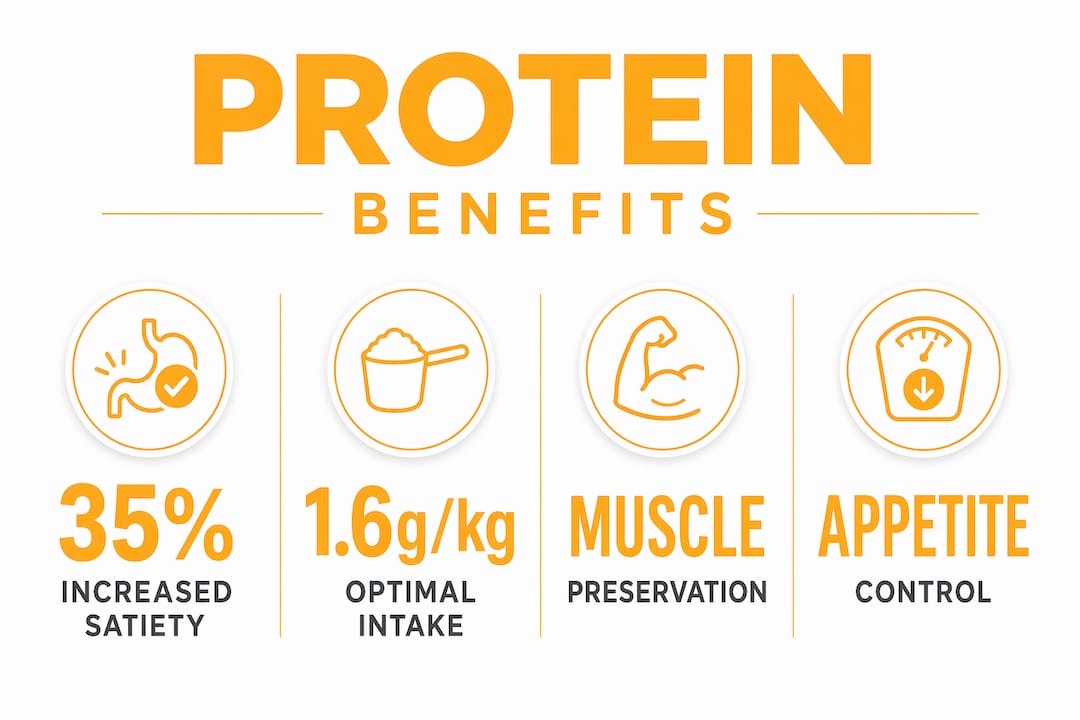
Protein is defined as the single most effective macronutrient for supporting weight loss through appetite control, muscle preservation, and metabolic support. The role of protein in weight management goes well beyond simply “eating more chicken.” Current weight loss guidelines recommend 1.2–1.6 grams per kilogram of body weight daily, nearly double the standard 0.8 g/kg RDA. Protein also carries a higher thermic effect than carbohydrates or fat, meaning your body burns more calories just digesting it. Understanding how protein works across these three mechanisms gives you a real edge in any weight management plan.
How does protein increase satiety and reduce appetite?
Protein is the most filling macronutrient, and the science behind that is specific. When you eat protein, your body releases hormones like GLP-1 that signal fullness, while suppressing ghrelin, the hormone that triggers hunger. That hormonal shift is why a high-protein meal keeps you satisfied longer than a carb-heavy one of the same calorie count.
The breakfast effect is particularly striking. Eating 24–30 grams of protein at breakfast reduces daily calorie intake by roughly 400 calories through enhanced satiety and less snacking. That is a meaningful reduction without any deliberate calorie counting.
Consistent protein distribution throughout the day controls appetite better than eating the same total amount in one or two sittings. Spreading protein across meals keeps hunger hormones steadier all day.
High-satiety protein sources to build meals around include:
- Eggs and egg whites
- Greek yogurt (plain, full-fat or low-fat)
- Cottage cheese
- Canned tuna and salmon
- Chicken breast and turkey
- Lentils and black beans
- Edamame and tofu
Pro Tip: Front-load your protein at breakfast. A meal with 25–30 grams of protein in the morning sets your appetite hormones on a steadier track for the rest of the day, making afternoon cravings far easier to manage.
Does protein help preserve muscle mass during weight loss?
Muscle loss is the hidden cost of most calorie-restricted diets. When you cut calories without adequate protein, your body breaks down lean tissue for energy. That loss slows your metabolism and makes long-term weight maintenance harder.
Research shows that increasing protein intake from 0.87 to 1.06 g/kg of body weight per day in older adults undergoing weight loss significantly preserves appendicular lean soft tissue, the muscle in your arms and legs most vulnerable to age-related decline. That finding matters for anyone over 50 pursuing fat loss.
Resistance training amplifies the effect. High protein intake combined with resistance training promotes body recomposition, meaning you can lose fat and maintain or even gain lean mass simultaneously. Protein supports the process, but the training stimulus is what tells your body to keep the muscle. For practical workout structures that pair well with a high-protein diet, minimalist resistance routines are an efficient starting point.
| Population | Recommended protein intake | Primary goal |
|---|---|---|
| General adults | 0.8 g/kg/day (RDA) | Basic maintenance |
| Adults pursuing weight loss | 1.2–1.6 g/kg/day | Fat loss, muscle retention |
| Older adults (50+) | 1.06 g/kg/day and above | Lean mass preservation |
| Resistance-trained individuals | Up to 2.5 g/kg/day | Body recomposition |
Pro Tip: If you do resistance training three or more times per week, aim for the higher end of the 1.2–1.6 g/kg range. Pair your post-workout nutrition with a protein-rich meal or snack within two hours of training for best muscle retention results.
What protein sources actually support weight management?
Protein quality matters as much as quantity. Animal proteins like eggs, fish, chicken, and dairy are complete proteins, meaning they contain all nine essential amino acids your body cannot make on its own. Plant proteins like lentils, beans, and quinoa are often incomplete individually, but combining plant-based sources such as rice and beans covers the full amino acid spectrum.
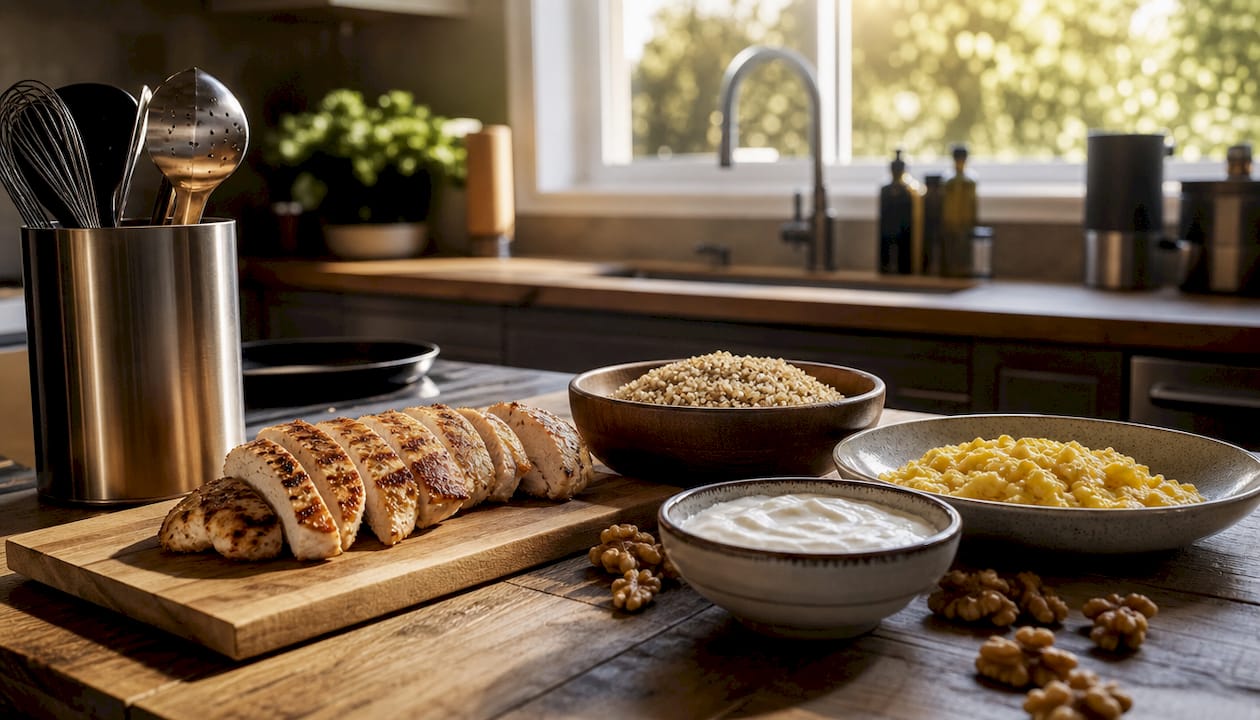
The American Medical Association emphasizes quality over quantity when it comes to protein intake. Eating a wide variety of protein sources, especially plant-based ones, also delivers fiber, which supports gut health and metabolic function. Overloading on animal protein while neglecting fiber is a common mistake that undermines long-term results.
Excessive reliance on protein supplements can displace fiber and micronutrients from your diet, creating deficits that hurt gut health over time. Whole food sources should form the foundation of your protein intake, with supplements filling gaps rather than replacing meals.
Strong protein sources that also support overall nutritional balance include:
- Wild salmon and sardines (omega-3s plus complete protein)
- Lentils and chickpeas (protein plus fiber)
- Quinoa (complete plant protein)
- Tempeh (fermented soy with gut health benefits)
- Low-fat cottage cheese (high protein, low calorie density)
- Hemp seeds (complete amino acid profile, plant-based)
How do you calculate your protein intake for weight loss?
Your protein target depends on your body weight and activity level. For most adults pursuing fat loss, the target is 1.2–1.6 grams per kilogram of body weight per day. That range exceeds the standard RDA of 0.8 g/kg and is where the research consistently shows benefits for satiety and muscle retention.
For people with a BMI over 30, using total body weight to calculate protein needs can overestimate the target. Adjusted body weight calculations, which account for the difference between current and ideal body weight, give a more accurate number. A registered dietitian or a tool like Fitnesshealth’s daily protein calculator can help you find the right figure for your situation.
Timing also shapes results. A high-protein breakfast improves 24-hour glycemic control and reduces snacking compared to skipping breakfast entirely. Spreading protein across three to four meals, rather than concentrating it in one large dinner, keeps muscle protein synthesis active throughout the day.
Total calorie balance still governs weight loss. Increasing protein without adjusting overall calorie intake often leads to weight maintenance or gain, not loss. Protein works best as part of a calorie-controlled plan, not as a workaround for one.
Pro Tip: Avoid the common mistake of eating most of your protein at dinner. Distribute it across breakfast, lunch, and dinner to keep hunger in check and support muscle recovery throughout the day.
Key Takeaways
Protein supports weight management through three distinct mechanisms: appetite control, muscle preservation, and a modest metabolic boost from its thermic effect.
| Point | Details |
|---|---|
| Optimal intake range | Target 1.2–1.6 g/kg of body weight daily for effective fat loss and muscle retention. |
| Breakfast protein matters | Eating 24–30 grams of protein at breakfast can reduce daily calorie intake by roughly 400 calories. |
| Muscle preservation requires training | Protein preserves lean mass during calorie deficits, but resistance training is the primary driver. |
| Prioritize protein quality | Combine plant and animal sources to cover all essential amino acids and maintain fiber intake. |
| Distribute protein evenly | Spreading protein across meals controls hunger better than concentrating it in one sitting. |
Why protein alone won’t get you there
Protein is a powerful tool, but I’ve seen too many people treat it like a magic fix. They triple their protein shakes, skip vegetables, and wonder why the scale barely moves. The research is clear: protein is not a standalone solution. Total calorie balance still drives weight loss.
What I’ve found actually works is treating protein as the anchor of a well-structured plan, not the whole plan. Pair it with consistent resistance training, and you get the muscle retention that keeps your metabolism from dropping during a cut. Add fiber-rich plant proteins, and your gut health stays intact. Skip the fiber, and you’ll feel the consequences within weeks.
The other mistake I see constantly is ignoring protein quality in favor of hitting a number. Eating 150 grams of protein from processed deli meat and protein bars is not the same as getting it from eggs, lentils, salmon, and Greek yogurt. Structured resistance training is the primary driver of muscle retention. Protein supports it. That distinction changes how you should think about your entire approach.
Individualization is the part most articles skip. Your protein needs at 35 differ from your needs at 60. Your needs during a fat loss phase differ from maintenance. Build your plan around your actual body weight, activity level, and food preferences, and you’ll get results that last.
— Rene
Fitnesshealth resources for your protein and weight goals
Knowing the right protein targets is one thing. Putting them into practice consistently is where most people need support.

Fitnesshealth brings together expert nutrition guides, supplement recommendations, and practical tools to help you build a protein-focused weight management plan that fits your life. Whether you’re calculating your daily protein needs, timing meals around workouts, or choosing between whole food sources and supplements, Fitnesshealth covers the full picture. The peak performance nutrition guide is a strong starting point for anyone ready to align their diet with their weight and fitness goals. For a broader look at fat reduction strategies, the fat reduction fitness plan pairs well with a high-protein approach.
FAQ
What is the recommended protein intake for weight loss?
Weight loss guidelines recommend 1.2–1.6 grams of protein per kilogram of body weight per day, which exceeds the standard adult RDA of 0.8 g/kg. Active individuals and older adults may benefit from the higher end of that range.
Does protein help reduce appetite?
Yes. Protein triggers the release of satiety hormones like GLP-1 and suppresses ghrelin, the hunger hormone. Eating 24–30 grams of protein at breakfast alone can reduce daily calorie intake by roughly 400 calories.
Can you lose fat and keep muscle at the same time?
Yes, when you combine adequate protein intake with resistance training. Research shows that high protein intake paired with resistance training supports body recomposition, allowing fat loss and lean mass maintenance simultaneously.
Is plant protein as effective as animal protein for weight management?
Plant protein is effective when you combine sources to cover all essential amino acids. Pairing lentils with rice, or chickpeas with quinoa, delivers a complete amino acid profile along with fiber that supports gut health and satiety.
How does protein affect metabolism?
Protein has a higher thermic effect than carbohydrates or fat, meaning your body expends more energy digesting it. This contributes a modest but real increase in daily calorie burn compared to eating the same calories from other macronutrients.










